
Neem Powder: 11 Science-Backed Benefits, Smart Uses & Everything You Need to Know


By Suvarn Naturals Wellness Team | Medically Reviewed | Last Updated: 2026
Imagine a single plant so therapeutically rich that ancient Vedic scholars named it Sarva Roga Nivarini — ‘the one that cures all ailments.’ That plant is neem. And today, its most accessible, affordable, and versatile form is neem powder — finely ground dried leaves of the Azadirachta indica tree.
If you’ve been searching for a natural solution for stubborn acne, flaky scalp, sluggish digestion, or weakened immunity, you’ve likely come across neem powder. But with hundreds of articles making vague promises, it can be hard to separate fact from fiction.
This guide is different. Drawing from published clinical research, Ayurvedic tradition, and transparent ingredient science, we’re going to cover exactly what neem powder does, how to use it safely and effectively, and — critically — what competitors aren’t telling you. Whether you’re new to herbal wellness or a seasoned Ayurvedic practitioner, this is the most complete neem powder resource you’ll find.
| ✦ What You’ll Learn in This Guide: The exact phytochemicals in neem powder and why they matter 11 evidence-supported benefits (with honest notes on research quality) Step-by-step usage guides for skin, hair, oral health, and internal use Side effects and who should avoid it How neem powder compares to neem oil and neem capsules 8 real FAQs based on what people actually search |
What Is Neem Powder?
Neem powder is made by drying the leaves of the neem tree (Azadirachta indica) and grinding them into a fine green powder. Sometimes called neem churna or neem leaf powder in Ayurvedic texts, it preserves the leaf’s full spectrum of bioactive compounds in a shelf-stable, easy-to-use form.
The neem tree itself is a fast-growing tropical evergreen native to the Indian subcontinent — found throughout India, Sri Lanka, Myanmar, Pakistan, and Bangladesh. The tree has been cultivated for over 4,000 years and is one of the most thoroughly researched medicinal plants on earth. Scientists have isolated more than 140 biologically active compounds from various parts of the neem tree, with the leaves being particularly rich in therapeutically relevant molecules.
The Science Behind the Powder: Key Phytochemicals
What makes neem powder so potent isn’t one magic compound — it’s a synergistic cocktail of phytochemicals working together:
| Nimbin & Nimbidin | Primary anti-inflammatory agents; reduce redness, swelling, and irritation at a cellular level |
| Azadirachtin | The most studied compound in neem; powerful antimicrobial, antifungal, and antiparasitic activity |
| Quercetin | A flavonoid antioxidant that inhibits the NF-kB inflammatory pathway; strong free-radical scavenging |
| Nimbolide | Shows anti-proliferative and pro-apoptotic effects in early cancer cell line studies |
| Gallic acid & Catechin | Polyphenols with antioxidant activity; support liver and cellular health |
| Gedunin | Antiparasitic and antimalarial limonoid; also studied for immune modulation |
| Epicatechin | Cardiovascular and metabolic health support; found in both neem bark and leaves |
| 💡 Quick Fact: The Sanskrit word ‘nimba’ means ‘bestower of good health.’ The name neem is derived from it — a clue to how deeply this plant is woven into the wellness tradition of South Asia. |
Unlike neem oil, which is cold-pressed from the seeds and carries a strong odor, neem powder is gentler, virtually odorless, and versatile enough for both topical and internal use. Unlike capsule supplements, neem powder lets you control your dose precisely and use it across multiple applications.
11 Evidence-Based Benefits of Neem Powder
Here’s what the research actually says — with honest transparency about where more studies are needed.
1. Fights Acne and Clears Bacterial Skin Infections
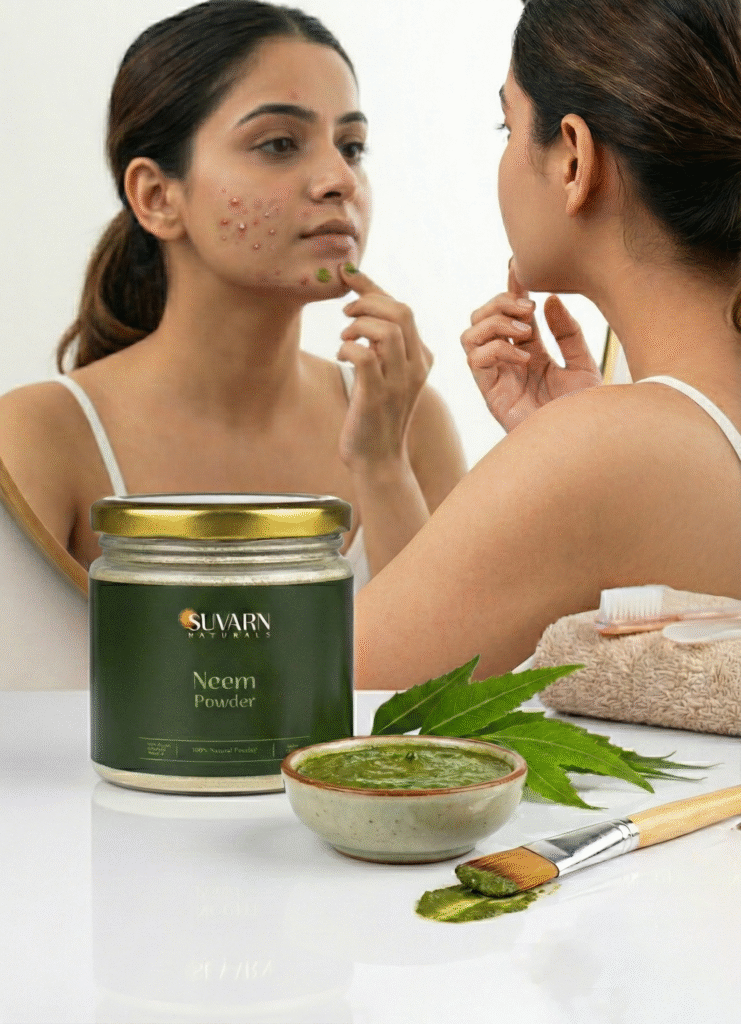
Neem powder’s antibacterial properties are among its most studied. The active compounds azadirachtin and nimbin have demonstrated strong activity against Staphylococcus aureus and Propionibacterium acnes — the two bacteria most associated with pimples, cysts, and skin infections. As a face pack, neem powder helps reduce excess sebum, unblock pores, and calm inflammation. Consistent use over 4–6 weeks is where most people begin to see meaningful results.
2. Soothes Eczema, Psoriasis & Chronic Skin Irritation
Neem’s anti-inflammatory compounds — particularly quercetin and nimbidin — are thought to inhibit the NF-kB inflammatory pathway, a key driver of chronic skin conditions. A clinical study on 50 psoriasis patients using oral neem capsules combined with topical tar showed significant reduction in PASI scores (Psoriasis Area and Severity Index). Topical neem powder paste has been used traditionally for eczema, rashes, and itching with promising anecdotal outcomes, though rigorous human trials are ongoing.
3. Promotes Oral Health: Gum Disease, Plaque & Fresh Breath
This is one of neem’s most evidence-backed applications. A 21-day clinical study involving 45 individuals with gingivitis found that neem mouthwash was as effective as chlorhexidine — the pharmaceutical gold standard — at reducing gum bleeding and plaque. Neem’s phytochemicals minimize bacterial colonization on tooth surfaces and reduce inflammation in gum tissue. Neem powder can be used directly as a tooth powder or added to oil pulling routines.
4. Combats Dandruff and Scalp Fungus
Dandruff is primarily caused by the fungus Malassezia furfur, and neem’s antifungal compounds — including nimbolide and azadirachtin — target this directly. A 2024 study found that hair gel formulations containing neem extract outperformed minoxidil (the standard treatment) in reducing dandruff and supporting hair growth in rats. While we await more human data, neem powder mixed into scalp masks or hair packs has centuries of documented traditional use for scalp health.
5. Supports Blood Sugar Management
Multiple animal studies have shown neem leaf extract supports healthy blood glucose regulation by helping protect and repair beta cells in the pancreas — the cells responsible for producing insulin. In one study, neem supplementation significantly supported healthy blood sugar levels after 15 days in diabetic-induced rats. While this is not a replacement for diabetes medication, neem powder may complement a medically supervised wellness plan for metabolic health. Always consult a doctor before use.
6. Supports Liver Health and Detoxification
Neem’s polyphenols — particularly gallic acid, epicatechin, and catechin — exhibit hepatoprotective (liver-protecting) activity. Research suggests neem leaf extract can prevent chemical-induced liver damage by stabilizing blood marker enzymes and raising antioxidant levels such as vitamins E and C. Regular, moderate use of neem powder may support the liver’s natural detoxification processes, though long-term high-dose use should be avoided (see Side Effects section).
7. Boosts Immunity and Acts as a Natural Antimicrobial
Neem powder has broad-spectrum antimicrobial activity — demonstrated against bacteria, fungi, and certain viruses in laboratory studies. Its compounds stimulate the immune response and reduce pathogen load when used consistently. This is why neem has been used in Ayurveda as a general tonic for immune resilience during seasonal changes and periods of illness. It does not replace medical treatment but can serve as a sensible supportive measure.
8. Helps Heal Ulcers and Supports Gut Health
Neem bark extract has shown clinical benefit for gastric ulcers: in a study, patients taking 30–60 mg of neem bark extract twice daily for 10 weeks saw significant ulcer healing and a marked decrease in acid secretion. For digestive health more broadly, neem powder has been traditionally used to manage intestinal worms, bloating, and stomach inflammation. Neem powder made into a tea is the standard Ayurvedic approach for gut support.
9. Anti-Aging Skin Benefits
A 2017 study found that topical neem leaf application on hairless mice exposed to UV radiation significantly reduced signs of aging — including wrinkles and sagging — while boosting procollagen enzyme levels and elastin protein. Elastin maintains skin’s shape; collagen gives it structure. These findings support neem’s traditional reputation as one of the oldest known skin-softening agents. In face packs, neem powder can be combined with sandalwood, turmeric, and rose water for an anti-aging formulation.
10. Natural Blood Purifier
In Ayurveda, neem leaf powder is classified as a ‘rakta shodhak’ — a blood purifying herb. This traditional claim has partial scientific backing: neem’s detoxifying compounds support the liver’s filtration function, and its antioxidants help neutralize free radicals in the bloodstream. Regular moderate use (especially as a morning wellness drink) is thought to improve overall skin clarity and reduce systemic inflammation over time.
11. Potent Antifungal: Beyond the Scalp
Neem preparations have shown laboratory-confirmed toxicity against 14 common human-infecting fungi — including Trichophyton (athlete’s foot), Epidermophyton (ringworm), and Microsporum. Topical neem powder paste is used in folk medicine for fungal skin infections, nail infections, and intertrigo. This is one area where the traditional evidence is particularly robust, even as formal clinical trials remain limited.
How Neem Powder Works: Mechanism, Tradition, and Modern Science
Here’s what most generic articles skip: understanding the mechanism helps you use neem powder smarter and set realistic expectations.
The Tri-Pathway Model
Neem powder works through three simultaneous pathways:
- Antimicrobial Action: Azadirachtin disrupts the cellular membranes of bacteria and fungi, preventing reproduction and causing cell death. This explains neem’s effectiveness across skin infections, oral bacteria, and gut pathogens.
- Anti-Inflammatory Cascade: Quercetin and nimbin inhibit NF-kB — a ‘master switch’ of inflammation in the body. By turning this switch down, neem helps reduce redness, swelling, and chronic irritation at a cellular level.
- Antioxidant Defense: Polyphenols like gallic acid and catechin neutralize free radicals that damage DNA, accelerate aging, and contribute to chronic disease. Neem’s antioxidant capacity has been confirmed in multiple in-vitro and animal studies.
Traditional Ayurvedic Perspective vs. Modern Research
Ayurveda classifies neem (nimba) as bitter (tikta rasa), cooling (sheeta virya), and light (laghu guna). It is considered to balance Pitta and Kapha doshas — which in practical terms means it’s useful for conditions involving heat, inflammation, excess oil, and toxin accumulation.
Modern science is validating many of these traditional applications. Where the two diverge is in the scale and specificity of evidence: Ayurvedic texts describe neem as effective for hundreds of conditions, while clinical science has confirmed meaningful benefits in a narrower set — primarily skin conditions, oral health, and certain aspects of digestive and metabolic health.
The honest position: neem powder is a genuinely powerful herb with real, documented benefits. It is not a miracle cure for everything. Used appropriately within a holistic wellness routine, it delivers measurable results.
Who Should Use Neem Powder?
Neem powder is one of the most broadly useful herbal products available — but it’s most impactful for specific groups.
Ideal Candidates
- People with oily, acne-prone, or combination skin looking for a natural, non-irritating cleansing solution
- Individuals dealing with chronic dandruff, scalp fungus, or hair thinning due to scalp inflammation
- Anyone wanting to upgrade their oral hygiene routine naturally, especially those prone to plaque buildup or sensitive gums
- People supporting metabolic health and blood sugar balance under medical guidance
- Those with chronic low-grade inflammation who want a herbal complement to their wellness protocol
- Ayurveda practitioners and enthusiasts who prefer Pitta- or Kapha-balancing herbs
- Individuals with digestive discomfort — particularly bloating, slow gut motility, or mild stomach acidity
Who Should Be Cautious or Avoid It
- Pregnant women: Neem can cause uterine contractions and is considered unsafe during pregnancy
- Breastfeeding mothers: Insufficient safety data; avoid until more research is available
- Children under 12: Internal neem use is not recommended; topical use should be supervised
- Individuals planning conception: Neem has demonstrated contraceptive effects in some studies and may affect sperm viability
- Those with liver or kidney conditions: High doses over extended periods have been associated with organ stress
- People on immunosuppressant medications: Neem may interact; consult your physician
How to Use Neem Powder: Step-by-Step Guide
Neem powder is remarkably versatile. Here are practical, actionable methods for each application — the kind of specific guidance most articles leave out.
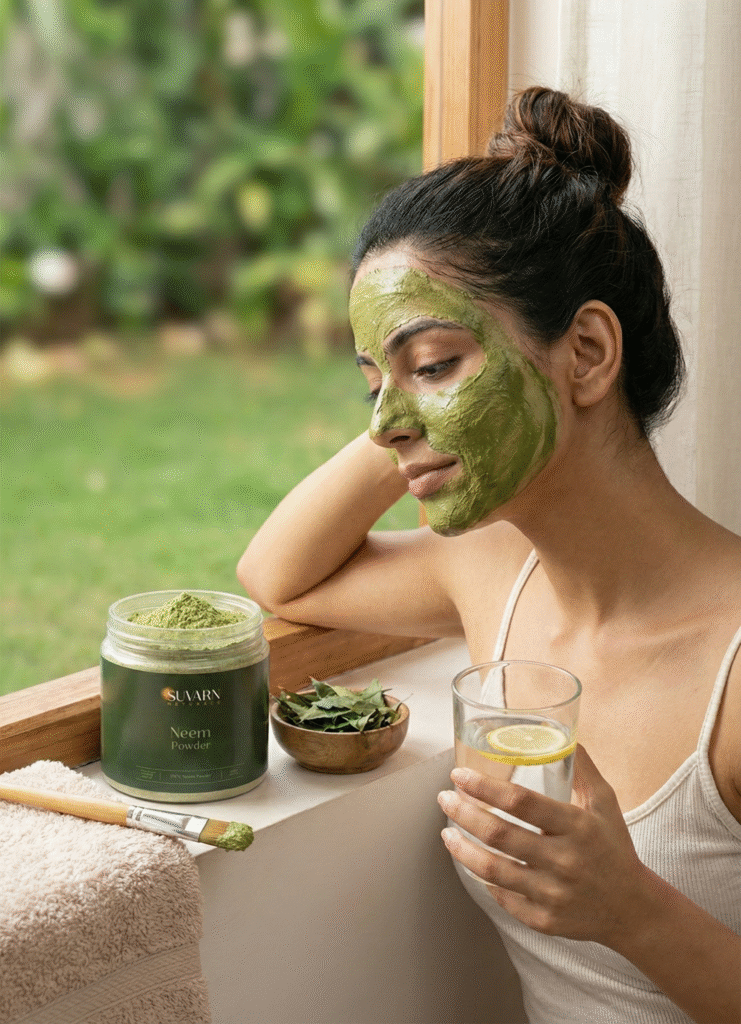
For Face & Skin: Neem Powder Face Pack
- Measure 2 teaspoons of pure organic neem powder into a clean bowl.
- Add 1 teaspoon of raw honey (for dry/sensitive skin) or rose water (for oily skin) to create a smooth paste.
- Optional boosters: add a pinch of turmeric for brightening, or 1 tsp plain yogurt for gentle exfoliation.
- Apply evenly to clean, damp face using fingertips or a brush. Avoid the eye area.
- Leave on for 10–15 minutes. Do not let it dry completely — mist with water if needed.
- Rinse thoroughly with lukewarm water and follow with your regular moisturizer.
- Frequency: 2–3 times per week for acne-prone skin; once a week for maintenance.
| ⚠️ Patch Test Rule: Always apply a small amount to the inside of your wrist or behind your ear 24 hours before full facial use. This is especially important for sensitive skin types. |
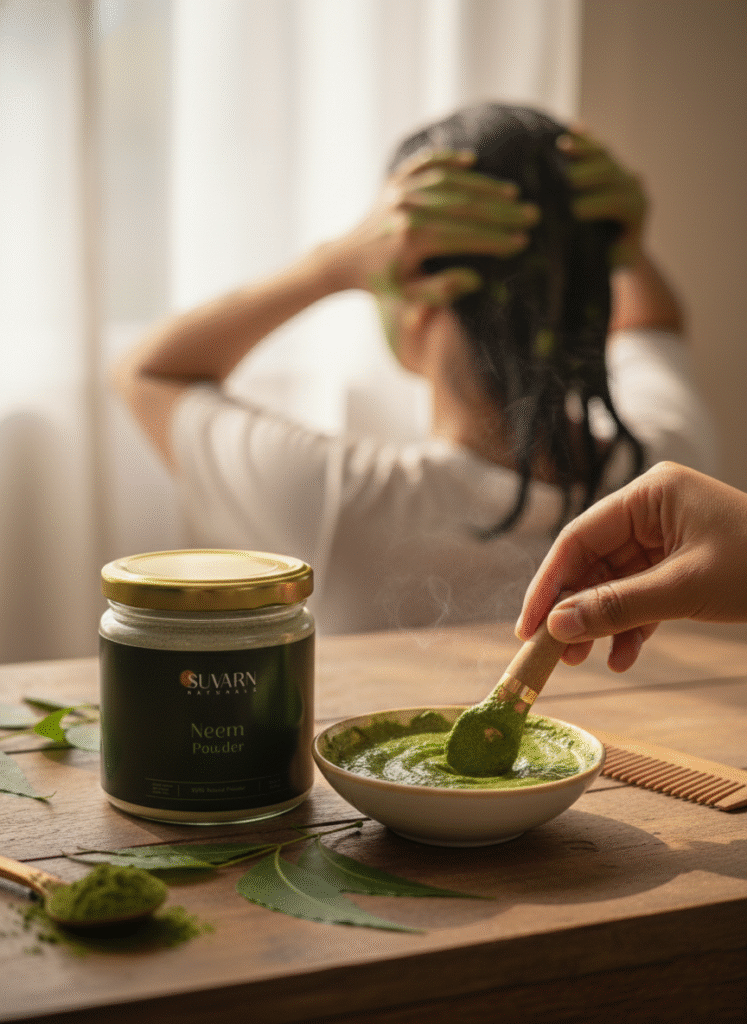
For Hair & Scalp: Anti-Dandruff Hair Mask
- Mix 3 tablespoons of neem powder with enough warm water or aloe vera gel to form a thick paste.
- Add 1 tablespoon of coconut oil or neem oil for dry scalp; skip oil for very oily scalp.
- Section your hair and apply the paste directly to the scalp using your fingertips. Work in sections.
- Gently massage for 2–3 minutes to stimulate blood circulation and ensure even coverage.
- Cover with a shower cap and leave for 20–30 minutes.
- Rinse with lukewarm water and a mild sulfate-free shampoo. You may need two rinse cycles.
- Frequency: Once a week for active dandruff; twice monthly for maintenance.
For Oral Health: Neem Tooth Powder
- Combine 1 teaspoon of neem powder with 1/2 teaspoon of baking soda and a pinch of rock salt.
- Wet your toothbrush, dip it lightly into the mixture.
- Brush gently in circular motions for 2 minutes, focusing on the gum line.
- Rinse well. This can be used as a complete replacement for conventional toothpaste or alternated daily.
- Frequency: Once daily (morning) for best results.
Alternatively, dissolve 1/4 teaspoon neem powder in a small glass of warm water and use as a 30-second mouth rinse after brushing.
For Internal Use: Neem Powder Wellness Drink
Always start with the lowest dose and monitor your body’s response before increasing.
- Start with 1/4 teaspoon of neem powder mixed into a glass of warm water.
- Add a small amount of honey or lemon juice to soften the natural bitterness.
- Drink on an empty stomach in the morning for digestive and immunity support.
- After 1 week, if well-tolerated, you may increase to 1/2 teaspoon twice daily.
- Do not exceed 1/2 teaspoon twice daily without professional Ayurvedic guidance.
- Use for a maximum of 8–10 weeks at a stretch; take a 2-week break before resuming.
| 📌 Suvarn Naturals Recommendation: Our Neem Powder is made from shade-dried, first-harvest neem leaves — preserving the full spectrum of active compounds. It is fine-milled for smooth blending and free from fillers, preservatives, and artificial additives. Every batch is third-party tested for heavy metals, microbial contaminants, and purity. When choosing neem powder, always look for organic certification and transparent sourcing — these are non-negotiables for both safety and efficacy. |
Side Effects & Safety Precautions
This section matters — and most neem articles underplay it. Being informed is part of using herbal products responsibly.
Topical Use (Face, Hair, Skin)
- Generally considered safe for most adults when used as directed
- May cause contact dermatitis in people with sensitive skin or neem allergy — always patch test first
- Rare reports of allergic contact stomatitis (mouth irritation) with oral rinse use
- Do not leave paste on skin for more than 15–20 minutes to avoid drying or irritation
Internal Use (Oral Consumption)
- Neem bark extract has been studied as safe at doses up to 60 mg daily for up to 10 weeks (WebMD/Drugs.com)
- High doses or prolonged use may stress the kidneys and liver — periodic breaks are essential
- Never consume neem seed oil internally — this form has caused serious toxicity events
- Drug-induced liver injury (rare) has been reported at very high doses in case reports
- May interact with: blood sugar-lowering medications (additive hypoglycemia risk), immunosuppressants, and anticoagulants
- Report any yellowing of skin, unusual fatigue, or digestive distress to your healthcare provider immediately
Populations That Should Avoid Internal Neem Powder
- Pregnant women (risk of miscarriage)
- Breastfeeding mothers (safety unknown)
- Infants and children under 12 (serious adverse events have been reported)
- Men trying to conceive (possible contraceptive effect at high doses)
Neem Powder vs. Alternatives: Which Should You Choose?
Not all neem forms are equal. Here’s an honest, clear breakdown to help you decide what’s right for your specific needs.
| Feature | Neem Powder | Neem Oil | Neem Capsules |
| Form | Fine green powder | Cold-pressed seed oil | Encapsulated extract |
| Primary Use | Skin, hair, oral, internal | Topical skin & scalp | Internal / supplement |
| Topical Use | Excellent (face packs, masks) | Excellent (diluted) | Not applicable |
| Internal Use | Yes (as tea or mixed in water) | Never (seeds) | Yes |
| Smell | Mild, earthy | Strong, pungent | Minimal |
| Ease of Use | Very versatile | Requires dilution | Most convenient |
| Dose Control | Easy to adjust | Needs careful dilution | Fixed per capsule |
| Shelf Life | 1–2 years (sealed) | 1–2 years | 1–2 years |
| Bioactive Spectrum | Full leaf phytochemicals | Seed-specific compounds | Standardized extract |
| Best For | Whole-body holistic use | Specific topical concerns | Convenient daily dosing |
| Suvarn Naturals? | Yes — Organic Neem Powder | Not in current range | Not in current range |
The Verdict: When to Choose Neem Powder
Choose neem powder if you want maximum versatility. It’s the only neem form that lets you address skin concerns, hair health, oral hygiene, and internal wellness with a single product. It’s more affordable per use than capsules, more controllable than oil, and better suited to traditional Ayurvedic protocols.
The key is quality. Commercial neem powders can vary widely in potency depending on harvest time, drying method, and processing. First-harvest leaves dried in shade (not sun) preserve the highest concentration of active compounds. This is the standard Suvarn Naturals maintains.
Frequently Asked Questions About Neem Powder
Q: Can I use neem powder on my face every day?
A: Daily use is generally not recommended for most people. 2–3 times a week is the standard guidance for active acne treatment. Daily use may over-dry the skin or cause irritation, especially for sensitive or dry skin types. For oily skin that tolerates it well, a brief daily cleansing rinse (not a full mask) may be fine. Always moisturize afterward.
Q: How long does it take for neem powder to work on skin?
A: For acne and oiliness, most people notice a difference within 2–4 weeks of consistent use (2–3 times weekly). For chronic conditions like eczema or psoriasis, it may take 6–8 weeks before meaningful improvement is visible. Neem is a therapeutic herb, not an instant fix. Consistency matters far more than frequency.
Q: Is neem powder safe to eat or drink daily?
A: In small amounts (1/4 to 1/2 teaspoon per day), neem powder is considered possibly safe for most healthy adults for up to 10 weeks at a time. It should not be consumed daily indefinitely. Always take a break after 8–10 weeks. Do not consume neem seed oil internally under any circumstances — this is very different from leaf powder.
Q: Can neem powder lighten skin or reduce dark spots?
A: Neem powder has antioxidant and anti-inflammatory properties that may gradually reduce hyperpigmentation and uneven skin tone — particularly when combined with turmeric or lemon juice in face packs. However, it is not a bleaching agent and will not dramatically lighten skin tone. Expect subtle brightening with consistent, long-term use.
Q: Does neem powder really stop hair fall?
A: Neem powder can address hair fall caused by scalp infections, dandruff, or inflammation — which are common underlying causes. By improving scalp health, reducing fungal overgrowth, and supporting circulation, it can create better conditions for hair retention and growth. It will not address hair fall caused by hormonal imbalances, nutritional deficiencies, or genetic factors.
Q: What is the difference between neem powder and neem churna?
A: These are often the same thing — both refer to finely powdered neem leaves. ‘Churna’ is the Sanskrit/Hindi Ayurvedic term for any herbal powder. In practice, products labeled ‘neem churna’ are typically formulated for internal (digestive) use, while ‘neem powder’ may be marketed for both topical and internal applications. Always read the label for sourcing and intended use.
Q: Can I mix neem powder with other herbal powders?
A: Absolutely, and this is actually how Ayurveda recommends using it. Powerful combinations include: neem + turmeric (anti-inflammatory, skin brightening), neem + multani mitti (deep cleansing for oily skin), neem + sandalwood (cooling, acne-calming), and neem + amla (antioxidant-rich hair treatment). Always mix fresh before each use and store unmixed powders separately.
Q: Is organic neem powder better than regular neem powder?
A: Yes, meaningfully so. Non-organic neem cultivation can involve pesticide use, and since neem itself is used medicinally, you do not want chemical residues in your product. Organic certification also typically indicates better quality control in harvesting and processing. Additionally, look for ‘wild-harvested’ or ‘shade-dried’ labels — these are markers of higher phytochemical preservation.
Final Summary: Making Neem Powder Work for You
Let’s bring it all together. Here’s what you need to remember:
- Neem powder is a genuinely effective, well-studied Ayurvedic herb with over 140 documented bioactive compounds.
- Its most evidence-backed applications are acne and skin infections, dandruff, oral health, and gut support.
- Used correctly — the right dose, the right frequency, the right form — it delivers real, measurable results.
- It is not a miracle cure. It works best as part of a consistent, holistic wellness routine.
- Quality matters enormously. Choose organic, shade-dried, first-harvest neem powder from a brand that tests for purity.
- Observe the safety guidelines — particularly around internal use duration, and absolute avoidance during pregnancy.
The neem tree has been called the ‘village pharmacy’ for a reason. For thousands of years, it provided everything from skincare to oral hygiene to immune support — all from a single source. In powder form, that same ancient intelligence becomes available to you in the most modern, convenient way possible.
At Suvarn Naturals, we source our neem powder from organic groves in South India, dried in natural shade to preserve peak potency, and tested by independent laboratories before it reaches you. Because we believe that traditional wisdom deserves modern standards.
| ✦ Pure Neem Powder by Suvarn Naturals | Organic · Tested · Effective |
Ready to add neem powder to your wellness routine? Explore Suvarn Naturals’ range of certified organic herbal powders — crafted with the integrity and transparency your health deserves.
Disclaimer: This article is for educational and informational purposes only. It is not intended as medical advice and should not substitute consultation with a qualified healthcare provider. Individual results may vary. Claims about neem powder are based on traditional Ayurvedic use and available scientific literature; not all claims have been evaluated by regulatory authorities.