
Why Is My Hair Falling Out? Causes, Warning Signs and What Actually Helps

Published: 25 August 2026 | By Suvarn Naturals Team
TL;DR
- Losing 50–100 hairs a day is normal; noticeably more than that, or thinning you can see, usually falls into one of a few well-studied patterns.
- Telogen effluvium (diffuse shedding after stress, illness, surgery, crash diets, childbirth or fever) is the most common cause of a sudden increase in shedding, and it’s usually temporary.
- Female pattern hair loss (androgenetic alopecia) causes gradual thinning, usually at the centre/crown of the scalp, and needs a different approach than shedding does.
- Iron stores (ferritin), thyroid function, medications, and restrictive dieting are worth ruling out with a doctor — the evidence on iron is real but more nuanced than most articles suggest.
- Biotin is heavily marketed for hair, but current evidence only supports it when there’s an actual biotin deficiency, which is uncommon.
- See a doctor promptly for sudden or patchy hair loss, hair loss with scalp redness/itching/scarring, or shedding alongside symptoms like fatigue, weight change or irregular periods.
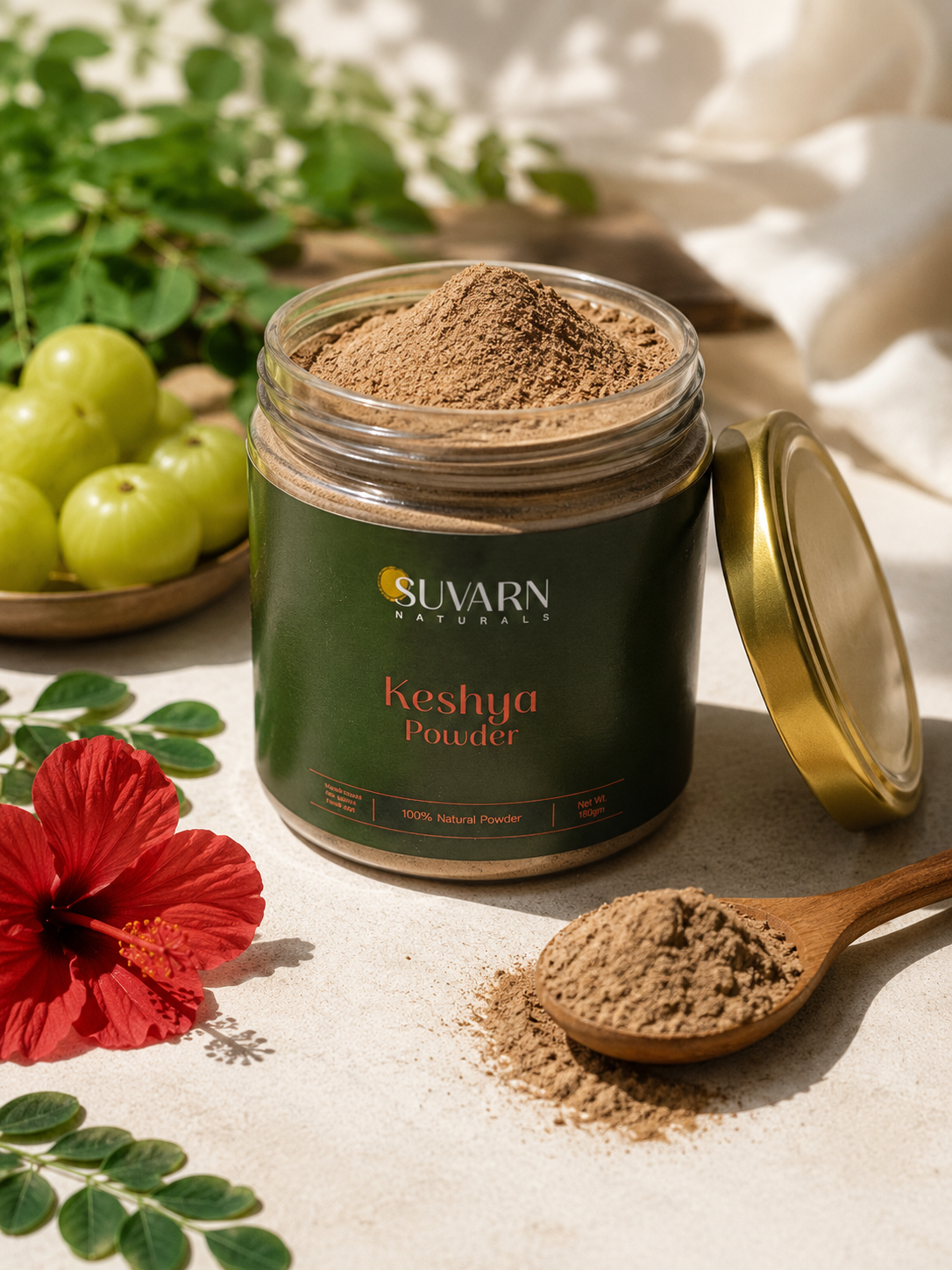
- Suvarn Naturals’ Keshya Powder, Amla Powder and Moringa Powder are traditional hair-care and nutritional ingredients used in Ayurveda and everyday Indian routines — they’re part of general hair care, not a treatment for medical hair loss.
Why hair fall feels so alarming — and what this article covers
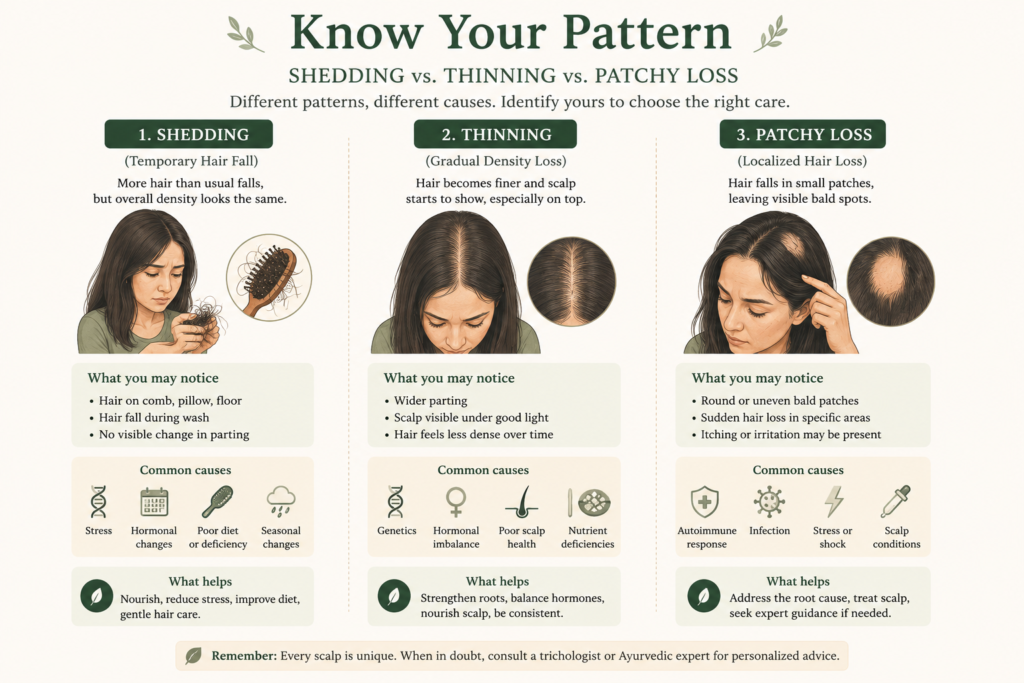
If you’ve suddenly noticed more hair in your brush, on your pillow, or in the shower drain, the first instinct is usually to search for a single cause and a quick fix. In reality, “why is my hair falling out” doesn’t have one answer — it depends on how the hair is falling out (diffuse shedding vs. visible thinning vs. patches), how long it’s been happening, and what else is going on in your health and life at the time.
This article walks through the main causes doctors and dermatologists actually look for, what the research does and doesn’t support about diet and supplements, and when it’s time to stop self-diagnosing and get a proper evaluation. Where Suvarn Naturals products are relevant, they’re discussed as part of general hair care and nutrition — not as a substitute for medical advice.
First: how much hair loss is actually normal?
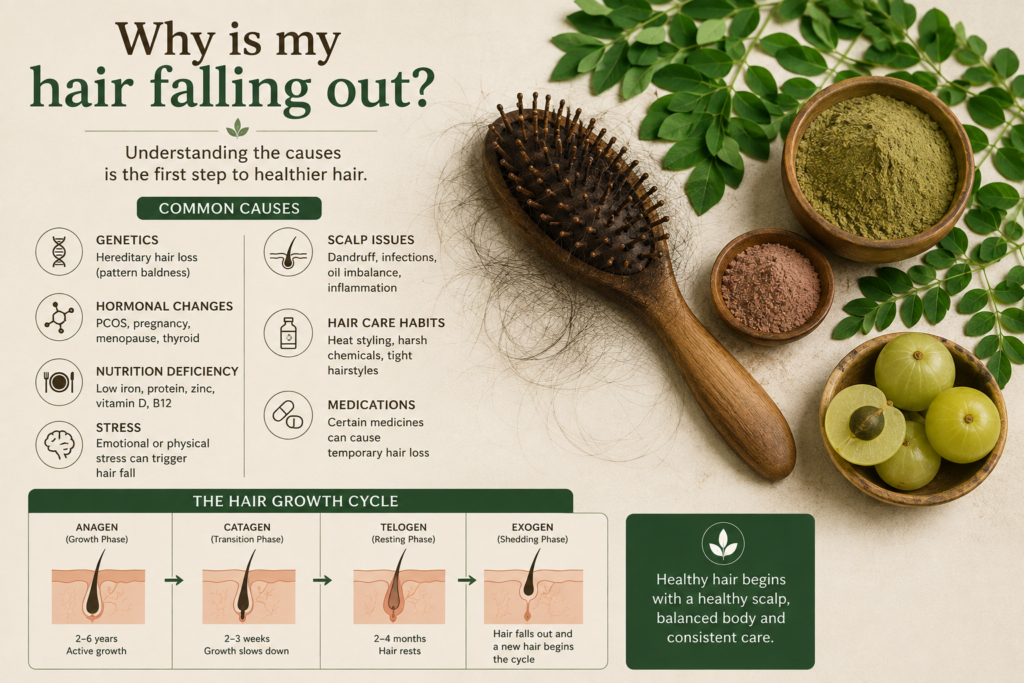
Most people shed somewhere in the range of 50–100 scalp hairs a day as part of the natural hair growth cycle — this is simply old hairs being replaced by new ones and is not a sign of a problem. Noticeably more than that — hair coming out in clumps, a visibly widening centre parting, or thinning you or others can see — is what dermatologists usually mean by “hair loss” as distinct from normal shedding.
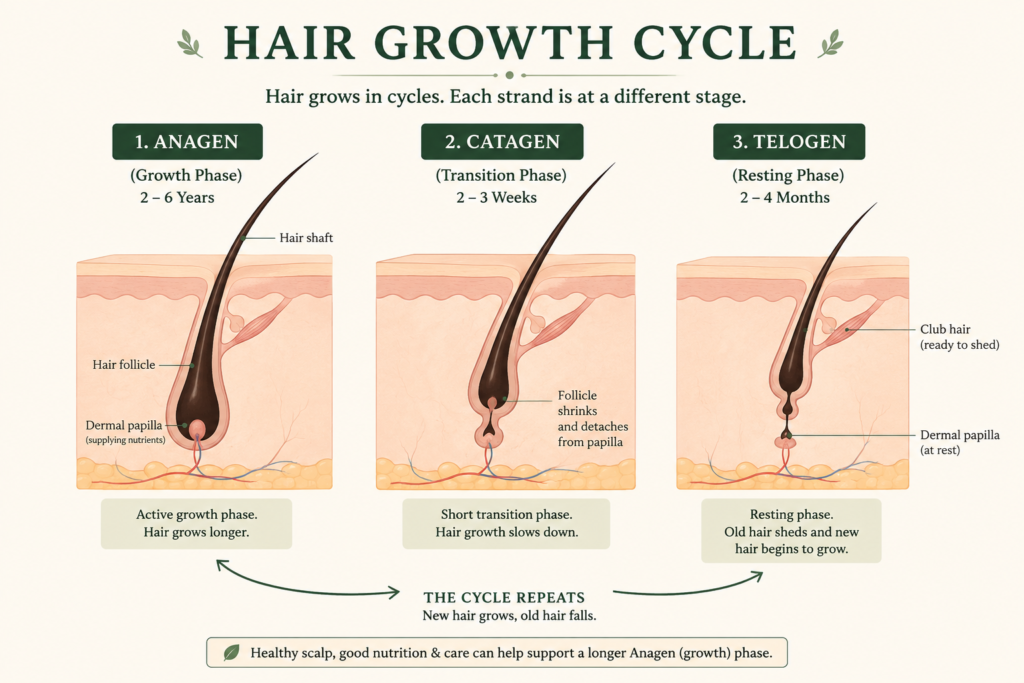
To understand why hair falls out at all, it helps to know the three phases of the hair growth cycle:
- Anagen (growth phase): Around 80–90% of scalp hairs are actively growing at any time, a phase that can last several years.
- Catagen (transition phase): A brief phase where the follicle stops actively growing.
- Telogen (resting/shedding phase): About 10–15% of hairs are “resting” at any time; after roughly 2–4 months in this phase, the hair is shed and replaced by a new growing hair.
Most of the common causes of hair fall come down to a disruption somewhere in this cycle — either too many hairs being pushed into the shedding phase at once, or the growth phase itself shortening over time.
The most common causes of hair fall
1. Telogen effluvium — sudden, diffuse shedding
Telogen effluvium is the medical term for a sharp, temporary increase in hair shedding, usually across the whole scalp rather than in one spot, and it’s the answer most people are actually looking for when they ask why is my hair falling out so suddenly. According to Cleveland Clinic, it happens when a stressor pushes an unusually large share of hairs into the resting (telogen) phase at the same time; because hair takes two to four months to actually fall out after entering that phase, the shedding often shows up two to three months after the triggering event — which is why people are frequently confused about what caused it.
Recognised triggers include:
- High fever, severe infection or major illness
- Major surgery, significant blood loss or physical trauma
- Childbirth (sometimes called telogen gravidarum, typically starting around three months postpartum)
- Significant psychological stress
- Rapid weight loss, crash dieting or very low protein intake
- Thyroid dysfunction (both an underactive and an overactive thyroid can trigger it)
- Starting or stopping certain medications, including some hormonal birth control
- Chronic conditions such as inflammatory bowel disease, liver or kidney disease, and some autoimmune conditions
The reassuring part: telogen effluvium is usually self-limiting. Once the underlying stressor resolves, hair typically regrows over the following months, though chronic or repeated episodes can persist longer and are worth discussing with a doctor.
2. Female pattern hair loss (androgenetic alopecia)
This is a gradual, progressive thinning pattern rather than sudden shedding, and it’s the most common cause of long-term hair thinning in women. It’s driven by a genetic sensitivity to androgens (hormones present in everyone, in different amounts) acting on scalp hair follicles over time, causing hairs to become progressively finer and shorter with each growth cycle.
In women, this usually shows up as diffuse thinning over the centre and crown of the scalp, with the front hairline generally staying intact — unlike the receding hairline pattern more typical in men. As DermNet NZ and other dermatology references note, it’s assessed clinically using scales such as the Ludwig scale, and unlike telogen effluvium, it does not usually reverse on its own; it tends to be progressive without some form of intervention, which is why an early, accurate diagnosis matters.
A minority of women with this pattern also have signs of elevated androgens — irregular periods, acne, or excess facial/body hair — which can point to underlying conditions like PCOS and is worth raising with a doctor rather than assuming it’s “just” hair.
3. Iron stores (ferritin) and diet-related causes
Iron deficiency is one of the most searched-for explanations for hair fall, and the evidence is genuinely more nuanced than most articles let on. A 2022 systematic review and meta-analysis pooling data from 36 studies and over 10,000 women found that women with non-scarring hair loss (telogen effluvium and female pattern hair loss combined) had meaningfully lower ferritin (iron-store) levels than women without hair loss. At the same time, other reviews and clinical commentary point out that the findings across individual studies have been inconsistent, and that iron-deficiency anaemia specifically hasn’t shown as strong or consistent a link — meaning low iron stores can matter even without full-blown anaemia, but iron alone rarely explains hair loss on its own.
Because of this, many dermatologists do check ferritin as part of a hair-loss work-up, particularly in menstruating women, but treat it as one factor among several rather than an automatic explanation.
Other diet-related contributors that are well documented:
- Inadequate protein intake (very low-calorie diets, some fad diets) — hair is largely made of protein, and severe restriction can push follicles into telogen effluvium.
- Zinc and essential fatty acid deficiency — less common, but recognised triggers when intake is very low.
- Vitamin D — some research links low vitamin D to diffuse hair loss, though the relationship isn’t fully settled.
- Biotin (vitamin B7) — this one deserves its own mention, because it’s the most heavily marketed “hair vitamin” despite the weakest evidence base for most people (see below).
4. Does biotin actually help hair fall?
Biotin is popular in hair supplements, but recent evidence reviews are consistent on one point: biotin mainly helps in cases of a genuine biotin deficiency, which is uncommon in people eating a varied diet, since biotin is available in many common foods and is also produced by gut bacteria. Reviews examining the published human research have found the evidence insufficient to recommend biotin supplementation for hair growth in people who are not actually deficient — so if you’re wondering whether a supplement alone explains why your hair is falling out, biotin usually isn’t the answer unless a blood test confirms a real deficiency. It’s not necessarily harmful in reasonable doses, but it isn’t a reliable fix for hair fall caused by stress, hormones, genetics or iron stores.
5. Medical conditions and medications
Thyroid disorders (both hypo- and hyperthyroidism), autoimmune conditions, chronic illness, and hormonal conditions like PCOS can all contribute to hair thinning. So can some medications — this is why doctors often ask about recent changes in prescriptions, birth control, or supplements when evaluating hair loss. This is also why self-diagnosing from a symptom list online has real limits: several of these causes look similar on the surface but need blood tests or a clinical exam to tell apart.
6. Other causes worth knowing
- Alopecia areata — patchy, well-defined bald spots (an autoimmune condition, distinct from the diffuse patterns above) — needs prompt medical evaluation.
- Traction alopecia — thinning at the hairline or temples from tight hairstyles, braids or extensions worn repeatedly.
- Scalp conditions — dandruff, seborrheic dermatitis or psoriasis can contribute to shedding when the scalp is inflamed.
What does the research actually show about hair-care ingredients?
It’s worth separating three different levels of evidence that get blended together online:
- Traditional use: In Ayurveda, several plant ingredients — including Amalaki (Indian gooseberry / Amla, Phyllanthus emblica) — are classified as keshya (hair-benefiting) and have been used for generations in hair-care routines and oils.
- Preliminary/laboratory and animal research: Some laboratory and animal studies on Amla extract have reported effects on hair follicle size and growth-phase duration, which is interesting but doesn’t confirm the same effect in people using a topical or dietary product.
- Human clinical research: A small triple-blind randomised controlled trial (60 women with female androgenetic alopecia, 30 per group) tested an oral Amla fruit preparation against a placebo over 12 weeks and measured hair growth using digital trichoscopy. This is a genuine human clinical study, but it was small, tested a specific oral preparation (not Suvarn Naturals’ product), and its results should be read as preliminary rather than definitive.
What this means practically: research on an ingredient like Amla does not prove that any particular finished product — including Suvarn Naturals Keshya Powder or Amla Powder — has been clinically tested or will reproduce those results. We don’t make that claim, and we’d encourage you to be sceptical of any brand that does.
Moringa (Moringa oleifera) is nutritionally dense — it’s a source of plant protein, iron, and vitamins A, C and E, all of which the body needs for many functions, hair included. But direct human clinical research specifically on moringa and hair growth is limited; its relevance to hair is better understood as “a nutrient-dense food that supports overall nutrition” rather than a proven hair-loss treatment.
Who might find general hair-care and nutrition habits useful
If your hair fall is mild, recent, and tied to something identifiable — a stressful period, a strict diet, a recent illness — then supporting your overall nutrition and being gentle with your hair while your body recovers is a reasonable, low-risk approach. This is also a reasonable time to include nutrient-dense foods and traditional Ayurvedic hair-care ingredients like Amla and Moringa as part of a broader routine, alongside — not instead of — addressing the underlying cause.
Who should be cautious or seek medical evaluation first
- Sudden, patchy hair loss (distinct bald spots) — this needs prompt evaluation, not home remedies.
- Hair loss with scalp redness, itching, burning, flaking or scarring.
- Hair loss alongside fatigue, unexplained weight change, irregular or missing periods, or excess facial/body hair.
- Hair loss that has continued for more than six months without improvement.
- Pregnant or breastfeeding women, or anyone on regular medication, should check with a doctor before starting any new supplement or herbal product, since interactions and appropriate dosing can vary by individual.
- People with known allergies to specific plant ingredients should patch-test topical products and check ingredient lists carefully.
If you’re not sure which category you fall into, that uncertainty is itself a good reason to see a dermatologist rather than guess.
“`html
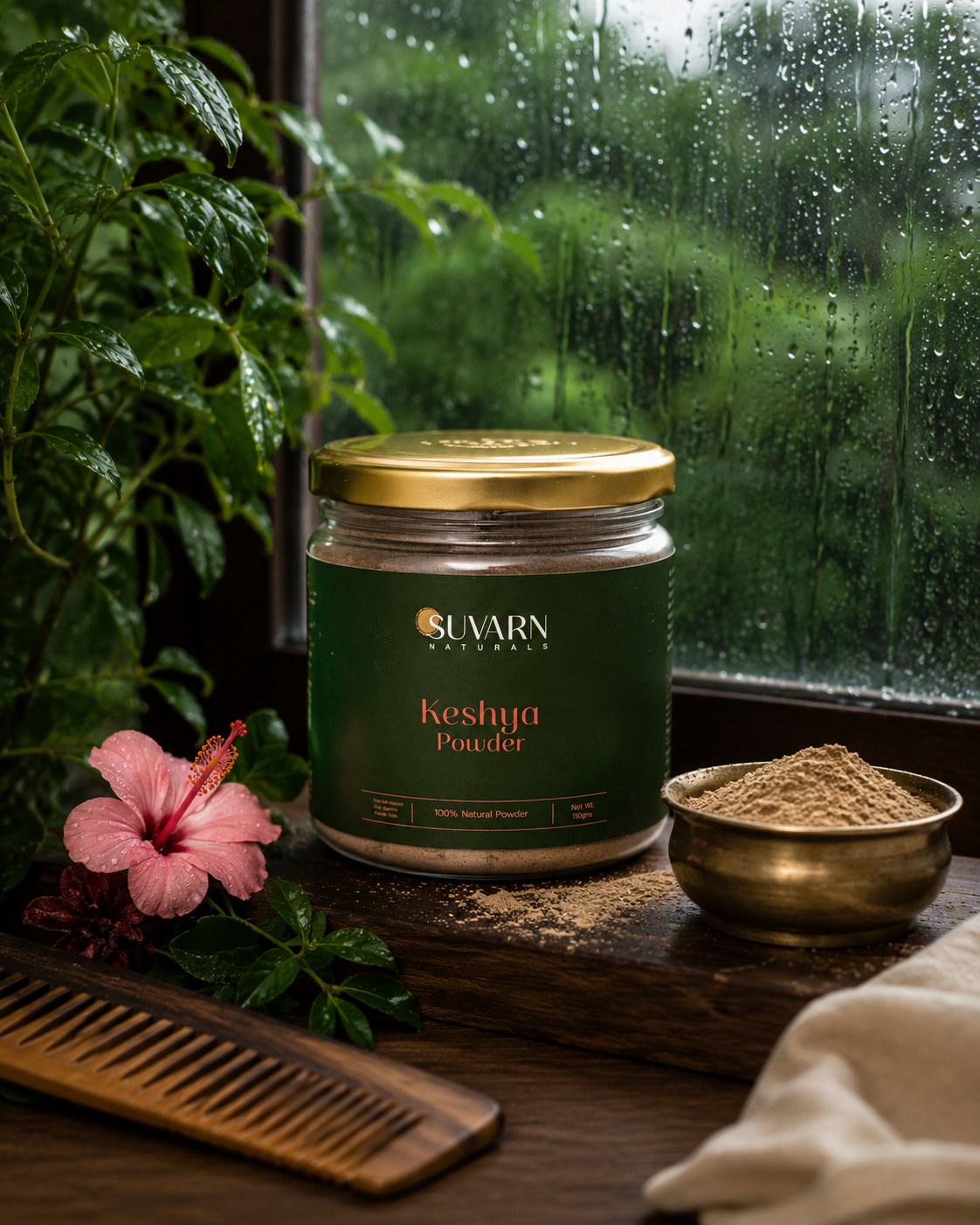
Give Your Hair the Herbal Care It Deserves with Keshya Powder
Crafted with a nourishing blend of traditional Ayurvedic herbs, Keshya Powder is perfect for DIY hair masks and natural hair care routines. Enjoy stronger-looking, softer, and healthier-looking hair with every application.
- ✔ Blend of Premium Ayurvedic Herbs
- ✔ Ideal for DIY Hair Masks & Scalp Care
- ✔ Helps Hair Feel Soft, Healthy & Manageable
- ✔ 100% Pure with No Additives or Preservatives
When to see a doctor
It’s reasonable to see a dermatologist or doctor if you notice any of the following:
- A clear increase in shedding over a short period (more hair than usual on your pillow, in the shower, or in your brush)
- A widening centre parting or visibly reduced hair volume
- Round or oval bald patches, rather than all-over thinning
- Hair loss accompanied by scalp symptoms (redness, itching, scaling, pain)
- Hair loss alongside other symptoms — unexplained fatigue, weight changes, cold intolerance, or menstrual irregularities
- Hair loss that is affecting your confidence or mental wellbeing, even if it seems “mild” — a doctor can confirm what’s normal and rule out anything that isn’t
A doctor will typically take a history, examine your scalp, and may run blood tests (commonly including ferritin/iron studies and thyroid function) or perform a simple “hair pull test” to help identify the type of hair loss and its cause.
Common myths about hair fall
A lot of the confusion around why your hair is falling out comes from myths that get repeated so often they start to sound like fact. Here are the ones worth correcting:
| Myth | What the evidence actually says |
|---|---|
| “Frequent hair washing causes hair loss” | Normal washing doesn’t cause hair loss; hairs that were already in the shedding (telogen) phase simply come out more visibly during washing. |
| “Biotin supplements will fix any hair loss” | Current evidence supports biotin mainly when there’s an actual deficiency, which is uncommon on a varied diet; it isn’t a general fix for hair fall. |
| “If it’s genetic, nothing can be done” | Female pattern hair loss is progressive without intervention, but it’s a well-studied condition with established medical options — a dermatologist can advise on what’s appropriate. |
| “Hair loss from stress means the hair is gone for good” | Telogen effluvium (the stress-linked, diffuse-shedding pattern) is usually temporary and improves once the trigger resolves, though regrowth takes months, not days. |
A simple, evidence-aware daily hair-care routine
None of the following claims to treat medical hair loss — they’re general good-practice habits for hair health:
- Be gentle when hair is wet. Wet hair is more fragile; detangle gradually with a wide-tooth comb rather than pulling through knots.
- Avoid very tight hairstyles worn daily (tight braids, ponytails, buns), which can contribute to traction alopecia over time.
- Support overall nutrition — adequate protein, iron-rich foods, and a varied diet matter more for hair than any single “miracle” ingredient.
- Manage scalp health — a clean, non-irritated scalp is a better foundation for healthy hair growth than any product applied to unhealthy skin.
- Be patient with timelines. Because of the hair growth cycle, it typically takes at least 3–4 months to notice any meaningful change after adjusting diet, stress levels, or a health condition — this is true regardless of which products are used.
A note on Indian climate and routines
Humidity, monsoon dampness and hard water are commonly blamed for hair fall in Indian households, and while they can affect hair texture, frizz and scalp comfort, there isn’t strong evidence that climate alone causes the kind of hair loss discussed above. That said, many Indian households do traditionally use ingredients like Amla and Moringa, taken as a powder mixed into water, milk, smoothies or food, as part of a general wellness and hair-care routine — this is a matter of traditional practice and personal preference rather than a documented medical treatment.
Where Suvarn Naturals products fit in
Suvarn Naturals makes Keshya Powder, Amla Powder and Moringa Powder — herbal and nutritional powders rooted in traditional Ayurvedic hair-care ingredients. We position these as part of a general hair-care and nutrition routine, not as a treatment for hair loss.
Frequently Asked Questions
Is it normal to lose hair every day?
Yes — losing roughly 50–100 hairs a day is part of the normal hair growth cycle and isn’t a sign of a problem on its own.
How long does hair take to grow back after shedding?
For telogen effluvium specifically, visible regrowth often takes three to six months after the trigger resolves, because of how long the hair growth cycle takes.
Can stress alone cause hair loss?
Yes — significant physical or emotional stress is a recognised trigger for telogen effluvium, a temporary, diffuse shedding pattern.
Does iron deficiency cause hair loss?
The evidence shows women with hair loss tend to have lower iron stores (ferritin) on average, but the research is mixed on whether iron deficiency alone causes hair loss, and correcting it isn’t a universal fix. It’s worth discussing with a doctor, particularly if you’re a menstruating woman.
Should I take biotin for hair fall?
Current evidence mainly supports biotin supplementation when there’s an actual biotin deficiency, which is uncommon in people eating a varied diet. It’s not proven to help hair fall from other causes.
Can Amla or Moringa powder stop hair fall?
We don’t make that claim. Amla is traditionally classified in Ayurveda as a hair-benefiting (keshya) ingredient, and some small studies have looked at its effects on hair growth, but this doesn’t establish that any specific product treats hair loss. These ingredients are best understood as part of general hair care and nutrition, not a medical treatment.
Final takeaway
If you’ve been asking “why is my hair falling out,” the honest answer is: it depends — but it’s rarely a mystery once you look at how it’s happening (sudden diffuse shedding vs. gradual thinning vs. patches) and what else is going on with your health. Hair fall has a real, findable cause in most cases. Mild, stress- or diet-related shedding often improves on its own with time and good general nutrition and hair care. Sudden, patchy, or persistent hair loss, or hair loss alongside other symptoms, is worth a proper medical evaluation rather than guesswork.
If you’re building a general hair-care routine alongside addressing the underlying cause, Suvarn Naturals’ Keshya Powder, Amla Powder and Moringa Powder reflect traditional Ayurvedic ingredients used for generations in Indian households — used as part of everyday nutrition and hair care, not as a substitute for medical advice.
This article is for general information and does not replace individual medical advice. If you’re experiencing hair loss that concerns you, please consult a dermatologist or doctor.