
Remove Tan Naturally at Home with Orange Peel: Science + Ayurveda

Published: 02 June 2026 | By Suvarn Naturals Team
TL;DR — Everything You Need in 30 Seconds
Everything you need to know in 30 seconds:
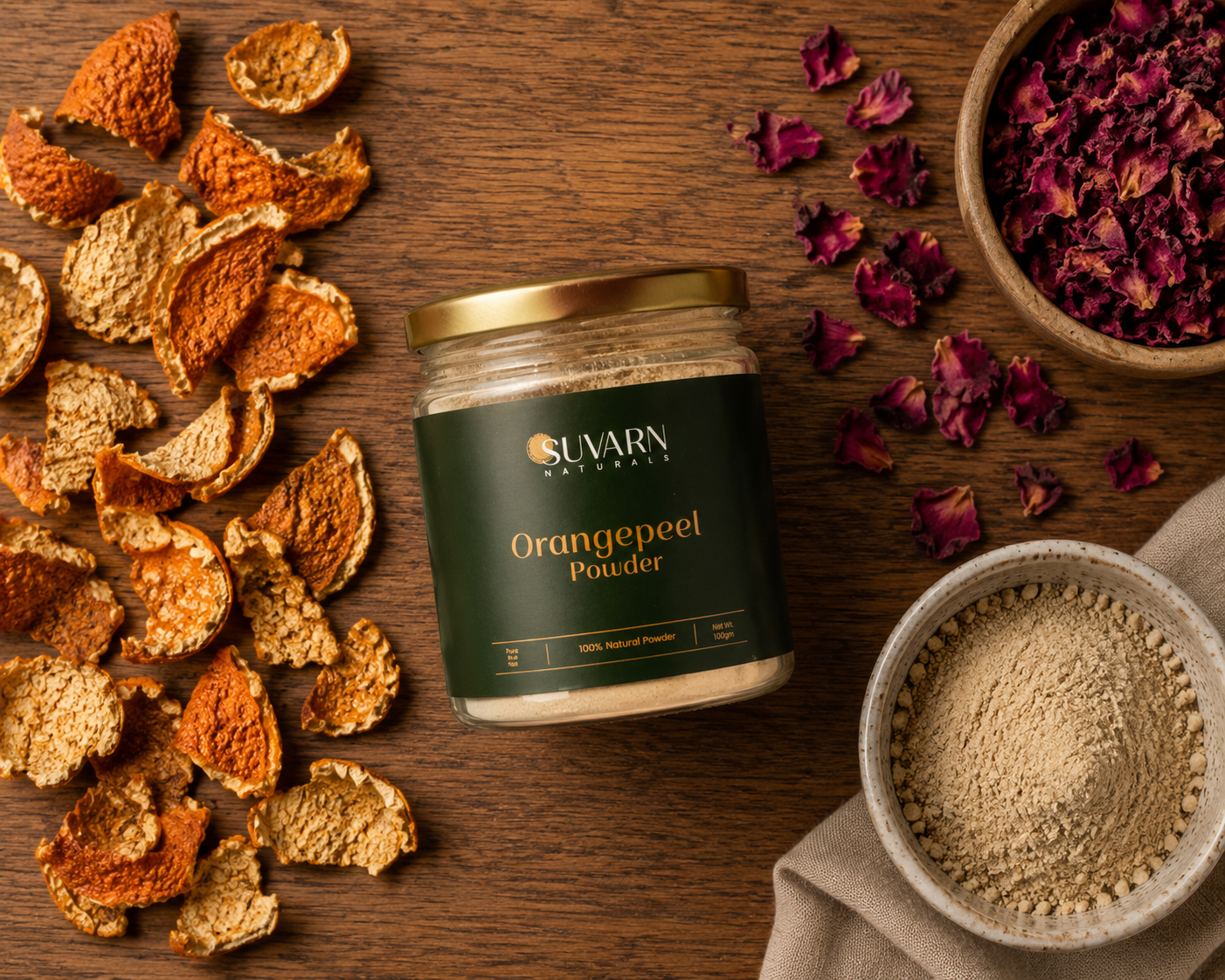
Try Suvarn Naturals Orange Peel Powder — cold-processed, no fillers, no synthetic fragrance.
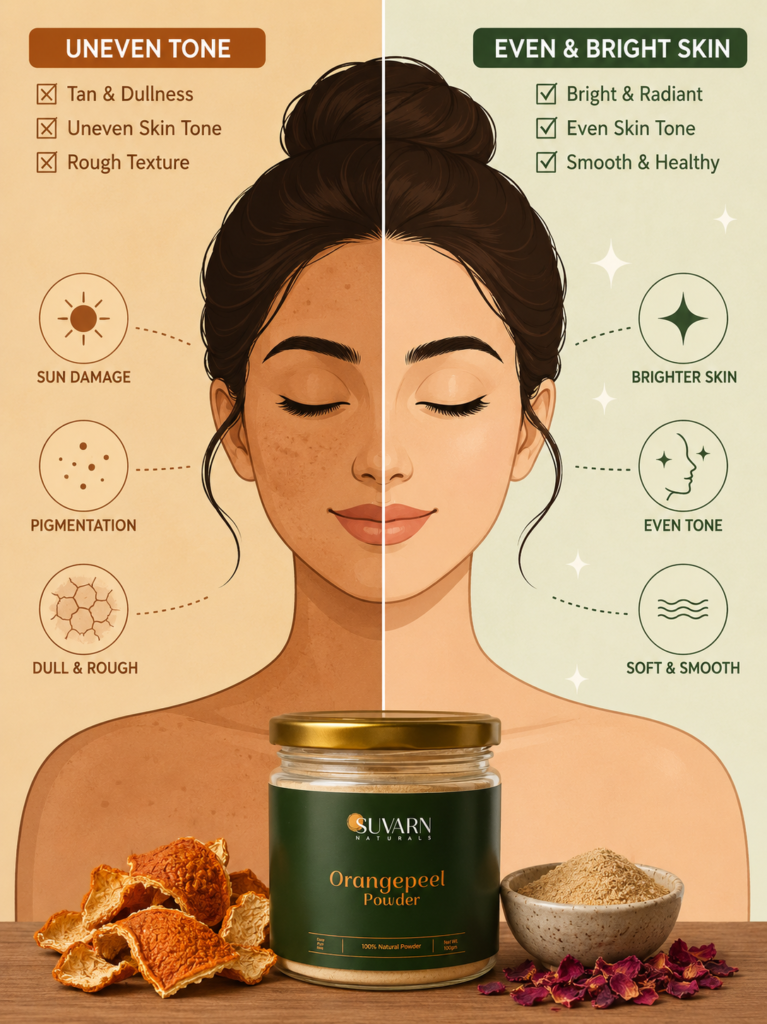
Sun tan = excess melanin triggered by UV rays — it’s skin defence, not damage to fear.
Orange peel powder may support tan removal through Vitamin C, hesperidin, and naringin — which research suggests can inhibit tyrosinase, the enzyme that produces melanin.
Ayurveda has used Narangi (orange peel) as a Kapha-balancing, brightening herb for centuries.
Most home remedies treat only the surface. The 3-minute Suvarn Naturals ritual addresses exfoliation, melanin modulation, and barrier repair — together.
Results typically appear in 3–4 weeks of consistent use, not overnight.
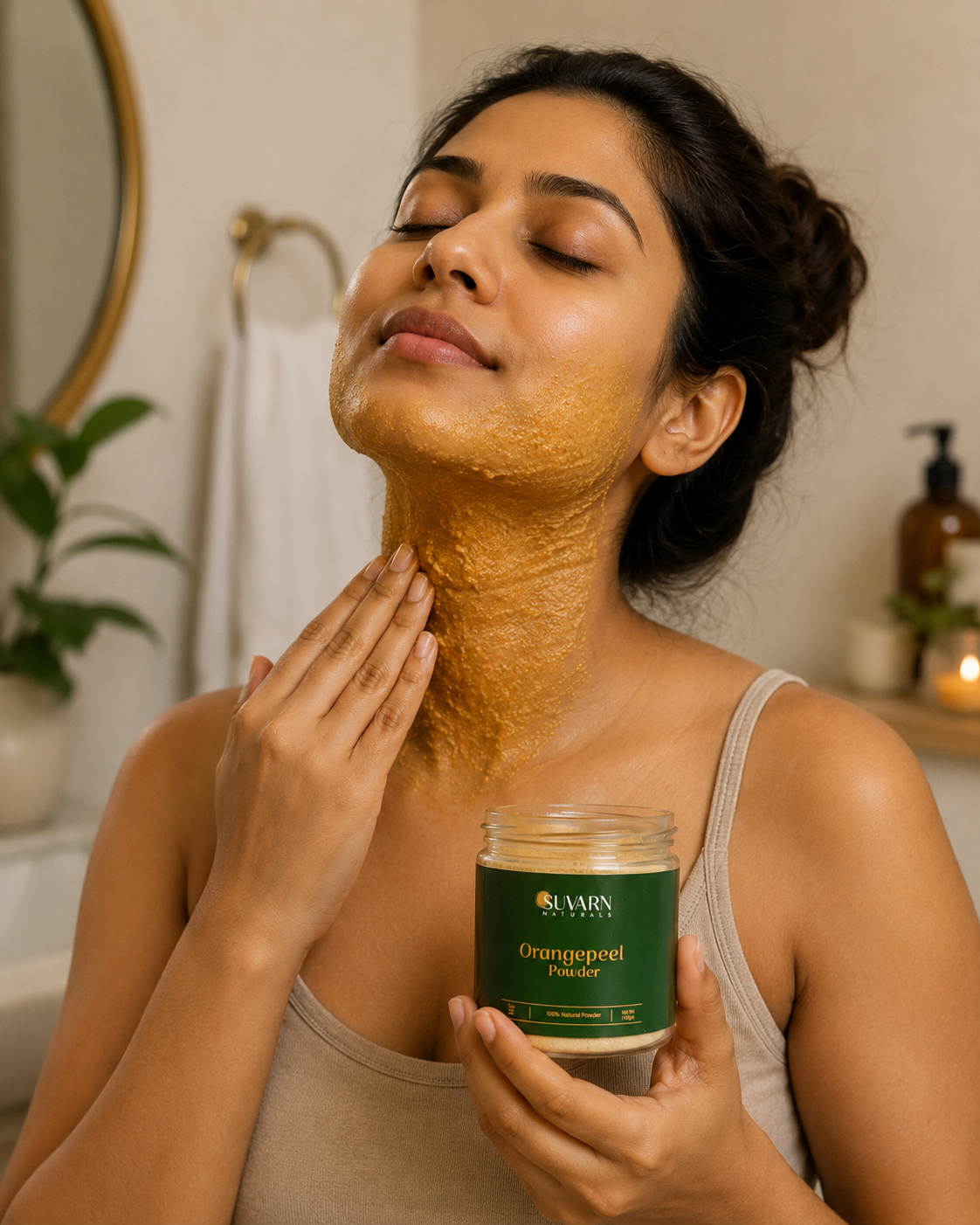
You stepped out for an errand. Then a commute. Maybe a picnic. Now your neck, arms, or cheeks are two shades darker — and you’re Googling ‘how to remove tan naturally at home’ at 11 pm.
You’re not alone. Tan is one of the most common skincare concerns in India, especially for women juggling outdoors, hormones, and limited time.
This guide (published 10 June 2026) gives you the science behind tan formation, the Ayurvedic perspective competitors skip, and a simple ritual centred on an ingredient your grandmother probably used — orange peel. Suvarn Naturals Orange Peel Powder was born from exactly that tradition. More on that below.
What Is Sun Tan — and Why Does Skin Darken?
Sun tan is the skin’s temporary darkening caused by increased melanin production in response to UV radiation. It is a protective response, not a disease. Melanin is made by melanocyte cells and is the same pigment that determines your baseline skin colour.
When UVA rays penetrate the dermis, they stimulate melanocytes to produce more melanin. This extra pigment rises to the surface, making skin appear darker or uneven. UVB rays, meanwhile, damage the outer epidermal layer, causing redness or peeling.
In Ayurveda, tanning — and the dullness that follows — is associated with an aggravated Pitta dosha (heat and inflammation) and sluggish Kapha (poor cell turnover and clogged channels or srotas). The approach, therefore, is not just to ‘bleach’ the surface but to cool excess Pitta and stimulate healthy Kapha renewal.
Key term: Tyrosinase — an enzyme that catalyses the conversion of tyrosine into melanin. Most natural depigmenting agents work by inhibiting this enzyme.
The Science + Ayurvedic Perspective on Orange Peel for Tan Removal
Orange peel powder works through multiple mechanisms — not just one. A 2023 review published in the Journal of Food Chemistry & Nanotechnology (Jaiswal & Gaur) confirmed that orange peel is a valuable source of bioactive compounds including Vitamin C, hesperidin, naringin, and limonene — and that it suppresses tyrosinase activity, reducing melanin synthesis.
Vitamin C (ascorbic acid) in orange peel: donates electrons to halt the oxidation of L-DOPA to melanin, one of the key steps in pigment formation.
Hesperidin + Naringin (flavonoids): provide antioxidant and anti-inflammatory action that may reduce post-UV inflammation, which often worsens tan appearance.
Limonene (essential oil): gently dissolves surface dead cells, assisting exfoliation without the harshness of synthetic scrubs.
Ayurvedic context: Orange peel, known as Narangi Tvak, is classified as tikta (bitter) and kashaya (astringent) in taste — properties that support Pitta pacification and improve bhrajaka agni (the ‘digestive fire’ of the skin responsible for complexion and lustre).
Myth vs Fact
| Myth | What Really Happens | Evidence |
| Lemon juice is the best de-tan remedy | Lemon is acidic (pH ~2) and can disrupt the skin barrier, cause photosensitivity, and worsen pigmentation with sun exposure | Dermatology consensus; avoid undiluted lemon on skin before going outdoors |
| Tan fades in days with any remedy | Melanin takes weeks to turn over naturally. Most remedies speed exfoliation; they cannot remove deep dermal pigment overnight | Skin cell cycle is ~28 days; deeper UVA tan may take 8–12 weeks |
| Natural always means safe for all skin types | Citrus ingredients can trigger contact dermatitis in sensitive skin. Always patch test 24 hours before use | Journal of Clinical & Aesthetic Dermatology; perform patch test on inner arm |
Benefits of Removing Tan Naturally at Home — Especially for Women
1. May Support Melanin Regulation
Vitamin C and flavonoids in orange peel may interfere with tyrosinase activity, potentially reducing new melanin formation with consistent use. For women dealing with hormonal hyperpigmentation (e.g., melasma during PCOS or pregnancy), this gentle approach avoids the irritation that harsh chemical peels can cause.
💡 Quick tip: Mix Suvarn Naturals Orange Peel Powder with cold rose water for a Pitta-cooling mask. Use 3x a week for best results.
2. Gentle Exfoliation Without Microplastics
The natural fibre content and citric acid in orange peel powder gently loosen the outermost layer of dead, tanned cells. Unlike synthetic scrubs with polyethylene microbeads (now banned in many countries), orange peel powder biodegrades fully and does not accumulate in waterways.
💡 Quick tip: Use circular motions for 60 seconds, then rinse with cool water. Avoid scrubbing if skin is sunburned or inflamed.
3. Antioxidant Barrier Support
UV exposure generates free radicals that accelerate skin ageing and deepen pigmentation. Hesperidin and Vitamin C in orange peel may neutralise these free radicals before they cause further cellular damage — supporting a healthier complexion over time.
💡 Quick tip: Apply the mask in the evening, not before sun exposure, to maximise antioxidant benefit without photosensitivity risk.
4. Pore Clarifying Action
Citric acid has mild astringent properties. Women with oily or combination skin often notice enlarged, darkened pores as a secondary effect of sun damage. Regular use of orange peel powder masks may help tighten pores and reduce sebum oxidation, which can contribute to uneven tone.
💡 Quick tip: If you have open comedones, pair with Suvarn Naturals Neem Powder (link below) for an antibacterial boost.
5. Collagen-Stimulating Potential
The same 2023 Jaiswal & Gaur review noted collagen-stimulating properties in orange peel bioactives. Collagen production naturally declines after age 25 and is further suppressed by chronic UV exposure. Supporting collagen synthesis may improve skin firmness alongside evening out tone.
💡 Quick tip: For women over 35, combine with a facial massage using upward strokes to improve lymphatic drainage while the mask works.
Who Should Use Orange Peel Powder for Tan Removal?
This ingredient may be particularly helpful for women experiencing:
- PCOS-related pigmentation: Elevated androgens in PCOS can increase sebum and darken pore areas. Orange peel’s astringent and antioxidant action may support overall complexion clarity.
- Postpartum skin changes: Hormonal shifts post-delivery can leave uneven tone. A gentle, chemical-free option is preferable for breastfeeding women (topical use only; consult your doctor).
- Perimenopausal skin: Declining oestrogen reduces skin cell turnover. Orange peel’s exfoliating and Vitamin C action may complement this need.
- Exam-stress skin: Cortisol spikes trigger inflammation and can worsen pigmentation. Combining a consistent skincare ritual with stress management supports better outcomes.
- Daily commuters and working women: Repeated low-level UV exposure accumulates. A 3x-weekly mask routine may help prevent progressive darkening.
Not ideal if you have:
- Active eczema, psoriasis, or rosacea — citrus can aggravate inflammation.
- Open wounds, sunburn, or post-procedure skin — wait until skin heals.
- Known citrus allergy — perform a 24-hour patch test on the inner arm before full application.
How to Use Orange Peel Powder to Remove Tan at Home — Step by Step
There is no single ‘correct’ way. Choose the format that suits your routine:
Format 1: Basic De-Tan Mask (Beginner)
- Mix 1 tsp Suvarn Naturals Orange Peel Powder + 1 tsp raw honey + enough rose water to form a paste.
- Apply evenly on clean face, neck, and arms. Avoid eye area.
- Leave for 15–20 minutes. Do not let it dry to a crack — mist with rose water if needed.
- Gently massage in circular motion for 1 minute before rinsing with cool water.
- Pat dry. Follow with a light moisturiser.
- Frequency: 2–3 times per week.
Format 2: Brightening Body Scrub
Mix 2 tsp orange peel powder + 1 tsp besan (gram flour) + milk or curd. Use in the shower on tanned arms, legs, and neck. Rinse after 5–7 minutes of gentle circular scrubbing.
Format 3: Overnight Spot Treatment
Mix a small amount of orange peel powder with raw aloe vera gel. Apply only on stubborn tanned patches (knuckles, elbows, forehead line). Leave overnight. Wash off in the morning. This approach is not recommended for full-face use as leave-on citrus can occasionally cause sensitivity.
Dos and Don’ts
| ✅ Do | ❌ Don’t |
| Patch test 24 hours before first use | Apply on sunburned or broken skin |
| Use in the evening to avoid photosensitivity | Mix with lemon juice and go outdoors |
| Follow with SPF 30+ every morning | Expect results in 3–5 days — give it 3–4 weeks |
| Store powder in a cool, dry, airtight container | Use if you have a known citrus allergy |
| Combine with rose water for sensitive skin | Scrub vigorously — gentle circular motion only |
The 3-Minute Orange Peel Ritual to Remove Tan Naturally at Home
Most de-tan tutorials focus on one action: exfoliate. This ritual adds two more: melanin modulation and barrier repair — the combination that actually produces a visible change over weeks.
Best time: Evening, after cleansing. This avoids photosensitivity and lets active compounds work during skin’s natural overnight repair cycle.
What You Need
- 1 tsp Suvarn Naturals Orange Peel Powder
- ½ tsp Suvarn Naturals Rose Powder (for anti-inflammatory + brightening support)
- 1 tsp raw honey (humectant + antimicrobial)
- Rose water (to bind and cool)
- 1 tsp plain curd (optional — lactic acid for gentle AHA exfoliation)
Steps
- Cleanse face with a gentle cleanser. Pat dry. Remove all makeup and SPF residue — this step is critical. Ingredients cannot penetrate through sunscreen.
- Combine orange peel powder, rose powder, honey, and enough rose water to form a smooth paste.
- Apply in upward strokes from neck to forehead. Cover tanned areas evenly. Skip the immediate eye contour.
- Set a timer for 15 minutes. Relax. Drink water. This is your skin’s reset window.
- With slightly wet fingertips, massage the mask in circular motions for 60 seconds before rinsing. This is when exfoliation happens.
- Rinse with cool (not cold, not hot) water. Finish with a light moisturiser.
Pro tip: Mixing Suvarn Naturals Orange Peel Powder with our Rose Powder amplifies both brightening and anti-inflammatory benefits. Rose (Rosa damascena) contains anthocyanins that support skin barrier repair after UV exposure — making it the ideal companion ingredient for this ritual.
Orange Peel Powder vs Alternatives — Which Is Right for You?
| Option | Ease of Use | Time to Results | Skin Type Fit | PCOS-Friendly | Cost |
| Suvarn Naturals Orange Peel Powder | Very Easy | 3–4 weeks | Most skin types (patch test) | Yes — gentle, no hormonal disruptors | Affordable |
| Generic loose orange peel powder | Moderate (quality varies) | Unpredictable | Depends on processing | Uncertain — may contain additives | Cheaper but inconsistent |
| Vitamin C serum (synthetic) | Easy | 2–6 weeks | All types (check concentration) | Generally yes | Moderate to expensive |
| Chemical de-tan peel (salon/clinic) | Requires professional | 1–3 sessions | Not for sensitive skin | Avoid if hormonal sensitivity | Expensive |
| DIY lemon + sugar scrub | Easy | Variable | Not for dry or sensitive skin | Caution — photosensitivity risk | Very cheap |
Side Effects and Precautions
Orange peel powder is generally well tolerated, but transparency matters:
- Photosensitivity: Citrus compounds (especially limonene and bergapten in some citrus varieties) can increase UV sensitivity. Always use this mask in the evening and apply broad-spectrum SPF the following morning.
- Contact dermatitis: A small percentage of people are sensitive to citrus. A 24-hour patch test on the inner arm is non-negotiable before the first use.
- Stinging or tingling: Mild tingling is normal. Burning, redness, or swelling means rinse off immediately and discontinue.
- Pregnancy and breastfeeding: Topical use is generally considered safe, but consult your doctor before starting any new skincare routine during pregnancy.
- Drug interactions: No significant topical interactions are currently documented. If you are on photosensitising medications (e.g., certain antibiotics or retinoids), consult your dermatologist before adding citrus-based topicals.
When to see a doctor: If your tan has not improved after 8–12 weeks of consistent home care, or if you notice irregular dark patches, sudden changes in moles, or skin that feels painful — consult a dermatologist. Some conditions such as melasma, Addison’s disease, or medication-induced hyperpigmentation need medical evaluation.
Myths and Mistakes Women Make When Trying to Remove Tan at Home
Myth 1: ‘Results in 5 minutes’
Every search result promises ‘5-minute tan removal.’ It sells clicks — not results. Melanin that took weeks to accumulate cannot be reversed in minutes. What is happening in 5 minutes is surface-level hydration making skin temporarily appear brighter. Real de-pigmentation requires 3–4 weeks of consistent use. Set realistic expectations and stay consistent.
Myth 2: ‘Lemon juice is the best natural bleach’
Lemon is the go-to recommendation on almost every competitor article. Here’s what they don’t mention: undiluted lemon juice (pH ~2) can disrupt the skin barrier, cause chemical burns in sensitive skin, and significantly increase photosensitivity. Applying it before going outdoors — as many blogs recommend — can worsen pigmentation, not improve it. Orange peel powder, by contrast, is pH-neutral when mixed with water and does not carry the same phototoxicity risk.
Myth 3: ‘The more you scrub, the faster it fades’
Over-exfoliation damages the skin barrier, triggers inflammation, and can actually increase melanin production as a defence response — making tan worse. Use a gentle 60-second massage motion, 2–3 times a week maximum.
Myth 4: ‘Tan only affects the face’
Many women focus only on their face while ignoring the neck, hands, and V-zone of the chest — which are often equally or more exposed. A consistent body routine using an orange peel powder scrub can address full-body tan accumulation.
Myth 5: ‘You don’t need SPF if you use natural remedies’
This is the most dangerous myth. Natural ingredients can support tan fading. They cannot prevent new UV damage. Daily SPF 30+ (even indoors near windows) is non-negotiable for any de-tan routine to hold its results.
Notes from the Suvarn Naturals Founder
While exploring traditional skincare ingredients, we noticed that orange peel was one of the most commonly used ingredients in homemade beauty routines across India. Instead of being discarded, dried orange peel was transformed into face packs and skincare blends that people used for generations.
That observation inspired us to create Suvarn Naturals Orange Peel Powder — but we wanted to do it properly.
In our process, we cold-dry the peels at controlled temperatures. Heat processing destroys Vitamin C and degrades hesperidin — two of the key actives you want. We test every batch for moisture content to ensure a shelf life that doesn’t depend on artificial preservatives.
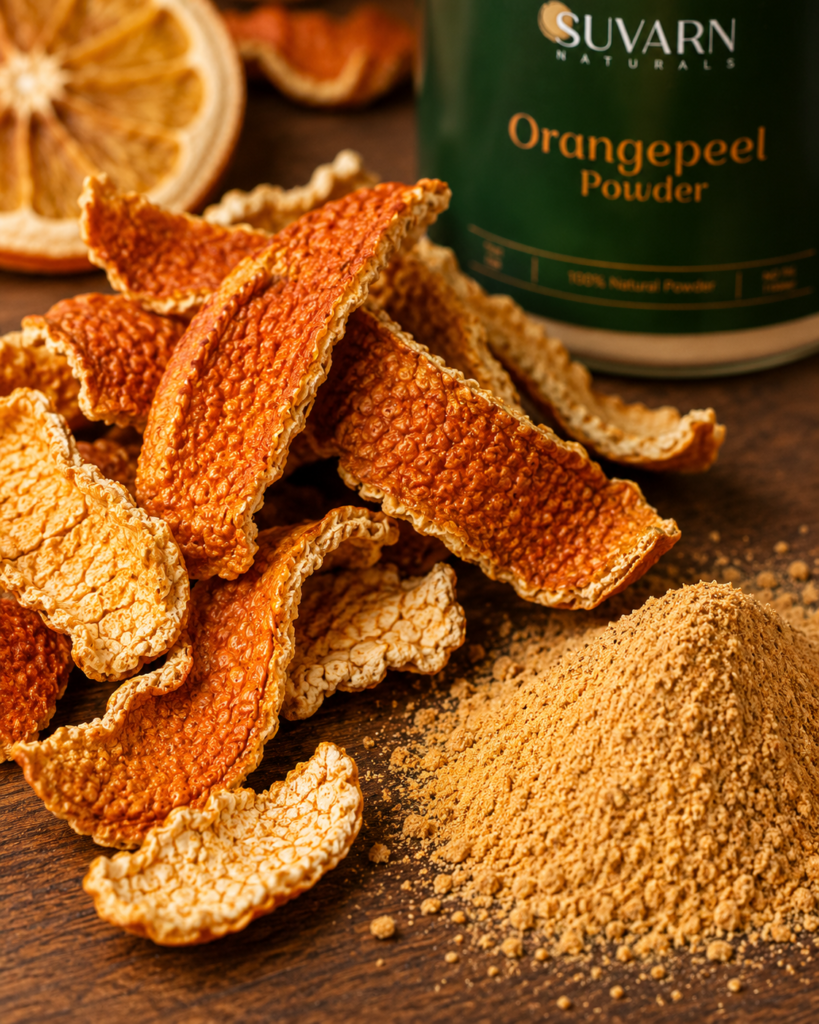
The texture is fine — not gritty like commercial scrubs, not too powdery that it clumps. The colour is a natural warm orange-yellow. The smell is fresh citrus, nothing added. If your orange peel powder smells ‘orange-flavoured’ in a synthetic way, that’s a red flag.
We source from farms that sun-dry naturally where possible. No bleaching of the powder. No synthetic fragrance. No fillers. What you get is exactly what generations of Indian households used — just cleaned, tested, and consistently dried for you.
Try Suvarn Naturals Orange Peel Powder → suvarnnaturals.com/product/orange-peel-powder/
Frequently Asked Questions
1. How long does it take to remove tan naturally at home?
For surface-level tan (1–2 weeks of sun exposure), consistent use of an orange peel mask 3x per week may show visible improvement in 3–4 weeks. Deeper or older tan may take 8–12 weeks. Skin’s natural cell cycle is approximately 28 days — no home remedy can bypass this biology.
2. Can I use orange peel powder daily?
Daily use is not recommended. The exfoliating action of orange peel powder, used too frequently, can over-strip the skin barrier. Twice to three times per week is the effective and safe frequency. On other days, focus on hydration and SPF.
3. Is orange peel powder safe for sensitive skin?
It can be — with care. Use a smaller quantity (½ tsp), mix with plain yogurt or aloe vera gel instead of rose water for extra buffering, and always patch test 24 hours before full application. Avoid if you have active rosacea or eczema.
4. Can women with PCOS use orange peel powder?
Yes. Orange peel powder is a gentle, hormone-free topical ingredient. It does not contain phytoestrogens or hormonal disruptors. For PCOS-related hyperpigmentation (often on the neck and underarms), it may support gradual brightening alongside medical management.
5. Can I use orange peel powder to remove tan from my hands and arms?
Absolutely. The body scrub format (Format 2 in the How to Use section above) is specifically designed for broader areas. Mix with besan and curd and use 2–3 times per week in the shower for hands, arms, and legs.
6. What’s the difference between store-bought orange peel powder and Suvarn Naturals?
Processing method matters significantly. Heat-dried or bleached powders lose most of their Vitamin C content. Cold-processed powders like Suvarn Naturals preserve bioactive compounds. Look for natural colour (warm yellow-orange), fresh smell, and no added fragrance or preservatives on the ingredient list.
7. Can I use orange peel powder at night and go out in the sun the next morning?
Yes — in fact, that is the recommended approach. Using the mask at night avoids any daytime photosensitivity risk. Apply SPF the following morning before stepping outdoors. This is the safest protocol for any citrus-based skincare.
8. How do I store orange peel powder to keep it effective?
Store in a cool, dry place in an airtight container — away from direct sunlight and moisture. Avoid using a wet spoon to scoop powder from the jar. Shelf life is typically 12–18 months if stored correctly. Discard if it clumps, smells stale, or changes colour significantly.
9. Can I mix orange peel powder with rose water only — no other ingredients?
Yes. Orange peel powder + rose water is the simplest effective formula. It is ideal for oily or acne-prone skin where you want to avoid heavy ingredients like honey or curd. Apply, wait 15 minutes, massage gently, and rinse.
10. What should I do after using an orange peel mask?
Always follow with a light, fragrance-free moisturiser to seal in hydration after exfoliation. In the morning, apply a broad-spectrum SPF 30 or higher — this is the single most important step to protect de-tanned skin from re-tanning.
Final Takeaway
Removing tan naturally at home is entirely possible — but it requires the right ingredient, the right method, and realistic expectations. Orange peel powder offers a science-backed, Ayurveda-aligned approach that addresses melanin modulation, gentle exfoliation, and antioxidant support in one simple step.
The key is consistency: 3x a week, for at least 4 weeks, combined with daily SPF. That is the formula that works. No expensive treatments. No harsh chemicals. Just an ingredient your grandmother trusted, now cold-processed and tested for you.
Ready to start? Explore Suvarn Naturals Orange Peel Powder at suvarnnaturals.com/product/orange-peel-powder/ — and browse our full range of single-ingredient herbal powders at suvarnnaturals.com/shop/
