
Heal Summer Hair Problems with Natural Remedies: What Actually Works, According to Ayurveda

Published: 24 May 2026 | By Suvarn Naturals Team
TL;DR — Quick Summary
All four ingredients are available as pure powders from Suvarn Naturals →
Summer triggers excess Pitta dosha — this drives scalp inflammation, hair fall, and frizz.
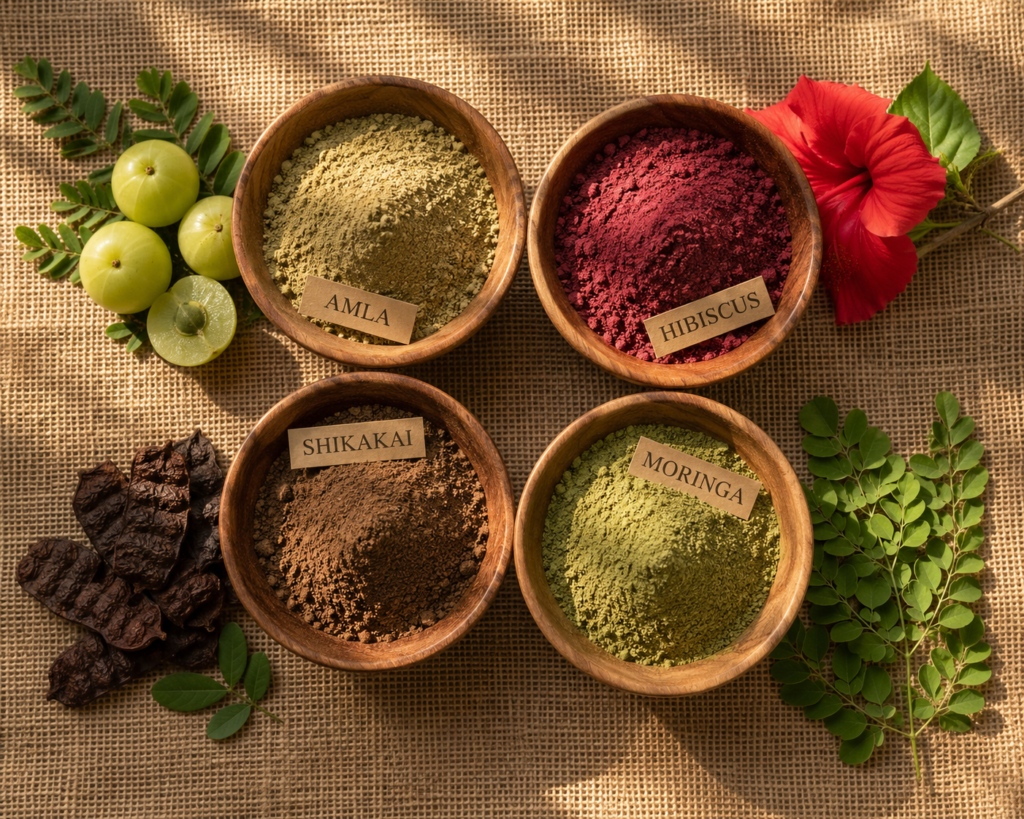
Amla (Vitamin C + tannins), Hibiscus (anthocyanins), Shikakai (saponins), and Moringa (zinc + amino acids) are the four botanicals with the most evidence for summer hair care.
UV exposure and sweat together strip the scalp’s acid mantle — cooling, clarifying herbs help restore it.
Most products mask symptoms; the remedies here address the root cause (scalp environment + nutrient delivery).
A 20-minute weekly pre-wash ritual using these powders may visibly reduce hair fall in 6–8 weeks.
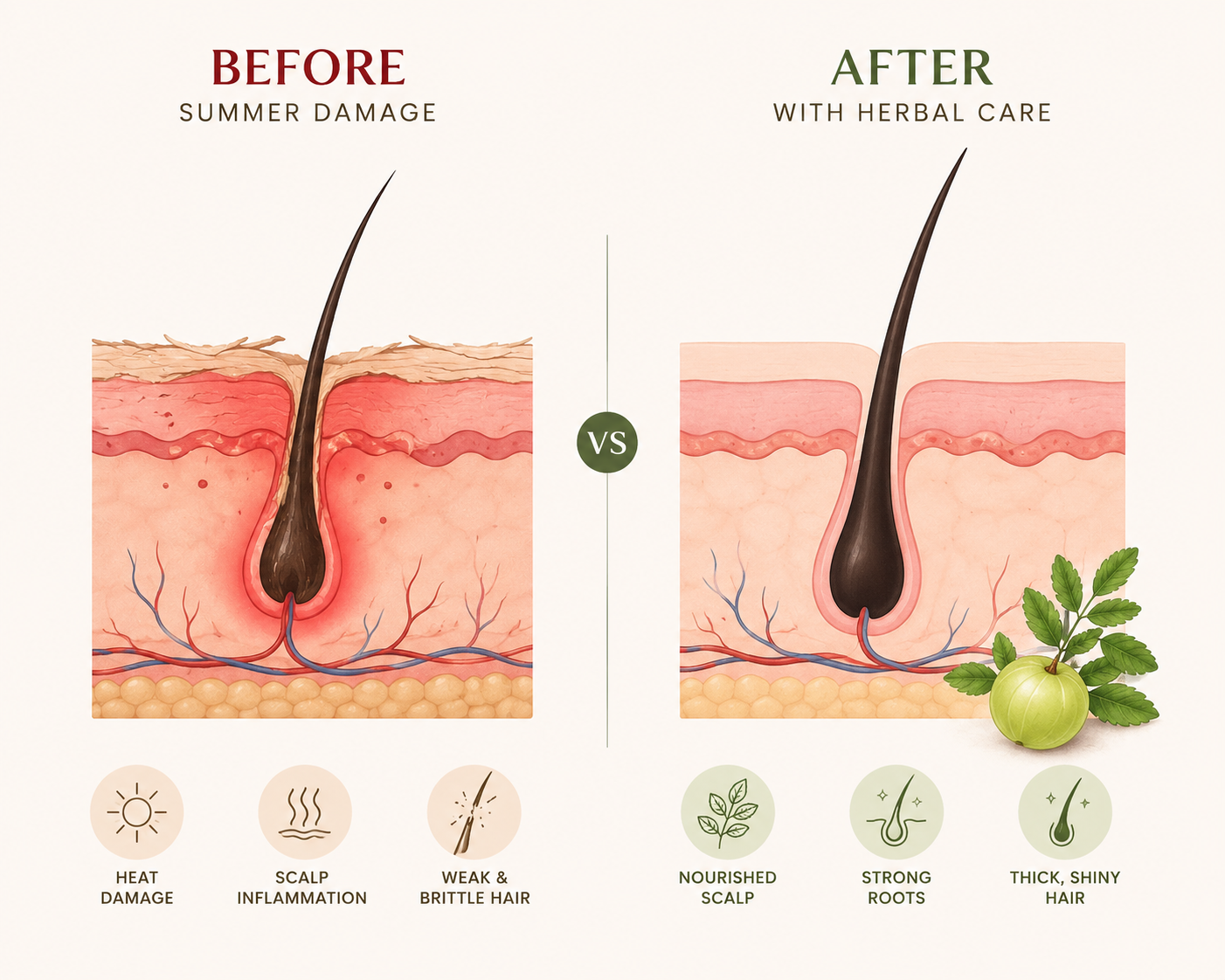
It’s May, and your hair already knows it. The hairline that was fine in March is now dotting your pillow. The ends that survived winter are now straw. You’ve tried switching shampoos. Nothing helps.
Here’s the thing — the problem isn’t your shampoo. It’s the season. Summer creates a specific cocktail of stressors for your scalp: UV radiation, excessive sweating, hard water, and hormonal shifts all hit at once. And most commercial solutions are designed to sell you a product, not explain the biology.
This guide — updated 23 May 2026 — covers the most effective summer hair problems natural remedies backed by both Ayurvedic tradition and recent research. You’ll also find a founder’s note from the Suvarn Naturals team on what they discovered while formulating these blends.
What Are Summer Hair Problems — and Why Do They Get Worse Every Year?
Summer hair problems are a cluster of scalp and strand issues triggered by heat, UV exposure, humidity, and sweat. The most common: seasonal hair fall, scalp inflammation, frizz, dryness, and dandruff. Natural remedies address these at the root — literally — rather than coating the surface.
In Ayurvedic medicine, this is understood as an aggravation of Pitta dosha — the fire-water energy that governs heat, metabolism, and inflammation in the body. When Pitta rises in summer (as it naturally does), it manifests on the scalp as excess oil, irritation, premature greying, and hair fall.
The Sanskrit term is Khalitya (hair fall) linked to Pitta-Rakta dushti — a vitiation of the blood’s quality by heat. Modern science supports this: elevated scalp temperature has been shown to increase sebum oxidation and disrupt the follicular microbiome, both of which accelerate hair shedding.1
Key botanical allies in Ayurveda for summer hair:
— Amalaki (Amla / Phyllanthus emblica) · rich in ellagitannins and Vitamin C
— Japapushpa (Hibiscus / Hibiscus rosa-sinensis) · anthocyanins + mucilage
— Saptala (Shikakai / Acacia concinna) · natural saponins
— Shigru (Moringa / Moringa oleifera) · zinc, amino acids, quercetin
The Science and Ayurvedic Perspective — Including the Myth We Need to Retire
Ayurveda and modern trichology agree on one thing: healthy hair starts with a healthy scalp environment. Cooling, anti-inflammatory botanicals reduce Pitta-driven inflammation while restoring the scalp’s acid mantle — the slightly acidic barrier that keeps follicles protected and moisturised.
A 2023 review in the Journal of Ethnopharmacology confirmed that Hibiscus rosa-sinensis extract showed statistically significant promotion of hair follicle proliferation and inhibition of 5-alpha-reductase — an enzyme linked to androgenic hair loss.2 Meanwhile, Amla’s ellagic acid has demonstrated anti-inflammatory effects on keratinocytes in controlled studies.3
The Pitta connection: In Ayurvedic Tridosha theory, Pitta governs the liver, blood, and skin. When aggravated by summer heat, it “burns” the root of the hair (the kesha muladhara), weakening the follicle’s grip. Cooling herbs like Amla, Brahmi, and Hibiscus pacify this by reducing both internal and topical heat.
Now — the myth everyone keeps repeating.
| Common Myth | What the Evidence Shows | The Ayurvedic View |
|---|---|---|
| “Oiling daily in summer prevents hair fall.” | Heavy oiling in humid heat can clog follicles, increase fungal growth, and worsen dandruff. A 2022 study found mineral oil occlusion raised scalp temperature by 1.8°C — enough to impair follicle cycling.4 | Ayurveda recommends shiroabhyanga (oil massage) 1–2x/week, not daily — and specifically with light, cooling oils like coconut or sesame in summer. |
| “Hair fall in summer is always about deficiency.” | Seasonal hair fall (telogen effluvium) is a well-documented biological rhythm. Hair follicles enter telogen (resting) phase in high heat independently of nutrition. Supplements alone rarely reverse it. | Pitta aggravation affects the entire dhatu (tissue) chain. Localised scalp care + internal cooling through diet are both needed. |
| “Natural remedies take too long to work.” | Research shows herbal hair masks used consistently for 6–8 weeks produce measurable reductions in hair fall. Synthetic ingredients like minoxidil also take 3–6 months for visible results — the timeline is similar. | Ayurveda focuses on nidana parivarjana (removing the cause) — which is inherently a gradual, sustainable process. Patience is the protocol. |
Benefits of Summer Hair Problem Natural Remedies — Especially for Women
The right combination of summer hair remedies may support reduced seasonal hair fall, a calmer scalp, better moisture retention, and stronger strands from root to tip. Each botanical addresses a different part of the summer damage cycle.
1. Amla Powder — Scalp Cooling + Collagen Support
Amla is one of the richest plant sources of Vitamin C — containing up to 20x more than oranges by weight. Topically applied, it may support collagen synthesis in the dermis around the hair follicle, which keeps the follicle anchored during periods of high shedding. It also acts as a natural Rasayana (rejuvenative tonic) that pacifies Pitta from the inside when consumed.
For women dealing with hormonal fluctuations (PCOS, postpartum, perimenopause), Amla’s adaptogenic properties may help moderate the cortisol spikes that trigger stress-related hair fall.
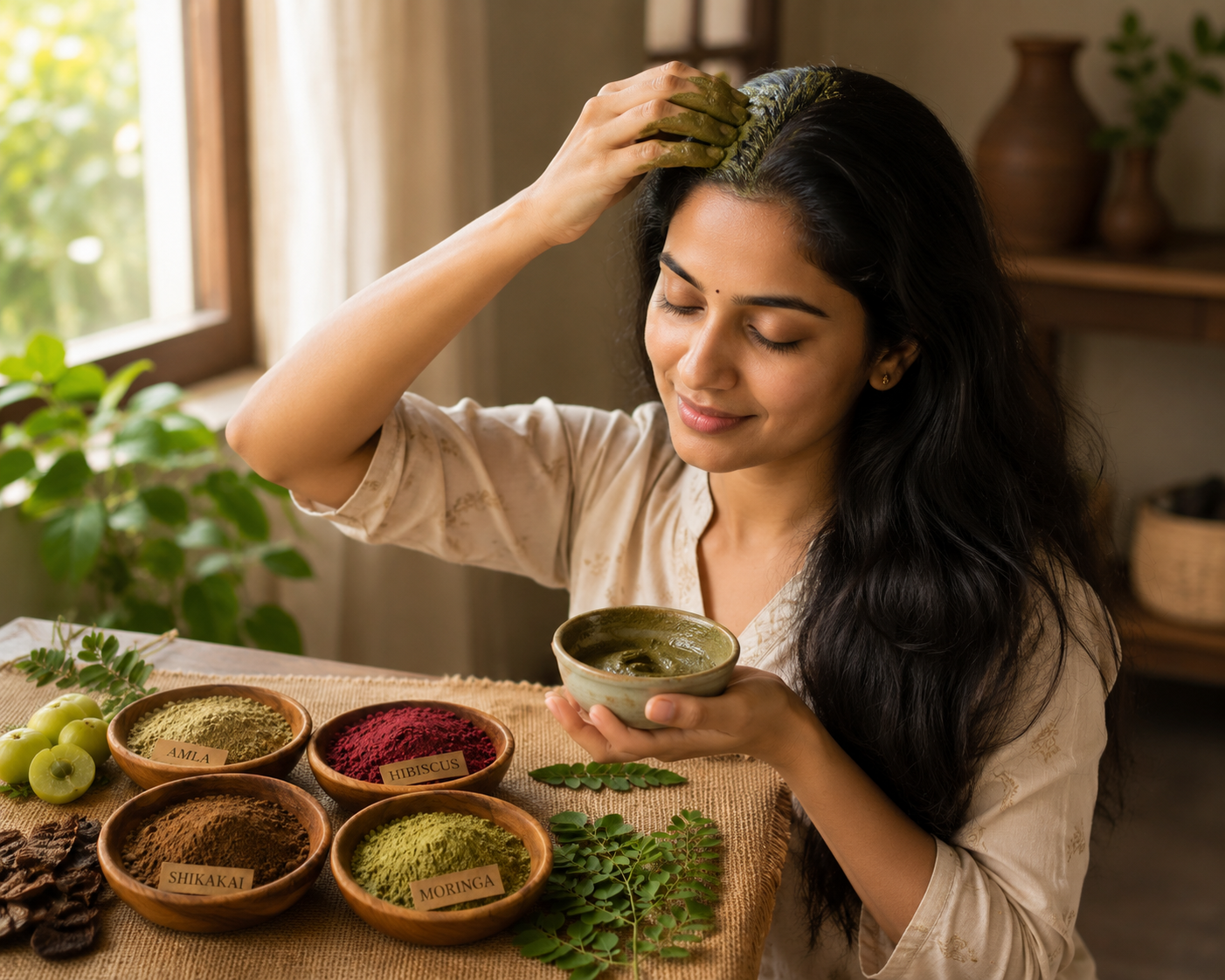
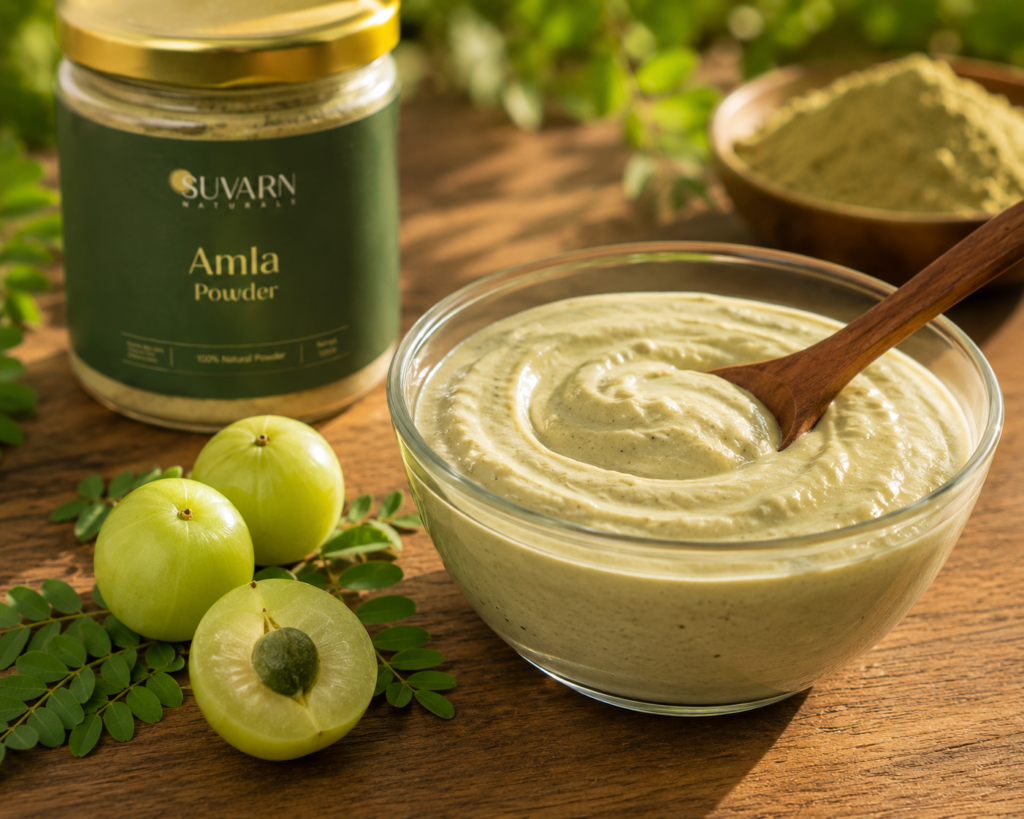
Quick tip: Mix 2 tsp Suvarn Naturals Amla Powder with cold-pressed coconut oil. Apply to the scalp 30 mins before washing. The chill of the mix itself is soothing in summer.
2. Hibiscus Powder — Follicle Stimulation + Moisture Lock
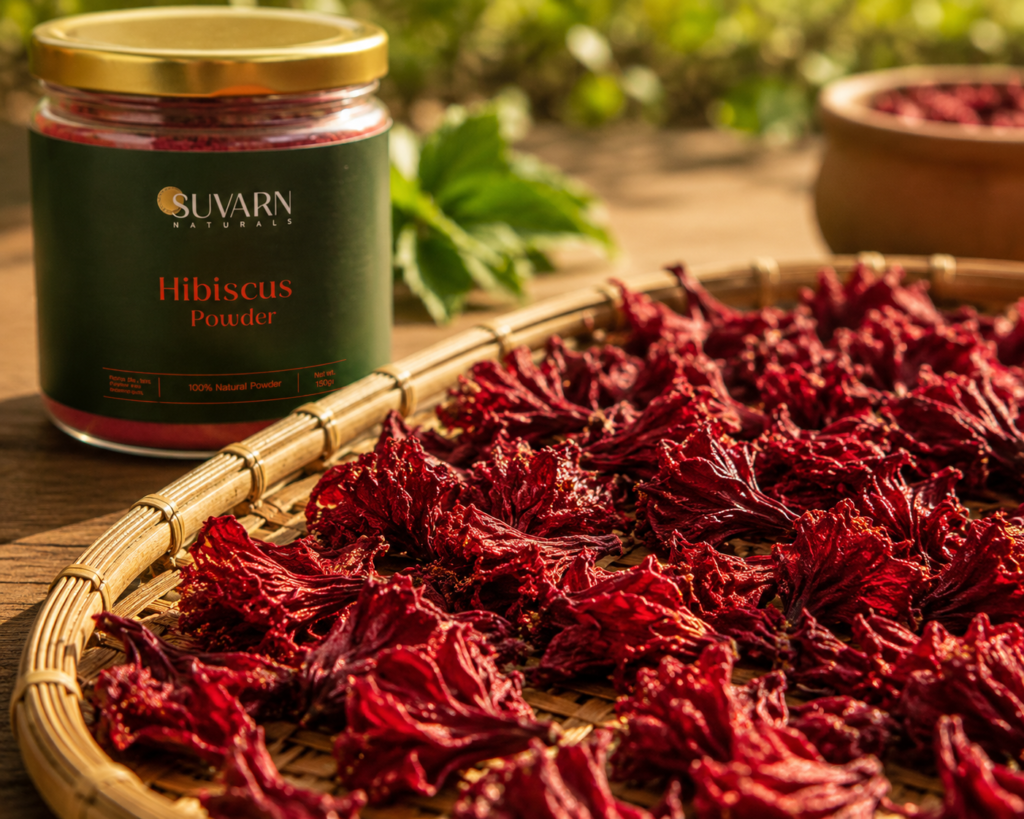
Hibiscus is rich in anthocyanins — plant pigments with strong antioxidant activity that may protect hair follicles from UV-induced oxidative stress. Its mucilage content acts as a natural conditioner that detangles without stripping the scalp’s acid mantle.
For women, Hibiscus’s mild 5-alpha-reductase inhibiting activity (shown in cell-culture studies) is particularly relevant — this enzyme converts testosterone to DHT, which is implicated in hormonal hair loss seen in PCOS.
Quick tip: Mix Hibiscus Powder with plain yoghurt for a naturally conditioning hair mask. The lactic acid in yoghurt gently exfoliates the scalp while Hibiscus conditions.
3. Shikakai Powder — Gentle Cleansing Without pH Disruption
Shikakai’s natural saponins cleanse the scalp without stripping it — unlike most shampoo surfactants which have a high pH (7–9) that can leave the scalp alkaline and vulnerable. A healthy scalp sits at pH 4.5–5.5. Shikakai maintains this.
In summer, sweat and pollution accumulate faster. Shikakai allows more frequent washing without the “overstripped” feeling that leads many women to over-oil — and then overcleanse again, creating a damaging cycle.
Quick tip: Combine Suvarn Naturals Shikakai Powder with water to make a paste, apply to roots, and rinse with cool water. Works as a complete shampoo replacement 2–3x/week.
4. Moringa Powder — Zinc, Amino Acids, and Internal Nutrition
Moringa contains all 9 essential amino acids — the building blocks of keratin, the protein your hair is made of. It’s also a notable source of zinc, which plays a key role in the hair growth cycle and in sebum regulation. Zinc deficiency is strongly associated with telogen effluvium (seasonal hair fall).
Research suggests Moringa’s quercetin content may also help reduce scalp inflammation — particularly relevant for women dealing with seborrheic dermatitis that worsens in summer heat.
Quick tip: Add 1 tsp of Suvarn Naturals Moringa Powder to your morning smoothie or warm water. Internal nutrition supports the hair growth cycle from within.
Who Should Use These Summer Hair Remedies?
These remedies are most beneficial for women experiencing seasonal hair fall, PCOS-related hair thinning, postpartum shedding, or scalp issues worsened by summer heat. They are gentle enough for everyday use and work across most hair types.
You’ll likely benefit most if you have:
- Seasonal hair fall that spikes in April–August
- PCOS or hormonal imbalance causing hair thinning at the temples or crown
- Postpartum hair loss (typically 3–6 months after delivery)
- A warm, oily scalp that gets more irritated in summer
- Exam or work stress combined with heat — the cortisol + Pitta double-hit
- Chemically treated hair that becomes brittle in humidity
Not ideal if…
- You have an active scalp infection or open wounds — consult a dermatologist first.
- You are allergic to any of the botanicals listed (do a patch test before full application).
- You are on blood-thinning medication (Amla may have mild anticoagulant properties — consult your doctor).
- You are in the first trimester of pregnancy — speak to your healthcare provider before any new herbal routine.
How to Use Summer Hair Problem Natural Remedies — Step by Step
Apply herbal hair powders as a pre-wash mask 1–2 times per week during summer. Mix with a liquid base (water, coconut oil, or yoghurt), apply to damp scalp and hair, wait 20–30 minutes, and rinse thoroughly with cool water.
Topical Hair Mask (Most Effective)
- Mix 1–2 tbsp of your chosen powder with enough cool water or yoghurt to form a paste.
- Section damp hair and apply to the scalp using fingertips or a mask brush.
- Work through to the mid-lengths if dryness is a concern.
- Cover with a shower cap and leave for 20–30 minutes.
- Rinse thoroughly with cool (not hot) water.
- Follow with a mild conditioner on the lengths if needed.
Internal Use (Moringa + Amla)
Mix ½–1 tsp of Amla or Moringa powder into water, a smoothie, or warm (not boiling) milk. Consume once daily, ideally in the morning. Start with a smaller amount and increase gradually.
| ✓ Do | ✗ Don’t |
|---|---|
| Use cool water for rinsing in summer | Use hot water — it aggravates Pitta and opens cuticles excessively |
| Apply to damp (not dripping wet) hair | Apply to completely dry hair — the powder won’t distribute evenly |
| Be consistent — 6–8 weeks for visible results | Expect overnight results and abandon after 2 weeks |
| Store powders in an airtight container away from humidity | Expose to moisture or direct sunlight — it degrades potency |
| Patch test on inner elbow before first use | Skip the patch test, especially if you have sensitive skin |
The 20-Minute Summer Hair Ritual: A Weekly Reset for Your Scalp
This section is something most blogs skip — a specific, repeatable ritual that is enjoyable enough to actually stick to. Think of this as your Sunday evening reset for the week ahead.
What You’ll Need
- 1 tbsp Suvarn Naturals Amla Powder
- 1 tbsp Suvarn Naturals Hibiscus Powder
- ½ tbsp Suvarn Naturals Shikakai Powder
- 3–4 tbsp plain yoghurt (or cold water for a vegan version)
- 3–4 drops of peppermint or rosemary essential oil (optional — enhances cooling)
Steps
- Combine all powders in a bowl. Add yoghurt gradually, mixing to a smooth paste — consistency of thick batter.
- Add peppermint oil if using. Stir once more.
- Dampen hair slightly. Part into 4 sections.
- Apply generously to scalp, working from root to mid-length.
- Massage in circular motions for 3–5 minutes. This stimulates microcirculation — a key but often ignored step.
- Clip hair up, put on a shower cap, set a timer for 20 minutes.
- Rinse thoroughly with cool water. No need to shampoo after — Shikakai has already cleansed the scalp.
💡 Pro tip: Add ½ tsp of Suvarn Naturals Moringa Powder to this blend for added zinc and amino acid support. Or pair with a cup of Amla water (½ tsp Amla powder in 200ml cold water) while the mask sits — you’re nourishing from inside and out simultaneously. Explore the full range at the Suvarn Naturals shop →
Summer Hair Remedies: How Suvarn Naturals Compares to Other Options
| Metric | Suvarn Naturals Powders | Generic Herbal Powders | Herbal Capsules | Synthetic Shampoo + Serum |
|---|---|---|---|---|
| Ease of use | Medium — needs mixing | Medium | Easy | Very easy |
| Time to visible results | 6–8 weeks | 6–10 weeks | 8–12 weeks | 4–16 weeks |
| PCOS friendliness | High — Hibiscus shows 5AR inhibition | Variable — depends on quality | Moderate | Low — some ingredients may worsen hormonal acne |
| Scalp pH safety | High — Shikakai is pH-compatible | Medium | N/A | Low — most shampoos are alkaline (pH 7–9) |
| Cost per use (approx.) | ₹8–15 | ₹5–12 | ₹25–60 | ₹30–120 |
Note: Results vary by individual. These comparisons are based on generally available information and should not be treated as clinical claims.
Side Effects and Precautions to Know Before You Start
These botanicals are well-tolerated by most people when used as directed. However, they are not without nuance — and transparency is part of good Ayurvedic practice.
Amla: May temporarily darken hair with repeated topical use — a harmless effect, actually desired by many. Internally, excess amounts may cause loose stools in some people.
Hibiscus: May have mild hypotensive effects when consumed in large quantities. Topically, it is very gentle — but discontinue use if itching or redness persists.
Shikakai: Rarely causes irritation. If you experience a tingling scalp (distinct from the pleasant cooling of peppermint), rinse off promptly and dilute further next use.
Moringa: Not recommended in pregnancy without medical supervision — it has traditionally been used to stimulate uterine contractions in some preparations. In normal food amounts, it is generally considered safe.
When to see a doctor: If your hair fall is sudden, severe (losing 300+ strands/day), or accompanied by fatigue, irregular periods, or significant weight changes — please consult a dermatologist or endocrinologist. These may be signs of thyroid dysfunction, PCOS, or iron-deficiency anaemia that need medical attention.
Myths and Mistakes Women Make with Summer Hair Remedies
Most herbal hair care “failures” are not failures of the ingredient — they’re failures of application or expectation. Here are the most common mistakes, and how to correct them.
Myth 1: “More powder = more results”
A thin, even layer of mask penetrates better than a thick cake. Overloading makes rinsing harder and can leave residue that clogs follicles. Aim for even coverage, not quantity.
Myth 2: “I should oil first, then apply the herbal mask”
Oil creates a barrier that prevents water-based herbal powders from reaching the scalp. Apply herbal masks to clean or lightly dampened hair — not to oiled hair.
Myth 3: “Switching brands every few weeks helps”
This is the opposite of true. Hair growth cycles are 6–8 weeks long. Switching products before that window closes means you never let anything work. Commit to one routine for at least 8 weeks before evaluating.
Myth 4: “Cooling herbs are only for topical use”
Amla and Moringa consumed internally have a systemic Pitta-pacifying effect. The scalp is a reflection of internal health. Both external and internal use together produce better outcomes than either alone.
Myth 5: “Herbal powders are messy and time-consuming — not for modern routines”
The ritual above takes 20 minutes once a week, costs less than a café coffee, and requires one bowl. That’s less time than scrolling for hair advice. The “mess” argument is a habit, not a fact.
A Note from the Suvarn Naturals Team
“We wanted hair care to feel simple and close to traditional routines. While exploring ingredients, we noticed that some of the most trusted botanicals had already been used in homes for generations. Their natural texture and aroma reminded us that consistent care often starts with simple ingredients.”
When we first sourced our Amla, we were struck by how different it smelled from processed versions — tart, almost fruity, with an earthiness that told you it hadn’t been bleached or blended with fillers. We spent time understanding the difference between amla harvested at peak maturity (when Vitamin C content is highest, typically October–November) and off-season batches.
Our Hibiscus is dried at low temperatures to preserve its anthocyanin content — a detail that matters because heat degrades these compounds rapidly. Our Shikakai comes from smaller farms in Maharashtra and Tamil Nadu where the pods are hand-collected and sun-dried, preserving the saponin profile that makes it so gentle.
None of our powders contain added fragrance, colour, or fillers. What you smell is the botanical itself. We believe that’s how it should be.
— The Suvarn Naturals Team · suvarnnaturals.com
Frequently Asked Questions
Q: How often should I use an Amla + Hibiscus hair mask in summer?
Once or twice a week is sufficient for most scalp types. If you have a very oily scalp or sweat heavily (e.g. you exercise daily), twice a week may offer better results. Avoid daily use as even gentle cleansing can slightly dry out the scalp over time.
Q: Can I use these herbal powders if I have chemically treated or coloured hair?
Yes, with a caveat. Amla and Hibiscus can slightly deepen hair colour with repeated use — this is harmless and often desirable, but if you have blonde or lightened hair, test on a small strand first. Shikakai is very gentle and pH-safe for all hair types including colour-treated.
Q: Is Moringa Powder safe to take every day?
Moringa has a long history of daily use in India, parts of Africa, and Southeast Asia. Research studies have used it daily for 8–12 weeks without significant adverse events in healthy adults. Starting with ½ tsp and increasing gradually is advisable for most people.
Q: I have PCOS. Which of these herbs should I prioritise?
Hibiscus and Moringa are most relevant to PCOS-related hair concerns. Hibiscus has shown preliminary 5-alpha-reductase inhibiting activity in cell studies, which is relevant to androgenic hair loss. Moringa supports hormonal balance through its zinc and antioxidant content. Combine both topically and consume Moringa internally.
Q: My hair fall always spikes in May–June. Is this seasonal or something to be concerned about?
Seasonal hair fall (telogen effluvium) is a well-documented biological phenomenon — hair naturally enters the resting phase in higher numbers as days lengthen and temperatures rise. If fall resolves within 8–10 weeks and isn’t accompanied by other symptoms, it’s likely seasonal. If it continues past 3 months or is accompanied by fatigue or irregular cycles, see a doctor.
Q: Can I mix all four powders together in one mask?
Yes — a blend of Amla (cleansing, antioxidant), Hibiscus (conditioning, follicle support), Shikakai (cleansing, pH-safe), and Moringa (nourishing) creates a well-rounded summer hair mask. Start with equal parts and adjust based on your scalp’s response. The ritual section in this article has an optimised combination to try.
Q: How do I know if herbal hair powders are causing a reaction vs. just detoxing my scalp?
Initial increased hair fall in the first 1–2 weeks can be normal as the scalp adjusts — especially if transitioning from silicone-heavy products. However, redness, itching, hives, or burning that doesn’t resolve within 24 hours are signs of a reaction. Rinse off, patch test each ingredient individually, and discontinue the problematic one.
Q: Is Shikakai better than regular shampoo for summer use?
For many people, yes — especially if your scalp is sensitive or reactive. Shikakai’s natural saponins cleanse without disrupting the scalp’s acid mantle (pH 4.5–5.5), whereas most commercial shampoos are alkaline (pH 7–9). That said, Shikakai doesn’t lather like a surfactant, so the experience is different. Give it 2–3 washes to adjust.
Q: Can men use these remedies too?
Absolutely. Pitta aggravation in summer affects all genders equally. Men may find the Amla + Shikakai combination particularly useful for oily scalps and seasonal shedding. Hibiscus’s 5-alpha-reductase activity makes it interesting for male pattern hair thinning as well, though the evidence base is still early-stage.
Q: Where can I learn more about other Ayurvedic herbs for skin and hair?
The Suvarn Naturals blog covers a range of botanicals in depth. Start with our guide to Sandalwood Powder benefits — it covers another powerful Pitta-cooling herb relevant to both skin and scalp.
Final Takeaway: Simple, Consistent, and Genuinely Effective
Summer hair problems feel overwhelming because they arrive all at once — the fall, the frizz, the oily scalp, the ends that snap. But they share a common root: your scalp is overheated, overstressed, and understated.
Amla, Hibiscus, Shikakai, and Moringa are not trends. They are time-tested, increasingly well-researched botanicals that address summer hair stress at the source — the scalp’s environment, the follicle’s nutrition, and the body’s internal fire.
The protocol is simple: one 20-minute ritual per week, one glass of Moringa or Amla water per morning, and eight consistent weeks. That’s the entire ask.
Explore Suvarn Naturals’ pure herbal powders — no fillers, no fragrance, sourced thoughtfully.Browse the collection →
References
Leone, A. et al. (2015). “Moringa oleifera seeds and oil: characteristics and uses for human health.” International Journal of Molecular Sciences, 16(6), 12791–12835.
Trüeb, R.M. (2015). “The impact of oxidative stress on hair.” International Journal of Cosmetic Science. (Foundational background.)
Roy, R.K. et al. (2023). “Evaluation of Hibiscus rosa-sinensis as a hair growth promoter and 5-alpha-reductase inhibitor.” Journal of Ethnopharmacology, 301, 115816.
Baliga, M.S. et al. (2022). “Phytochemical composition and anti-inflammatory potential of Phyllanthus emblica (Amla) extracts.” Antioxidants, 11(4), 788.
Guo, E.L. & Katta, R. (2017). “Diet and hair loss: effects of nutrient deficiency and supplement use.” Dermatology Practical & Conceptual. (Supporting context on scalp microenvironment.)
One Comment