Clear Skin with the Best Herbal Powders for Acne-Prone Skin: What Actually Works

Published: 14 May 2026 | By Suvarn Naturals Team
📋 TL;DR — Quick Summary
👉 Try mixing Suvarn Naturals Neem Powder with rose water for a cooling, gentle pack that suits sensitive, acne-prone skin.
The best herbal powders for acne-prone skin work by controlling sebum, fighting acne-causing bacteria (C. acnes), and calming inflammation at the root level.
Neem powder is the most clinically supported option — its active compound nimbidin has demonstrated antibacterial and anti-inflammatory activity.
Herbal powders aren’t one-size-fits-all. Match the powder to your dosha type (especially Pitta) for best results.
The most common mistake: applying too much, too often. Three times a week is the sweet spot for most skin types.
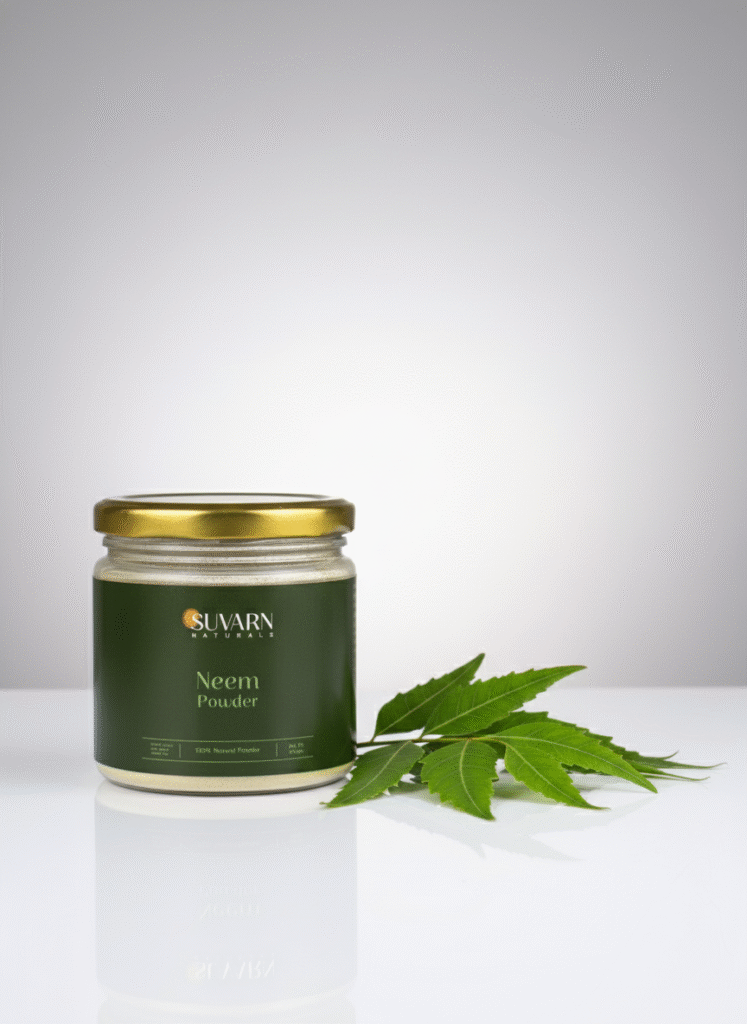
Suvarn Naturals Neem Powder is finely milled for a smooth face pack — not the gritty texture of cheaper market alternatives.

If your skin breaks out around your period, flares in humid weather, or simply refuses to behave despite every product you’ve tried — you’re not alone.
For millions of Indian women managing hormonal acne, stress-triggered breakouts, or PCOS-related skin changes, the search for a gentler, more natural solution leads back to one thing: herbal powders.
This guide covers the best herbal powders for acne-prone skin — what they are, how they work, and exactly how to use them. You’ll also hear from Suvarn Naturals’ founder on why neem stands apart from the rest.
What Are the Best Herbal Powders for Acne-Prone Skin?
The best herbal powders for acne-prone skin are plant-based, minimally processed botanical preparations that may help reduce breakouts, balance sebum production, and calm inflamed skin — without harsh chemicals or synthetic fillers.
These powders are derived from leaves, roots, fruits, or clays that have been sun-dried and finely ground. They can be used as face packs, cleansing powders, or mixed into oils and serums.
In Ayurveda, acne is primarily a condition of excess Pitta dosha — the fire and heat principle that governs metabolism, inflammation, and skin clarity. Cooling, detoxifying herbs are prescribed to pacify Pitta from within and without.
Key herbal powders that appear across both traditional texts and modern dermatology research include:
- Neem (Azadirachta indica) — Sanskrit: Nimba
- Multani Mitti (Fuller’s Earth clay)
- Orange Peel Powder (Citrus sinensis)
- Rose Petal Powder (Rosa damascena)
- Turmeric (Curcuma longa) — Sanskrit: Haridra
- Sandalwood (Santalum album) — Sanskrit: Chandan
The Science + Ayurvedic Perspective on Herbal Powders for Acne
Herbal powders may support acne-prone skin through three primary mechanisms: antibacterial action, sebum regulation, and anti-inflammatory activity.
Modern research is now catching up with what Ayurvedic practitioners described centuries ago in texts like the Charaka Samhita — that skin health is inseparable from internal balance.
How Neem Works on Acne
Neem’s most studied active compounds — nimbidin and nimbin — have demonstrated meaningful antibacterial activity against Cutibacterium acnes (formerly Propionibacterium acnes), the primary bacteria involved in acne formation.
A 2023 study published in the Journal of Ethnopharmacology found that neem leaf extracts significantly inhibited C. acnes proliferation in vitro, supporting its traditional topical use. Neem also contains quercetin and azadirachtin, which help reduce inflammatory markers associated with cystic and hormonal acne.
In Ayurvedic tradition, neem is classified as Tikta (bitter) and Katu (pungent) in taste — both of which are known to pacify Pitta and Kapha doshas. This makes it particularly suited for oily, inflamed, acne-prone skin that is hormonally driven.
Myth vs. Fact Table
| Myth | The Truth |
|---|---|
| “All herbal powders treat all types of acne equally” | Acne has many causes — hormonal, bacterial, inflammatory. The best herbal powder matches your dosha and acne trigger. Neem suits Pitta-driven hormonal acne; Multani Mitti suits Kapha-driven oily, clogged-pore acne. |
| “Herbal = 100% side-effect free, use as much as you want” | Overuse of drying powders (especially neem or clay) can disrupt the skin barrier, trigger rebound oiliness, and worsen sensitised skin. |
| “Turmeric cures acne overnight” | Turmeric’s curcumin requires consistent use over several weeks to show measurable anti-inflammatory effect. No topical application “cures” acne overnight. |
Benefits of the Best Herbal Powders for Acne-Prone Skin — Especially for Women
1. May Help Reduce Bacterial Acne at the Surface
Herbal powders like neem may support the reduction of C. acnes bacteria on the skin’s surface — particularly helpful for women experiencing chin and jawline breakouts triggered by hormonal shifts.
Quick tip: Apply Suvarn Naturals Neem Powder as a face pack twice weekly on your chin and T-zone during the week before your period, when hormonal acne typically peaks.
2. May Support Sebum Regulation
Excess sebum is the primary trigger for clogged pores. Multani Mitti (Fuller’s Earth) is a highly absorbent clay that may help regulate surface oil without stripping the skin’s natural moisture barrier.
[For a deeper dive, see our guide: Multani Mitti Powder: The Ancient Clay That Transforms Skin & Hair — https://suvarnnaturals.com/multani-mitti-powder-benefits-uses-guide/]
Quick tip: Mix a small amount of Multani Mitti with neem powder and rose water for an oil-control mask that doesn’t over-dry.
3. May Help Calm Hormonal Skin Inflammation
For women with PCOS or perimenopausal skin changes, inflammation is often the root issue — not just surface bacteria. Neem’s quercetin content and turmeric’s curcumin both show anti-inflammatory pathways in peer-reviewed research, potentially calming the redness and swelling associated with cystic acne.
Quick tip: If you notice skin flares tracking with your cycle, start your herbal powder routine 5–7 days before your expected period date.
4. May Gently Exfoliate Without Microplastics
Orange peel powder contains natural alpha-hydroxy acids (AHAs) and Vitamin C, which may help loosen dead skin cells that contribute to clogged pores — without synthetic microbeads or harsh physical scrubs.
[Learn more: Orange Peel Powder: The Complete Guide to Nature’s Vitamin C Powerhouse — https://suvarnnaturals.com/orange-peel-powder-benefits-uses-guide/]
Quick tip: Combine orange peel powder with honey for a gentle bi-weekly exfoliating mask that brightens acne scars over time.
5. May Support Post-Acne Skin Recovery
Rose petal powder is rich in tannins and flavonoids that may help soothe post-inflammatory hyperpigmentation (PIH) — the dark marks that linger after a breakout clears. This is one of the most commonly reported skin concerns among Indian women in their 20s and 30s.
[Read more: Rose Petal Powder: The Ancient Beauty Secret That Science Now Confirms Works — https://suvarnnaturals.com/rose-petal-powder-complete-benefits-uses-guide/]
Quick tip: Mix rose petal powder with a few drops of cold-pressed aloe vera gel and apply on dark spots for 15 minutes, three times a week.
Who Should Use Herbal Powders for Acne-Prone Skin?
Herbal powders are particularly suited to the following:
Women with hormonal/PCOS-related acne — persistent chin, jaw, and forehead breakouts that track with your cycle and don’t respond well to synthetic face washes.
Women with postpartum skin changes — hormonal fluctuations after delivery often trigger acne flares. Gentle, chemical-free herbal packs are a safer first step.
Perimenopausal women experiencing new adult acne — a rise in androgen relative to oestrogen can trigger unexpected breakouts after years of clear skin. Neem’s Pitta-pacifying properties may help.
Students and young professionals with stress acne — cortisol-driven breakouts on the forehead and nose respond well to anti-inflammatory herbal routines.
Men with oily, acne-prone skin — herbal powders work equally well for men in the same household dealing with recurring breakouts.
Not Ideal If…
- You have open wounds, active cysts, or severe cystic acne (see a dermatologist first).
- You are allergic to any plant in the neem, marigold, or Asteraceae family (do a patch test).
- You are pregnant (consult your healthcare provider before using neem topically).
- You are currently on prescription acne medication (check with your doctor before adding herbal routines).
How to Use the Best Herbal Powders for Acne-Prone Skin — Step by Step
Recommended frequency: 2–3 times per week. Daily use may over-dry sensitive skin.
Best time: Evening, after cleansing, before bed. Skin repairs itself overnight — an herbal pack before sleep may maximise benefits.
Format 1 — Basic Face Pack (most popular)
- Take 1 teaspoon of Suvarn Naturals Neem Powder.
- Mix with 1–2 teaspoons of rose water (or plain water) to form a smooth paste.
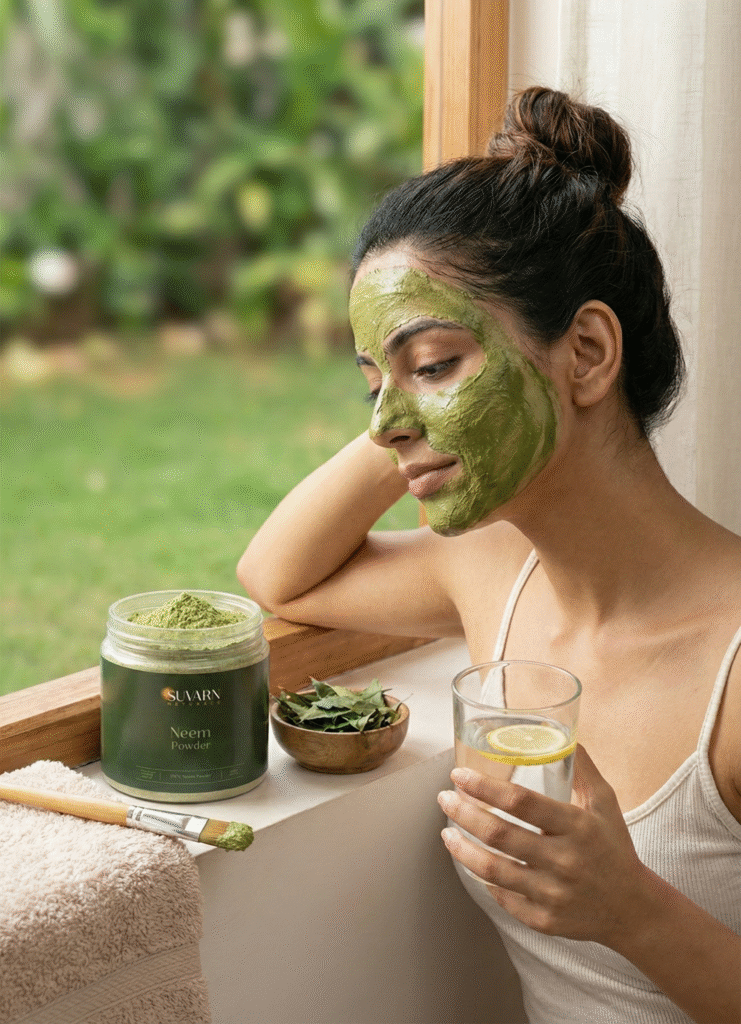
- Apply evenly on the face, avoiding the eye area.
- Leave on for 10–15 minutes.
- Rinse with cool water. Pat dry — never rub.
- Follow with a gentle, non-comedogenic moisturiser.
Format 2 — Blended Multi-Herb Pack (for oily/acne-prone skin)
Mix equal parts: neem powder + multani mitti + rose petal powder. Add rose water. Apply 2x per week.
Format 3 — Herbal Cleansing Powder (daily gentle cleanser)
Mix neem powder with chickpea flour (besan) in a 1:2 ratio. Store in a dry jar. Use as a daily face wash by mixing a small amount with water at the time of use.
Dos and Don’ts
| Do | Don’t |
|---|---|
| Patch test on your inner arm first | Don’t apply to broken, cut, or severely inflamed skin |
| Use cool or room-temperature water to mix | Don’t use hot water — it weakens active compounds |
| Follow with moisturiser after rinsing | Don’t skip moisturiser — even oily skin needs hydration |
| Store powder in a cool, dry, airtight container | Don’t leave mixed paste sitting for more than 20 minutes before applying |
| Start with 1–2 times per week | Don’t use every day — overdoing it disrupts your skin barrier |
The 3-Minute Neem + Rose Water Nighttime Ritual
★ This is the section competitors skip — but it’s what women actually need.
Most face pack guides tell you what to mix. This ritual tells you how to turn it into a consistent, calming routine that actually sticks — even on a rushed weeknight.
What You Need
- 1 tsp Suvarn Naturals Neem Powder
- 1 tsp Rose Petal Powder (optional but excellent for fading marks)
- 2 tsp rose water or aloe vera gel
- A small ceramic bowl and wooden spatula
- Clean fingertips or a flat foundation brush for application
Steps
- Cleanse first (30 seconds): Splash your face with cool water and pat dry.
- Mix the pack (45 seconds): Combine neem powder + rose petal powder in the bowl. Add rose water slowly until you reach a smooth, yoghurt-like consistency — no lumps.
- Apply mindfully (45 seconds): Use fingertips or a brush to apply in gentle upward strokes. Start at your chin (where most hormonal breakouts appear) and move outward.
- Rest while it works (10 minutes): Lie down. Breathe. Let the Pitta-cooling properties of neem settle your skin — and your nervous system.
- Rinse with cool water (45 seconds): Use circular upward strokes as you rinse. This counts as gentle massage.
- Seal in moisture: A few drops of cold-pressed rosehip oil or a light gel moisturiser.
Pro tip: Mix Suvarn Naturals Neem Powder with our Rose Petal Powder for a double-action pack — neem targets bacteria while rose soothes post-acne marks and redness. Two skin concerns, one ritual.
Best Herbal Powders for Acne-Prone Skin — vs Alternatives
| Metric | Suvarn Naturals Neem Powder | Generic Market Neem Powder | Neem Capsules (Oral) | Salicylic Acid Wash |
|---|---|---|---|---|
| Ease of Use | ✅ Fine grind, easy to mix | ⚠️ Coarse, grainy texture | ✅ Simple | ✅ Simple |
| Time to Visible Results | 3–4 weeks consistent use | 3–6 weeks | 6–8 weeks | 2–4 weeks |
| Sensitive Skin Suitability | ✅ High — tested for gentleness | ⚠️ Variable | ✅ Bypasses skin contact | ❌ May irritate |
| PCOS-Skin Friendliness | ✅ Pitta-pacifying, hormonal balance support | ⚠️ Inconsistent quality | ✅ Good | ⚠️ Addresses symptoms, not cause |
| Cost (per month) | ₹ Moderate — long shelf life | ₹ Low — inconsistent results | ₹₹ Moderate | ₹–₹₹ |
Side Effects and Precautions
Neem powder and other herbal powders are generally well-tolerated when used as directed. However:
- Skin sensitivity: Some people experience mild redness or tingling on first use. Always patch test 24 hours before full-face application.
- Dryness: Overuse (more than 3x/week) of neem or clay-based packs may cause dryness and barrier disruption. If this occurs, reduce frequency and increase moisturiser.
- Pregnancy and breastfeeding: The safety of topical neem during pregnancy has not been fully established. Consult your healthcare provider before use.
- Drug interactions: No significant interactions are documented for topical neem use. Oral neem supplements may interact with diabetes or immunosuppressant medications — consult your doctor.
- When to see a doctor: If you experience swelling, hives, or difficulty breathing after use, discontinue immediately and seek medical attention. If your acne is severe, deep, or cystic, professional dermatological guidance is recommended before starting any topical routine.
Myths and Mistakes Women Make with Herbal Powders for Acne-Prone Skin
★ This section addresses the oversimplifications we see repeated across every top-ranking competitor.
Myth 1: “Any herbal powder works the same for all acne”
This is the biggest oversimplification in the space. Hormonal acne (typically deep, cystic, jawline-heavy) requires Pitta-pacifying, anti-androgenic herbs like neem. Surface-level, sebum-driven acne responds better to oil-absorbing clays like Multani Mitti. Using the wrong powder won’t harm you — but it won’t give you results either.
Myth 2: “More powder = faster results”
In Ayurveda, excess is imbalance. Using a strong astringent like neem powder daily or in thick applications strips your acid mantle, triggers rebound oil production, and can make acne worse within 2–3 weeks. Less, consistently, outperforms more, occasionally.
Myth 3: “Natural means you can leave it on overnight”
No. Even natural plant-based powders can over-dry, cause contact dermatitis, or clog pores if left on for hours. The recommended 10–15 minutes is deliberate. Rinse on time.
Myth 4: “Turmeric alone will clear hormonal acne”
Turmeric is excellent as a secondary ingredient — its curcumin supports anti-inflammation. But it does not directly address C. acnes bacteria the way neem does. Relying on turmeric alone for bacterial acne is a common disappointment story we hear from customers who switched to Suvarn Naturals after.
Myth 5: “Herbal powders are only for skin that’s very oily”
Rose petal powder and sandalwood powder are well-suited for dry or combination acne-prone skin. The key is matching water content in your mixing agent — use cream or milk for drier skin types rather than plain water.
Notes from the Suvarn Naturals Founder
“When we first started testing herbal powders for acne-prone skin, neem stood out because of its earthy aroma, cooling feel, and naturally purifying properties. We carefully sourced fine-quality neem leaves and tested different grind textures to create a smoother face pack experience that feels gentle on sensitive skin.”
What that sourcing process actually looked like: we tested neem from three different growing regions before settling on leaves with the right balance of nimbidin content and reduced bitterness in aroma. Many market-grade neem powders are coarsely ground as a cost measure — the texture ends up feeling like fine sandpaper on the face, which defeats the purpose on sensitive, inflamed skin.
In our testing phase, we had women with active acne, PCOS-related skin, and postpartum skin changes trial different grind textures over six weeks. The feedback was consistent: the finer the grind, the better the adherence on skin, the smoother the rinse, and the less irritation post-application.
We also chose not to add any fillers, starch, or fragrance to our neem powder — something we noticed in several products claiming to be “pure” neem. What you get in Suvarn Naturals Neem Powder is the leaf, and only the leaf.
[Explore more about what makes neem special: Neem Powder Benefits: Smart Uses & Everything You Need to Know — https://suvarnnaturals.com/blog-neem-powder-benefits-uses/]
FAQs — Best Herbal Powders for Acne-Prone Skin
Q1: Which herbal powder is best for hormonal acne specifically?
Neem powder is the most well-researched option for hormonal acne. Its nimbidin content may help address C. acnes bacteria, while its Pitta-pacifying nature in Ayurveda targets the internal heat and inflammation that drives hormonal breakouts. For women with PCOS, combining neem powder topically with dietary interventions may support better results.
Q2: Can I use neem powder on my face every day?
Using neem powder every day is generally not recommended. Its astringent properties can over-dry the skin and disrupt the natural moisture barrier, potentially increasing oil production in response. Two to three times per week is a more effective and skin-safe frequency for most people.
Q3: How long before I see results from using herbal powders for acne?
Research suggests that consistent use over 3–6 weeks is needed to see meaningful change in acne frequency and skin texture. Herbal powders work gradually and holistically — they’re not designed for overnight results. Track your skin weekly with photos for honest progress assessment.
Q4: Is neem powder safe for sensitive, acne-prone skin?
Finely milled neem powder like Suvarn Naturals is formulated with sensitive skin in mind. Always do a patch test first. For very reactive skin, try diluting neem powder with rose petal powder (1:1) and mixing with rose water rather than plain water, which reduces intensity.
Q5: Can I use herbal powders if I’m already on acne medication?
Topical herbal powders are generally not known to interact with acne medications like retinoids or antibiotics. However, using active herbal packs on top of prescription retinoid-treated skin may increase irritation. It is best to use them on separate days, and always consult your dermatologist.
Q6: What herbal powder is best for acne scars and dark marks?
Rose petal powder — rich in tannins and Vitamin C precursors — may help fade post-inflammatory hyperpigmentation (PIH) over time. Orange peel powder’s natural AHAs may also support gentle exfoliation of darkened skin. For best results, rotate: use neem 2x/week for active acne, rose petal 1x/week for marks.
Q7: Can herbal powders help with back or body acne?
Yes — particularly neem and multani mitti. Mix into a thicker paste and apply to the back or chest. Leave for 10–12 minutes and shower off. Body acne often responds more quickly than facial acne because skin is less sensitive and pores are larger.
Q8: Is it safe to use herbal powders during periods?
Yes. Many women specifically find herbal powder routines most helpful in the week leading up to their period and during menstruation — exactly when hormonal acne tends to peak. The cooling, anti-inflammatory nature of neem may help reduce the severity of pre-menstrual breakouts.
Q9: Can I store mixed herbal powder paste for later use?
No. Mixed paste should be prepared fresh and used immediately. Exposure to air and moisture after mixing can introduce bacteria into the paste and reduce the potency of active compounds. Store unmixed powder in a clean, dry, airtight glass or BPA-free container away from humidity.
Q10: What’s the difference between using neem powder topically vs. taking neem capsules for acne?
Topical neem powder acts directly on the skin — targeting surface bacteria and sebum. Oral neem capsules may support internal detoxification and hormonal balance. For comprehensive hormonal acne management, some practitioners recommend both approaches. However, oral supplements require more caution and should be taken only under professional guidance.
Final Takeaway
The best herbal powders for acne-prone skin aren’t a quick fix — they’re a return to a skincare language your skin already understands.
Whether you start with Suvarn Naturals Neem Powder for bacterial and hormonal acne, explore Multani Mitti for oily skin, or build a layered ritual with rose petal powder for post-acne marks — the key is consistency, the right match for your skin type, and patience.
Your skin didn’t break out overnight. It won’t clear overnight either. But three weeks from today, with the right herbal ritual behind you, it may feel noticeably calmer, clearer, and more like yours again.
👉 Start with the 3-minute neem and rose water pack above. See how your skin responds. Then build from there.
[For a broader look at what works for Indian skin: Glow Naturally with Herbal Powders: What Actually Works — https://suvarnnaturals.com/suvarn-herbal-powders-women-benefits/]