
Glow Naturally with Herbal Powders: What Actually Works

Published: 28 April 2026 | By Suvarn Naturals
TL;DR — Read This First
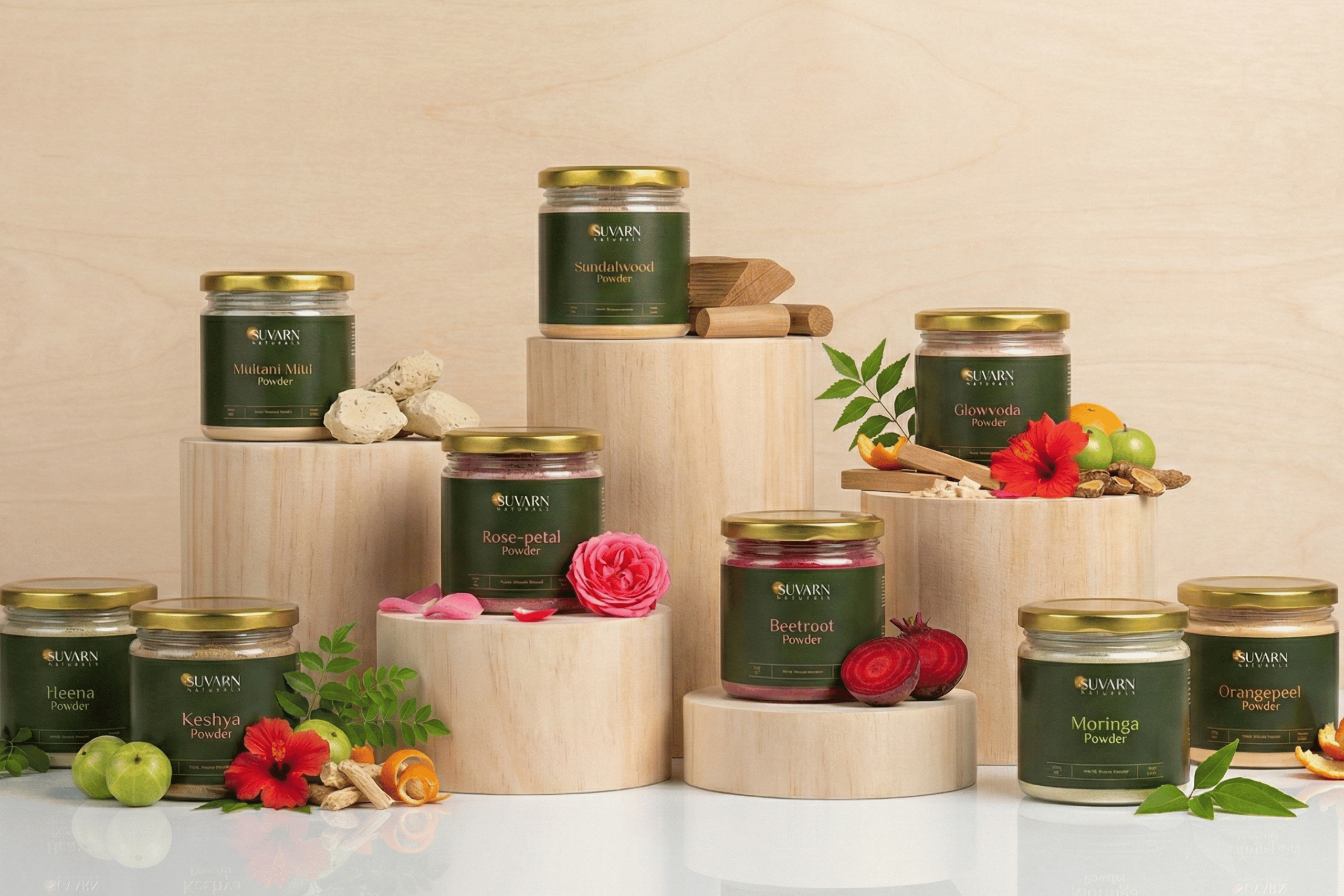
Try Suvarn Naturals’ Neem, Amla, or Moringa powders — no fillers, no fragrance, just the herb
Herbal powders are finely ground medicinal plants used in Ayurveda for 5,000+ years — not just DIY face masks
They work by delivering phytonutrients, antioxidants, and adaptogenic compounds directly to skin, hair, and the body
Different powders suit different doshas — one-size-fits-all is a myth
Women with PCOS, hair fall, hormonal acne, or stress may particularly benefit
Use consistently for 4–8 weeks to see results — single-use won’t do it
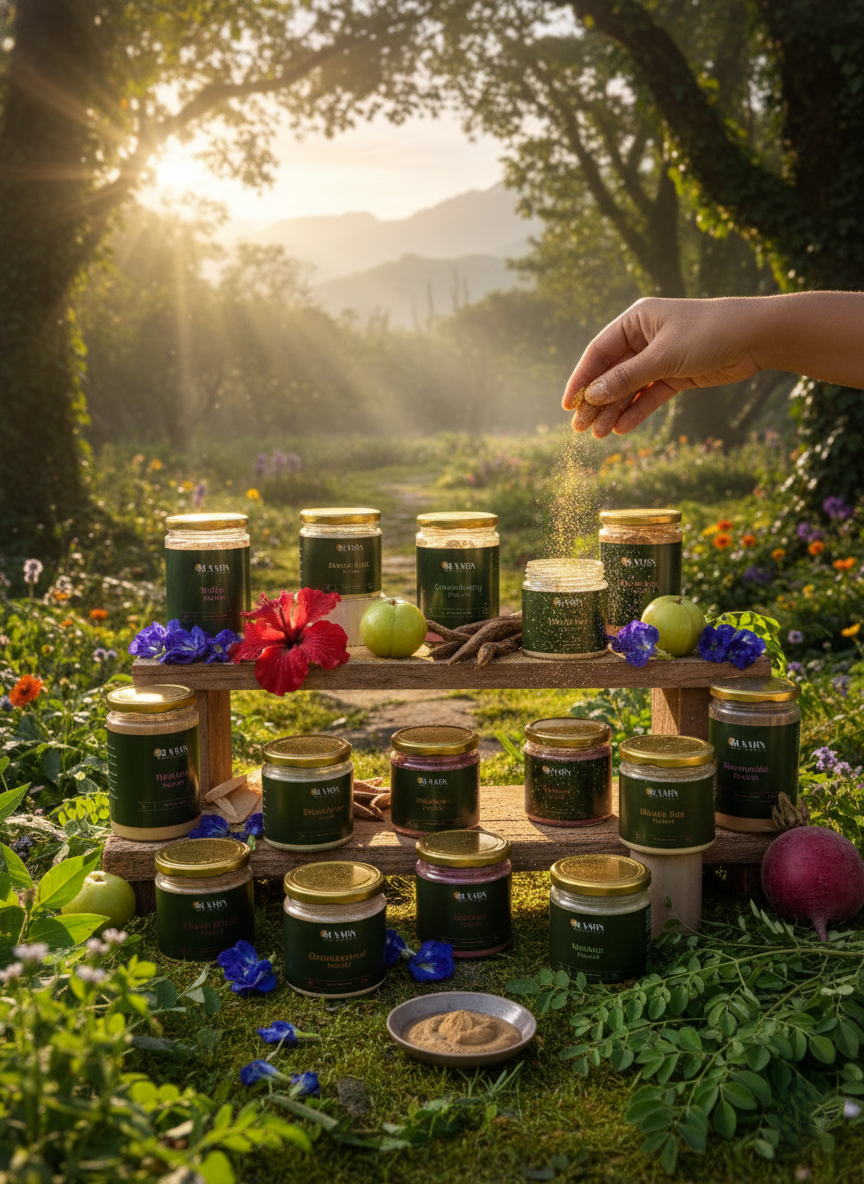
You’ve probably stood in front of the mirror at 11pm, inspecting a breakout or running fingers through thinning hair, wondering if anything natural actually works. That question — “will this work for someone like me?” — is exactly why this guide exists.
Herbal powders have been the quiet backbone of Indian wellness rituals for generations. Yet most of what’s written about them online is vague, generic, or oversimplified. This article cuts through the noise. You’ll find the science, the Ayurvedic context, the honest caveats, and a founder’s perspective built on real sourcing experience — all updated as of 28 April 2026.
What Are Herbal Powders?
Herbal powders are finely milled dried medicinal plants — roots, leaves, bark, or fruit — that concentrate active phytonutrients in a shelf-stable, versatile form. They can be used topically, consumed internally, or added to food and drinks.
In Ayurveda, powdered herbs are called Churna (चूर्ण) — one of the eight classical dosage forms described in ancient texts like the Charaka Samhita. The process preserves volatile compounds and bioactive constituents that would otherwise degrade in extraction or processing.
Modern botany has validated what Ayurveda observed centuries ago. Plants like Azadirachta indica (Neem), Phyllanthus emblica (Amla), Moringa oleifera (Moringa), Santalum album (Sandalwood), and Citrus sinensis (Orange Peel) are now well-studied for their polyphenols, flavonoids, triterpenoids, and vitamin C content.
Key constituents found across popular herbal powders include:
- Nimbidin and Quercetin (Neem) — studied for antimicrobial and anti-inflammatory action
- Ellagic acid and Ascorbic acid (Amla) — potent antioxidant and Rasayana (rejuvenating) compounds
- Isothiocyanates and Chlorogenic acid (Moringa) — studied for metabolic and anti-inflammatory effects
- α-Santalol (Sandalwood) — studied for calming and skin-clarifying properties
- Hesperidin and Limonene (Orange Peel) — studied for brightening and antimicrobial activity
The Science + Ayurvedic Perspective
Herbal powders work through two interlocking systems: the modern science of phytochemical action on skin and hormones, and the Ayurvedic principle of balancing the three doshas — Vata, Pitta, and Kapha — which govern all physiological functions.
In Ayurvedic theory, most adult skin and hormonal issues in women stem from aggravated Pitta (excess heat, inflammation) or imbalanced Kapha (sluggish metabolism, congestion). Herbal powders are selected to correct this imbalance. For example, Neem is a classic Pitta-pacifying herb — cooling, drying, and antibacterial. Sandalwood is also Pitta-cooling but more calming to the nervous system.
Modern research supports these traditional applications in meaningful ways. A 2023 review in the Journal of Ethnopharmacology (Kapoor et al.) confirmed that Amla fruit extract demonstrated significant antioxidant capacity and inhibited enzymes linked to skin ageing, supporting its Rasayana classification. Similarly, a 2022 study in Nutrients (Singh et al.) found that Moringa leaf powder supplementation was associated with improvements in inflammatory markers in adult women.
Myth vs. Fact
| Myth | The Truth |
|---|---|
| “Any herbal powder works for all skin types” | Powders are dosha-specific. A Kapha-dominant person may need stimulating herbs like Moringa; a Pitta type needs cooling herbs like Sandalwood. Mixing indiscriminately can worsen imbalance. |
| “Natural means safe for everyone, always” | Even natural herbs can interact with medications or cause reactions. Neem, for example, should be avoided in pregnancy and by those on blood-thinning medication. |
| “The more you apply, the faster the results” | Excess application — especially of astringent powders like Neem — disrupts the skin barrier. A thin, consistent application outperforms a heavy, infrequent one. |
Benefits of Herbal Powders — Especially for Women
Herbal powders may support a wide range of concerns that many women navigate quietly — hormonal breakouts, hair thinning, energy dips, and uneven skin tone — when used consistently and matched to individual needs.
Skin Brightening and Acne Support
Neem powder contains Nimbidin and Azadirachtin, studied for their ability to inhibit P. acnes bacteria. Orange Peel powder delivers Hesperidin and Vitamin C, which may support melanin regulation and skin radiance.
Research published in Phytomedicine (2022) found neem-based topical preparations reduced inflammatory acne lesions in adult women over eight weeks.
Quick Tip: Mix a teaspoon of Suvarn Naturals Neem Powder with a small amount of raw honey. Apply for 10–12 minutes, rinse. Use twice a week for hormonal breakouts.
Hair Fall and Scalp Health
Amla is one of Ayurveda’s most studied Rasayana (rejuvenating) herbs. It is rich in Ellagic acid and Vitamin C, which may support collagen synthesis in the scalp dermal layer and strengthen hair follicles. It is traditionally used in hair oils and rinses across India for generations.
Moringa powder, high in bioavailable iron and zinc, may address nutrient-deficiency-related hair thinning — particularly relevant for women with PCOS or postpartum hair loss.
Quick Tip: Combine Amla Powder with warm coconut oil, apply to roots, leave for 30 minutes, and rinse. Do this weekly for a minimum of 6–8 weeks before assessing results.
Hormonal Balance and PCOS Support
Moringa is emerging as a herb of interest in women’s hormonal health. A 2022 clinical pilot (published in Frontiers in Nutrition) found that Moringa oleifera supplementation was associated with reductions in oxidative stress markers in adult women, which is relevant in PCOS where oxidative stress is elevated.
Neem has been traditionally used to support a healthy inflammatory response — now understood to influence androgen metabolism at the cellular level.
Note: These findings are preliminary. Herbal powders are not a replacement for medical treatment of PCOS.
Quick Tip: Add half a teaspoon of Moringa Powder to your morning smoothie or warm water. Consistent daily use is more effective than periodic large doses.
Stress, Energy, and Mood
Sandalwood (Chandan) has long been used in Ayurveda as a nervine — a herb that calms the nervous system. α-Santalol, its key active compound, has been studied for mild anxiolytic and mood-supportive effects when inhaled or applied topically.
Orange Peel powder, rich in Limonene and B-complex vitamins, may support a gentle energy lift when consumed as a warm tea or added to food.
Quick Tip: Add a pinch of Sandalwood Powder to your evening face mask for both topical and aromatherapeutic benefit.
Anti-Ageing and Skin Elasticity
Amla is considered one of the richest natural sources of Vitamin C — estimated at 20 times that of an orange by weight. Vitamin C is foundational to collagen synthesis. Regular topical and internal use of Amla powder may support skin firmness over time.
Orange Peel powder, used in Ayurvedic Ubtan (traditional body scrub) formulations, delivers gentle exfoliation alongside Hesperidin — a flavonoid linked to improved microcirculation in skin tissue.
Quick Tip: Blend Orange Peel Powder with Sandalwood Powder and rose water for a brightening Ubtan. Use fortnightly.
Who Should Use Herbal Powders?
Herbal powders may be especially useful for women navigating hormonal transitions, chronic skin issues, or nutrient gaps — particularly when they’re looking for complementary support alongside their existing healthcare.
Potentially well-suited for:
- Women with PCOS seeking anti-inflammatory and metabolic support (Moringa, Neem)
- Postpartum women with hair fall or skin dullness (Amla, Moringa)
- Women in perimenopause dealing with dry skin or mood fluctuation (Sandalwood, Amla)
- Students or working women managing exam or work stress (Sandalwood, Orange Peel)
- Anyone with oily or acne-prone skin not responding well to synthetic skincare (Neem, Orange Peel)
Not ideal if you:
- Are pregnant (Neem and some herbal powders are contraindicated in pregnancy)
- Are on blood-thinning medication (consult your doctor before adding Amla or Neem internally)
- Have a known allergy to any of the plant families mentioned
- Expect instant results — consistency over weeks is non-negotiable
How to Use Herbal Powders — Step by Step
Herbal powders can be used in three primary formats: as topical pastes (face masks, hair packs), as internal supplements (in warm water, milk, or smoothies), and as culinary additions. Dosage and method depend on the herb and your goal.
Topical use (face/body):
- Measure ½–1 teaspoon of powder into a clean bowl
- Add a liquid base: rose water, honey, yoghurt, or coconut oil
- Mix into a smooth paste (no lumps to avoid micro-abrasion)
- Apply a thin layer to clean, damp skin
- Leave for 10–15 minutes — no longer
- Rinse with lukewarm water; follow with moisturiser
Internal use (supplements):
- Start with ¼ teaspoon daily — allow 2 weeks before increasing
- Mix into warm water, milk, or a smoothie
- Best time: morning on an empty stomach (Moringa), or with food (Amla)
- Traditionally, Amla churna is taken with honey or warm water at bedtime
Dos and Don’ts
| Do | Don’t |
|---|---|
| Patch-test any new powder on your inner wrist 24 hours before first use | Apply directly to open wounds or active cystic acne |
| Store in an airtight container away from direct sunlight | Buy powders without checking for added fragrance, preservatives, or colour |
| Use consistently for at least 4–8 weeks before judging results | Use multiple new powders simultaneously — you won’t know which one is working (or causing a reaction) |
| Combine with a nourishing carrier (honey, oil, yoghurt) for topical use | Leave paste on for more than 20 minutes — it can over-dry the skin |
The 3-Minute Herbal Powder Ritual
This section is your secret weapon — a specific, repeatable nighttime ritual using herbal powders that takes under three minutes to prepare and fits easily into any routine.
Most people try herbal powders once, don’t follow through, and conclude they don’t work. Ritualism changes that. A small, consistent action beats an elaborate, occasional one every time.
The Pitta-Calming Night Mask (For Oily, Acne-Prone, or Hormonal Skin)
Best for: Women with PCOS-related breakouts, adult hormonal acne, or oily combination skin.
Ingredients
- 1 tsp Suvarn Naturals Neem Powder
- ½ tsp Suvarn Naturals Sandalwood Powder
- 1–2 tsp raw, unheated honey (as base)
- 2–3 drops rose water (to adjust consistency)
Steps
- Combine the powders in a small ceramic bowl
- Add honey and mix until a smooth paste forms — 30 seconds
- Adjust consistency with rose water drops until spreadable
- Apply a thin layer to clean face, avoiding the eye area
- Leave for 12 minutes (set a timer)
- Rinse with lukewarm water, gentle circular motion, then pat dry
- Follow immediately with a light moisturiser or a drop of rosehip oil
Frequency: 2–3 nights per week. Within 3–4 weeks, you may notice fewer new breakouts and a calmer skin texture.
Pro tip: Mix the dry powders in a batch ahead of time and store in a small jar. This makes the ritual genuinely 3 minutes — no measuring each night.
Try combining with our Orange Peel Powder in place of Sandalwood for a brighter, Vitamin C-forward mask on alternating nights.
Herbal Powders vs Alternatives
When choosing between herbal powders, capsules, synthetic skincare, and generic branded powders, the right choice depends on your goal, skin sensitivity, budget, and lifestyle consistency.
| Metric | Suvarn Naturals Herbal Powders | Generic Loose Powder | Herbal Capsules | Synthetic Skincare |
|---|---|---|---|---|
| Ease of use | Moderate (requires mixing) | Moderate | Easy (swallow) | Easy |
| Time to visible results | 4–8 weeks (topical); 6–12 weeks (internal) | 4–8 weeks | 6–12 weeks | 2–4 weeks (variable) |
| Suitable for sensitive skin | Yes — single ingredient, no additives | Check label for fillers | Yes | Depends on formula |
| PCOS-friendliness | High — adaptable, multi-herb options | Variable | High if standardised | Low for hormonal concerns |
| Cost | Low–moderate | Low | Moderate–high | Moderate–high |
| Transparency | High — single herb, visible ingredient | Variable | Low (proprietary blends) | Often low |
No exaggerated claims: results vary by individual, consistency, and dosage.
Side Effects and Precautions
Herbal powders are generally well-tolerated when used correctly, but they are biologically active — they warrant the same care as any supplement or skincare ingredient.
Topical side effects (uncommon but possible):
- Mild skin tightening or dryness (especially Neem on dry skin types)
- Contact dermatitis in those allergic to Asteraceae or related plant families
- Temporary redness if left on for too long
Internal side effects (uncommon but possible):
- Digestive discomfort if Moringa or Amla is taken on a completely empty stomach
- Neem may lower blood sugar — those on diabetes medication should consult their doctor
- Amla is high in Vitamin C; very large internal doses may cause loose stools
Pregnancy and breastfeeding: Neem powder is traditionally contraindicated in pregnancy. Moringa is used postpartum in traditional Indian practice, but consult your gynecologist before adding any new supplement if pregnant or breastfeeding.
Drug interactions: Amla may interact with blood-thinning drugs (Warfarin). Moringa may interact with thyroid medication and antihypertensives. Always inform your doctor about herbal use.
When to see a doctor: If you notice increasing breakouts, skin redness, or systemic symptoms (dizziness, nausea) after starting any herbal powder, discontinue use and consult a healthcare provider.
Myths and Mistakes Women Make with Herbal Powders
The biggest barrier to results with herbal powders isn’t the herbs — it’s common avoidable mistakes that come from well-meaning but inaccurate information shared in wellness spaces.
Myth 1: “All herbal powders are interchangeable for skin” They’re not. Neem is drying and antibacterial — ideal for oily, acneic skin. Sandalwood is cooling and calming — better for sensitive or inflamed skin. Using Neem on dry or mature skin regularly can worsen dehydration.
Myth 2: “More powder, more results” A common mistake — using thick, heavy masks thinking it accelerates benefit. In reality, excess application leaves residue that clogs pores and disrupts the skin barrier. Thin and consistent beats heavy and occasional.
Myth 3: “You can judge results in a week” Phytonutrients work at a cellular level. Skin cell turnover alone takes 28–40 days. Expect meaningful visible improvement only after 4–8 weeks of consistent use. Abandoning at week two is the most common reason women conclude herbal powders “don’t work.”
Myth 4: “Any loose herbal powder from the market is the same” This is perhaps the most damaging myth. Herbal powders vary enormously in quality — microbial count, particle fineness, freshness, and adulteration. A powder that smells faintly of nothing, or has added colour, is not delivering the same phytonutrient profile as a freshly milled, tested product.
Mistake 5: Mixing too many new herbs at once Adding five new herbal powders to your routine in one week makes it impossible to identify what’s helping, what’s neutral, and what’s causing a reaction. Introduce one new powder every two weeks.
Notes from the Suvarn Naturals Founder
“At Suvarn Naturals, we began by sourcing raw herbs directly from trusted farms, focusing on purity and freshness. What stood out instantly was the rich aroma and soft, natural texture of freshly ground powders — it felt real and untouched.
During our first formulation trials, we made a conscious decision to keep everything as natural as possible, without adding anything artificial, and that philosophy continues to guide us.
When I first handled our Neem batch, the sharpness of the scent was immediate — that’s the Nimbidin you’re smelling. When you open our Amla, there’s a slight tanginess in the air. That sensory experience is your first quality indicator. If a herbal powder has no smell, ask why.
Our powders undergo microbial testing before every batch release. We don’t add fragrance to mask low-quality inputs, and we don’t use flow agents or anti-caking powder. What you receive is one ingredient: the herb, milled and sealed.
That decision — to never compromise on inputs — isn’t a marketing line. It’s the only way we know how to make something we’d be comfortable giving to our own families.”
— Suvarn Naturals Founding Team
FAQs — Blue Pea Flower for Stress Relief
Can I use herbal powders on my face every day?
It depends on the powder. Sandalwood and Amla are gentle enough for 3–4 applications per week for most skin types. Neem is more astringent and is best used 2–3 times weekly. Daily use of astringent powders can strip the skin barrier over time.
Which herbal powder is best for PCOS-related skin issues?
Neem powder is traditionally used for the inflammatory and hormonal breakouts associated with PCOS. Moringa is often recommended internally for its antioxidant support relevant to PCOS. For topical use, begin with Neem. For internal use, begin with Moringa — ¼ teaspoon daily in warm water.
Can I take herbal powders internally while on birth control pills?
Current evidence does not show a direct interaction between the common herbal powders (Neem, Amla, Moringa, Sandalwood) and oral contraceptives. However, as a YMYL caution: consult your doctor before adding any new supplement to a prescription regimen.
How do I know if a herbal powder is genuinely pure?
Look for: single-ingredient labelling, visible batch or harvest information, a natural smell on opening, no added fragrance or colour, and ideally microbial testing certification. Price is not a reliable indicator of quality.
Can herbal powders help with postpartum hair fall?
Amla and Moringa are the two most traditionally and scientifically supported options for nutrient-related hair thinning. Amla supports scalp collagen and circulation; Moringa provides bioavailable iron and zinc. Results take 6–10 weeks of consistent use.
Are herbal powders safe for teenagers with acne?
Topical use of Neem and Sandalwood powders is generally considered safe for teenagers. Internal supplementation should be discussed with a paediatric doctor. Always patch-test first.
Can I mix herbal powders with my regular face wash or moisturiser?
Adding powders directly to commercial skincare products can affect pH, stability, and preservation. It is safer to use them as standalone masks mixed with simple carriers (honey, rose water, yoghurt) than to blend with formulated products.
How long do herbal powders stay fresh?
Properly stored (airtight container, cool and dark space, away from moisture), quality herbal powders typically remain potent for 12–18 months. Discard if the scent has faded significantly or you notice any off-smell or colour change.
Which powder is best for dull skin in your 30s?
Amla and Orange Peel are the most relevant for skin radiance and early signs of ageing. Orange Peel Powder used topically provides gentle exfoliation and Vitamin C. Amla used both topically and internally addresses collagen synthesis. Use both — alternating days — for best results.
Can men use herbal powders too?
Absolutely. Neem is particularly popular for men with oily or acne-prone skin and scalp conditions. Moringa is used widely as a nutritional supplement across genders. The Ayurvedic principles of dosha-matching apply equally.
Final Takeaway
You started with a simple question — will herbal powders actually work for someone like me? The honest answer: they may, if you choose the right powder for your skin type and dosha, use it consistently for at least 4–8 weeks, and source from a brand that tests what it sells.
Herbal powders are not overnight solutions. But they are one of the few wellness tools with centuries of documented traditional use, a growing body of modern research, and virtually no synthetic inputs.
Start with one powder. Build the ritual. Give it time.
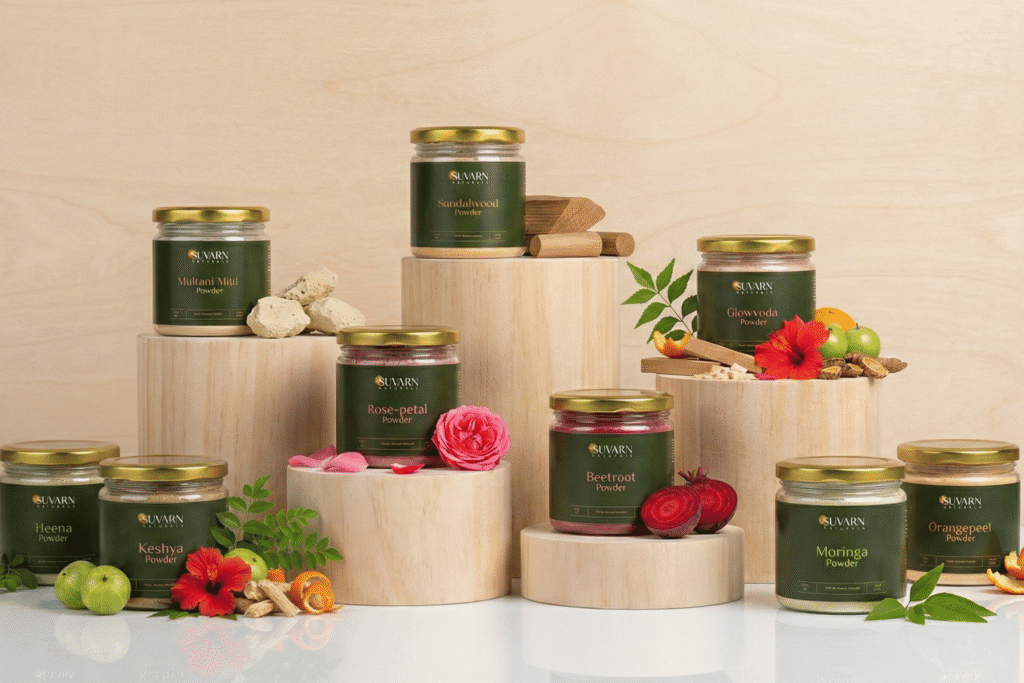
Explore Suvarn Naturals’ full range — starting with Neem, Amla, or Moringa — each sourced directly and milled to retain the freshness you can smell on opening.
