
Know the Real Difference Between Organic, Natural & Chemical-Free Products — And Why It Changes Everything

Published: 29 April 2026 | By Suvarn Naturals Team
TL;DR — Quick Summary
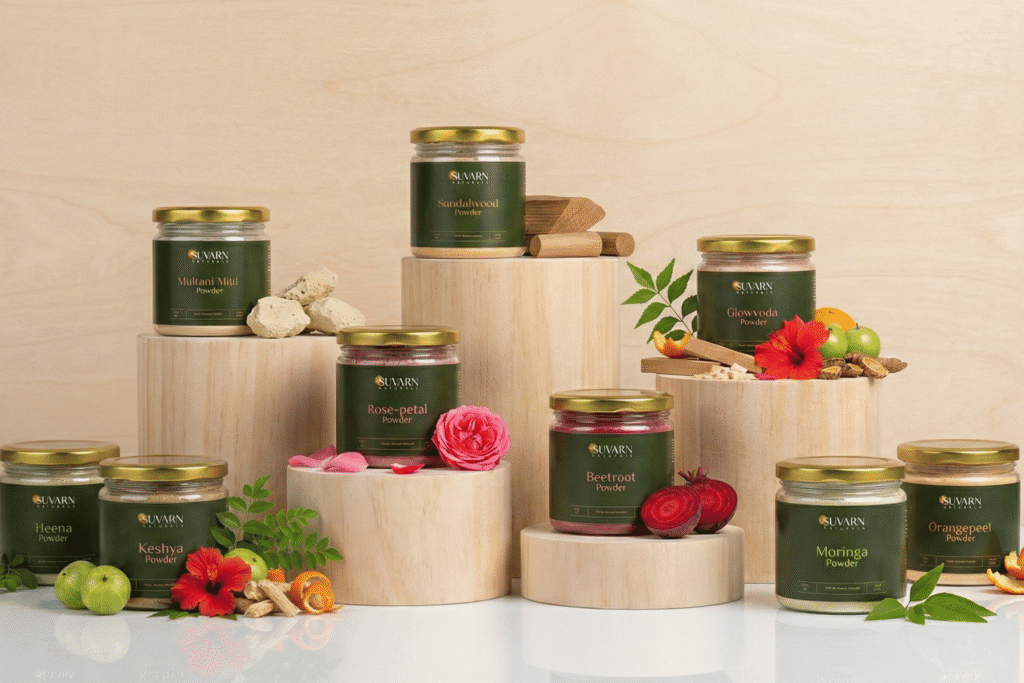
Try our range: Suvarn Naturals Herbal Powders — sourced from certified farms, ground fresh, zero additives.
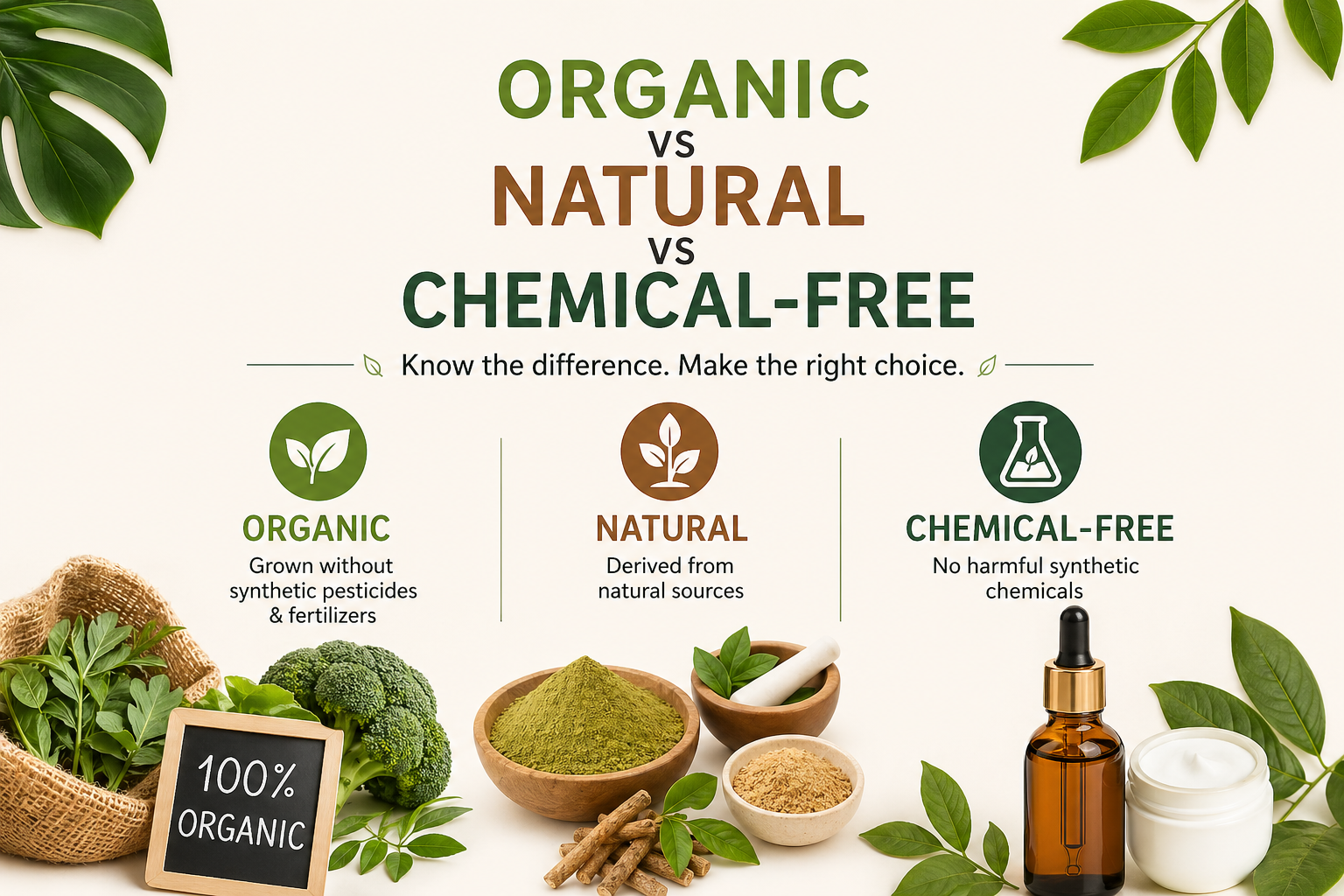
“Natural” means ingredients come from plants, animals, or minerals — but it has no legal regulation in India.
“Organic” means the ingredients were grown without synthetic pesticides or fertilisers, certified under NPOP or USDA standards.
“Chemical-free” is a marketing myth — every substance on earth is a chemical, including water. The term has no scientific meaning.
Ayurvedic tradition used Sattvic sourcing 5,000 years before modern certifications existed — and it is far more rigorous.
For skin, hair, and hormonal health, certified organic herbal powders in whole-food form offer superior phytochemical bioavailability compared to most synthetic “natural” alternatives.
What Is the Difference Between Organic, Natural & Chemical-Free Products?
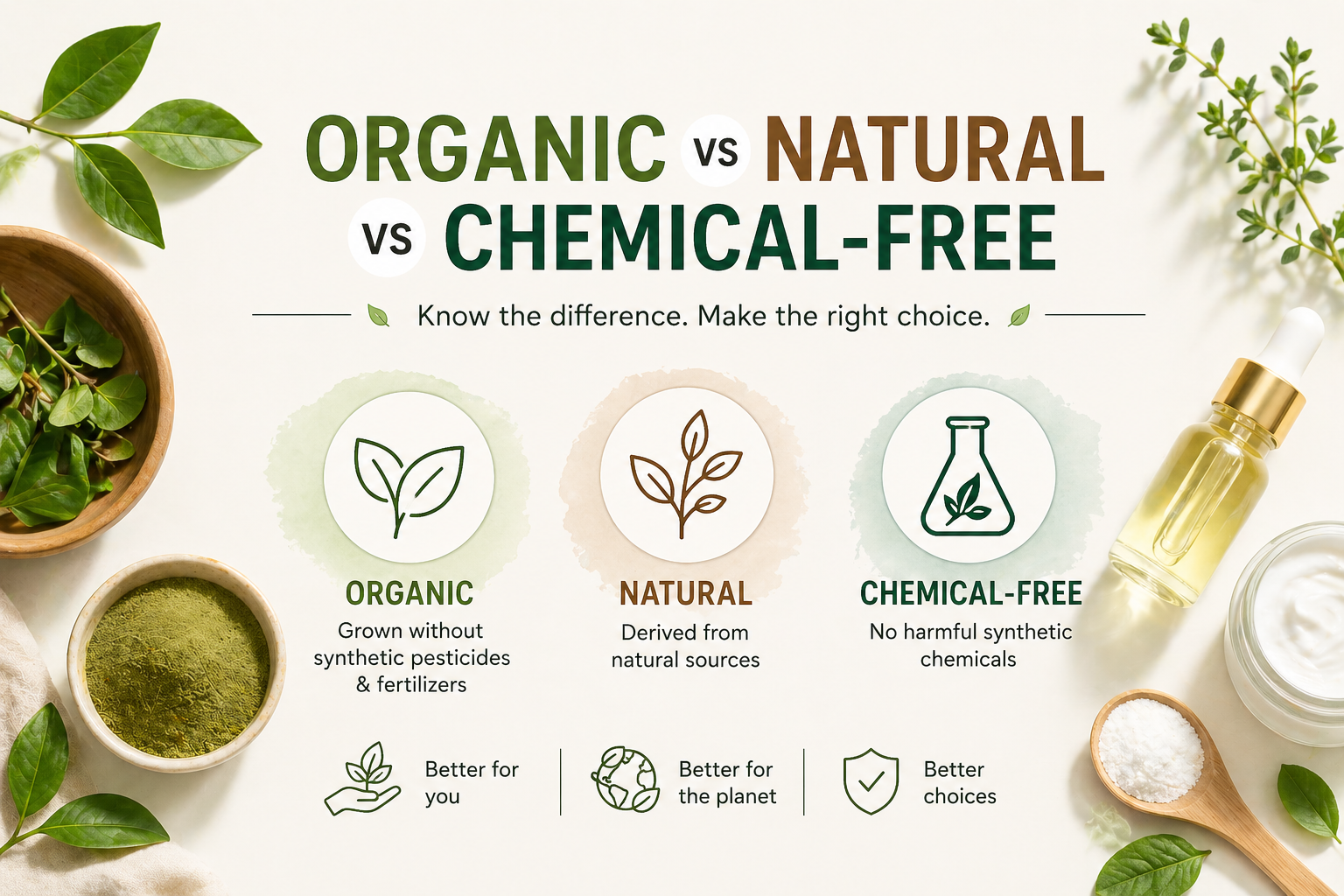
The three terms sound similar but mean very different things. “Natural” simply refers to plant- or mineral-derived ingredients, with no mandatory certification in India. “Organic” refers to a farming and processing standard — ingredients grown without synthetic chemicals, verified by bodies like NPOP (India) or USDA. “Chemical-free” is scientifically meaningless; it is a marketing phrase with no regulatory definition anywhere in the world.
Understanding these differences protects you from greenwashing — a practice where brands use feel-good words to sell products that may not live up to their claims. Especially for skin, hair, and hormonal health, the label you trust could significantly affect your results.
The Science + Ayurvedic Perspective
Modern science and Ayurveda agree on one thing: the source and quality of an ingredient determines its effect on the body. Phytochemicals — the bioactive compounds in plants — are sensitive to how a plant is grown, harvested, and processed. Synthetic pesticide residues, for example, can suppress or alter phytochemical profiles in herbs like Neem and Amla.
A 2023 review published in Food Chemistry found that organically grown medicinal herbs contain measurably higher concentrations of key phenolic phytochemicals compared to conventionally grown counterparts. This directly affects bioavailability — the degree to which your body can absorb and use these compounds.
Ayurveda classified ingredients long before certifications existed. The concept of Sattvic quality — pure, fresh, ethically sourced, minimally processed — maps almost perfectly onto what modern organic certification tries to achieve. A Sattvic herb supports all three Doshas (Vata, Pitta, Kapha) without introducing toxicity or imbalance. This was not philosophy — it was a practical quality framework refined over centuries of observation.
Myth vs Fact Table
| Common Claim | The Myth | The Truth |
|---|---|---|
| “Chemical-free means no toxins” | “Chemical-free” products are purer and safer | Every ingredient is a chemical. Arsenic is natural and highly toxic. The claim has no scientific basis. |
| “Natural is always safe” | Plant-derived = harmless | Poison ivy, hemlock, and aristolochic acid are all natural. Safety depends on the specific compound and dose. |
| “Organic is just a premium upsell” | Certification is a marketing tactic | NPOP and USDA organic standards have strict soil, farming, and processing criteria. Research supports higher phytochemical density in certified organic herbs. |
Benefits of Choosing Certified Organic Herbal Products — Especially for Women
1. Better Skin Without the Hidden Load
Conventional “natural” skincare may still contain synthetic preservatives, emulsifiers, or fragrance compounds. Certified organic products restrict these. For women dealing with hormonal acne or PCOS-related breakouts, reducing the overall chemical load on the skin may support clearer skin over time. Phytochemicals in herbs like Neem — including nimbidin and azadirachtin — are better preserved in organic, minimally processed powder form.
Quick tip: Apply organic Neem powder as a face mask mixed with rose water. Leave for 10–12 minutes. Use twice a week for best results.
2. Hormonal Support the Ayurvedic Way
Many synthetic “natural” products contain endocrine-disrupting compounds (EDCs) like parabens or synthetic musks. These may interfere with oestrogen signalling — a concern for women managing PCOS or perimenopause. Certified organic formulations significantly reduce exposure to these compounds. Research published in Environmental Health Perspectives (2022) found that switching to certified organic personal care products reduced urinary paraben levels by up to 44% within 28 days.
Quick tip: Try Amla Powder as a morning tonic — traditionally used to support liver detoxification, which is central to healthy hormone metabolism.
3. Hair Growth Without Synthetic Interference
Hair loss in women aged 25–45 is frequently linked to DHT sensitivity, thyroid imbalance, and nutritional deficiency. Organic herbal powders deliver phytochemicals directly to the scalp without synthetic surfactants that strip the scalp’s acid mantle. Moringa Powder is rich in zinc, iron, and amino acids — nutrients research suggests may support hair follicle health.
Quick tip: Mix 1 tsp organic Moringa powder with coconut oil. Apply to scalp, leave for 30 minutes, then wash with a mild cleanser.
4. Brighter Skin Tone — Gently
Synthetic brightening agents (hydroquinone, kojic acid in synthetic form) come with risks including ochronosis and irritation with long-term use. Certified organic alternatives like Sandalwood Powder and Orange Peel Powder offer gentle brightening through naturally occurring alpha-hydroxy acids and antioxidant phytochemicals, without synthetic processing aids.
Quick tip: Combine organic Sandalwood powder with a few drops of raw honey and apply as a brightening mask. Use 2–3 times weekly.
5. Stress and Sleep Support
Cortisol dysregulation affects skin, hair, weight, and mood. Ayurvedic adaptogens classified as Rasayana (rejuvenating) herbs traditionally support the HPA axis — the body’s stress-response system. When these herbs come from certified organic sources, the absence of synthetic pesticide residues means the active phytochemicals reach your system more cleanly.
Quick tip: A warm Amla tonic before bed may support antioxidant recovery while you sleep.
Who Should Use Certified Organic Herbal Products?
You may benefit most if you:
- Have PCOS or irregular periods and are sensitive to synthetic hormone disruptors
- Are postpartum and breastfeeding — the organic standard reduces infant exposure to residues via breast milk
- Are in perimenopause and managing hormonal skin changes
- Suffer from chronic stress, exam pressure, or burnout
- Have sensitive or reactive skin that flares with synthetic preservatives or fragrances
Not ideal if:
- You need a clinically diagnosed medical treatment — organic herbal products traditionally support wellness, not disease treatment
- You are on blood-thinning medication — consult your doctor before adding high-dose herbal powders
- You have a known allergy to the specific plant family (e.g. sandalwood or citrus allergies)
How to Use Organic Herbal Powders — Step by Step
Organic herbal powders are versatile. Here are the three most practical formats for Indian women:
Format 1: Topical (Face/Hair Pack)
- Use 1–2 tsp powder
- Mix with rose water, raw honey, yoghurt, or plain water
- Apply to clean skin or scalp
- Leave for 10–20 minutes, rinse with cool water
Format 2: Internal (Tonic)
- Use ½–1 tsp powder (hedged dose — consult an Ayurvedic practitioner for your specific constitution)
- Mix in warm water, milk, or a smoothie
- Take in the morning on an empty stomach or as directed
Format 3: Bath/Body Ritual
- Add 2–3 tsp to a paste with chickpea flour and turmeric
- Use as a full-body scrub before bathing
- Traditionally known as Ubtan
Dos and Don’ts
| Do | Don’t |
|---|---|
| Patch test before first use | Mix multiple powders without understanding their properties |
| Store in an airtight container away from moisture | Use near eyes without diluting |
| Use consistently for at least 4–6 weeks | Expect overnight results |
| Check for NPOP/USDA certification on the label | Trust “natural” or “chemical-free” labels without verification |
The 3-Minute Organic Herbal Ritual — A Daily Routine That Works
This is where the real difference between an organic product and a labelled-natural one shows up in your daily life. A simple, consistent ritual beats an expensive but irregular routine every time.
Morning Glow Ritual (3 minutes)
Ingredients
- 1 tsp organic Orange Peel Powder
- ½ tsp organic Sandalwood Powder
- Rose water or raw honey — enough to make a smooth paste
Steps
- In a small bowl, combine both powders.
- Add rose water drop by drop until you reach a smooth, thick paste consistency.
- Apply to your face in gentle circular motions.
- Leave for 5 minutes while you drink a glass of warm water.
- Rinse with cool water. Pat dry — do not rub.
- Follow with your regular moisturiser.
Pro tip: Add ½ tsp of our Amla Powder to this mix for an added antioxidant boost — Amla is one of the richest natural sources of Vitamin C and may support collagen synthesis over time.
Evening Hair Nourishment Ritual (3 minutes, before bed)
Ingredients
- 1 tsp organic Moringa Powder
- 2 tbsp warm coconut or sesame oil
- Optional: 3–4 drops of lavender essential oil
Steps
- Warm the oil gently — just above body temperature.
- Stir in the Moringa powder until fully combined.
- Section your hair and apply directly to the scalp.
- Massage in slow circular motions for 2–3 minutes.
- Tie hair loosely. Leave overnight. Wash in the morning.
Organic vs Natural vs Chemical-Free — Comparison Table
| Metric | Certified Organic (e.g. Suvarn Naturals) | Generic “Natural” Powder | Herbal Capsules | Synthetic “Natural” Skincare |
|---|---|---|---|---|
| Ease of Use | High — ready to mix | High — but quality varies | Very easy | Easy |
| Time to Results | 4–8 weeks (consistent use) | Variable | 6–12 weeks | Varies widely |
| Sensitive Skin Suitability | High — no synthetic additives | Medium — depends on processing | Medium | Low — often contains preservatives |
| PCOS-Friendliness | High — no EDC exposure | Medium | Medium | Low — parabens/synthetic fragrance risk |
| Cost | Mid-range, transparent | Low to mid | Mid to high | Mid to high |
This table reflects general category characteristics. Individual products may vary.
Side Effects and Precautions
Certified organic herbal powders are generally well tolerated, but “natural” does not mean zero risk for everyone.
Possible mild reactions:
- Skin sensitivity during the first 1–2 uses (patch test always recommended)
- Digestive adjustment when starting internal herbal tonics
- Sandalwood and citrus (orange peel) may increase photosensitivity — apply at night or use SPF after topical use
Pregnancy and breastfeeding: Consult your gynaecologist or Ayurvedic physician before starting any new herbal supplement internally during pregnancy or breastfeeding.
Drug interactions: Amla is high in Vitamin C and may interact with certain chemotherapy agents. Moringa may mildly affect thyroid hormone levels in very high doses. If you are on prescription medication, speak to your doctor first.
When to see a doctor: If you notice increased skin redness, swelling, or irritation beyond 48 hours after use, discontinue and consult a dermatologist.
Myths and Mistakes Women Make About Natural and Organic Products
Myth 1: “Chemical-free means the safest option”
This is the biggest myth in the wellness space today. Every substance — water, salt, oxygen, aloe vera — is a chemical. “Chemical-free” has no regulatory definition in India or globally. Brands use it to create a feeling of safety without any obligation to prove it. When you see “chemical-free” on a label, it tells you nothing about the actual ingredient list. Ask instead: is it certified organic? What does the ingredient list say?
Myth 2: “Natural = no allergic reactions”
Poison oak is natural. Bee venom is natural. Natural origin does not remove allergenic potential. Always patch test a new herbal product, even certified organic ones, especially if you have known plant allergies.
Myth 3: “Organic is just for food — skincare doesn’t need it”
Your skin absorbs compounds. Synthetic pesticide residues in conventional herbal powders can enter the bloodstream through topical application, particularly on the scalp where absorption rates are higher. The organic standard matters for what goes on your skin, not just what goes in your mouth.
Myth 4: “More expensive = more organic”
Price is not a proxy for certification. Some premium “botanical” brands charge significantly more than certified organic herbal powders but carry no NPOP or USDA certification. Always check for a certification mark — not just the price tag.
Myth 5: “Ayurvedic products are automatically organic”
The word “Ayurvedic” describes a system of medicine, not a farming or certification standard. An Ayurvedic formulation can still use conventionally grown herbs. Look for the certification alongside the Ayurvedic label.
Notes from the Suvarn Naturals Founder
“At Suvarn Naturals, we source our herbs directly from trusted farms, ensuring purity right from the origin. What truly stood out in our early batches was the rich, natural aroma and the soft, earthy texture of freshly ground powders — it felt completely authentic. During our first formulation tests, we focused on preserving this natural essence without adding anything artificial, and that remains our core philosophy.
When I first tested our Neem batch, the sharp, characteristic bitterness of fresh Neem was unmistakable — that is the mark of real azadirachtin content, the key phytochemical that makes Neem effective. You simply do not get that profile from conventionally processed or adulterated powder.
In our lab, we noticed that standardising sourcing to specific farm partners dramatically reduced batch-to-batch variation in colour, texture, and aroma. We made that non-negotiable. Every batch is tested for moisture content, heavy metal absence, and microbial safety before it leaves our facility.
We do not add anti-caking agents, synthetic preservatives, or flow aids. What you receive is exactly what left the grinding unit. If it clumps slightly in humidity — that is evidence of no anti-caking additives. Store in a dry, cool place and it behaves exactly as it should.”
— Suvarn Naturals Founding Team
FAQs — Blue Pea Flower for Stress Relief
What does “certified organic” actually mean in India?
In India, organic certification is governed by the National Programme for Organic Production (NPOP), administered by APEDA under the Ministry of Commerce. NPOP-certified products meet strict standards for farming inputs, traceability, and processing. When a product carries this mark, it means an independent body has verified the organic claim — not just the brand’s marketing team.
Is “natural” a protected or regulated term in India?
No. As of 2026, the word “natural” is not legally regulated in India’s cosmetics or food supplement industry. Any brand can use it without meeting any specific standard. This makes “certified organic” a far more reliable label to look for.
Can organic herbal powders help with PCOS?
Herbal powders like Amla and Moringa are traditionally used to support liver health, antioxidant status, and nutritional balance — areas relevant to PCOS management. However, PCOS is a medical condition. Organic herbal products may support overall wellness alongside medical treatment, but they should not replace your gynaecologist’s care.
How do I know if an organic label is genuine?
Look for the NPOP logo (India) or USDA Organic seal. You can also cross-check the certification number with the certifying body’s database. Legitimate brands will share their certification details on request.
How long does it take to see results from organic herbal powders?
Most women notice skin texture improvement within 2–4 weeks of consistent topical use. Internal benefits — improved energy, hair texture, or skin glow — typically appear over 6–8 weeks of daily use. Consistency matters far more than quantity.
Can I use multiple herbal powders together?
Yes, but start with one at a time. Introduce a new powder for 1–2 weeks before combining, so you can identify the cause if your skin reacts. Classic Ayurvedic combinations like Amla + Neem or Sandalwood + Orange Peel are well-tolerated by most skin types.
Is it safe to use organic herbal powders during breastfeeding?
Topical use (face packs, hair masks) is generally considered low risk. For internal use, consult your Ayurvedic physician or doctor, as some herbs may affect milk composition or infant digestion.
Why do some organic herbal powders clump or smell earthy?
Clumping is a sign of the absence of anti-caking agents — which are synthetic additives found in lower-quality products. An earthy or herbal aroma indicates the powder has not been deodorised with synthetic fragrance. Both are positive signs of a minimally processed, authentic product.
What is the difference between an Ayurvedic product and an organic product?
“Ayurvedic” describes the formulation system — the herbs chosen and combined according to classical Ayurvedic texts. “Organic” describes the farming standard for those herbs. Ideally, you want both: herbs selected through Ayurvedic wisdom, grown and processed to an organic standard.
Are chemical-free beauty products actually safer?
Not necessarily — because the claim means nothing. “Chemical-free” is unregulated and scientifically inaccurate. A product labelled “chemical-free” may still contain synthetic preservatives, synthetic fragrance, or pesticide-laden herbs. Focus on certified organic + minimal ingredient lists instead.
Final Takeaway
The terms “natural,” “organic,” and “chemical-free” are not interchangeable — and not all three are trustworthy. Certified organic gives you a verifiable standard. “Natural” gives you a feeling, not a guarantee. “Chemical-free” gives you a marketing phrase that means nothing.
If you are a woman navigating skin, hair, or hormonal concerns, the standard of your ingredients matters as much as the ingredient itself. Phytochemicals work best when they come from clean, properly sourced herbs — not from conventionally grown, residue-laden raw materials dressed up in wellness language.
Start simple. One certified organic herbal powder, used consistently. Your skin and hair will show you the difference within weeks.
→ Explore the Suvarn Naturals Herbal Powders Range — farm-sourced, certified clean, no synthetic additives.