Clear, Oil-Free Skin with Natural Face Packs: The Ayurvedic Way That Actually Works
-
By admin
Published: June 10, 2026
📋 TL;DR — Read this first
- Natural face packs using neem, multani mitti, orange peel, and sandalwood may help control sebum, reduce acne-causing bacteria, and visibly reduce shine.
- The right pack for you depends on your Dosha type — Kapha-dominant oily skin needs different care than Pitta-driven hormonal breakouts.
- Using face packs every day can backfire — it strips the acid mantle and triggers more oiliness. 2–3 times a week is the sweet spot.
- Suvarn Naturals herbal powders — neem, orange peel, rose, sandalwood, multani mitti — are versatile enough to mix into multiple custom recipes at home.
- This guide (published 10 June 2026) gives you 5 tested recipes, a 3-minute evening ritual, and science-backed reasons each ingredient works.
- 👉 Browse Suvarn Naturals herbal powders →
What Are Natural Face Packs for Oily Skin?
Natural face packs for oily skin are topical blends — usually powders, pastes, or clays — made from botanicals, clays, and herbs that help absorb excess sebum, unclog pores, and calm inflammation without stripping the skin’s natural barrier.
In Ayurveda, they are part of Lepa Chikitsa — the science of medicated topical applications. Traditional texts describe ingredient combinations tailored to skin type (Prakriti), season, and doshic imbalance. Modern cosmeceutical research is now validating many of these formulations.
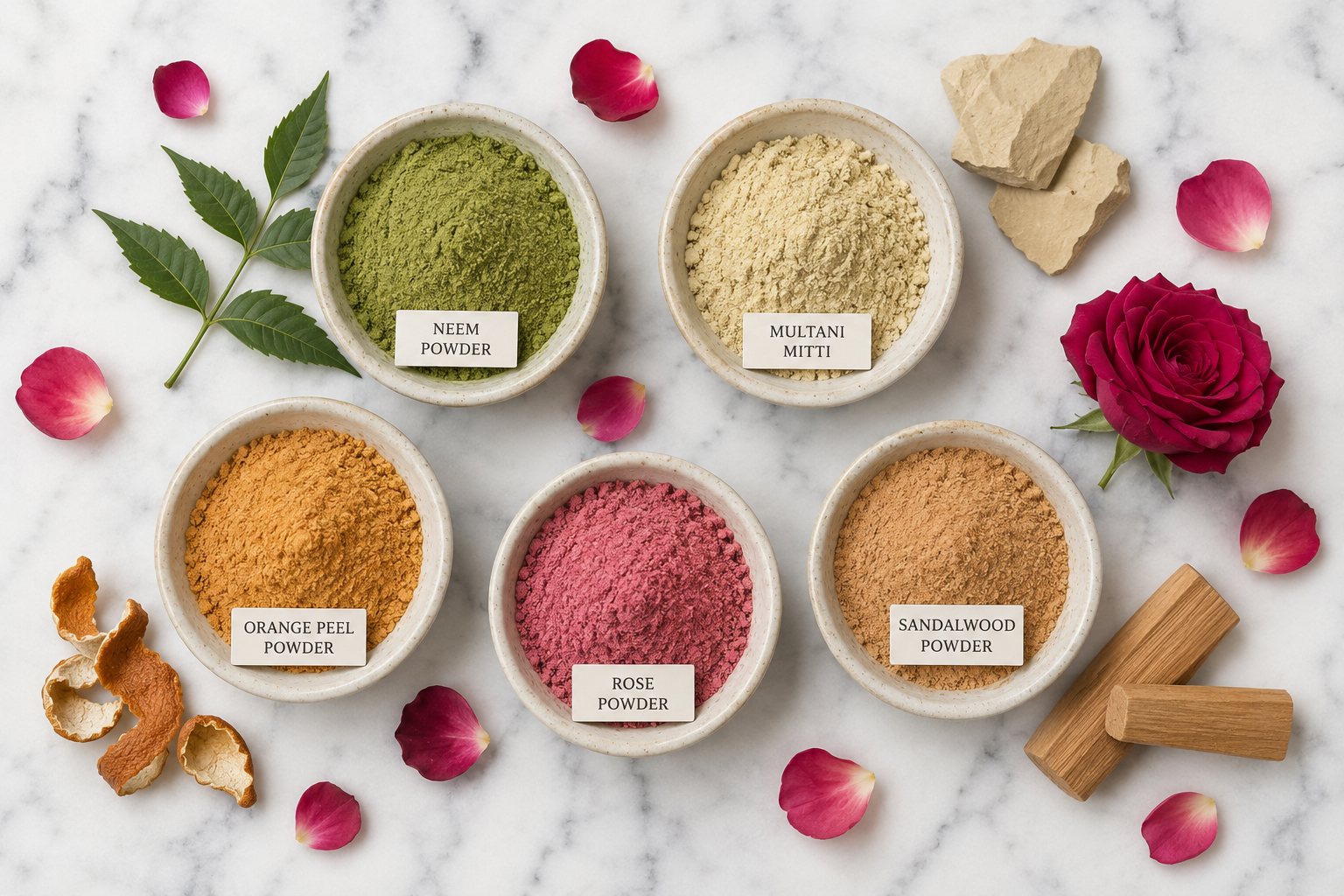
Key ingredients used in this guide:
| Ingredient | Botanical/Origin | Primary Action |
|---|---|---|
| Neem Powder | Azadirachta indica | Antimicrobial, anti-inflammatory |
| Multani Mitti | Fuller’s Earth (Calcium Montmorillonite) | Sebum absorption, pore cleansing |
| Orange Peel Powder | Citrus sinensis | Exfoliation, Vitamin C brightening |
| Sandalwood Powder | Santalum album | Astringent, cooling, scar-fading |
| Rose Powder | Rosa damascena | Toning, soothing, pH balancing |
| Hibiscus Powder | Hibiscus rosa-sinensis | AHA-like exfoliation, pore tightening |
The Science + Ayurvedic Perspective
Oily skin happens when the sebaceous glands overproduce sebum — a waxy lipid that is normal and protective in small amounts but problematic when excess. Triggers include androgens (like testosterone and DHT), heat, humidity, stress, and high-glycaemic diets.
In Ayurveda, oily skin is predominantly a Kapha-Pitta imbalance. Kapha excess causes the heaviness, enlarged pores, and congestion. Pitta excess brings inflammation, redness, and hormonal breakouts. This dual-dosha reality is why one-size-fits-all face packs rarely work long-term — and why the Ayurvedic approach of matching ingredients to your specific imbalance is so effective.
The clay mechanism: Multani Mitti (Fuller’s Earth) works through adsorption — its negatively charged silicate particles bind to positively charged sebum and impurity molecules, lifting them off the skin surface. A 2024 review in IJCRT confirmed that formulations combining multani mitti with neem and orange peel powder showed measurable sebum reduction and reduced blackhead formation.
The neem mechanism: Neem contains azadirachtin and nimbidin — bioactive limonoids with proven antimicrobial activity. A 2022 clinical study published in the Journal of Cosmetic Dermatology (Yogesh et al., J Cosmet Dermatol. 2022;21(7):2849–2858) found that neem-based topical formulations significantly reduced mild-to-moderate acne with minimal side effects, supporting its use as a natural alternative to synthetic antibacterials.
The tannin mechanism: Sandalwood and rose both contain tannins — natural astringents that temporarily contract skin tissue, tighten the appearance of pores, and reduce trans-epidermal water loss. This is the Ayurvedic concept of Kashaya Rasa (astringent taste) acting on the skin.
🔍 Myth vs Fact
| Myth | Fact |
|---|---|
| “Use a face pack every day for oily skin” | Daily clay packs strip the acid mantle. The skin compensates by producing more sebum. 2–3x/week is optimal. |
| “Oily skin doesn’t need moisturising after a face pack” | Sebum and hydration are different. After a clay pack, light water-based hydration (like rose water or aloe) is essential to prevent rebound oiliness. |
| “Lemon juice directly on skin is fine for oily skin” | Lemon’s pH (~2) can cause chemical burns and phototoxic reactions on oily + acne-prone skin. Orange peel powder is a far safer Vitamin C source — it’s buffered, dry, and gentle. |
Benefits of Natural Face Packs for Oily Skin — Especially for Women
1. Sebum Control Without Stripping
Multani Mitti’s adsorption capacity may help balance oil production without destroying the skin barrier. Unlike alcohol-based toners, it works mechanically — not chemically. This matters especially for women with hormonal fluctuations (during periods, pregnancy, or perimenopause) when skin already feels reactive.
💡 Quick tip: Mix multani mitti with rose water instead of plain water for a gentler pack that controls oil and soothes Pitta-driven redness.
2. Acne and Breakout Support
Neem powder’s active compound azadirachtin may inhibit Propionibacterium acnes (now called Cutibacterium acnes) — the bacteria central to inflammatory acne. Research published in Cosmetics (MDPI, 2022) confirmed neem leaf’s antibacterial, anti-inflammatory, and antioxidant properties for topical dermatological use. For women with PCOS-linked hormonal acne along the jawline and chin, this is particularly relevant.
💡 Quick tip: Add a pinch of Suvarn Naturals Neem Powder to any face pack during active breakout weeks, and dial it back during clear-skin phases.
3. Brightening and Vitamin C Boost
Orange peel powder is one of the richest natural sources of Vitamin C (ascorbic acid) and hesperidin. These compounds may support collagen synthesis and reduce melanin overproduction — which shows up as post-acne dark spots, common in Indian skin tones. A 2024 herbal formulation study in IJCRT specifically cited orange peel as reducing “remaining skin markings” when combined with sandalwood and rose.
💡 Quick tip: Use the orange peel pack in the evening — Vitamin C is photosensitive and works better overnight than in direct sunlight.
4. Pore Tightening and Texture Smoothing
The tannins in sandalwood and hibiscus act as natural astringents. They temporarily firm the skin, visibly reduce pore size, and smooth out uneven texture. Sandalwood (Chandan) is also deeply cooling — it pacifies Pitta and reduces the heat-driven inflammation that makes pores appear larger.
💡 Quick tip: Sandalwood face packs work beautifully before events — mix Suvarn Naturals Sandalwood Powder with chilled rose water for an instant brightening effect.
5. Mood and Ritual Benefits
This one no competitor talks about. Hibiscus and rose carry aromatic compounds that have measurable anxiolytic (calming) effects in aromatherapy research. The act of a 10-minute face pack ritual — applying, waiting, washing off — creates a pause in the day that may support stress regulation. Since cortisol is a direct driver of excess sebum, this isn’t a trivial benefit. It’s the Ayurvedic principle of Dinacharya — daily ritual as medicine.
💡 Quick tip: Make your face pack ritual a phone-free 10 minutes. The skin benefits are the same, but the mental reset is real.
Who Should Use Natural Face Packs for Oily Skin?
You’ll likely benefit most if you:
- Have oily or combination skin, especially in the T-zone
- Experience hormonal breakouts linked to your menstrual cycle, PCOS, or postpartum shifts
- Live in a humid climate (most of urban India) where sebum production spikes in summer
- Are in your 20s–30s and dealing with stress-related skin congestion
- Want to replace chemical-laden face washes or salicylic acid products with something gentler and long-term safe
Hormonal connection women should know: Women with PCOS often have elevated androgens, which directly stimulate sebaceous glands to produce more sebum. Herbal packs address the surface symptoms, but the most lasting results come when topical care is combined with internal Ayurvedic support. Think of the face pack as the visible, immediate layer — the outer ritual.
Not ideal if you:
- Have very dry, dehydrated, or eczema-prone skin (clay will worsen dryness)
- Have open wounds, active cystic acne, or sunburned skin
- Are allergic to any of the listed botanicals (do a patch test behind the ear first)
- Are pregnant — consult your doctor before using neem topically in large amounts
How to Use Natural Face Packs for Oily Skin — Step by Step
Basic Method (Works for All 5 Recipes Below)
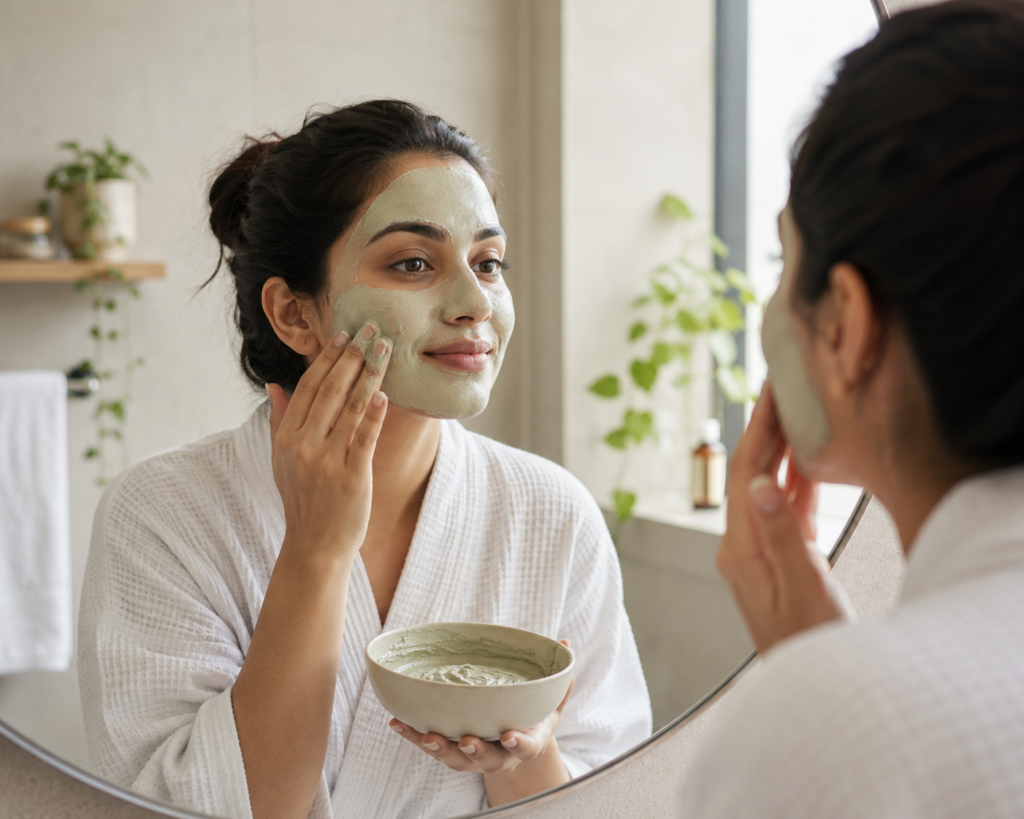
- Cleanse first. Wash your face with a gentle cleanser or plain water. Pat dry.
- Mix your pack. In a small ceramic or glass bowl, combine powders with your liquid base. Aim for a thick paste — not runny, not crumbly. Let it sit 30 seconds to activate.
- Apply with clean fingers or a flat brush. Avoid the eye area and lips.
- Wait 10–15 minutes — not until it cracks completely dry (that’s over-drying).
- Rinse with cool or lukewarm water. Never hot.
- Tone + moisturise immediately after. A few sprays of rose water works perfectly.
Frequency Guide
| Skin State | Recommended Frequency |
|---|---|
| Active breakouts | 3x per week (neem + multani mitti pack) |
| Maintenance (calm skin) | 1–2x per week |
| Brightening/glow | 1x per week (orange peel + sandalwood pack) |
| Sensitive or reactive week | Skip or use rose-only pack |
Dos and Don’ts
| ✅ Do | ❌ Don’t |
|---|---|
| Patch test before first use | Apply to broken or inflamed skin |
| Use cool water for mixing and rinsing | Use lemon juice directly as a substitute |
| Follow up with rose water or aloe | Skip moisturiser thinking oily skin doesn’t need it |
| Store unused dry powder blend in an airtight jar | Mix too far in advance — use within 30 minutes |
5 Natural Face Pack Recipes for Oily Skin (with Suvarn Naturals Powders)
Recipe 1 — The Oil-Balancer (Everyday Kapha Balancer)
Best for: Congested pores, blackheads, excess shine
| Ingredient | Amount |
|---|---|
| Multani Mitti | 2 tsp |
| Neem Powder | ½ tsp |
| Rose water | Enough to make a paste |
Mix, apply for 10–12 mins, rinse with cool water.
Recipe 2 — The Glow Pack (Brightening + Exfoliating)
Best for: Post-acne dark spots, dull skin, uneven tone
| Ingredient | Amount |
|---|---|
| Orange Peel Powder | 1 tsp |
| Multani Mitti | 1 tsp |
| Raw honey | ½ tsp |
| Rose water | To bind |
Apply for 10 mins. Best used in the evening.
Recipe 3 — The Calm-Down Pack (Pitta Cooler)
Best for: Hormonal breakouts, redness, sensitive oily skin
| Ingredient | Amount |
|---|---|
| Sandalwood Powder | 1 tsp |
| Rose Powder | 1 tsp |
| Chilled rose water | To bind |
Leave for 15 mins. Ideal during the week before your period.
Recipe 4 — The Pore Tightener (Hibiscus + Rose)
Best for: Enlarged pores, sagging skin, pre-event skin prep
| Ingredient | Amount |
|---|---|
| Hibiscus Powder | 1 tsp |
| Rose Powder | 1 tsp |
| Aloe vera gel | 1 tsp |
Leave for 12 mins. Follow with a splash of cold water.
Recipe 5 — The Full-Herbal Ritual Pack (Once a Week Reset)
Best for: Deep-cleansing, all-in-one weekly skin reset
| Ingredient | Amount |
|---|---|
| Multani Mitti | 1½ tsp |
| Neem Powder | ½ tsp |
| Orange Peel Powder | ½ tsp |
| Sandalwood Powder | ½ tsp |
| Rose water | To bind |
This is your Sunday reset pack. Apply for 12–15 mins. Follow with a spritz of rose water and a light gel moisturiser.
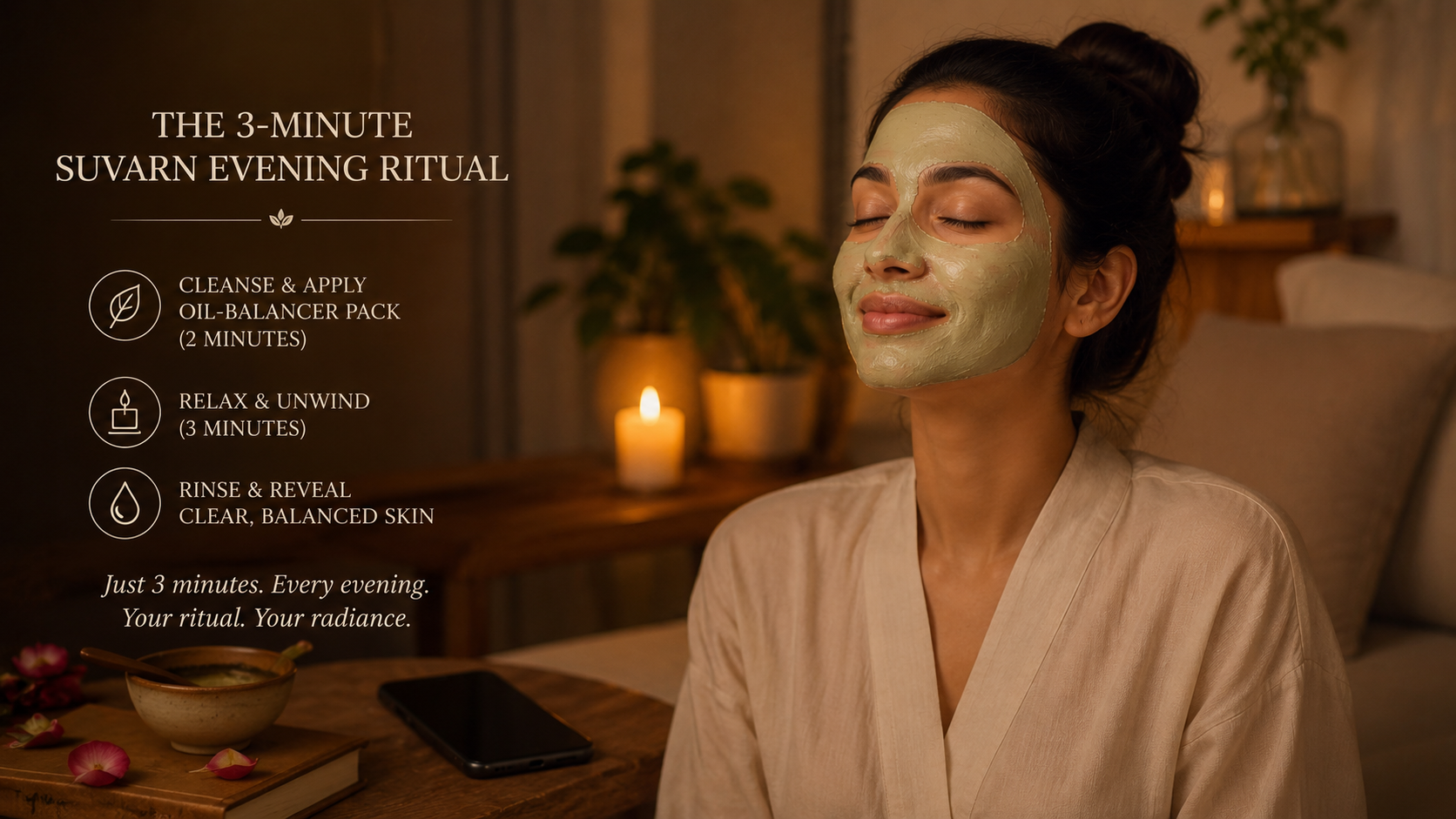
The 3-Minute Suvarn Evening Ritual for Oily Skin
★ This is the section most competitors completely skip — and it’s the most useful one.
You don’t need an elaborate 10-step routine. This single evening ritual takes 3 minutes of prep and 10 minutes of waiting — and it addresses sebum, acne bacteria, and skin tone all at once.
Ingredients
- 1 tsp Multani Mitti
- ½ tsp Neem Powder
- ½ tsp Rose Powder
- Rose water (chilled, if possible)
Steps
Step 1 — Set up (1 minute) Splash your face with cool water. Pat dry. Lay out your bowl and powders.
Step 2 — Mix (1 minute) Combine the three powders. Add rose water a few drops at a time until you get a thick, spreadable paste. Don’t over-mix.
Step 3 — Apply (1 minute) Using clean fingertips, apply in gentle upward strokes. Avoid the under-eye area.
Step 4 — Wait (10 minutes) Put your phone face-down. Let the pack work. You’ll feel a gentle tightening — that’s the tannins and clay doing their job.
Step 5 — Rinse + Finish Rinse with cool water. Immediately spritz rose water to restore pH balance. Apply a dime-sized amount of aloe vera gel or a light water-based moisturiser.
🌿 Pro tip: Mix in ½ tsp of Suvarn Naturals Orange Peel Powder twice a week for added brightening. The Vitamin C in orange peel works with the antimicrobial action of neem to address both active spots and post-acne marks simultaneously.
Natural Face Packs vs Alternatives — Which Is Right for You?
| Metric | Suvarn Naturals Herbal Powders | Generic Herbal Powder (Loose) | Clay-Based Ready Pack (Brand) | Salicylic Acid Wash | Synthetic Sheet Mask |
|---|---|---|---|---|---|
| Ease of use | Mix required (2 mins) | Mix required | Ready to apply | Wash-off only | Ready to apply |
| Time to visible results | 2–4 weeks consistent use | 2–4 weeks | 1–2 weeks | 1–2 weeks | Instant (temporary) |
| Oily skin suitability | ⭐⭐⭐⭐⭐ | ⭐⭐⭐ | ⭐⭐⭐⭐ | ⭐⭐⭐ | ⭐⭐ |
| PCOS-friendliness | High (no synthetic hormones) | Medium (quality varies) | Low–Medium (check ingredients) | Low (drying) | Low |
| Cost per use | ₹5–₹15 | ₹5–₹20 | ₹40–₹100 | ₹20–₹50 | ₹50–₹200 |
| Customisable | ✅ Yes | Partially | ❌ No | ❌ No | ❌ No |
Note: Results vary by individual skin type, consistency of use, and overall skincare routine. No product is a medical treatment.
Side Effects and Precautions
Herbal face packs are generally well tolerated, but here’s what to know before you begin:
Patch test: Always apply a small amount behind your ear or on your inner wrist. Wait 24 hours before using on your face, especially if you have sensitive skin.
Neem: May cause mild dryness or a temporary tingling sensation in some people. If redness or itching occurs, discontinue use.
Orange Peel Powder: Contains natural citrus compounds that may increase photosensitivity. Use orange peel packs in the evening and always follow up with SPF the next morning.
Multani Mitti: If used more than 3x per week, it can over-strip the skin’s natural oils. Start with once a week and build up based on how your skin responds.
Sandalwood: Very rarely, some individuals may have a contact allergy to sandalwood. Patch test is essential.
Pregnancy and breastfeeding: Neem has traditionally been used topically in India, but there is limited clinical research on topical neem during pregnancy. Out of caution, consult your doctor before using neem-based packs during pregnancy or while breastfeeding.
Drug interactions: No significant topical interactions are documented for these herbs at cosmetic concentrations, but if you’re on prescription retinoids or strong topical antibiotics, check with your dermatologist before adding new active ingredients.
When to see a doctor: If you have cystic acne, rapidly spreading inflammation, or skin that isn’t improving after 6–8 weeks of consistent herbal care, consult a dermatologist. Herbal packs are complementary — not a replacement for medical care.
Myths and Mistakes Women Make with Natural Face Packs
Mistake 1: “More is more — I’ll use a face pack every day”
This is the most common mistake repeated across skincare blogs and even some Ayurvedic product pages. Using a clay or herb-based pack daily over-strips the skin’s acid mantle — the slightly acidic film that protects against bacteria and moisture loss. When stripped repeatedly, the sebaceous glands interpret this as drought and produce more sebum to compensate. This is called reactive seborrhea and it explains why some women feel their oily skin is getting worse the more they use face packs.
The fix: 2–3 times a week maximum. Let your skin breathe.
Mistake 2: “If it’s natural, I don’t need to patch test”
Natural doesn’t mean non-allergenic. Neem, sandalwood, and citrus are among the more common botanical allergens. A 10-minute patch test behind the ear can save you days of skin distress.
Mistake 3: “Skip moisturiser after — my skin is already oily”
Sebum (oil) and water-based hydration are completely different. After a clay pack removes sebum, your skin’s moisture barrier is temporarily compromised. Skipping hydration signals the skin to produce more sebum to compensate. Spritz rose water immediately — it restores pH and provides light hydration without heaviness.
Mistake 4: “The pack should dry to a hard crack before I wash it off”
Waiting until the pack is completely cracked and pulling at your skin means you’ve gone too far. That stage causes micro-tears and disrupts circulation. The ideal time to remove a clay pack is when it has set but is just starting to crack at the edges — usually 10–15 minutes.
Mistake 5: “One recipe fits all my oily skin problems”
Oily skin from PCOS or hormonal shifts behaves differently from oily skin caused by heat + humidity or stress. The Kapha-dominant oily skin (congested, consistently oily) responds well to neem + multani mitti. The Pitta-dominant hormonal oily skin (cyclical breakouts, redness) needs more sandalwood and rose. Noticing when your skin gets oily can help you choose the right recipe.
Notes from the Suvarn Naturals Founder
One of the reasons we love herbal powders is their versatility. A single ingredient can be mixed in different ways depending on your skincare routine and preferences. Many traditional beauty rituals relied on simple herbal powders, and we wanted to make those ingredients easily accessible for modern skincare enthusiasts.
What that means in practice: when we source our neem powder, we look for shade-dried neem leaves — not sun-dried, which can degrade the delicate nimbidin content. The smell should be distinctly bitter and earthy, not musty or stale. That bitterness is actually your quality indicator — it tells you the bioactives are intact.
Our multani mitti is processed to a fine, silky texture specifically for face-use — coarser grades are better for hair masks. When you mix it with rose water, it should absorb slowly and swell gently. That’s the sign of real, unadulterated Fuller’s Earth.
The orange peel powder should smell like fresh citrus — bright and slightly tangy. If it smells flat or chemical, the Vitamin C content has likely oxidised and it won’t deliver the brightening you’re looking for.
And our rose powder — made from Rosa damascena petals — should have a soft, true floral scent. Not synthetic-rose, not flat. When it hits your skin with rose water, you’ll notice the difference from generic packs immediately.
This is why we exist: to make these traditional ingredients genuinely accessible and genuinely effective.
FAQs
Can I use a natural face pack for oily skin every day?
No — and this is important. Daily use of clay or herb-based packs can over-strip your skin’s natural oil barrier, triggering more sebum production as compensation. Use face packs 2–3 times a week for balanced results. On other days, a gentle cleanse and rose water spritz is enough.
Which face pack is best for oily skin with PCOS?
Women with PCOS often have androgen-driven sebum overproduction and cyclical breakouts, especially along the jawline. The sandalwood + rose pack (Recipe 3) works well during inflammatory phases, while the neem + multani mitti pack (Recipe 1) addresses ongoing congestion. Neither is a medical treatment — they may help manage surface symptoms alongside broader PCOS care.
How long before I see results from herbal face packs?
Most people notice improved texture and reduced shine within 2–4 weeks of consistent use. Post-acne dark spots may take 6–8 weeks to visibly lighten. Herbal ingredients work gradually and cumulatively — they’re not overnight solutions but they’re far gentler on your long-term skin health.
Can I use these face packs during my period?
Yes, with some adjustment. Skin is often more sensitive and reactive in the days before your period (late luteal phase) due to progesterone fluctuations. During this time, favour the gentler rose + sandalwood pack over the more active neem pack. After your period, skin often tolerates active packs better.
Can I mix all five Suvarn Naturals powders together?
Yes — in fact, Recipe 5 (the Full-Herbal Reset Pack) does exactly this. Each powder has a complementary action. The key is using small amounts of each so no single ingredient overwhelms the blend. Start with the measurements given and adjust based on your skin’s response.
Is orange peel powder safe for sensitive oily skin?
Generally yes, in the concentrations used in face packs (½–1 tsp). It’s far safer than applying fresh lemon juice, which has a pH low enough to cause irritation. That said, if your skin is currently inflamed or sunburned, skip the orange peel pack until things calm down. Always do a patch test first.
Can men use these face packs?
Absolutely. Oily skin, enlarged pores, and acne are very common in men aged 20–40. The neem + multani mitti pack (Recipe 1) is particularly popular and effective for men — it controls shine, clears blackheads, and is simple to use. The same frequency rule applies: 2–3 times a week.
What liquid should I mix the herbal powders with?
Rose water is the most versatile choice — it’s pH-balancing, mildly astringent, and adds a slight fragrance. You can also use plain water (room temperature), aloe vera gel for extra soothing, or raw milk for a creamier texture. Avoid mixing with pure lemon juice or apple cider vinegar — both are too acidic for a face pack.
Can I use these packs if I’m on a retinol or AHA routine?
If you’re using prescription-strength retinoids, introduce herbal face packs carefully. Clay packs on top of an already active retinol routine can sometimes cause excessive dryness. Start with just once a week and check how your skin responds. When in doubt, check with your dermatologist.
How should I store the leftover herbal powder blend?
Store unused dry powder blends in an airtight glass jar, away from moisture and direct sunlight. They should keep for 6–12 months this way. Once mixed with liquid, use within 30 minutes — don’t store mixed paste.
Final Takeaway
Your skin is not broken. It’s communicating — through excess oil, through breakouts, through that 3pm shine that won’t quit. Natural face packs aren’t a miracle fix, but used consistently and correctly, they can meaningfully support clearer, calmer, more balanced skin.
The Ayurvedic approach reminds us that the same ingredient can work differently depending on how you use it, how often, and what you combine it with. The recipes in this guide give you a starting framework — your skin will tell you the rest over time.
Start with Recipe 1 or the 3-minute evening ritual. Give it 3 weeks. Pay attention. Adjust.
