
Stronger Hair with Amla Powder for Hair Care: The Ayurvedic Secret That Actually Works


Published: 13 April 2026 | By Suvarn Naturals
Quick Summary
➡️ Try Suvarn Naturals Gooseberry Powder — stone-ground, fresh-sourced, and potency-tested.
Amla powder for hair care is one of Ayurveda’s most researched herbs for reducing hair fall, boosting shine, and supporting scalp health.
It works by delivering a concentrated dose of Vitamin C, tannins, and Emblicanins A & B — compounds shown to support collagen synthesis and may inhibit DHT-linked hair thinning.
Best used 2–3 times a week as a scalp mask, oil blend, or conditioning rinse.
Ideal for women with hair fall linked to PCOS, postpartum changes, stress, or hormonal shifts.
Myth debunked: Amla does NOT permanently darken hair — the tannin coating is temporary and washes out.
What Is Amla Powder for Hair Care?
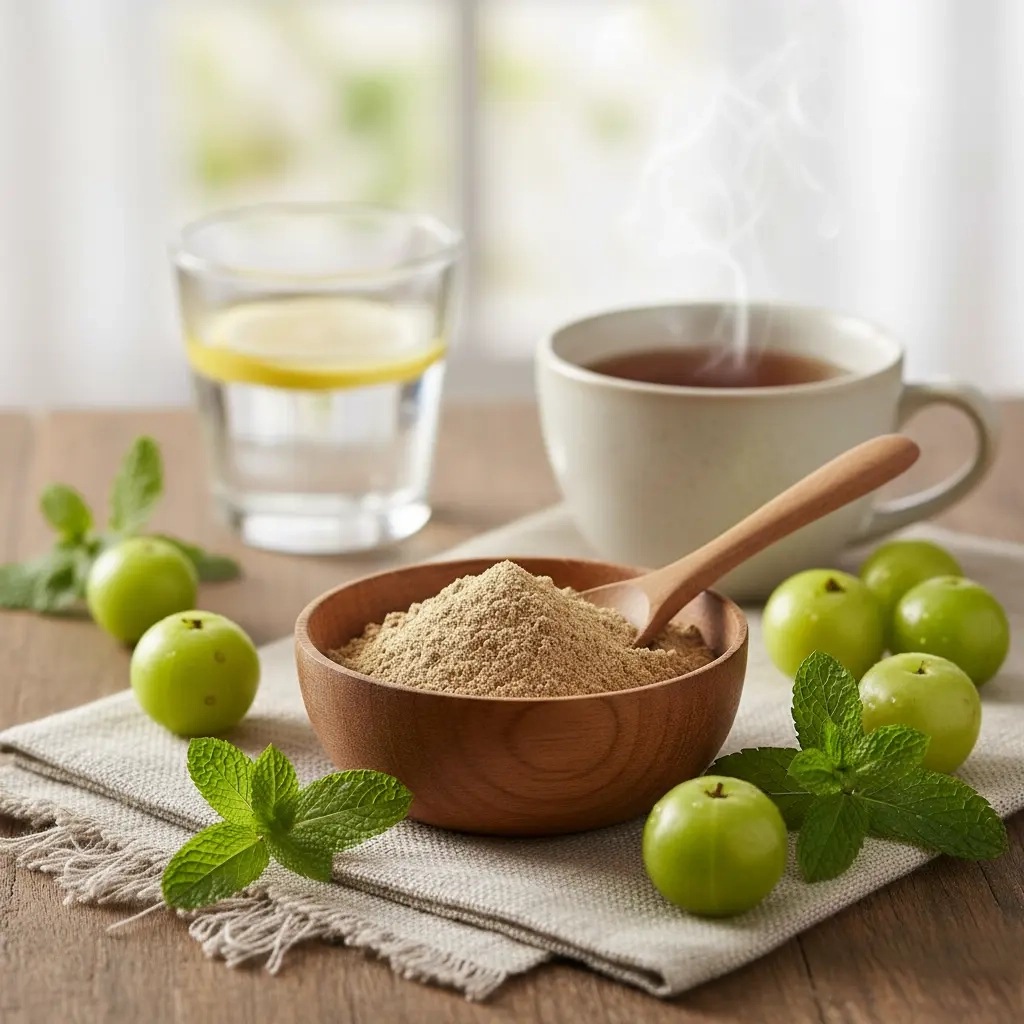
Amla powder for hair care is the dried, ground form of the Indian Gooseberry (Phyllanthus emblica, syn. Emblica officinalis). In Ayurveda, it is known as Amalaki — a Rasayana herb, meaning it is used to nourish, rejuvenate, and restore vitality to the body from What Is Amla Powder for Hair Care?
Amla powder for hair care is the dried, ground form of the Indian Gooseberry (Phyllanthus emblica, syn. Emblica officinalis). In Ayurveda, it is known as Amalaki — a Rasayana herb, meaning it is used to nourish, rejuvenate, and restore vitality to the body from root to tip.
The fresh fruit is stone-cold crushed and low-temperature dried to preserve its bioactive compounds. When used topically or internally, these compounds interact directly with hair follicles, the scalp microbiome, and the DHT pathway — the hormonal trigger behind most female hair thinning.
Key constituents:
- Vitamin C (Ascorbic Acid): One of the highest natural concentrations of any plant — up to 600–900 mg per 100 g of fresh fruit.
- Emblicanin A & B (Galloylglucose): Unique to amla; function as stable, hydrolysable tannins with potent antioxidant action.
- Tannins: Support scalp tightening and reduce excess sebum.
- Gallic acid and Ellagic acid: Help combat oxidative stress at the follicle level.
- Quercetin and Flavonoids: May support microcirculation in the scalp.
In Ayurvedic dosha theory, amla balances all three doshas — but especially cools Pitta excess, which is associated with inflammation, premature greying, and thinning in women under stress or going through hormonal changes.
The Science + Ayurvedic Perspective on Amla for Hair
Amla’s reputation in hair care is backed by both classical texts and modern research. Its primary mechanism for hair support is threefold: antioxidant protection at the follicle, possible DHT inhibition, and collagen precursor activity.
A 2022 study published in Journal of Ethnopharmacology found that Phyllanthus emblica extract significantly reduced oxidative stress markers in scalp tissue and showed potential 5-alpha reductase inhibitory activity — the enzyme responsible for converting testosterone into DHT (Dihydrotestosterone), the compound most linked to androgenic hair loss in women with PCOS.
In Ayurveda, the scalp is considered an extension of the digestive fire (Agni). When Pitta is aggravated — by stress, spicy food, excess heat, or hormonal fluctuation — it “burns” the hair root. Amla, classified as Sita (cooling) and Guru (heavy/nourishing), directly pacifies this excess, traditionally used for conditions described as Khalitya (hair fall) and Palitya (premature greying).
Myth vs. Fact: What Most Websites Get Wrong
| Myth | What Actually Happens | Why It Matters |
|---|---|---|
| “Amla permanently darkens hair” | Tannins temporarily coat the hair shaft, creating the appearance of depth. This washes out fully within 2–4 shampoos. | Stops women with coloured or highlighted hair from avoiding amla unnecessarily. |
| “More amla = more hair growth” | Overuse can dry the scalp due to astringency. 2–3 times/week is optimal. | Excess use can trigger flaking — the opposite of what you want. |
| “Amla works the same for all hair types” | Vata (dry, coarse), Pitta (fine, oily-scalp), and Kapha (thick, heavy) hair need different carrier oils and mixing ratios. | Matching your hair type to your amla ritual dramatically improves results. |
Benefits of Amla Powder for Hair Care — Especially for Women
1. May Reduce Hair Fall and Strengthen Roots
Research suggests that the Emblicanin A & B content in amla may help neutralise free radicals at the dermal papilla — the cellular cluster that controls hair growth cycles. This oxidative protection is especially relevant for women in their 30s experiencing hormonal hair fall.
💡 Quick tip: Mix 2 tsp of Suvarn Naturals Gooseberry Powder with plain curd and apply to roots 30 minutes before washing. The lactic acid in curd enhances amla’s absorption.
2. Supports Scalp Health and Reduces Dandruff
Amla’s natural astringency and tannin content may help regulate excess sebum. Traditional use describes amla paste as a Kandughna (anti-itch) application, and modern studies suggest gallic acid shows antifungal properties that may support a balanced scalp microbiome.
💡 Quick tip: For scalp-specific issues, add 2–3 drops of tea tree oil to your amla mask. Apply only to the scalp, not the hair length.
3. May Support Collagen Synthesis for Thicker Hair
Vitamin C is an essential cofactor for collagen synthesis. Since hair follicles are embedded in collagen-rich connective tissue, adequate ascorbic acid levels — supported topically and internally — may promote a stronger follicular base. This is especially relevant post-pregnancy, when collagen stores are depleted.
💡 Quick tip: Postpartum women may benefit from taking 1/2 tsp amla powder in warm water with honey internally, alongside topical use. Always check with your doctor first.
4. May Help with Premature Greying
Ayurvedic texts cite amla as the primary herb for Palitya (premature greying). Modern research points to antioxidant activity as the likely mechanism — free radicals damage melanocytes (pigment cells). Amla’s Emblicanin complex may reduce this cellular oxidative load.
💡 Quick tip: Consistent internal use (small amounts, daily) is more effective for greying than topical use alone. Consider a morning shot of amla powder mixed with warm water.
5. Adds Natural Shine and Conditions Hair
The tannin and Vitamin C combination tightens the cuticle layer of the hair shaft, which reflects more light — resulting in visible shine. This effect is immediate after the first use and builds over consistent application.
💡 Quick tip: For a glossy finish, rinse your amla mask off with cool water. Heat opens the cuticle; cold water seals it.
Who Should Use Amla Powder for Hair Care?
Amla powder is particularly well-suited for:
- Women with PCOS-related hair thinning: DHT excess is a common feature of PCOS. Amla’s potential 5-alpha reductase inhibiting activity may support hormonal hair health alongside medical care.
- Postpartum women (after 6 weeks): The drop in oestrogen post-delivery accelerates hair shedding. Amla’s nutrient profile may help during the regrowth phase.
- Perimenopause (40–55 age group): Declining oestrogen weakens follicular anchoring. Regular amla use — topical and internal — traditionally supports this transition.
- Students and professionals under chronic stress: Cortisol elevation pushes follicles into the telogen (shedding) phase prematurely. Amla as a Rasayana herb may help modulate the oxidative consequences of chronic stress.
- Women with dry, heat-damaged, or chemically treated hair: The conditioning and antioxidant action helps rebuild hair quality over 4–8 weeks.
Not Ideal If…
- You are allergic to gooseberries or Phyllanthus species (rare but possible).
- You are pregnant (internal use — consult your doctor; topical use is generally considered safe).
- You have very low iron levels and are taking iron supplements — Vitamin C significantly enhances iron absorption, which can affect your dosage. Discuss with your physician.
- You have active open scalp wounds or severe eczema on the scalp.
How to Use Amla Powder for Hair Care — Step by Step
Internal Use (Supports Hair from Within)
- Dosage: 1/4 to 1/2 tsp per day (hedged — consult your practitioner for personalised guidance).
- Best time: Morning, on an empty stomach or with warm water.
- Mix with: Honey, warm water, or blend into a smoothie.
- When to expect results: Traditionally, Ayurveda advises consistency over 90 days for Rasayana herbs to show systemic effects.
Topical Hair Mask Use
- Dosage: 2–3 tsp per application.
- Frequency: 2–3 times per week.
- Base options: Curd (moisturising), coconut oil (nourishing), fenugreek water (stimulating).
- Application time: 20–45 minutes before washing.
Dos and Don’ts
| Do | Don’t |
|---|---|
| Patch test before first topical use | Apply on broken or inflamed scalp |
| Use cool water to rinse | Use hot water — it strips the benefits |
| Store in an airtight container away from sunlight | Store in humid areas (degrades Vitamin C quickly) |
| Pair with a gentle sulphate-free shampoo | Follow immediately with a harsh clarifying shampoo |
| Use consistently for at least 4 weeks | Expect overnight results — Rasayana herbs work progressively |
The 3-Minute Amla Powder Hair Ritual
This section is the difference between occasional use and real results. Most women use amla once and forget it. This ritual builds it into your week effortlessly.
The Sunday Night Deep-Nourish Ritual
Ingredients
- 2 tsp Suvarn Naturals Gooseberry Powder
- 3 tbsp full-fat curd (room temperature)
- 1 tsp cold-pressed coconut oil or sesame oil (sesame for Vata and Kapha hair; coconut for Pitta)
- Optional: 4–5 drops of rosemary essential oil (research from 2023 suggests rosemary oil may be comparable to minoxidil for hair growth support)
Steps
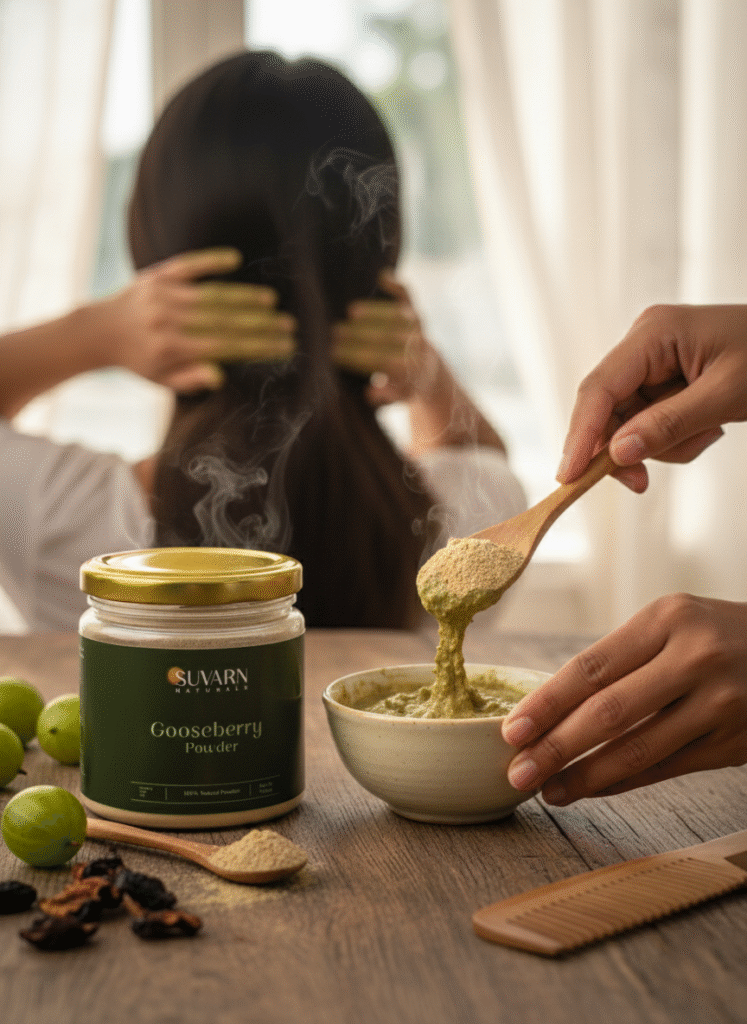
- Mix the Gooseberry Powder and curd in a non-metal bowl. Let it sit for 5 minutes — this activates the tannin compounds.
- Warm the coconut or sesame oil slightly (not hot). Add to the mix. Stir until it becomes a smooth paste.
- Part your hair into sections. Apply first to the scalp using your fingertips, massaging in small circles for 2–3 minutes.
- Coat the hair length from root to tip. Wrap in a warm towel or shower cap.
- Leave for 30–45 minutes. Use this time to rest — the warmth enhances absorption.
- Rinse with cool water. Shampoo once with a mild, sulphate-free cleanser.
🌿 Pro tip: For extra conditioning, mix a pinch of our Orange Peel Powder into the paste. The natural AHAs in orange peel help lift scalp buildup while amla nourishes — a one-step exfoliate-and-feed ritual.
Amla Powder for Hair vs. Alternatives: Which Is Best?
| Metric | Suvarn Naturals Gooseberry Powder | Generic Market Powder | Amla Capsules | Synthetic Hair Serums |
|---|---|---|---|---|
| Ease of Use | Medium (mix required) | Medium | High (no mixing) | High |
| Time to Visible Results | 3–6 weeks | 4–8 weeks (inconsistent quality) | 6–12 weeks | 1–2 weeks (surface only) |
| Hair Type Suitability | All types (adjust carrier) | Variable | All types | Label-dependent |
| PCOS-Friendliness | High — supports DHT pathway naturally | Moderate | Moderate | Low — often contains synthetic hormones |
| Estimated Monthly Cost | ₹150–₹300 | ₹80–₹150 | ₹300–₹600 | ₹500–₹2000+ |
Note: “Time to results” may vary based on individual health, consistency, and root cause of hair issue.
Side Effects and Precautions
Amla powder is considered safe for most adults when used topically or internally in traditional culinary/wellness amounts. That said:
- Pregnancy: Internal supplementation should be discussed with your OB/GYN. Topical use on the scalp is generally considered safe, but always patch test.
- Bleeding disorders: Amla has mild blood-thinning properties. If you are on anticoagulants (like warfarin), consult your doctor before regular internal use.
- Diabetes medication: Amla may support blood sugar regulation, which could amplify the effect of diabetes medications. Monitor accordingly.
- Dry scalp or eczema: The astringency of amla can worsen very dry conditions. Always mix with a moisturising carrier (curd, oil) and reduce frequency if dryness increases.
- Scalp tingling: Mild tingling after application is normal due to the acidic pH. Burning or redness is not — rinse immediately if this occurs.
When to see a doctor: If you experience sudden, patchy hair loss (alopecia areata pattern), a sudden increase in shedding over 200+ strands per day, or visible scalp inflammation, please consult a dermatologist. Amla supports wellness — it is not a substitute for medical diagnosis or treatment.
Myths and Mistakes Women Make with Amla Powder for Hair Care
Myth 1: “Amla will permanently turn my hair dark.”
This is the most repeated misconception online — and it stops thousands of women from using one of Ayurveda’s best-researched herbs. What actually happens: the tannins in amla temporarily coat the outer cuticle, creating a slightly deeper appearance. It washes out completely within 2–4 shampoos. It does not alter melanin production topically.
Myth 2: “Using more amla means faster results.”
Amla is astringent — one of the six tastes in Ayurveda that, in excess, causes dryness. Daily heavy masking without adequate moisturising can lead to scalp flaking and increased breakage. Twice a week is the sweet spot.
Myth 3: “Amla powder is only for dark hair types.”
Amla works on all hair types and colours — it supports the scalp, not the pigment. Women with highlighted, balayaged, or grey hair can safely use amla. If concerned about the temporary tannin coating, simply mix with a greater ratio of oil and reduce contact time to 20 minutes.
Myth 4: “I need to add lemon juice to activate amla.”
Amla is already one of the most Vitamin C-dense plants on earth. Adding lemon juice increases the acidity beyond what is beneficial for the scalp’s natural pH (4.5–5.5). This irritates the follicle and can strip the protective acid mantle. Skip the lemon.
Mistake: Using Metal Bowls for Mixing
Metal reacts with amla’s high ascorbic acid content, oxidising the Vitamin C almost immediately. Always use glass, ceramic, or wood. This single habit change can significantly improve your results.
Notes from the Suvarn Naturals Founder
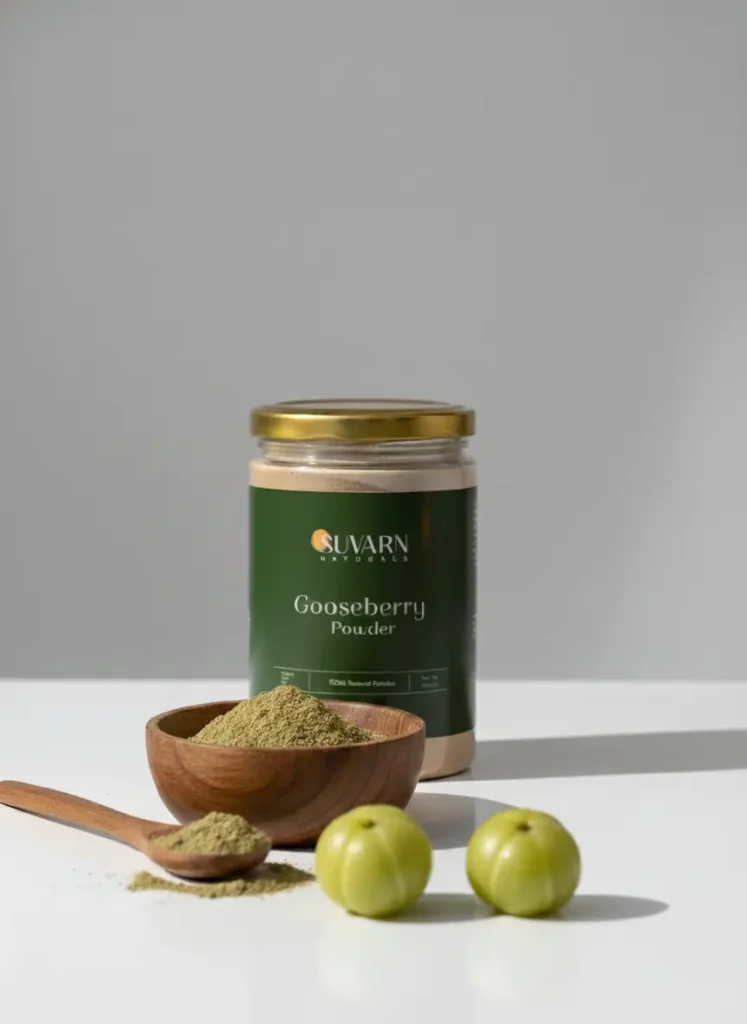
At Suvarn Naturals, we carefully source our amla from trusted farms to ensure maximum freshness and potency. When we first tested this Gooseberry Powder, we noticed its fine texture and naturally tangy, earthy aroma — clear signs of purity. Our early formulations showed visible improvements in hair shine and scalp health, which inspired us to bring this product to you.
What sets our Gooseberry Powder apart is how we source and process it. The amla is harvested at peak season — typically November to February — when the emblicanin content is highest. We use low-temperature stone-grinding to preserve heat-sensitive Vitamin C, which is destroyed above 60°C. The result is a powder with a noticeably bright, citrus-forward aroma and a pale greenish-beige colour — both visual and olfactory markers of active, unoxidised material.
When you open a fresh pouch, you should notice a tart, slightly astringent smell. If your amla powder smells flat, musty, or looks deep brown, it has likely oxidised and lost most of its bioactive potency — regardless of brand. Freshness is everything with ascorbic acid-dependent herbs.
We test every batch for heavy metals, microbial contamination, and moisture content. No fillers, no additives, no flowing agents. Just pure, powdered Amalaki — the way it has been used for over 5,000 years.
Frequently Asked Questions About Amla Powder
How often should I use amla powder for hair growth?
For topical use, 2–3 times per week is the recommended frequency for most women. This provides consistent nourishment without over-drying the scalp. For internal use, 1/4–1/2 tsp daily is the traditional Ayurvedic guideline, but individual needs vary — check with your healthcare provider.
Q2. Can amla powder help with PCOS-related hair loss?
Research suggests amla may offer modest 5-alpha reductase inhibitory effects, which could support androgenic hair health. However, it is not a medical treatment for PCOS. Use it as part of a broader lifestyle approach alongside medical guidance. Results may take 8–12 weeks of consistent use.
Q3. Can I mix amla powder with coconut oil directly?
Yes. Warm 3 tbsp of cold-pressed coconut oil gently and stir in 1–2 tsp of amla powder. This creates an infused oil that can be left on overnight or for 30 minutes before washing. Use a non-metal spoon to mix.
Q4. Will amla powder affect chemically coloured or bleached hair?
The temporary tannin coating may create a slightly deeper appearance, but it does not chemically alter colour. For bleached or very light hair, reduce contact time to 15–20 minutes and rinse thoroughly. Patch test on a small section first.
Q5. Is amla powder safe during breastfeeding?
In small culinary amounts (like in food), amla is generally considered safe. For larger wellness doses, consult your doctor. Topical use on the scalp during breastfeeding is widely considered safe, but always patch test.
Q6. Can men use amla powder for hair fall?
Absolutely. Amla works for all genders. For male-pattern hair thinning, the potential DHT-modulating properties are especially relevant. Men with oily scalps benefit from the astringent action of amla in a lighter carrier like aloe vera gel.
Q7. How long before I see results?
Most users notice improved shine and reduced scalp oiliness within 2–4 weeks. For significant reduction in hair fall, traditional Ayurvedic guidance suggests consistent use for 90 days. Hair growth cycles are 3–6 months long — any herb working on follicular health needs this window.
Q8. Can I take amla powder internally and use it topically at the same time?
Yes — this is actually the classical Ayurvedic approach. Internal use provides systemic nourishment to follicles from inside; topical use delivers concentrated actives directly to the scalp. Using both simultaneously traditionally yields better outcomes.
Q9. What is the difference between amla powder and amla oil?
Amla oil is typically an infusion of amla extract in a carrier oil (like sesame or coconut). Amla powder gives you the raw, full-spectrum material including fibre and tannins. Powder allows more flexibility — you can make fresh masks, oils, or take it internally. Oil is easier to apply directly without mixing.
Q10. Does amla powder expire? How should I store it?
Vitamin C oxidises quickly when exposed to light, heat, and moisture. Store amla powder in an airtight glass jar away from sunlight and humidity. Properly stored, it retains potency for 12–18 months. If the aroma fades and colour darkens significantly to brown, replace it.
Final Takeaway
If you have been looking for one herb that bridges traditional Ayurvedic wisdom and modern hair science, amla powder for hair care is it. It works at the scalp, nourishes the follicle, and over time, helps your hair reflect the health it deserves — shine, strength, and resilience.
The key is consistency and quality. A pure, fresh powder used 2–3 times a week with the right ritual beats an expensive serum used occasionally every single time.
Start with the Sunday Night Deep-Nourish Ritual above. Give it four weeks. Then tell us what you notice.
➡️ Explore Suvarn Naturals Gooseberry Powder — sourced fresh, tested for potency, and trusted by thousands of women across India.
One Comment