Calm Your Mind with Blue Pea Flower for Stress Relief: What Science & Ayurveda Both Agree On

Published: 16 April 2026 | By Suvarn Naturals
Quick Read
👉 Try Suvarn Naturals Blue Pea Flower Powder — finely milled, naturally sun-dried, zero additives.
Blue pea flower (Clitoria ternatea) may support stress relief through its effect on GABA pathways — the same calming system targeted by many modern relaxants.
Traditionally classified as a Medhya Rasayana in Ayurveda — meaning a nerve tonic that sharpens the mind while calming the body.
Key bioactive: Ternatin anthocyanins — potent antioxidants that may help reduce cortisol-linked oxidative stress.
Works best as a daily ritual, not as a one-sip fix. Consistency is everything.
Especially useful for women dealing with stress-linked skin dullness, hormonal imbalance, or PCOS-related anxiety.
The Intro: When Stress Shows Up in Your Skin, Your Cycle, and Your Sleep
You know that feeling — it’s 10:30 PM, your mind won’t stop, and your skin looks as tired as you feel.
For many women in urban India, chronic stress is the invisible root behind breakouts, irregular periods, hair fall, and restless nights. And most “solutions” are either synthetic, expensive, or just don’t feel right.
That’s where blue pea flower for stress relief has quietly been gaining attention — not just in wellness circles, but in early clinical research too.
In this guide (updated 16 April 2026), we’ll walk through exactly how this deep-indigo Ayurvedic herb works, who it’s most useful for, and how to make it part of a realistic daily ritual. We’ll also share a founder’s note on how Suvarn Naturals sources and mills this flower — because sourcing matters more than most brands admit.
What Is Blue Pea Flower for Stress Relief?
Blue pea flower (Clitoria ternatea) is a flowering vine native to tropical Asia, used for centuries in Ayurveda as a nerve tonic and mental rejuvenator. Its deep indigo petals contain ternatin anthocyanins — antioxidant compounds that may support the brain’s calming chemistry.
Known in Sanskrit as Aparajita (meaning “the undefeated one”), this flower has been a core ingredient in classical Ayurvedic formulations for the mind. In traditional texts, it is classified as a Medhya Rasayana — a category of herbs that nourish the nervous system, improve memory, and reduce mental fatigue.
Botanical name: Clitoria ternatea L. Sanskrit name: Aparajita (अपराजिता) Key constituents: Ternatin anthocyanins, kaempferol, p-coumaric acid, delphinidin glycosides, flavonoids
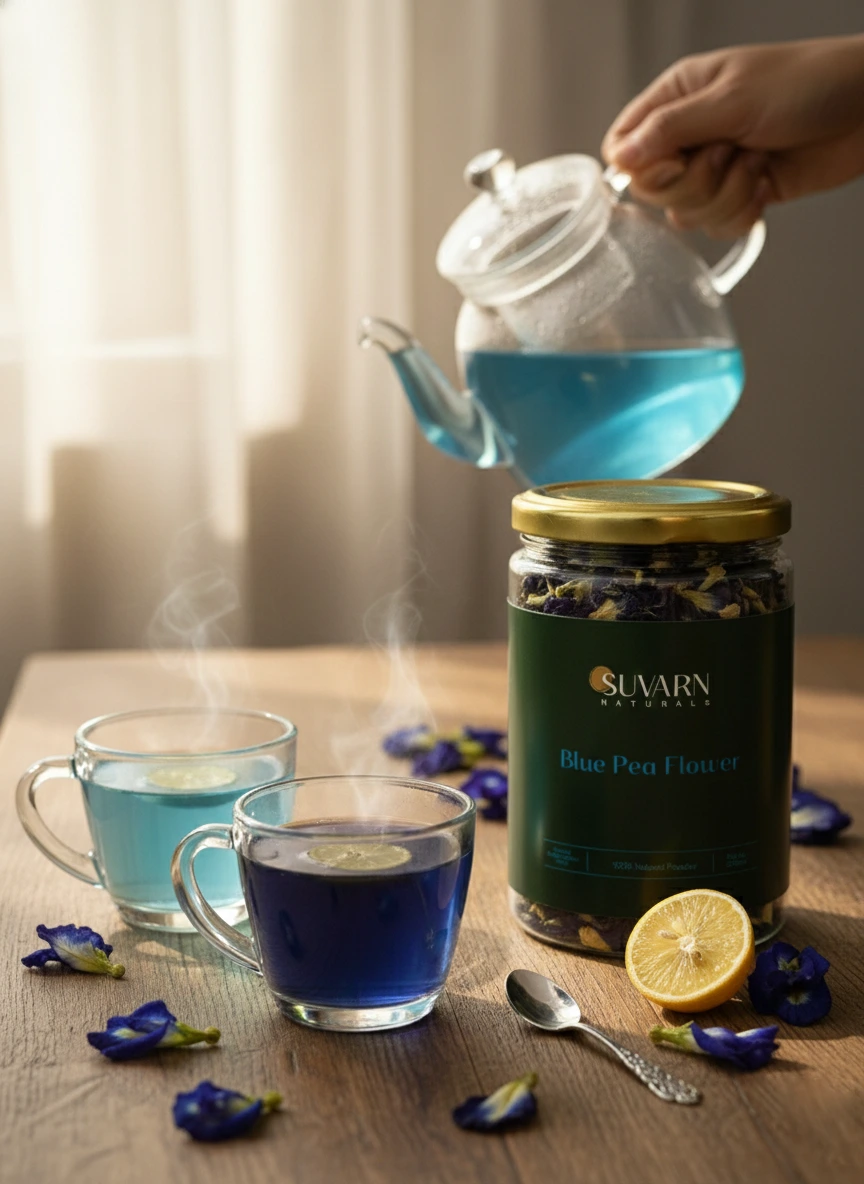
In modern wellness, you’ll find it sold as a loose-dried flower, fine powder, or extract — most commonly brewed as a vivid blue herbal tea.
The Science + Ayurvedic Perspective on Blue Pea Flower
Blue pea flower may support stress relief by interacting with the brain’s GABA (gamma-aminobutyric acid) system — the primary inhibitory neurotransmitter network that reduces neural excitability and promotes calm. Research also suggests it may help modulate cortisol, the body’s main stress hormone.
The Ayurvedic Lens
In Ayurveda, stress is largely a Vata imbalance — the air-and-space dosha that governs the nervous system. When Vata goes out of balance, the mind becomes scattered, anxious, and over-stimulated.
Aparajita is considered cooling and calming in nature (sheeta virya). It pacifies both Vata and Pitta doshas. This makes it particularly useful for the kind of hot, reactive stress — irritability, skin inflammation, hormonal disruption — that many urban women experience.
The Modern Research
A 2022 study published in Nutrients (Chusak et al.) found that Clitoria ternatea extract significantly reduced biomarkers of oxidative stress in human subjects, supporting its traditional use as a nerve-protective herb. Oxidative stress is closely linked to elevated cortisol, and reducing it may take some pressure off the HPA axis — the body’s stress-regulation system.
Preliminary animal studies have also shown blue pea flower extracts may enhance GABA activity in the brain, supporting a calming effect similar to — but gentler than — pharmaceutical anxiolytics.
Myth vs. Fact Table
| Common Claim | The Truth |
|---|---|
| “Blue pea tea works like a sedative — one cup and you’re calm” | It works as a tonic, not a sedative. Consistent daily use over 2–4 weeks builds its effect. |
| “The benefits are just the antioxidants from the blue colour” | The ternatin anthocyanins are active compounds with specific neuro-protective roles, not just pigment. |
| “It’s only useful as a tea for relaxation” | Research suggests benefits for skin, cognition, hair, and hormonal health — not just acute relaxation. |
Benefits of Blue Pea Flower for Stress Relief — Especially for Women
Blue pea flower offers a range of benefits for women that go well beyond simple relaxation. Its action on the HPA axis, antioxidant load, and collagen-linked pathways makes it particularly relevant for stress-related skin, hormonal, and hair concerns.
May Support Skin Glow Under Stress
Chronic stress elevates cortisol, which degrades collagen, inflames pores, and dulls the complexion. The ternatin anthocyanins in blue pea flower are among the most potent flavonoids studied for their anti-inflammatory and collagen-protective properties.
Research suggests these compounds may help reduce oxidative damage to skin cells — the same damage responsible for dullness and early ageing caused by stress.
💡 Quick tip: Mix ½ tsp of Blue Pea Flower Powder in warm coconut milk before bed. The anti-inflammatory effect may show up in your skin within 2–3 weeks of consistent use.
May Help Ease Anxiety-Driven Hormonal Disruption
For women with PCOS or irregular cycles, stress is often the trigger — not just a side effect. The cortisol–oestrogen axis is delicate. When cortisol stays elevated, it can suppress progesterone and disrupt ovulation.
By potentially supporting GABA activity and helping bring cortisol patterns back toward balance, blue pea flower may play a supportive role in the hormonal ecosystem. It is not a treatment for PCOS, but as part of a holistic approach, it may support the nervous system’s role in hormonal regulation.
💡 Quick tip: Pair with Moringa Powder Benefits — moringa’s iron and B-vitamin content complements the nerve-calming effect of blue pea flower for women with hormonal fatigue.
May Reduce Stress-Related Hair Fall
Telogen effluvium — temporary hair fall triggered by stress — is one of the most common complaints among women aged 25–40. Blue pea flower has long been used in Ayurvedic hair rituals for its scalp-calming, circulation-boosting, and potential DHT-modulating properties.
While scalp application (as a paste or rinse) targets hair follicles directly, internal use may work on the root stress-cortisol pathway.
💡 Quick tip: Prepare a cold blue tea rinse (1 tsp powder steeped in 1 cup cool water, strained), and use it as a final rinse after shampooing. Leave on for 5 minutes.
May Improve Sleep Quality and Mental Calm
Poor sleep and stress form a vicious cycle. Blue pea flower’s potential GABA-supporting action may help quiet the mind before sleep — without the grogginess associated with pharmaceutical options.
Traditional Ayurvedic texts recommend Aparajita in evening formulations (Sandhya prayoga) for exactly this reason — to ease the transition from the activity of day to the restoration of night.
💡 Quick tip: Brew a cup 30–45 minutes before bed. Adding a pinch of ashwagandha powder to the same cup may deepen the calming effect.
May Support Cognitive Clarity During High-Stress Periods
Early research on Clitoria ternatea extracts in animal models has shown improved acetylcholine activity — a neurotransmitter central to memory and learning.
💡 Quick tip: Try it as a morning blue latte (powder + warm oat milk + a touch of honey) for calm focus before a demanding day.
Who Should Use Blue Pea Flower for Stress Relief?
Blue pea flower is best suited for people experiencing chronic low-grade stress, stress-linked skin and hair issues, hormonal sensitivity, or sleep disruption — and who want a gentle, natural approach.
Specific groups who may benefit most:
- Women with PCOS — stress management is foundational to hormonal balance
- Working women aged 25–40 — managing career, family, and health simultaneously
- Postpartum women — navigating sleep deprivation, mood shifts, and hormonal recovery
- Students and exam-takers — needing calm focus without sedation
- Women in perimenopause — where cortisol volatility worsens hot flashes and sleep disruption
Not Ideal If…
- You are pregnant (consult your doctor before use — preliminary data on uterine effects is insufficient)
- You are on prescription anxiolytics or antidepressants (potential GABA interaction — medical advice is essential)
- You have known legume allergies (Clitoria ternatea belongs to the Fabaceae family)
- You expect immediate, single-use results — this is a tonic herb, not a quick fix
How to Use Blue Pea Flower — Step by Step
Blue pea flower powder is easiest used as a daily herbal drink. Start with ½ tsp per day, ideally in the evening, and build to 1 tsp over 1–2 weeks depending on tolerance.
Three Ways to Use It
1. As a herbal tea or infusion (most common)
- Add ½–1 tsp powder to 200ml of warm (not boiling) water
- Stir well, allow to steep for 2 minutes
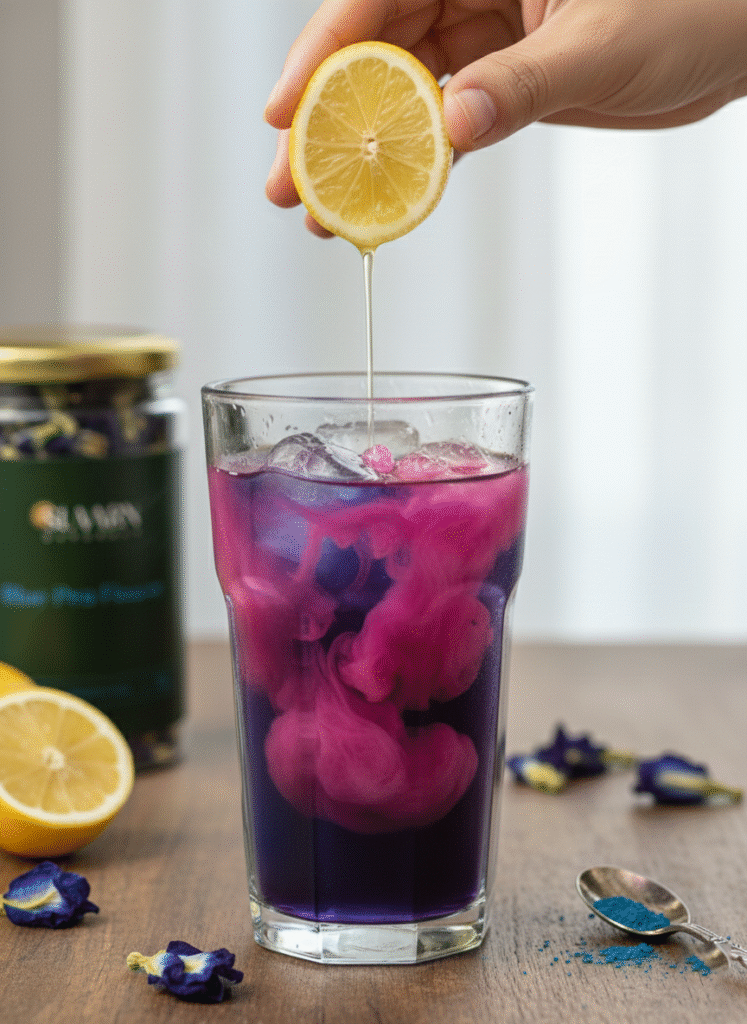
- Add a squeeze of lemon to watch the colour shift from blue to purple (pH change from anthocyanins)
2. As a blue milk latte (for absorption)
- Blend ½ tsp into warm oat milk or full-fat cow’s milk
- Add honey and a pinch of cardamom
- Fat-soluble compounds in milk may enhance absorption of certain flavonoids
3. As a topical rinse or face mask (for skin/hair)
- Mix 1 tsp with rose water or plain water into a paste
- Apply to face or scalp for 15–20 minutes, rinse clean
Dos and Don’ts
| ✅ Do | ❌ Don’t |
|---|---|
| Use consistently for at least 3–4 weeks | Expect results from a single use |
| Start with ½ tsp and increase gradually | Exceed 1.5 tsp/day without guidance |
| Combine with warm liquids for comfort | Mix with boiling water — it degrades anthocyanins |
| Store in a cool, dry, airtight container | Store near heat or moisture |
| Consult a doctor if on prescription medication | Self-substitute prescribed medication |
The 3-Minute Blue Pea Flower Evening Ritual
★ A simple, science-backed nighttime ritual that takes 3 minutes — and may transform your sleep and skin over 30 days.
This is the kind of ritual that doesn’t require a new routine. It replaces the late-night scroll.
Ingredients
- ½ tsp Suvarn Naturals Blue Pea Flower Powder
- 200ml warm oat milk or full-fat milk
- ½ tsp raw honey
- 1 small pinch of cardamom powder
- Optional: 3–4 drops of rose water
Steps
- Warm your milk — not boiling, just comfortably warm to the touch (around 55–60°C)
- Add the blue pea flower powder — stir gently in a clockwise direction (yes, this is intentional; slow, mindful movement is part of the ritual)
- Add cardamom and honey — cardamom supports digestion and adds warmth; honey binds the formulation in Ayurvedic tradition
- Add rose water if using — rose is a natural nervous system tonic, and its aroma alone activates the parasympathetic (rest-and-digest) response
- Sit without your phone for 3 minutes — hold the cup, inhale the steam, and allow the colour to slow you down. This is colour-assisted relaxation — the deep indigo-violet hue has a documented calming effect on the visual cortex.
- Drink slowly — sip over 5–7 minutes, ideally seated
💡 Pro tip: For women dealing with hormonal stress or PCOS-linked anxiety, try blending this with our Moringa Powder Benefits — add ¼ tsp moringa to the same cup for added mineral and adaptogenic support.
Want more ritual inspiration? See our Natural Detox Drinks guide for morning companions to this evening ritual.
Blue Pea Flower vs. Alternatives — Which Is Right for You?
| Metric | Suvarn Naturals Blue Pea Flower Powder | Generic Loose Dried Flowers | Blue Pea Capsules | Synthetic Anxiolytics |
|---|---|---|---|---|
| Ease of use | ⭐⭐⭐⭐⭐ Fine powder, blends easily | ⭐⭐⭐ Needs straining and steeping | ⭐⭐⭐⭐ Easy to swallow | ⭐⭐⭐⭐ Very easy |
| Time to visible results | 2–4 weeks consistent use | 2–4 weeks | 3–6 weeks (lower bioavailability) | Days (but dependency risk) |
| Skin type suitability | All skin types, anti-inflammatory | All types (unpredictable potency) | Systemic only, no topical use | Not relevant |
| PCOS-friendliness | May support hormonal calm | Variable — depends on quality | Moderate | Not advised without medical supervision |
| Cost (monthly) | ₹400–600 approx. | ₹200–400 (variable quality) | ₹600–1,000 | ₹500–2,000+ |
Note: No herbal supplement replaces medical treatment. The comparison above is for lifestyle wellness use only.
Side Effects and Precautions
Blue pea flower is generally considered safe for most healthy adults when used in food and beverage quantities. However, like all bioactive herbs, it warrants mindful use.
Possible Side Effects
- Nausea — rare, usually from taking it on an empty stomach; take with milk or after a light meal
- Mild digestive discomfort — in sensitive individuals; reduce dosage and build up slowly
- Allergic reactions — rare but possible, particularly in those with legume sensitivities
Specific Cautions
- Pregnancy: Insufficient data for safe recommendation. Please avoid without explicit medical clearance.
- Breastfeeding: Limited data available. Consult a doctor.
- Blood thinners / anticoagulants: Preliminary data suggests possible interaction with platelet aggregation; seek medical advice.
- Prescription anxiolytics / sedatives: Potential additive GABA effects. Do not combine without professional guidance.
When to see a doctor: If your stress or anxiety is significantly impacting daily function, relationships, or physical health — please speak to a qualified healthcare provider. Herbal support works best alongside, not instead of, professional care.
Myths and Mistakes Women Make with Blue Pea Flower
★ This section addresses the most common misunderstandings that cause women to give up on blue pea flower before it has a chance to work.
Myth 1: “I drank it once and felt nothing — it doesn’t work.”
This is the most common mistake. Blue pea flower is an adaptogenic tonic, not a pharmaceutical. Its benefits build through consistent use. Like vitamin C for skin — you don’t see results from one tablet. Give it 3–4 weeks of daily use.
Myth 2: “The pretty colour is just aesthetic — it doesn’t do anything.”
Wrong. The indigo colour is the medicine. The blue comes from ternatin anthocyanins — specific flavonoid compounds with documented antioxidant and neuroprotective activity. The deeper the blue, the more potent the anthocyanin content.
Myth 3: “I can just buy any blue tea from the supermarket.”
Generic “butterfly pea flower tea bags” often contain dried whole flowers with variable anthocyanin content and no quality testing. Concentration, drying method, and milling all affect bioavailability. Finely milled powder steeped briefly retains more active compounds than large dried petals brewed for 10+ minutes.
Myth 4: “It’s only useful for relaxation — I take it when I’m stressed.”
Its benefits for hair, skin, and cognition are cumulative. Waiting for a “stressful day” to take it means you’ll never build the therapeutic baseline the herb needs to work on those deeper concerns.
Myth 5: “More is better — I’ll take 2 tsp to see faster results.”
Higher doses have not been shown to accelerate benefits and may cause digestive discomfort. Stay at ½ to 1 tsp daily. Patience, not quantity, is the active ingredient.
Notes from the Suvarn Naturals Founder
“At Suvarn Naturals, our Blue Pea Flower is sourced from carefully selected farms where flowers are naturally sun-dried to retain their deep indigo colour and delicate aroma. The texture is finely milled, making it easy to blend into teas and wellness drinks.
During our first formulation test, we were amazed by how calming the colour itself felt — even before the first sip. There was something visceral about watching that deep blue bloom in warm milk. We knew immediately that this product had to preserve that visual experience, which meant controlling every step: harvest timing, drying temperature, milling mesh size.
We test every batch for anthocyanin concentration — not because anyone asks us to, but because a pale powder is a diluted product. The indigo you see when you open our packet is the quality guarantee.
— Suvarn Naturals Formulation Team
Explore our full Herbal Powders Collection to see how we apply the same sourcing philosophy to every product.
FAQs — Blue Pea Flower for Stress Relief
How quickly does blue pea flower work for stress relief?
Most people notice a gentle shift in sleep quality and evening calm within 7–10 days of daily use. Skin-related and hormonal benefits typically emerge after 3–4 weeks. Results vary based on stress load, lifestyle, and consistency of use.
Can I take blue pea flower if I have PCOS?
Blue pea flower is not a PCOS treatment. However, because stress management is central to PCOS support, its potential calming and anti-inflammatory properties may be useful as part of a holistic approach. Consult your gynaecologist before adding it to an existing supplement protocol.
Is blue pea flower safe to take every day?
Yes, at culinary doses (½–1 tsp per day), it is generally considered safe for healthy adults. Ayurvedic tradition recommends it as a daily tonic (nitya rasayana). Avoid exceeding 1.5 tsp per day without guidance from a qualified practitioner.
Can blue pea flower help with exam stress?
Yes — as a Medhya Rasayana, it is specifically classified as a herb that supports both mental calm and cognitive function. A morning blue latte may help students manage exam anxiety without inducing drowsiness, unlike many herbal sedatives.
Does it interact with thyroid medication?
There is currently no documented interaction between Clitoria ternatea and thyroid medications. However, as a precaution, take it 2 hours away from any prescribed medication, and inform your doctor.
Can I use it topically for my skin directly?
Yes. A paste made from blue pea flower powder and rose water can be applied to the face as a calming mask. It may support skin with stress-induced inflammation or dullness. Leave on for 15 minutes and rinse with cool water.
Can men use blue pea flower too?
Absolutely. While this article focuses on women’s concerns, blue pea flower is equally beneficial for men dealing with stress, cognitive fatigue, or stress-linked hair thinning.
What’s the best time of day to take blue pea flower for stress?
Evening is traditionally preferred — ideally 30–45 minutes before dinner or bedtime. Morning use is fine for cognitive support and focus. Avoid taking it right before physically demanding activity, as its calming effect may reduce peak alertness temporarily.
Can I mix blue pea flower with other Suvarn Naturals powders?
Does the colour change with lemon mean it’s lost its benefits?
No. The colour shift from blue to purple/pink when acid (like lemon juice) is added is a natural anthocyanin pH response — it’s actually a sign of active, high-quality anthocyanins. The benefits remain intact.
Final Takeaway
Stress is something most of us in urban India are managing quietly — in the middle of the night, between meetings, after the kids are asleep.
Blue pea flower for stress relief won’t eliminate the sources of stress. But used consistently, it may take the edge off your evenings, support your skin’s resilience, and give your nervous system something to lean on.
Start small. Start tonight. A half-teaspoon in warm milk, 30 minutes before bed, for 30 days — and notice what shifts.
When you’re ready, explore Suvarn Naturals Blue Pea Flower Powder — sourced, sun-dried, and milled with the quality that makes the colour deep and the benefit real.