
How to Use Butterfly Pea Flower for Hair Growth: What Science + Ayurveda Actually Say

Published: June 10, 2026
📌 TL;DR — Read This First
- Butterfly pea flower (Clitoria ternatea) is a traditional Ayurvedic herb known as Aparajita, used for centuries to support scalp health and hair vitality.
- Its key active compounds — anthocyanins, flavonoids, and proanthocyanidins — may help protect hair follicles from oxidative stress and support circulation to the scalp.
- Research published in 2022 suggests topical application of Clitoria ternatea extract may support hair follicle stimulation.
- You can use it as a scalp mask, hair rinse, or mixed with a carrier oil — all explained step by step below.
- Combining it with Amla Powder may amplify results, especially for hair prone to thinning or breakage.
- 👉 Try Suvarn Naturals Butterfly Pea Flower Powder — sourced for colour depth, not filler content.
You’ve probably seen that striking indigo-blue hair rinse all over Instagram and wellness groups. But if you’re wondering whether butterfly pea flower for hair growth is just a trend — or something with real roots — you’re asking exactly the right question.
If you’ve already read our guide on Summer Hair Problems? Natural Ingredients That May Help, you know that the best herbal remedies are the ones your grandmother’s generation never stopped using. Butterfly pea flower is one of them.
This guide covers the science, the Ayurvedic wisdom, and the exact rituals — so you can decide whether this is right for your hair, your lifestyle, and your body.
What Is Butterfly Pea Flower?
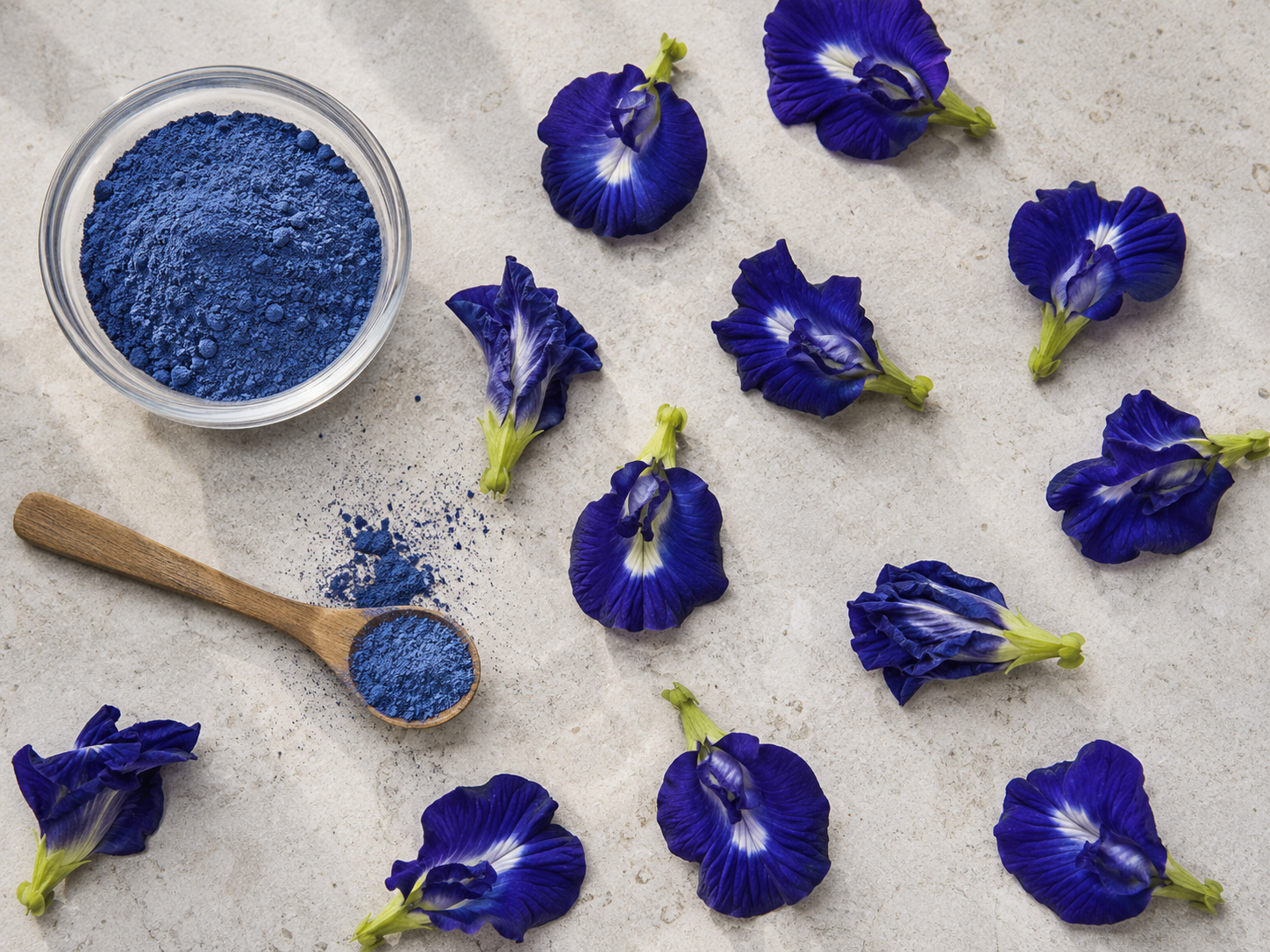
Butterfly pea flower (Clitoria ternatea) is a climbing plant native to tropical Asia. It produces vivid blue-violet flowers used in traditional medicine, culinary arts, and hair care for hundreds of years. In Ayurveda, it is known as Aparajita — meaning “the unconquered one” — and is classified as a Rasayana herb, traditionally believed to support longevity, mind, and body resilience.
Its most notable active compounds include:
- Anthocyanins — the pigments that give the flower its deep blue colour and act as potent antioxidants
- Flavonoids — plant-based compounds that may support circulation and reduce inflammation
- Proanthocyanidins — linked in research to hair follicle activity and scalp health
- Cyclotides — bioactive peptides unique to Clitoria ternatea with antimicrobial properties
- Kaempferol — a flavonoid associated with reduced DHT sensitivity in early-stage research
The flower works synergistically — meaning these compounds are most effective when you use the whole flower, not an isolated extract. This is why Ayurveda has always favoured whole-plant preparations.
👉 Explore Suvarn Naturals Blue Pea Flower Powder — made from the whole dried flower, not an extract.
The Science + Ayurvedic Perspective on Butterfly Pea Flower for Hair
Butterfly pea flower may support hair health through two parallel pathways — one validated by modern research, one understood through thousands of years of Ayurvedic clinical observation.
Modern Science: A 2022 study published in the Journal of Cosmetic Dermatology found that Clitoria ternatea extract applied topically showed statistically significant effects on hair follicle elongation in ex-vivo models, comparable to some reference compounds used in hair growth research. The mechanism is linked primarily to the inhibition of 5-alpha reductase — the enzyme that converts testosterone into DHT, the hormone most associated with follicle miniaturisation and hair thinning.
Ayurvedic Perspective: In classical Ayurvedic texts, Aparajita is classified under Medhya Rasayana — herbs that support cognitive clarity and neurological tone. But it also has documented application in Keshya (hair-supporting) preparations. Ayurveda understands hair fall through the lens of Pitta imbalance — excess heat in the body, often triggered by stress, hormonal changes, or inflammatory diet. Butterfly pea flower, with its cooling, antioxidant nature, is traditionally considered Pitta-pacifying — making it especially relevant for stress- or PCOS-related hair loss.
Myth vs. Fact: What Most Guides Get Wrong
| Myth | Fact |
|---|---|
| “Butterfly pea flower regrows hair by turning it blue” | The indigo colour has nothing to do with growth. The active compounds — anthocyanins and proanthocyanidins — are what may support follicle health. |
| “You need to drink it to get hair benefits” | Topical application delivers the active compounds directly to the scalp. Oral use may support systemic health but is not required for hair benefits. |
| “It works the same as rosemary oil or minoxidil” | It works differently — not as a direct vasodilator but potentially as an antioxidant, anti-inflammatory, and mild 5-alpha reductase inhibitor. It may complement, not replace, proven interventions. |
The most common oversimplification in top-ranking articles is treating butterfly pea flower as purely cosmetic — a colouring agent for brunettes. The real value lies in its bioactive compounds, not its pigment.
Benefits of Butterfly Pea Flower for Hair — Especially for Women
1. May Support Scalp Circulation and Follicle Activity
The anthocyanins and proanthocyanidins in butterfly pea flower may support microcirculation at the scalp level. Better circulation means more oxygen and nutrients reaching hair follicles — a foundational requirement for healthy hair growth cycles.
Research in vascular biology suggests that proanthocyanidins can stimulate vascular endothelial growth factor (VEGF), a protein associated with follicle activity in the anagen (growth) phase.
💡 Quick tip: Apply butterfly pea flower paste to a warmed scalp (post-oil massage) for better absorption. Gentle heat increases follicular permeability.
2. May Help Reduce Oxidative Stress on Hair Follicles
Oxidative stress is one of the least-discussed causes of premature hair thinning in Indian women — made worse by pollution, sun exposure, and chronic stress. Butterfly pea flower is exceptionally rich in anthocyanins, which are among the most potent natural antioxidants studied.
Antioxidants neutralise free radicals that damage the protein structure of hair and disrupt the cellular environment of hair follicles.
💡 Quick tip: If your hair thins at the crown or temples (a stress- or hormonal-pattern), this is the benefit most relevant to you. Combine with a consistent sleep routine for synergistic results.
3. May Support Hormonal Hair Fall — Particularly for PCOS
Early-stage research suggests butterfly pea flower contains compounds that may mildly inhibit 5-alpha reductase — the enzyme that produces DHT from testosterone. Elevated DHT is a primary driver of androgenetic hair loss, which is disproportionately common in women with PCOS.
This is not a pharmaceutical-grade intervention. But as a complementary botanical, it may be worth including in a holistic PCOS hair care routine.
💡 Quick tip: Women managing PCOS often do best combining topical use with systemic support — include Moringa Powder in your diet for B-vitamin and mineral support alongside this treatment.
4. May Strengthen Hair Shaft and Reduce Breakage
The flavonoids in butterfly pea flower may help maintain collagen integrity around the hair follicle and within the dermis. A healthier follicular dermis means hair that is anchored better at the root — reducing mechanical breakage from brushing and styling.
Users also report that regular use imparts a visible smoothness and shine, particularly on coarse, frizzy, or heat-damaged hair — consistent with the conditioning properties of flavonoid-rich botanicals.
💡 Quick tip: For breakage-prone hair, leave the rinse in for 10–15 minutes before washing. Don’t expect overnight results — consistency over 6–8 weeks is what most traditional practitioners recommend.
Who Should Use Butterfly Pea Flower for Hair?
Butterfly pea flower may be most beneficial for women experiencing:
- Diffuse hair thinning — especially at the crown, parting line, or temples
- PCOS-related hair fall — where DHT sensitivity may be a contributing factor
- Post-pregnancy or postpartum hair loss — hormonal rebalancing phase when scalp health support matters most
- Stress-induced hair fall — linked to elevated cortisol and Pitta imbalance in Ayurvedic terms
- Perimenopausal hair changes — declining oestrogen affects follicle cycling; botanical support may help
- Colour-treated or heat-damaged hair — antioxidant-rich ingredients support compromised hair structure
Not Ideal If…
- You have a known allergy to plants in the Fabaceae (legume) family — do a patch test first
- You are pregnant — consult your doctor before any new herbal topical or internal use
- You expect results in under 4 weeks — this is not a quick fix
- You are already on DHT-blocking medication — consult your dermatologist before combining
How to Use Butterfly Pea Flower for Hair — Step by Step
3 Ways to Use It
1. Scalp Paste (most concentrated) Mix 2 tablespoons of Butterfly Pea Flower Powder with enough warm water or aloe vera gel to form a thick paste. Apply directly to the scalp, section by section. Leave for 20–30 minutes. Rinse with lukewarm water. Use 1–2 times per week.
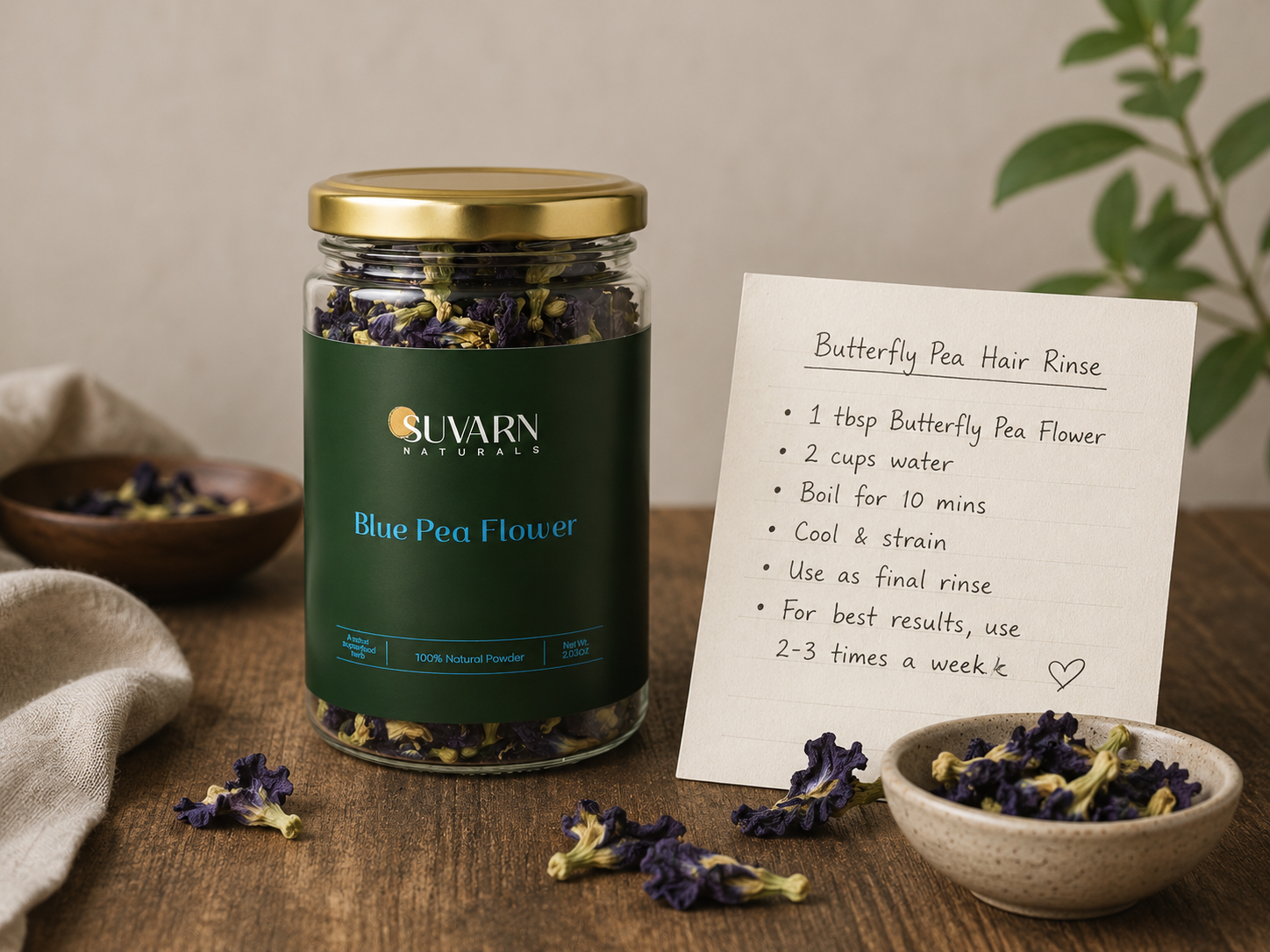
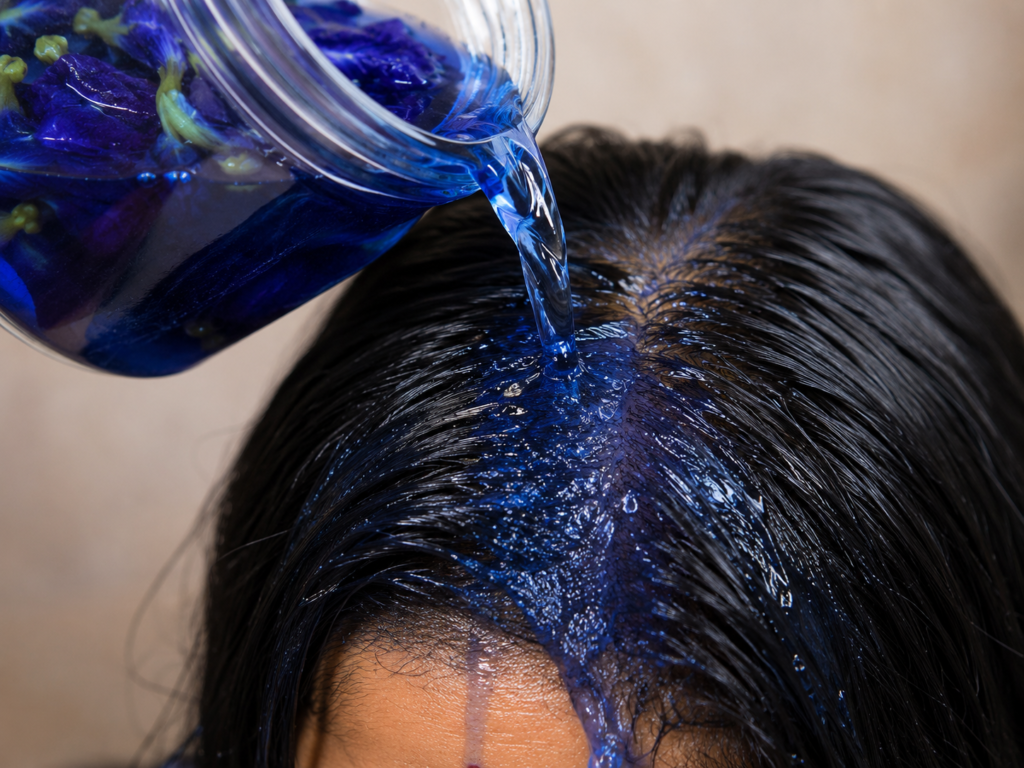
2. Hair Rinse (easiest) Steep 1 tablespoon of powder in 500 ml of hot water for 15 minutes. Strain well. Cool to room temperature. After shampooing, pour over hair as a final rinse. Do not rinse out. Use 2–3 times per week.
3. Infused Hair Oil (deepest conditioning) Add 2 tablespoons of powder to 100 ml of sesame or coconut oil. Heat gently on low flame for 10–15 minutes. Strain through muslin cloth. Store in a glass bottle. Use as a pre-wash oil treatment once a week.
Dos and Don’ts
| Do | Don’t |
|---|---|
| Strain the powder well before using as a rinse | Use without patch testing if you have sensitive skin |
| Start with 1x/week and build up | Expect results in under 4–6 weeks |
| Combine with a carrier oil for better scalp penetration | Apply to broken or irritated scalp |
| Store prepared oil or rinse in a cool, dark place | Mix with synthetic chemical treatments without dermatologist guidance |
| Maintain consistency — Ayurvedic herbs reward regularity | Confuse the blue staining (temporary) with hair dyeing |
Hedged dosage note: Traditional Ayurvedic use suggests topical application 1–2 times per week. No standardised clinical dosage has been established for hair growth applications. Start conservatively and observe your scalp’s response.
The 3-Minute Butterfly Pea Flower Scalp Ritual
★ This is the ritual most guides skip — and it’s where the real magic happens.
This nighttime ritual combines butterfly pea flower with complementary Ayurvedic ingredients for a targeted scalp treatment that takes under 3 minutes to prepare.
Ingredients
- 1 tablespoon Suvarn Naturals Butterfly Pea Flower Powder
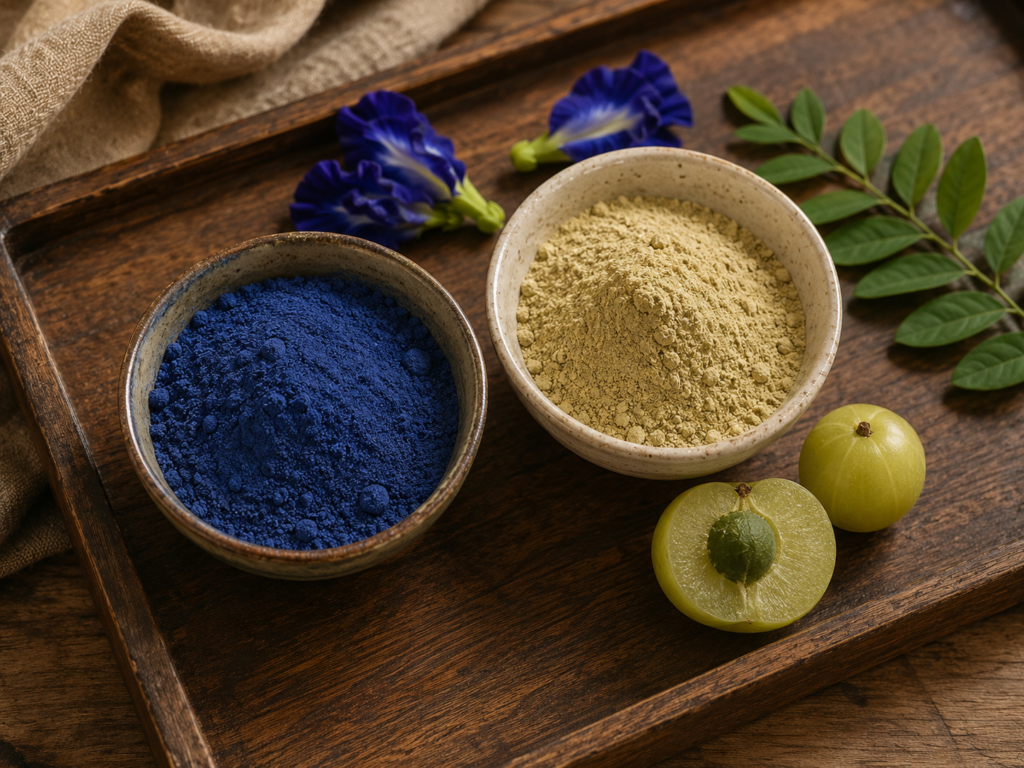
- 1 teaspoon Amla Powder (adds Vitamin C, enhances anthocyanin absorption)
- 2 tablespoons plain yogurt or cooled hibiscus tea
- Optional: 3–4 drops of rosemary essential oil
Steps
- Mix the butterfly pea flower powder and amla powder together in a small bowl.
- Add yogurt or hibiscus tea gradually, stirring to form a smooth, lump-free paste. Aim for a consistency that clings to your fingers without dripping.
- Apply to sectioned, slightly damp hair — scalp first, working from the crown outward. Spend 60 seconds on application.
- Cover with a shower cap or warm towel for 20–30 minutes.
- Rinse thoroughly with lukewarm water. Follow with a gentle sulphate-free shampoo if needed.
- Repeat 2 times per week for the first 4 weeks, then once a week as maintenance.
💡 Pro tip: Mix the amla powder in separately — it’s rich in Vitamin C, which research suggests may enhance the bioavailability of flavonoids like those in butterfly pea flower. Our Amla Powder is cold-processed to preserve its Vitamin C content.
Butterfly Pea Flower vs. Alternatives — Which Is Right for You?
| Metric | Suvarn Naturals BPF Powder | Generic BPF Powder | Rosemary Oil | Minoxidil |
|---|---|---|---|---|
| Ease of use | ★★★★☆ — simple prep | ★★★☆☆ — quality varies | ★★★★★ — apply directly | ★★★☆☆ — twice daily required |
| Time to visible results | 6–10 weeks | 6–12 weeks | 4–6 weeks | 3–6 months |
| Sensitive scalp suitability | High — cooling, anti-inflammatory | Moderate — sourcing matters | Moderate — must dilute | Low — may cause irritation |
| PCOS-friendliness | High — mild DHT support, no synthetic hormones | Moderate | Moderate | Not indicated |
| Cost (monthly estimate) | ₹350–₹500 | ₹150–₹400 | ₹200–₹600 | ₹800–₹2,500 |
Note: No claims of treating or curing any condition are made. This comparison is for informational guidance only.
Side Effects and Precautions
Butterfly pea flower is generally considered safe for topical use and moderate oral consumption in healthy adults. However:
- Skin sensitivity: A small number of users report mild contact irritation. Always do a patch test on the inner forearm 24 hours before first use.
- Blue staining: The anthocyanins temporarily stain light or bleached hair blue-violet. This fades with washing. It does not permanently colour hair.
- Pregnancy and breastfeeding: Data on safety during pregnancy is limited. Avoid internal use unless approved by your doctor. Topical use should be discussed with your healthcare provider.
- Drug interactions: Theoretical concern with anticoagulant medications, given flavonoid activity. If you are on blood thinners or hormonal medication for PCOS, consult your doctor before adding any new herbal routine.
- Oral use: When consumed as tea, butterfly pea flower is well-tolerated in normal culinary quantities. Avoid very high doses.
When to see a doctor: If hair fall is sudden, patchy, or accompanied by scalp pain, burning, or systemic symptoms (fatigue, weight changes), please consult a dermatologist or endocrinologist. Hair loss can be a sign of thyroid dysfunction, iron deficiency, or autoimmune conditions that require medical evaluation — not herbal supplementation.
Myths and Mistakes Women Make with Butterfly Pea Flower
Myth 1: “It Dyes My Hair — That’s the Point”
The temporary blue tint is a cosmetic bonus, not the mechanism. Women who use it only as a colour treatment often miss the scalp application step entirely — and lose most of the benefit. The active compounds need contact with the scalp and follicles, not just the hair shaft.
Myth 2: “More Powder = Faster Results”
Using a thick, high-concentration pack every day can actually cause scalp buildup, especially if not rinsed thoroughly. Traditional practice uses moderation — 1 to 2 times per week is the sweet spot. More is not more.
Myth 3: “It’s Just a Trend — There’s No Real Research”
As mentioned earlier, a 2022 study demonstrated measurable follicle-stimulating activity in lab models. Additionally, butterfly pea flower has been documented in traditional Thai and Indian medicine systems for centuries. The research is early-stage but it is real — and growing.
Myth 4: “It Works on Its Own”
Butterfly pea flower performs best as part of a multi-ingredient routine. Nutrition, sleep quality, and scalp hygiene all affect outcomes. Women who see the best results typically use it consistently, alongside a balanced diet with adequate protein, iron, and B vitamins.
Myth 5: “If It Doesn’t Work in 2 Weeks, It’s Useless”
Hair grows approximately 1–1.5 cm per month. A single hair follicle’s full cycle is 3–6 years. Any ingredient that works at the follicular level needs weeks to months of consistent use before visible changes appear. Expecting results in 2 weeks sets up real, effective herbs for unfair failure.
Notes from the Suvarn Naturals Founder
We are always inspired by traditional botanical ingredients that have been used in beauty rituals for generations. Butterfly pea flower stood out to us because of its vibrant natural colour and its remarkable versatility — not just in hair care, but across wellness routines.
When we first began developing our Butterfly Pea Flower Powder, we tested multiple sources side by side. The difference in colour intensity — which directly correlates to anthocyanin concentration — was striking. Low-quality sourcing produces a washed-out blue-grey. Ours produces a deep, vivid indigo that tells you the active compounds are present in meaningful amounts.
In our formulation process, we noticed that fine-milling the whole dried flower (rather than using a spray-dried extract) preserves the full spectrum of flavonoids and cyclotides. We cold-grind at low temperatures to prevent heat-induced degradation of the anthocyanins.
Butterfly pea flower’s growing popularity reflects something we believe deeply: people are rediscovering simple, plant-based ingredients — not because they are trendy, but because they work. And when sourced thoughtfully, they carry the intelligence of generations of traditional use alongside emerging scientific validation.
— Suvarn Naturals Team
FAQs: Butterfly Pea Flower for Hair Growth
Q1: Can butterfly pea flower actually regrow lost hair?
Research suggests it may support hair follicle activity and reduce some factors linked to hair thinning — particularly oxidative stress and mild DHT sensitivity. However, it is not a clinically proven hair regrowth treatment. Women with significant hair loss should consult a dermatologist and consider it as a complementary, not standalone, intervention.
Q2: How long does it take to see results from butterfly pea flower for hair?
Most users who are consistent report visible improvement in hair texture, reduced shedding, and scalp comfort within 6–10 weeks of regular use (2x/week). Significant changes in hair density, if they occur, typically take 3–4 months of consistent use.
Q3: Can I use butterfly pea flower powder if I have PCOS-related hair fall?
It may be a supportive addition to a broader PCOS hair care routine, given its potential mild 5-alpha reductase inhibiting properties and antioxidant profile. However, it should complement — not replace — medical management of PCOS. Always check with your doctor or gynaecologist.
Q4: Will butterfly pea flower permanently colour my hair?
No. The blue pigment is water-soluble and washes out with regular shampooing. On bleached, grey, or very light hair, it may leave a temporary tint for a few washes. It does not function as a permanent hair dye.
Q5: Can I drink butterfly pea flower tea for hair benefits?
Oral consumption may contribute to systemic antioxidant levels and overall wellness, which can indirectly support hair health. However, topical scalp application delivers the active compounds more directly to the follicles. Many traditional preparations use both routes simultaneously.
Q6: Is butterfly pea flower safe for colour-treated hair?
Generally yes — it is gentle and non-stripping. The blue tint may interact with coloured hair to create unexpected shades, particularly on lighter tones. Do a strand test first if you are concerned about colour interaction.
Q7: Can I mix butterfly pea flower with coconut oil and leave it overnight?
Yes — an infused butterfly pea flower oil is an excellent overnight treatment. Make sure the powder is fully strained out before application (loose powder can be difficult to wash out and may cause buildup). The oil base helps the active compounds penetrate the scalp while you sleep.
Q8: Does butterfly pea flower work differently for men with hair loss?
The mechanisms (antioxidant support, potential DHT activity) are relevant regardless of gender. Men in the household may benefit from the same preparations. The context of use is slightly different — male-pattern baldness involves more concentrated DHT activity than most female hair loss patterns — but the ingredient is not gender-restricted.
Q9: What is the difference between butterfly pea flower powder and extract?
Powder uses the whole dried flower; extract concentrates specific compounds. Whole-flower powder provides a broader range of phytonutrients — including cyclotides that may not survive extraction processes — but is gentler in concentration. For topical hair use, powder preparations are traditional and well-suited.
Q10: How should I store butterfly pea flower powder?
Store in a cool, dry place away from direct sunlight. Heat and UV exposure degrade anthocyanins rapidly. A sealed, dark glass or opaque container is ideal. Properly stored, it retains potency for 12–18 months.
Final Takeaway
Butterfly pea flower is not a miracle ingredient. But it is a genuinely interesting, traditionally grounded, and increasingly research-backed botanical for scalp and hair health — particularly for women navigating hormonal changes, stress-related shedding, or simply looking for a plant-based addition to their routine.
Used consistently, combined thoughtfully with complementary ingredients like Amla, and applied with a ritual that honours your scalp’s needs — it may be one of the more rewarding herbal habits you build this year.
Explore our complete collection of herbal powders and botanical ingredients designed for traditional wellness and beauty routines.