
Rose Powder vs Multani Mitti: 7 Proven Differences That Decide What Your Skin Actually Needs

Published: 21 July 2026 | By Suvarn Naturals Team
Pre-Writing Audit (Summary)
Competitor components covered by most top-ranking pages: (1) basic definition + how each ingredient works on skin, (2) a simple “which one for which skin type” list, (3) DIY face pack recipes using rose water/rosewater + multani mitti together.
Information gaps (used as unique sections below): (1) no one addresses hormonal-skin-cycle timing — using Multani Mitti during oily/PCOS-androgen phases vs. Rose Powder during dry/perimenopausal phases, (2) no ritual-based sequencing content (a 3-minute weekly rotation, not just “mix and apply”), (3) almost nobody covers the over-drying myth or gives an honest “not ideal if” list for either ingredient.
Search intent: Primarily commercial-investigative (“which is better/different”), with informational (what each is) and transactional (how to buy/use) layered in.
Common myth challenged: “Multani Mitti is good for everyone with acne, use it daily” — Ayurveda actually ties Multani Mitti to Pitta-Kapha pacification and warns against overuse on Vata-dominant or dry skin, which modern dermatology echoes via barrier-disruption concerns.
Semantic entities used: Fuller’s Earth (montmorillonite clay), Rosa damascena, Cation Exchange Capacity (oil absorption), Tridosha (Vata-Pitta-Kapha), Antioxidant/Polyphenol content.
TL;DR: Rose Powder vs Multani Mitti — Which One Does Your Skin Actually Need?
- Multani Mitti (Fuller’s Earth) is a mineral clay that absorbs oil and deep-cleans — best for oily, acne-prone, and Pitta-Kapha skin.
- Rose Powder is a gentle, antioxidant-rich flower powder — best for dry, sensitive, dull, and perimenopausal skin.
- Neither is “better” — they solve opposite problems. Many women need both, on different days.
- Multani Mitti can over-dry sensitive or Vata skin if used more than once a week.
- Rose Powder soothes redness, may support a calmer complexion during hormonal flare-ups, and layers well as a toner-mask.
- Try our 3-minute rotation ritual below to use both without over-stripping your skin barrier.
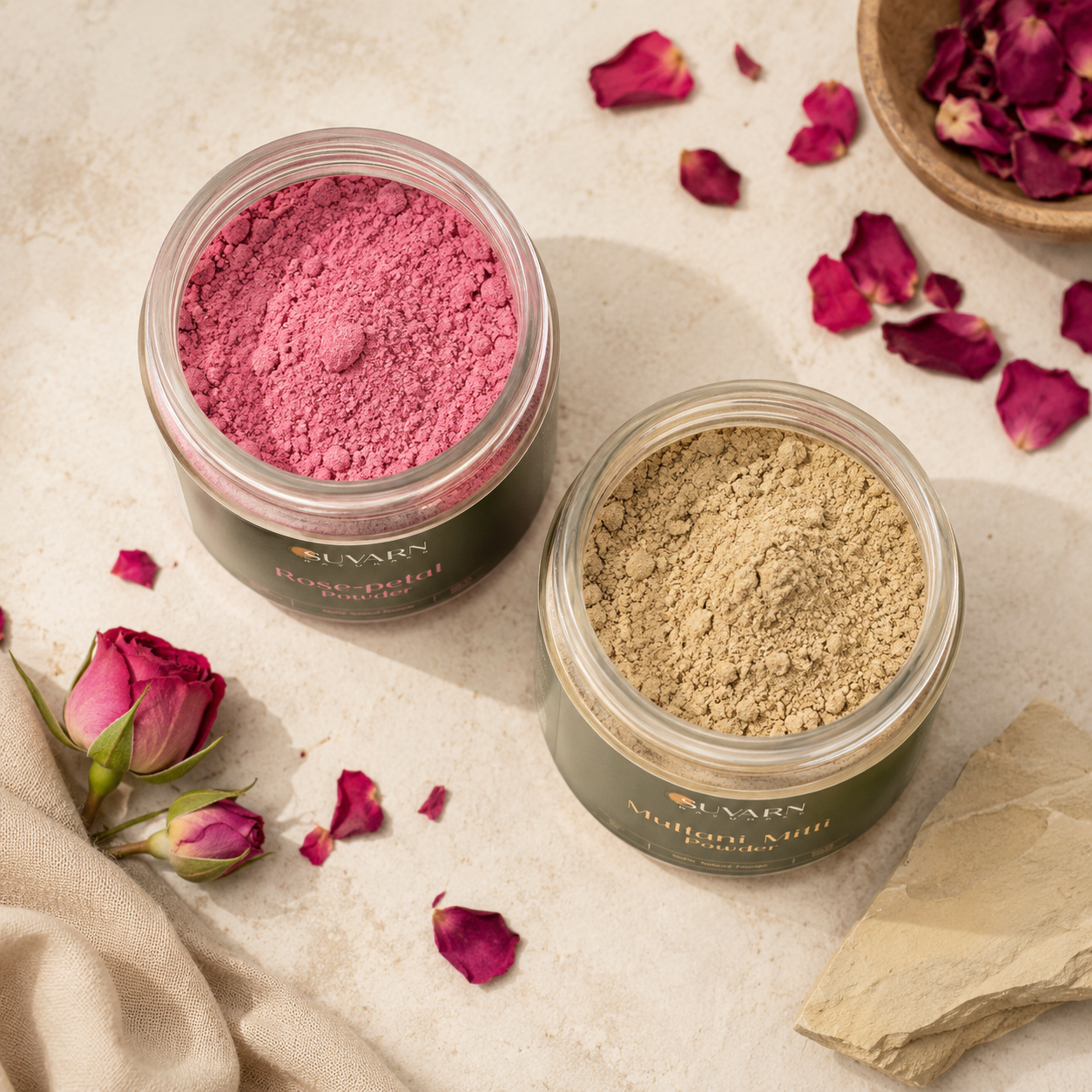
There’s a good chance you’ve stood in front of two jars — one pale pink, one dusty beige — wondering which one deserves a spot in tonight’s face pack. As of 21/07/2026, the Rose Powder vs Multani Mitti debate remains one of the most searched skincare comparisons in Indian wellness circles, and for good reason: both ingredients are cheap, natural, and all over WhatsApp forwards. But “natural” doesn’t mean “same.” Rose Powder and Multani Mitti come from completely different worlds — one is a flower, one is a clay — and they solve opposite skin problems. This guide breaks down what each does, who it’s genuinely for, and how to use them without accidentally undoing your skin barrier.
What is Rose Powder vs Multani Mitti?
In the Rose Powder vs Multani Mitti comparison, Rose Powder is dried, ground Rosa damascena petals — a gentle, antioxidant-rich botanical. Multani Mitti is Fuller’s Earth, a mineral clay that absorbs oil. One nourishes and calms; the other cleanses and mattifies. They’re not competitors — they’re specialists for different skin needs.
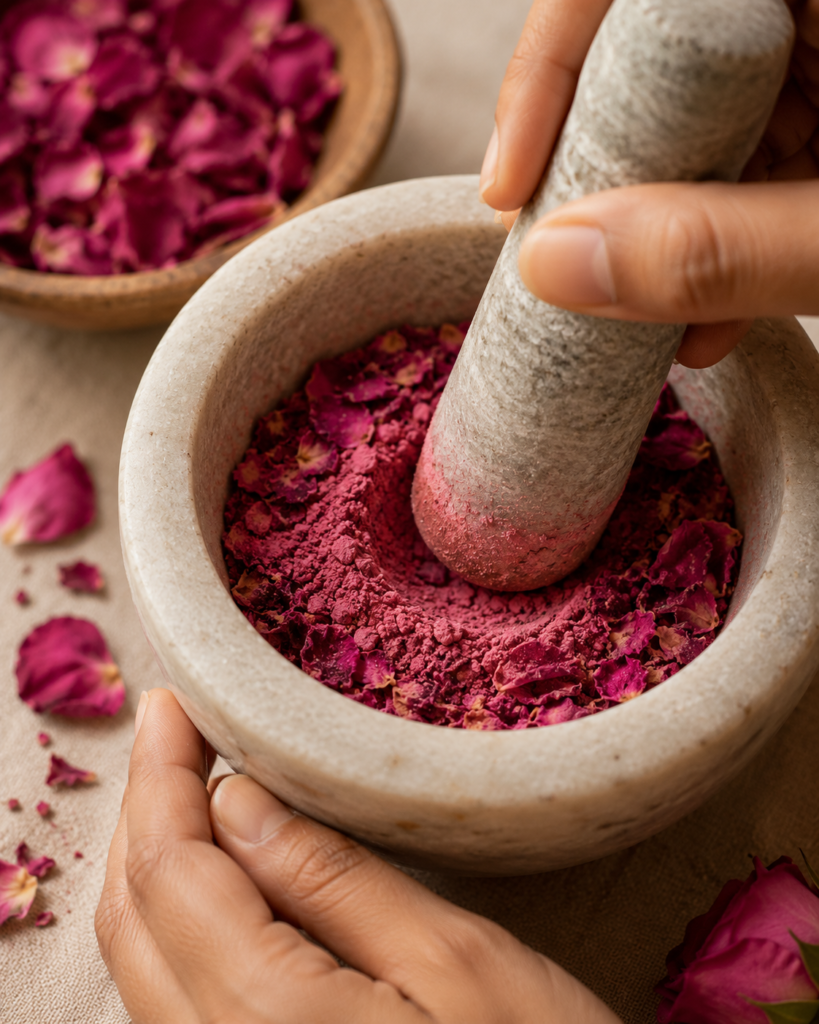
Rose Powder, called Gulab in Hindi and Rosa damascena botanically, is made from sun-dried Damask rose petals ground into a fine powder. It’s traditionally used in Ayurveda as a Pitta-pacifying, cooling ingredient. Its key constituents are polyphenols, flavonoids (including rutin), anthocyanins, and trace essential oils like citronellol and geraniol, which endow significant antioxidant and antimicrobial properties.
Multani Mitti, known as Fuller’s Earth, is a sedimentary clay mined largely from Rajasthan and Gujarat. Ayurveda doesn’t classify it as a single dosha remedy, but its drying, oil-absorbing action is traditionally reserved for Kapha-Pitta imbalances (excess oil, congestion) rather than Vata (dry, thin) skin. Its key minerals are montmorillonite, kaolinite, magnesium, and calcium, giving it antioxidant and enzyme-inhibiting properties relevant to skin aging, according to a 2025 cosmeceutical study.
This is really the heart of the Rose Powder vs Multani Mitti decision: a flower-based antioxidant versus a mineral-based absorbent, each built for a different skin story.
The Science and Ayurvedic Perspective Behind Rose Powder vs Multani Mitti
Modern skin science and Ayurveda agree more than people expect: Rose Powder works through antioxidant and anti-inflammatory compounds, while Multani Mitti works through physical oil absorption and mild exfoliation. Neither “treats” skin conditions — they support the skin’s existing processes.
Rose Powder’s action is largely chemical: its polyphenols and flavonoids may help neutralise oxidative stress on skin cells. A 2025 exploratory clinical study on oral Rosa damascena extract found it may help counter the effects of exposome-related oxidative stress on skin, and lab research on rose petal extracts has shown they can inhibit tyrosinase activity, the enzyme linked to pigmentation, at non-irritating concentrations — one reason rose is traditionally used for a brighter, more even-looking complexion.
Multani Mitti’s action is largely physical. Its montmorillonite content acts like a magnet for excess oil and impurities, which is why it’s the go-to clay for congested, oily skin. A 2025 cosmeceutical study found Multani Mitti showed notably strong enzyme-inhibition effects relevant to skin-aging pathways in lab (in-vitro) testing — promising, but this is bench research, not a clinical claim about wrinkles disappearing.
The myth we need to bust: “Multani Mitti is good for everyone with acne — use it daily.” In reality, most dermatology sources note that clay masks like Multani Mitti can temporarily absorb oil and refresh skin, but they aren’t a medical treatment, and modern clinical research on this specific clay remains limited. Daily use — especially on Vata-dominant or already-dry skin — can strip the barrier rather than heal it. This is exactly why the Rose Powder vs Multani Mitti question isn’t about which is “better,” but which matches your skin’s current state.
Myth vs Fact
| Myth | Fact |
|---|---|
| Multani Mitti works for every skin type | It’s best suited to oily/Kapha-Pitta skin; dry/Vata skin often gets tight, flaky, and irritated |
| More frequent use = faster results | Traditional and dermatological guidance both point to once a week for clay masks |
| Rose Powder is “just for smell” | It’s rich in antioxidant polyphenols and flavonoids with real cosmetic-science backing |
Benefits of Rose Powder and Multani Mitti — Especially for Women
Both sides of the Rose Powder vs Multani Mitti comparison respond to very real, very female concerns: hormonal breakouts, dullness from stress, and skin that changes with your cycle or age. Here’s how each one may help, broken down by benefit.
Rose Powder: Calming Hormonal Flare-Ups
Hormonal shifts — PMS week, PCOS, perimenopause — often bring redness and reactivity. Rose Powder’s anti-inflammatory flavonoids are traditionally used to soothe this kind of flare-up. Quick tip: Mix Rose Powder with plain yogurt (not rose water) if your skin feels hot or irritated — the lactic acid gently exfoliates while rose calms.
Rose Powder: Supporting an Even, Brighter Tone
Dull, stressed-looking skin is one of the top complaints from women juggling work and hormones. Rose’s antioxidant load may support a more even-looking complexion over time, with research showing reduced melanin and hyperpigmented spot area after consistent use. Quick tip: Use Rose Powder 2–3 times a week as a light overnight mask, not just a rinse-off pack, for a gentler brightening effect.
Multani Mitti: Managing Hormonal Oiliness and PCOS-Prone Skin
PCOS and androgen-driven oiliness respond well to gentle oil absorption. Multani Mitti’s clay minerals may attract and absorb excess oil, sebum, and pollutants from the skin’s surface, which is traditionally why it’s reached for during oily, congested phases. Quick tip: Limit to once weekly during PCOS flare-ups — over-drying can trigger rebound oil production.
Multani Mitti: Supporting Clearer, Less Congested Skin
For women dealing with recurring hormonal breakouts along the jawline, Multani Mitti’s exfoliating action helps remove dead skin cells and unclog pores, which may reduce breakouts and help prevent future ones. Quick tip: Pair with a hydrating serum immediately after rinsing — clay masks are drying by design.
Rose Powder: Hair and Scalp Calm
Many women extend Rose Powder to scalp use during stressful, shedding-prone phases, valuing its traditional cooling, anti-inflammatory reputation for a calmer scalp. Quick tip: Add a pinch of Rose Powder to your regular hair mask once a week rather than using it as a standalone treatment.
Who Should Use Rose Powder vs Multani Mitti?
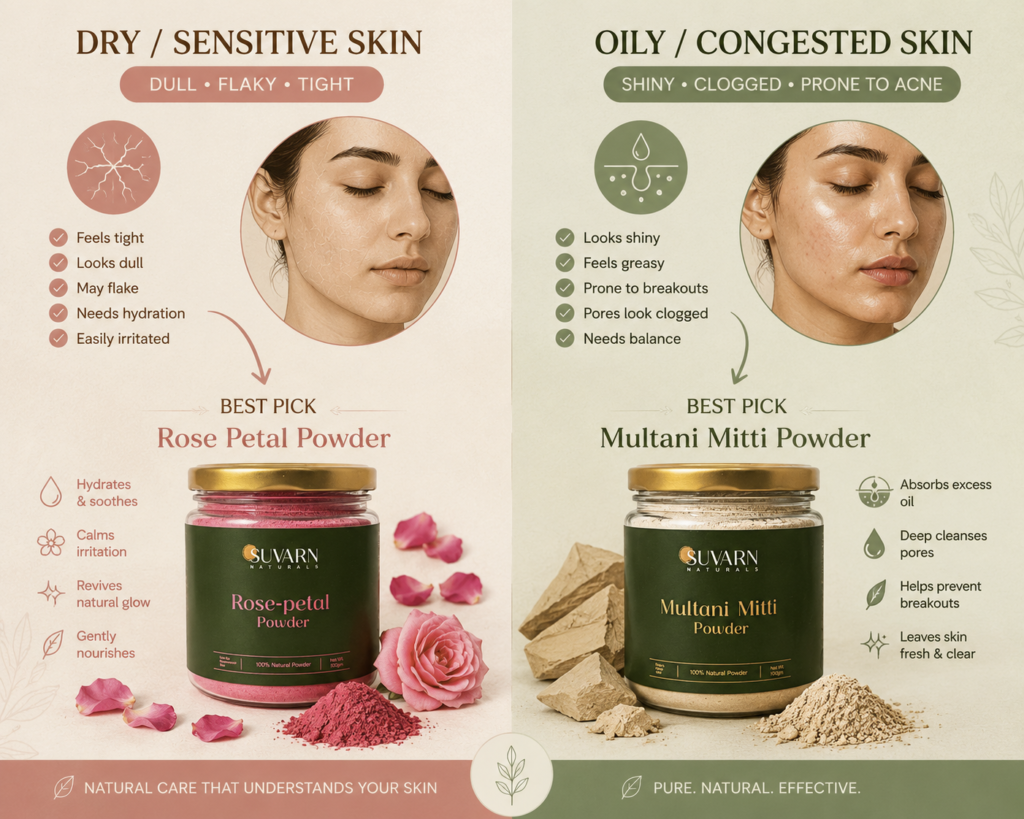
If your skin runs oily, congested, or acne-prone — especially during PCOS or a humid Indian summer — Multani Mitti is usually the better starting point. If your skin runs dry, sensitive, reactive, or you’re navigating perimenopause, Rose Powder is gentler and more supportive.
Multani Mitti may suit you if:
- You have oily or combination skin with visible shine by midday
- You’re managing PCOS-linked breakouts or blackheads
- You live somewhere hot and humid
Rose Powder may suit you if:
- Your skin feels dry, tight, or reactive
- You’re in perimenopause and noticing thinner, more sensitive skin
- You want a gentle option during exam stress or high-cortisol weeks, when skin tends to flare
Not ideal if:
- You have very dry or eczema-prone skin and are considering Multani Mitti more than once a week
- You have a known allergy to roses or rose pollen and are considering Rose Powder
- You have open wounds, active cystic acne, or broken skin — patch test either ingredient first
How to Use Rose Powder and Multani Mitti — Step by Step
Both ingredients work best as short-contact face packs, not leave-on treatments, and both should be patch-tested 24 hours before full use.
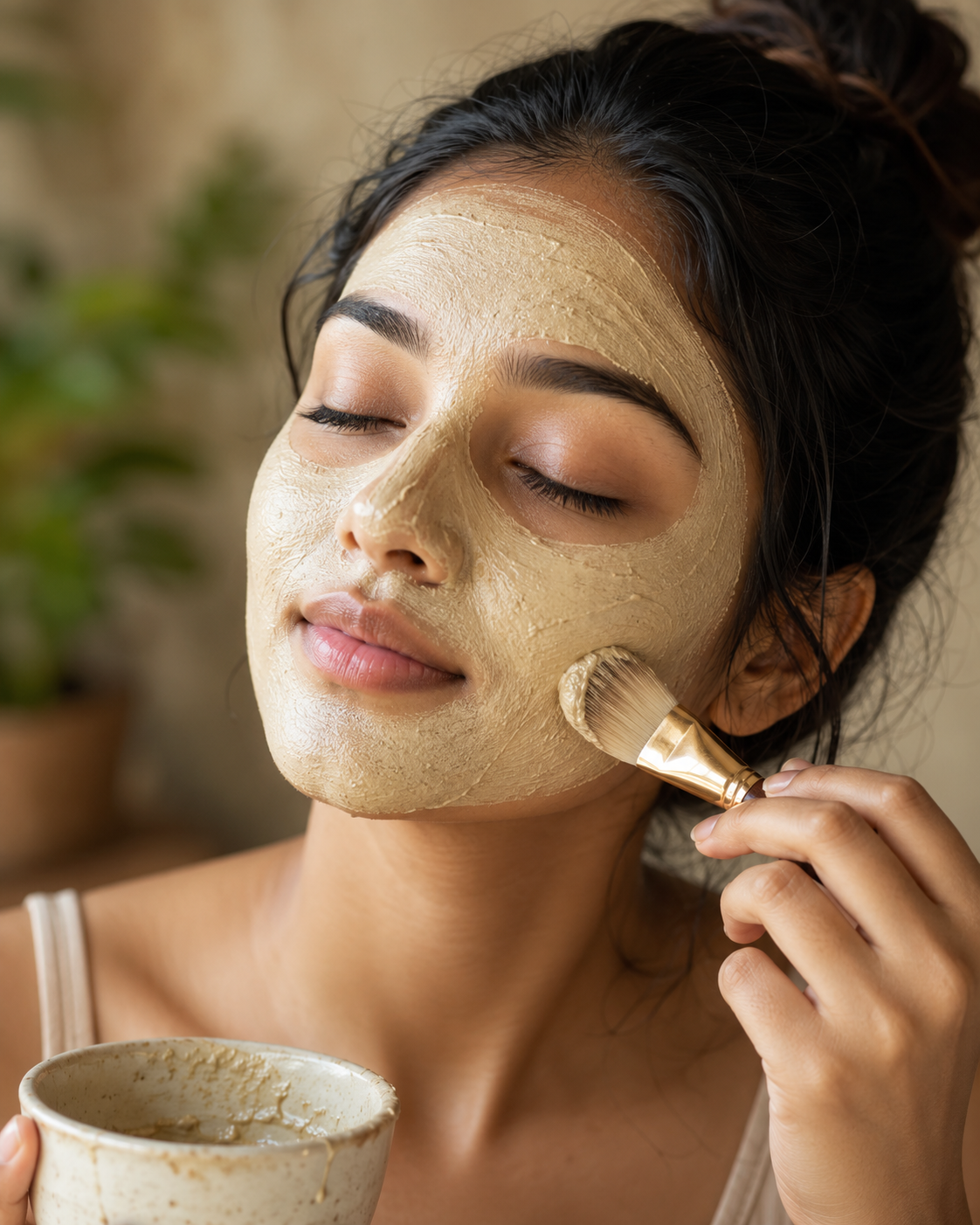
General method: Mix 1–2 teaspoons of powder with a liquid (rose water, plain water, or yogurt) into a smooth, non-drippy paste. Apply to clean, dry skin, avoiding the eye area. Leave for 10–15 minutes — not until fully cracked-dry, especially for Multani Mitti. Rinse with lukewarm water using circular motions.
Best time of day: Evening, 2–3 times a week for Rose Powder; once a week for Multani Mitti, ideally after a workout or on an oilier day.
3 use formats: (1) Classic wet paste face pack, (2) mixed into a clay-and-honey mask base for extra hydration, (3) a small pinch blended into your regular clay-based cleanser for daily gentle use.
| Do | Don’t |
|---|---|
| Patch test 24 hours before first use | Leave Multani Mitti on until it fully cracks and pulls skin |
| Moisturise immediately after rinsing | Use Multani Mitti more than 1–2x weekly on dry skin |
| Store powders in an airtight, dry jar | Mix with citrus juice if skin is already sensitised |
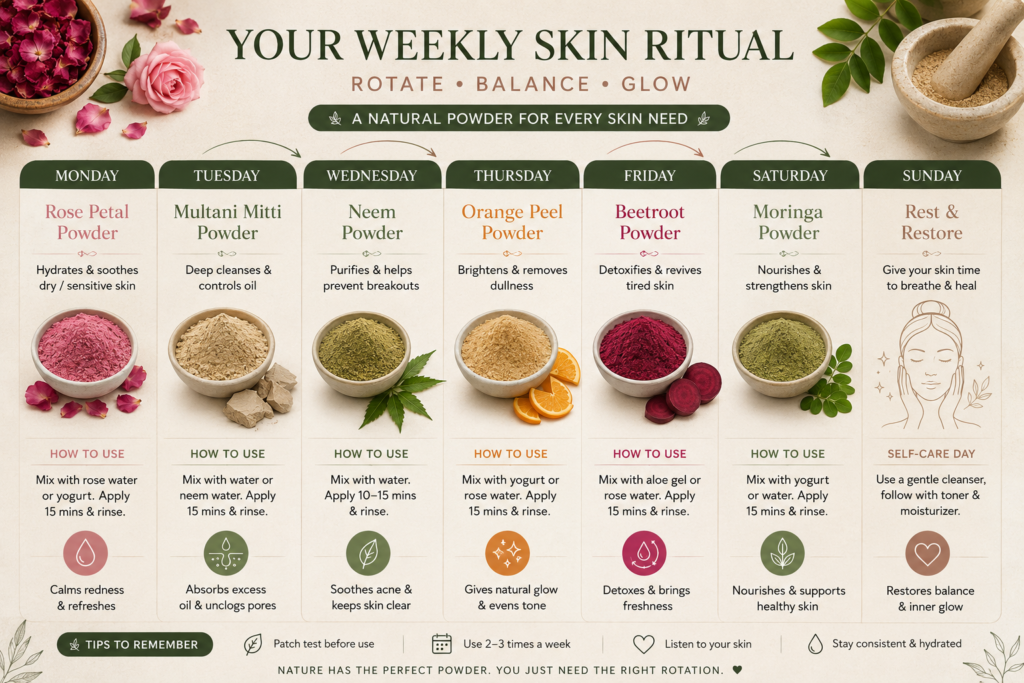
The 3-Minute Rose Powder & Multani Mitti Rotation Ritual
★ This is the piece most Rose Powder vs Multani Mitti comparison articles skip entirely — a simple weekly rhythm instead of a one-off recipe. ★
Ingredients
- 1 tsp Suvarn Naturals Rose Powder (for your “calm” nights)
- 1 tsp Suvarn Naturals Multani Mitti Powder (for your “reset” night)
- Rose water or plain water, as needed
- A small bowl and soft brush (optional, for even application)
Steps
- Pick your night: Oilier, post-workout, or midweek → Multani Mitti. Dry, tired, or PMS week → Rose Powder.
- Mix: Combine 1 tsp of your chosen powder with just enough rose water to form a smooth paste — no lumps, no drips.
- Apply: Smooth onto clean, dry skin in one even layer. Set a 12-minute timer.
- Rinse: Use lukewarm water, gentle circular motions, then pat (don’t rub) dry.
- Lock it in: Apply a light moisturiser immediately while skin is still slightly damp.
Pro tip: on your Multani Mitti night, mix with a few drops of our Rose Water instead of plain water — it softens the clay’s drying effect and layers in Rose Powder’s calming benefits without needing two separate masks.
This rotation is really the practical answer to the Rose Powder vs Multani Mitti question — not picking one forever, but letting your skin choose week to week.
Rose Powder vs Multani Mitti vs Alternatives
| Metric | Suvarn Naturals Rose Powder | Suvarn Naturals Multani Mitti | Generic Market Powder | Capsule/Supplement Form | Synthetic Face Wash |
|---|---|---|---|---|---|
| Ease of use | Easy, gentle paste | Easy, needs careful timing | Variable purity | Convenient but no topical action | Very easy |
| Time to visible results | 3–4 weeks, gradual | 1–2 weeks for oil control | Unpredictable | Not applicable topically | Immediate, short-lived |
| Best skin type suitability | Dry, sensitive, mature | Oily, congested | Unknown grade | N/A | Broad but can strip barrier |
| PCOS-friendliness | Good for calming flare-ups | Good for oil control | Depends on purity | Indirect only | Often too harsh |
| Cost (per use) | Low | Low | Low but inconsistent | Higher, ongoing | Moderate |
No product here “cures” hormonal skin issues — this table compares practical fit, not medical outcomes.
Side Effects and Precautions
Both sides of Rose Powder vs Multani Mitti are generally well tolerated, but neither is risk-free. Multani Mitti can over-dry and irritate compromised skin barriers; Rose Powder, while gentler, can still trigger reactions in those with rose or pollen sensitivities.
- Pregnancy/breastfeeding: Both are topical and generally considered low-risk, but always patch test first and consult your dermatologist or doctor, especially with any new skincare addition during pregnancy.
- Drug interactions: No known topical drug interactions, since these are external-use powders, not ingested remedies.
- When to see a doctor: If you notice persistent redness, burning, swelling, or breakouts that worsen after use, stop immediately and consult a dermatologist.
Myths and Mistakes Women Make with Rose Powder and Multani Mitti
The single biggest mistake we see: treating Multani Mitti like a daily cleanser instead of a once-weekly reset — the exact myth we flagged earlier as the most common oversimplification in this space.
- “Daily Multani Mitti = clearer skin faster.” It usually means a stripped, tighter-feeling face by week two.
- “Rose Powder is only for dry skin.” It can also calm oily, inflamed breakouts — it’s about frequency and pairing, not exclusion.
- “If it’s natural, it can’t irritate me.” Natural ingredients can absolutely cause reactions — patch test always.
- “Mixing with lemon juice boosts results.” It often sensitises skin further, especially alongside sun exposure.
- “One face pack fixes hormonal skin.” These are supportive rituals, not replacements for medical care when needed.
Notes from the Suvarn Naturals Founder
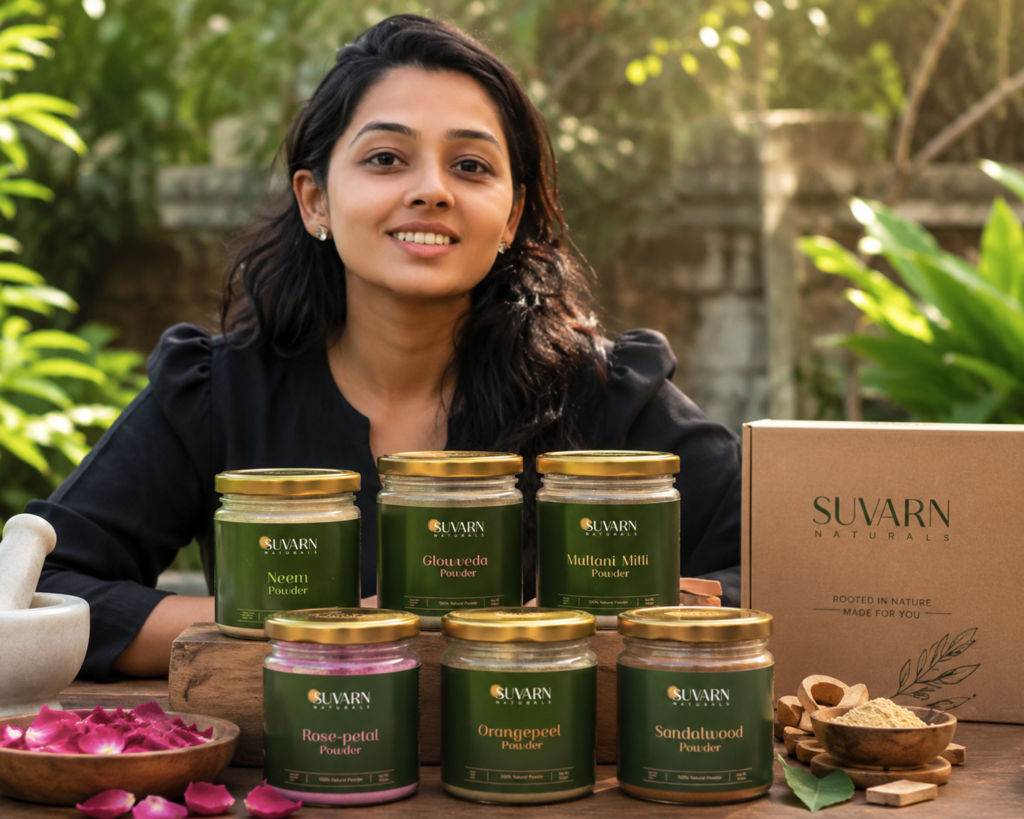
“When I first started sourcing for Suvarn Naturals, I tested over a dozen batches of Multani Mitti before settling on ours — most had a gritty, inconsistent texture that just didn’t feel right on skin. Our Rose Powder goes through a similar process: we shade-dry the petals slowly to protect the natural pink hue and scent, rather than fast-drying them, which strips both colour and aroma. In our lab, we noticed that batches dried too quickly lost almost all their characteristic rose fragrance — a sign the delicate compounds were degrading too. That’s the difference between a jar that smells like ‘flower-scented dust’ and one that still smells like an actual rose.”
There’s no single ingredient that’s right for everyone. We always recommend choosing herbal powders based on your skin type, skincare goals, and the season. Sometimes, the best results come from using different ingredients for different needs.
Frequently Asked Questions
1. Can I use Rose Powder and Multani Mitti on the same day?
It’s generally better to alternate them on different days, since layering an oil-absorbing clay with a hydrating flower powder in one sitting can confuse your routine. Pick based on how your skin feels that day.
2. Is Multani Mitti safe for PCOS-related acne?
Many women find it helpful for managing excess oil linked to PCOS, but it’s a supportive step, not a treatment — pair it with medical guidance for PCOS-related skin concerns.
3. Does Rose Powder actually lighten dark spots?
Research suggests certain rose compounds may support a more even tone over time, but it’s a gradual, supportive effect, not a bleaching or spot-removal treatment.
4. How often should I use Multani Mitti if I have combination skin?
Once weekly on the oilier zones (usually T-zone) is a safer starting point than a full-face daily routine.
5. Is it safe to use these powders during pregnancy?
Both are typically considered low-risk topical ingredients, but patch test first and check with your doctor before adding anything new during pregnancy.
6.Can Rose Powder help with hormonal breakouts during perimenopause?
Its calming, antioxidant profile is traditionally suited to the drier, more reactive skin many women notice during perimenopause, though results vary by individual.
7. What’s the difference between Multani Mitti and Bentonite clay?
They’re both absorbent clays, but Multani Mitti is traditionally milder and lighter in colour, generally considered gentler than Bentonite for regular use.
8. Can I mix Rose Powder into my moisturiser instead of making a mask?
Yes — a small pinch mixed into moisturiser can offer a lighter daily dose without the drying, mask-like effect.
9. Why does my skin feel tight after Multani Mitti even when I moisturise right after?
This usually means it was left on too long or applied too thick — try a thinner layer and rinse before it fully dries.
10. Which is better for exam-stress breakouts?
Rose Powder’s calming profile often suits stress-triggered sensitivity, while Multani Mitti suits stress-triggered oiliness — many women switch between the two depending on how their skin reacts that week.
Final Takeaway
If you’ve read this far on your phone at 11pm wondering which jar to reach for tonight, here’s the honest answer: the Rose Powder vs Multani Mitti choice depends on your skin, not on which one is trending. Multani Mitti is your reset for oily, congested days; Rose Powder is your calm-down for dry, reactive ones. Most women don’t need to choose forever — they need a simple rotation that respects what their skin is asking for that week. Start small, patch test, and let your skin’s response guide the ritual, not the other way around. If you’re ready to build that rotation, our Rose Powder and Multani Mitti Powder are a gentle place to begin.