
Oily Skin in Monsoon: Why It Gets Worse, and What Actually Helps

Published: 20 July 2026 | By Suvarn Naturals Team
TL;DR — Quick Answer Box
- Oily skin in monsoon gets worse because humidity and sweat both push your sebaceous glands to produce more oil.
- Clay-based ingredients like Multani Mitti absorb excess sebum without stripping your skin’s natural barrier.
- Neem powder may help reduce breakouts by targeting acne-causing bacteria, based on a 2022 clinical trial.
- Orange Peel Powder adds natural vitamin C, which supports brightness without the irritation of synthetic actives.
- A simple 3-minute weekly ritual (not daily) prevents the “rebound oiliness” cycle many women unknowingly trigger.
- Try pairing Multani Mitti with our Rose Powder for a cooling, monsoon-friendly pack you can make in your kitchen.
Every June, the same thing happens. Your skin feels fine in the morning, and by 1 pm your T-zone looks like it’s auditioning for a Every June, the same thing happens. Your skin feels fine in the morning, and by 1 pm your T-zone looks like it’s auditioning for a highlighter ad. If you’re dealing with oily skin in monsoon, you’re not imagining it, and you’re not doing anything wrong.
This is peak monsoon season across most of India, and dermatology searches for oily skin in monsoon spike every year around now. This guide explains why humidity causes oily skin in monsoon, and walks through five traditional, herbal fixes — used the right way — that may help you feel more comfortable in your own skin this season.
What Is Oily Skin in Monsoon?
Oily skin in monsoon refers to the temporary rise in sebum production and surface oiliness that happens when humidity and sweat combine during India’s rainy season. It’s not a permanent skin type change — it’s a seasonal shift.
In Ayurveda, oily skin in monsoon is closely tied to Kapha dosha, the energy associated with moisture, heaviness, and oil. Monsoon is considered a Kapha-aggravating season, even though the weather feels cool. The botanical stars in this routine — Azadirachta indica (neem), Citrus sinensis peel (orange), and Rosa damascena (rose) — have each been used for centuries in Ayurvedic skin pastes called lepa, specifically to balance excess Kapha on the skin’s surface.
Key constituents to know: azadirachtin and nimbidin (neem’s antibacterial compounds), hesperidin (orange peel’s antioxidant flavonoid), montmorillonite (the clay mineral in Multani Mitti responsible for oil absorption), sebum (the oil your skin naturally produces), and transepidermal water loss or TEWL (a marker of how well your skin barrier is holding up during monsoon).
The Science and the Ayurvedic Perspective Behind Oily Skin in Monsoon
Humidity doesn’t just sit on your skin — it actively changes how much oil your glands produce, while also weakening your skin’s protective barrier at the same time. This is the real reason oily skin in monsoon feels different from oily skin in any other season.
Modern research backs this up. A 2023 clinical study in Skin Research and Technology found that high humidity conditions temporarily dehydrated facial skin, weakened the skin barrier, and increased transient sebum production. Separately, a 2026 review in Acta Biochimica Polonica on skin behaviour under extreme environmental exposure found that high humidity conditions increased sebum production while also raising water loss from the skin. In plain terms: humid air makes your skin oilier and, confusingly, more dehydrated at the same time. That’s exactly the monsoon paradox many women describe when they talk about oily skin in monsoon — oily on the surface, tight and uncomfortable underneath.
The myth this article challenges: the common belief that oily skin in monsoon needs to be stripped, scrubbed, or dried out aggressively. Traditional Ayurvedic wisdom, and modern dermatology, both point the other way — gentle oil absorption paired with hydration, not harsh stripping, is what may actually keep sebum production in check over time.
Myth vs Fact: Oily Skin in Monsoon
| Myth | Fact |
|---|---|
| Oily skin in monsoon should be washed and scrubbed often | Over-cleansing may trigger “rebound oiliness,” where skin overproduces oil to compensate |
| Moisturiser makes oily skin worse in monsoon | Skipping moisturiser after clay masks can damage the skin barrier further |
| Natural clay powders work the same as synthetic mattifiers | Clays like Multani Mitti selectively absorb excess oil while traditionally being considered gentler on the skin’s protective layer |
5 Benefits of This Routine for Oily Skin in Monsoon — Especially for Women
1. Fewer Monsoon Breakouts
Hormonal fluctuations from PCOS, stress, or your monthly cycle already make many women prone to breakouts. Add oily skin in monsoon to the mix, and clogged pores may become more frequent.
Neem Powder is traditionally used for this. A 2022 open-label clinical study on a neem-based formulation found that 79% of participants showed reduction or no new appearance of acne lesions, with sebum levels decreasing significantly by the study’s later visits. This suggests neem may support clearer-feeling skin for women dealing with oily skin in monsoon, though individual results vary.
Quick tip: Mix a pinch of Neem Powder with rose water, not plain water, to soften its intensity for sensitive skin.
2. More Comfortable, Less “Shiny” Skin Through the Day
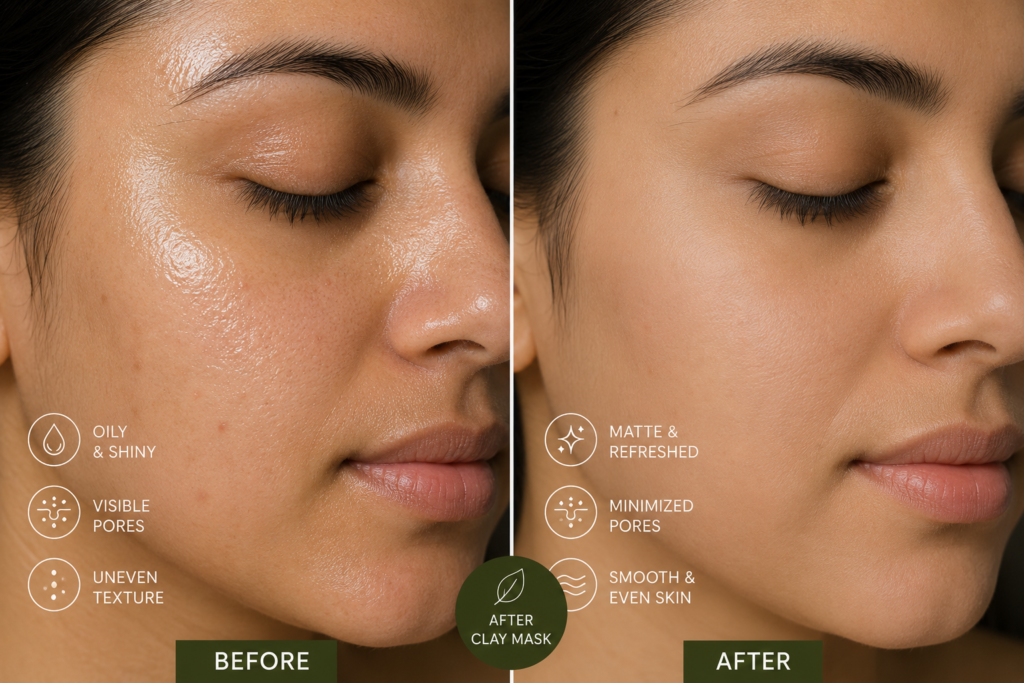
The core complaint behind oily skin in monsoon is visible shine by midday. Multani Mitti Powder’s mineral structure gives it a naturally high oil-absorbing capacity. This clay contains minerals with high cation exchange capacity, which may help attract and absorb excess oil, sebum, and pollutants from the skin’s surface.
Quick tip: Use it as a 10-minute mask, twice a week — not daily — to avoid over-drying combination areas like your cheeks.
3. A Brighter, Less Dull Complexion
Monsoon dullness often comes from a build-up of sweat, oil, and pollution sitting on the skin surface — another lesser-known symptom of oily skin in monsoon. Orange Peel Powder, rich in natural vitamin C, may help here. Research on citrus peel extracts, published in the Journal of Food Chemistry & Nanotechnology, notes that orange peel contains flavonoids, limonoids, and carotenoids that provide antioxidant and anti-inflammatory support, along with vitamin C that helps maintain collagen and skin firmness.
Quick tip: Patch test first — citrus powders can be photosensitising, so use this mask in the evening, not before sun exposure.
4. Calmer, Less Irritated Skin
Between humidity, sweat, and monsoon infections, skin can feel reactive. Rose Powder is traditionally valued for its cooling, soothing quality in Ayurveda, often used to balance more intense ingredients like neem or clay when managing oily skin in monsoon.
Quick tip: Add rose powder to any mask in this routine if your skin feels sensitised or over-exposed to rain.
5. Better Hair-Framing Skin Health (Hairline and Jaw Area)
Monsoon sweat often collects along the hairline, contributing to small bumps or “hairline acne” that many women notice but rarely name — a lesser-known side of oily skin in monsoon. A gentle Multani Mitti and Neem combination, applied along the jaw and hairline, may help manage this build-up.
Quick tip: Keep hair tied back for 15 minutes after applying any face pack near your hairline.
Who Should Use This Oily Skin in Monsoon Routine?
This routine for oily skin in monsoon may particularly help if you’re dealing with:
- Persistent oiliness and shine that worsens specifically in humid weather
- PCOS-related breakouts that flare up seasonally
- Postpartum skin changes combined with monsoon humidity
- Perimenopausal shifts in oil production
- Exam or work stress that shows up as your skin “acting up”
Not ideal if:
- You have very dry or highly sensitive skin — clay-based masks may be too drying without careful hydration follow-up
- You have open wounds, active eczema flares, or broken skin in the treatment area
- You are currently using strong prescription retinoids or acids, without a dermatologist’s guidance on combining routines
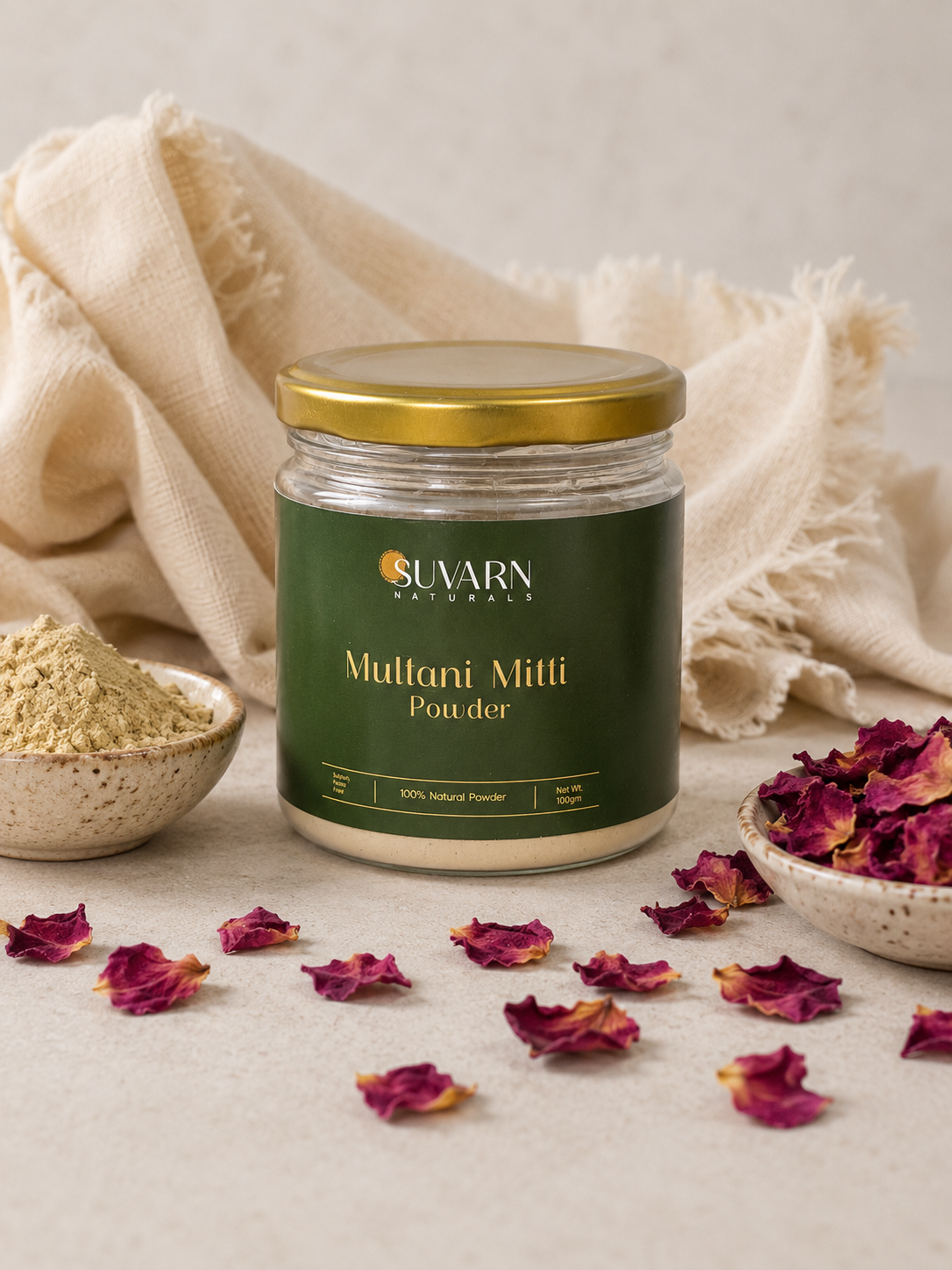
Reveal Fresh, Naturally Radiant Skin with Multani Mitti Powder
Crafted from premium Fuller’s Earth, Multani Mitti Powder is a timeless Ayurvedic skincare essential. It’s perfect for DIY face packs and helps leave your skin feeling fresh, clean, and naturally revitalized.
- ✔ Premium Quality Fuller’s Earth
- ✔ Ideal for DIY Face Packs & Skincare
- ✔ Helps Refresh Oily & Tired-Looking Skin
- ✔ 100% Pure with No Additives or Preservatives
How to Manage Oily Skin in Monsoon — Step by Step
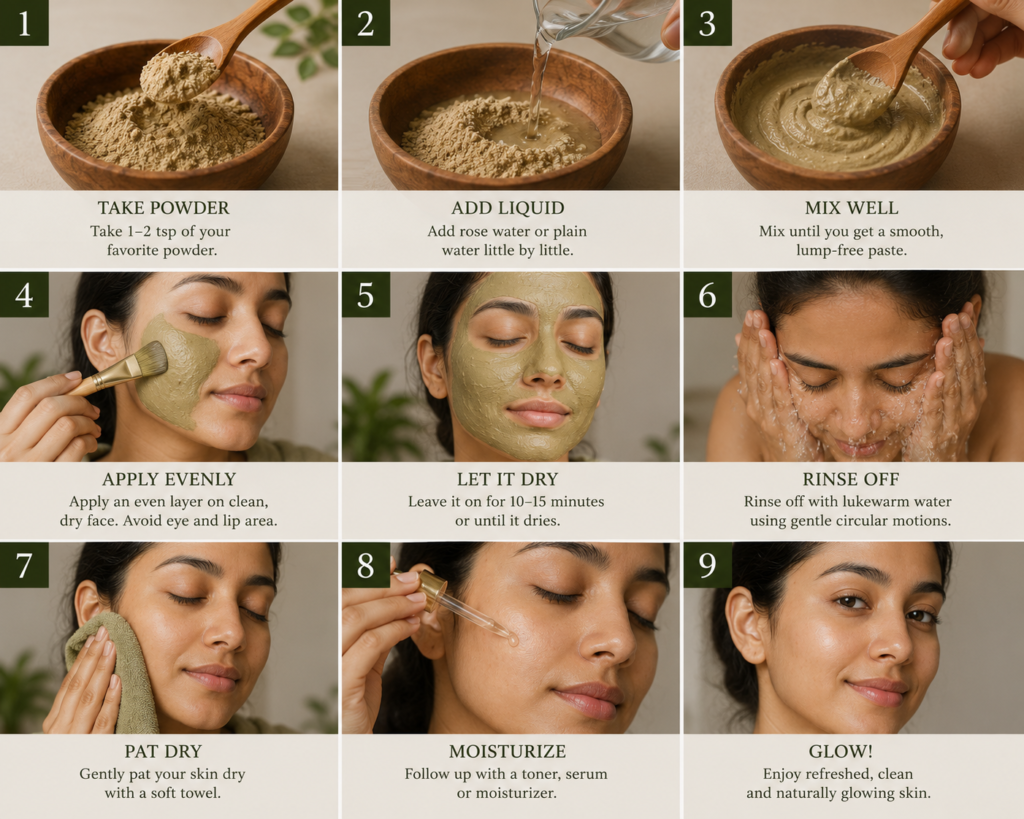
Start with clean, dry skin. Traditionally, these powders are used as a paste, mixed fresh each time rather than stored pre-mixed.
Best time of day: Evening, after your day’s sweat and pollution exposure, so your skin can rest overnight.
Three ways to use these powders for oily skin in monsoon:
- As a face pack — mixed with rose water or plain water into a paste
- As a cleanser boost — a pinch mixed into your regular face wash for extra oil control
- As a spot treatment — a small dab of neem paste directly on an active breakout
| Do | Don’t |
|---|---|
| Patch test any new powder on your inner arm first | Don’t leave clay masks on until fully dry and cracking |
| Moisturise after every mask, even if skin feels oily | Don’t use citrus-based powders right before sun exposure |
| Use lukewarm water to rinse | Don’t scrub aggressively to “get it all off” |
| Start with twice a week | Don’t use daily, as this may trigger rebound oiliness |
The 3-Minute Monsoon Ritual for Oily Skin
★ A simple evening ritual competitors rarely walk through in this much detail. ★
Ingredients
- 1 tsp Multani Mitti Powder
- ½ tsp Neem Powder
- ½ tsp Rose Powder
- Rose water, as needed, to form a paste
Steps
- Combine all three powders in a small bowl.
- Add rose water gradually, stirring until you get a smooth, non-lumpy paste — this takes about 1 minute.
- Apply an even layer to clean, dry skin, avoiding the eye area.
- Leave on for 8–10 minutes, until just damp, not fully dry and cracked.
- Rinse with lukewarm water using gentle circular motions.
- Follow with a lightweight, non-comedogenic moisturiser.
Pro tip: On nights your oily skin in monsoon feels especially dull, swap in a pinch of our Orange Peel Powder for a brighter finish — it pairs particularly well with the rose water base.
Oily Skin in Monsoon: Routine vs Alternatives
| Metric | Suvarn Naturals Herbal Powders | Generic Loose Herbal Powder | Capsule/Supplement Form | Synthetic Mattifying Product |
|---|---|---|---|---|
| Ease of use | Simple, mix-and-apply | Varies by source and freshness | Easiest, but for internal use only | Easy, ready-to-use |
| Time to results | 4–6 weeks of consistent use | Similar, if quality is comparable | Not applicable for topical concerns | Often instant, temporary effect |
| Skin type suitability | Formulated for oily/combination | Depends heavily on sourcing | Not skin-type specific | Can be harsh on sensitive skin |
| PCOS-friendliness | Gentle, hormone-neutral ingredients | Depends on purity and additives | Requires medical guidance | May contain irritating actives |
| Cost | Moderate, reusable over weeks | Often cheaper but inconsistent quality | Ongoing cost, different use case | Ongoing repurchase cost |
No option here is a guaranteed fix for oily skin in monsoon — skin response varies from person to person.
Side Effects and Precautions
These are traditional, topical ingredients, but they aren’t risk-free for everyone managing oily skin in monsoon.
- Patch test first, especially with Orange Peel Powder, which can occasionally cause mild irritation or photosensitivity in some people.
- Pregnancy and breastfeeding: topical use of these powders is generally considered low-risk, but check with your doctor before introducing new skincare, especially neem-based products, during pregnancy.
- Drug interactions: no significant topical interactions are documented, but if you’re using prescription acne treatments like retinoids or benzoyl peroxide, space this routine out to avoid over-exfoliating.
- When to see a doctor: if you notice persistent redness, swelling, cystic breakouts, or skin that worsens despite gentle care, see a dermatologist rather than continuing to self-treat.
Myths and Mistakes Women Make With Oily Skin in Monsoon
- “More washing equals less oil.” Over-cleansing strips your barrier and may trigger your glands to produce even more oil to compensate.
- “I should skip moisturiser since my skin is already oily.” This is the single most common mistake with oily skin in monsoon — under-moisturised skin often produces more sebum, not less.
- “Natural means it works overnight.” Traditional ingredients like neem and clay typically need 4–6 weeks of consistent, gentle use to show a real difference.
- “If my face pack cracks completely dry, it’s working better.” A fully dried, cracked mask pulls too much moisture from skin — damp removal is gentler and just as effective.
- “Oily skin doesn’t need SPF in monsoon.” Cloud cover doesn’t block UV — oily skin still needs a lightweight, non-comedogenic sunscreen every day.
Notes From the Suvarn Naturals Founder
Monsoon weather can make oily skin feel even more challenging because of increased humidity and sweat. We believe that a simple skincare routine with traditional herbal ingredients can help you keep your skin feeling fresh and comfortable throughout the season.
When I first started sourcing neem for our powders, I insisted on testing multiple harvest batches side by side — the bitterness and green intensity of the smell told us more about potency than any label could. In our lab, we noticed that finely milled Multani Mitti, sifted to a near-talc texture, mixes into a smoother paste for oily skin in monsoon and rinses off without leaving grit behind. That texture difference is small, but it’s the kind of detail that decides whether you’ll actually use a product twice a week or let it sit in your cabinet.
Frequently Asked Questions
1. Why does my skin get oilier specifically during monsoon, not summer?
Monsoon combines high humidity with fluctuating temperatures, which research suggests may stimulate sebaceous activity more than dry heat alone, while also weakening your skin’s water barrier.
2. Can I use Multani Mitti every day if my skin is very oily?
Daily use is generally not recommended, even for very oily skin, since it may strip natural oils and trigger a rebound oiliness cycle. Twice a week is a safer starting point.
3. Is neem powder safe for sensitive, acne-prone skin?
Neem is traditionally considered gentle, but sensitive skin should always patch test first and mix it with a soothing base like rose water rather than plain water.
4. Will this routine help with PCOS-related breakouts?
It may support overall oil balance, but PCOS-related breakouts are hormonally driven and often need a combined approach — this routine works best alongside your doctor’s guidance, not instead of it.
5. Can I use orange peel powder if I have dark spots from old acne scars?
Orange peel powder’s vitamin C content is traditionally used for brightening, but for stubborn pigmentation, pair it with sun protection, since citrus ingredients can be photosensitising.
6. How long before I see results from this routine?
Most women notice a difference in shine control within 1–2 weeks, but real changes in breakout frequency typically take 4–6 weeks of consistent use.
7. Can I use this routine if I’m pregnant?
Topical use is generally considered lower-risk than internal use, but check with your doctor before adding any new skincare ingredient during pregnancy.
8. What’s the biggest mistake to avoid with DIY herbal face packs?
Letting the mask dry completely and crack on your skin — this over-dries and can irritate rather than help oily skin.
9. Does this routine replace my regular cleanser or sunscreen?
No. This is a 2–3 times a week addition to your routine, not a replacement for daily cleansing and SPF.
10. Can men in the household use the same routine?
Yes — sebum, humidity, and monsoon breakouts affect all skin types regardless of gender, and the same ingredients and steps apply.
Final Takeaway
Monsoon oily skin isn’t a flaw to fix — it’s a seasonal shift your skin goes through every year, and it responds well to consistency over intensity. Start small: one evening ritual, twice a week, paired with a light moisturiser and daily SPF.
Give it 4–6 weeks before judging results, and adjust based on how your skin actually feels, not how quickly you want it to change. If you’re ready to try it, our <a href=”https://suvarnnaturals.com/product/multani-mitti-powder/”>Multani Mitti Powder</a> and <a href=”https://suvarnnaturals.com/product/rose-powder/”>Rose Powder</a> make a gentle starting pair for this season. Your skin has gotten through every monsoon so far — this one, you’ll meet with a little more knowledge on your side.
