
Best Ayurvedic Herbs for Immunity: A Science-Backed Guide

Published: 30 July 2026 | By Suvarn Naturals Team
TL;DR — Quick Answer
- Ayurveda’s approach to immunity (“Ojas”) relies on a handful of Rasayana herbs — Moringa, Amla, Blue Pea Flower — used consistently, not as a one-time fix.
- Moringa and Amla are the two best-researched Ayurvedic herbs for immunity, thanks to their polyphenol and vitamin C content.
- Immunity isn’t a switch you flip overnight — it’s built through gut health, sleep, stress management, and steady herbal support over weeks.
- Women dealing with PCOS, postpartum recovery, or perimenopause often see added benefits for skin, hair, and energy alongside immune support.
- A simple 3-minute night ritual (recipe below) can make these herbs part of your routine instead of another thing to remember.
- Always check with your doctor before adding any herb if you’re pregnant, on medication, or managing a chronic condition.
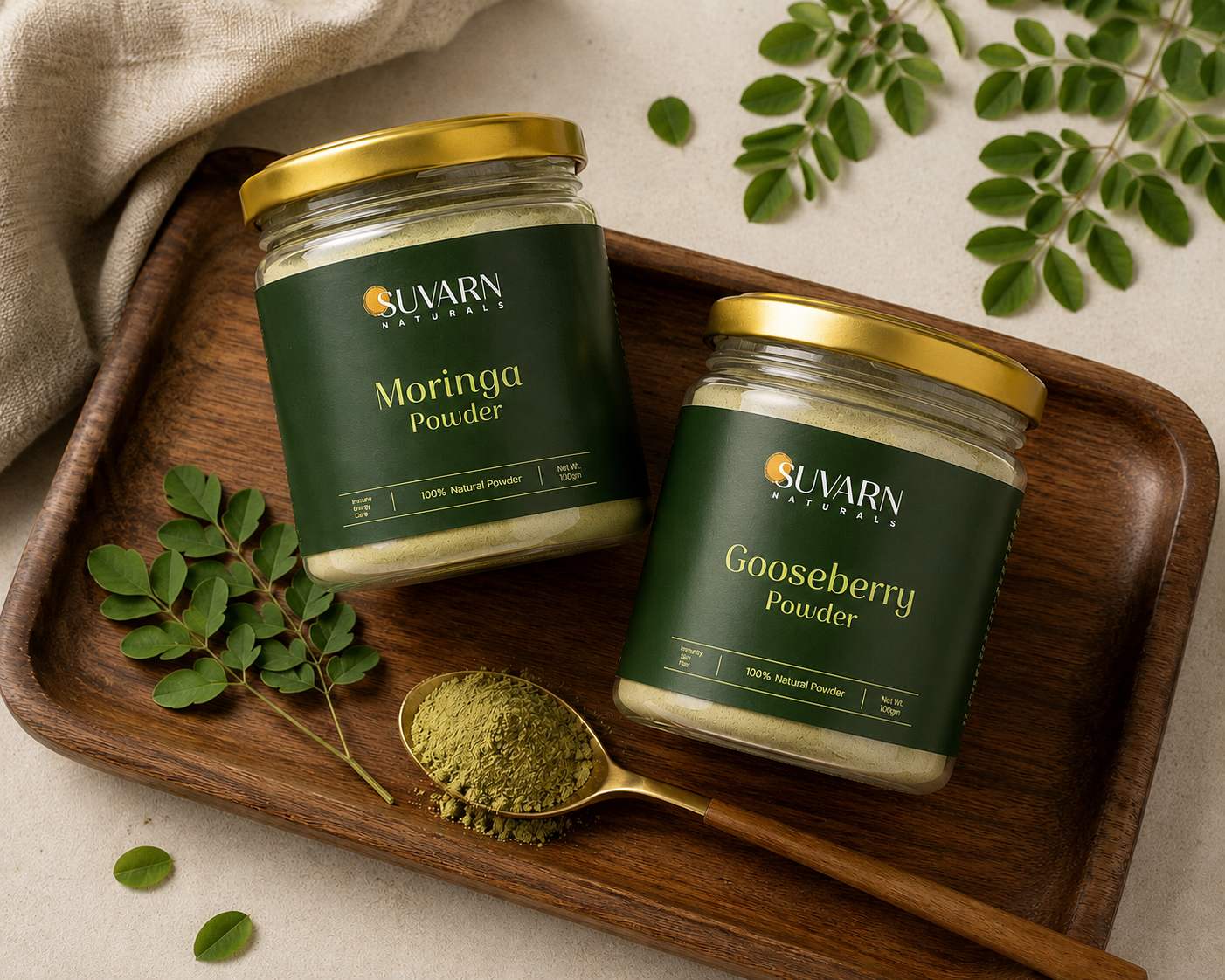
Try our small-batch Moringa Powder and Amla Powder — start with our Best Detox Drink for Monsoon recipe if you want a gentle first step.
Cold season hits and you’re reaching for another vitamin C tablet, wondering if there’s a gentler, more sustainable way to support your body. That’s usually the moment women start asking about Ayurveda.
Interest in Ayurvedic immunity herbs has spiked again with monsoon season in India. This guide cuts through the “miracle herb” hype and looks at what Ayurvedic tradition and current research actually say about Moringa, Amla, and Blue Pea Flower — and how to realistically fit them into a busy week. Our founder’s note at the end shares what we’ve learned sourcing these herbs directly from Indian farms.
What Are Ayurvedic Herbs for Immunity?
In short: Ayurvedic immunity herbs are traditional Rasayana (rejuvenative) botanicals — like Moringa, Amla, and Blue Pea Flower — traditionally used to nourish “Ojas,” the body’s vital reserve believed to underpin resilience and disease resistance.
In Ayurveda, immunity isn’t a single organ system — it’s tied to Ojas, a subtle essence produced when digestion (Agni) is strong and tissues are well-nourished. Herbs classified as Rasayana are traditionally used to build Ojas over time, rather than to fight one illness.
- Moringa (Sanskrit: Shigru; botanical name Moringa oleifera) — leaves rich in polyphenols, quercetin, and chlorogenic acid.
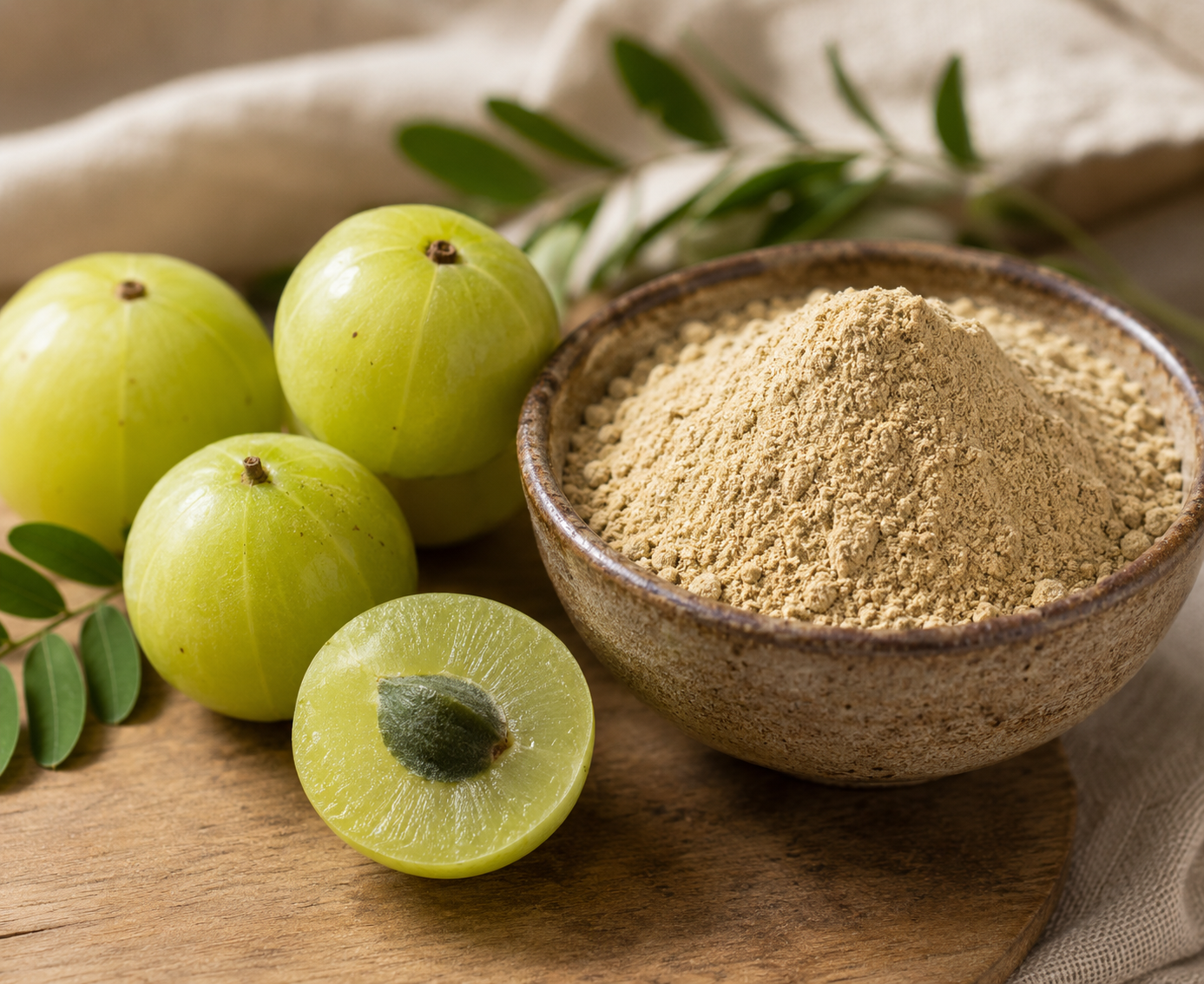
- Amla (Sanskrit: Amalaki; botanical name Phyllanthus emblica) — one of the most concentrated natural sources of vitamin C, plus tannins called emblicanins.
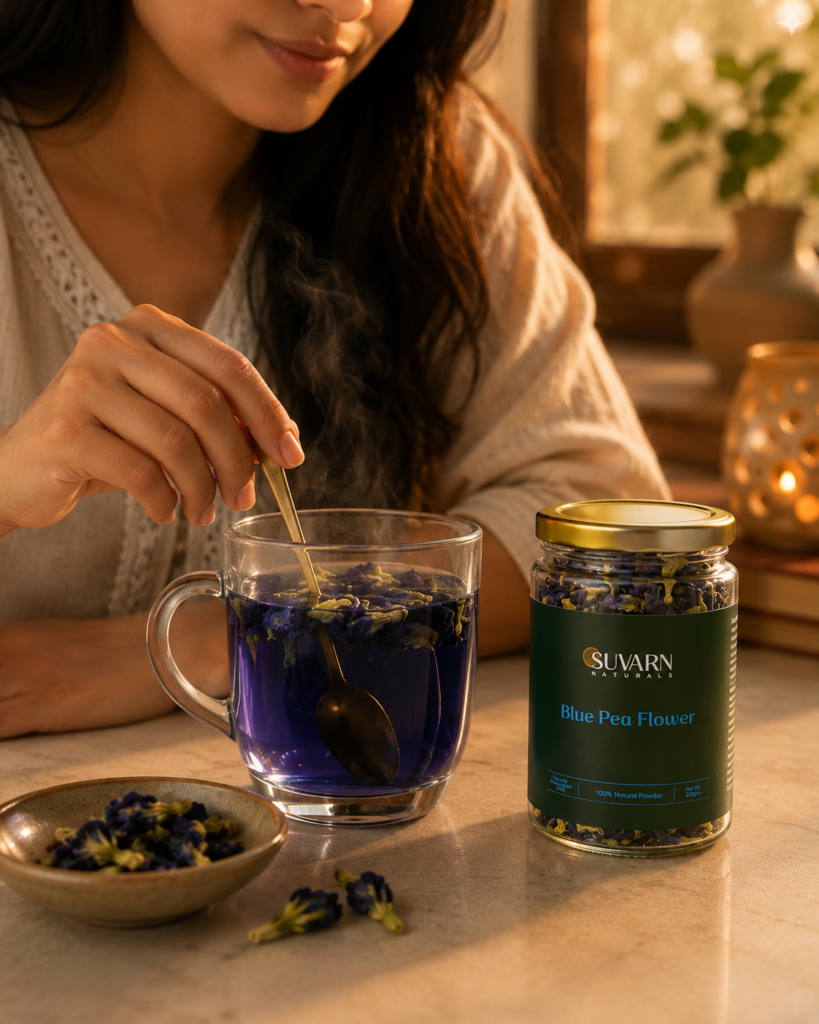
- Blue Pea Flower (Sanskrit: Aparajita; botanical name Clitoria ternatea) — rich in anthocyanins, traditionally used as a calming, antioxidant-rich infusion.
These three, along with our Floral Detox Powder blend, form the core of a simple Ayurvedic immunity routine.
The Science + Ayurvedic Perspective
In short: Modern research increasingly supports what Ayurveda described qualitatively — these herbs contain compounds that modulate immune cell activity and reduce oxidative stress, though human clinical evidence is still growing.
Ayurveda classifies Moringa and Amla as Tridoshic — balancing for all three doshas (Vata, Pitta, Kapha) — which is one reason they’ve historically been used across such a wide range of constitutions and seasons.
Modern research is starting to explain why. A 2023 pharmacological review found Moringa oleifera contains compounds with documented immunomodulatory and antioxidant activity <cite index=”4-1″>Moringa oleifera is a nutrient-packed tree reshaping modern medicine with its ability to fight inflammation, regulate metabolism, and enhance immune resilience</cite>. Separately, a 2024–2025 systematic review and meta-analysis found <cite index=”5-1″>Moringa oleifera has been widely used as a traditional herbal remedy for enhancing immunity and improving nutritional status</cite>, and researchers have specifically begun investigating its <cite index=”7-1″>immune-relevant molecular targets and potential mechanisms using computational screening approaches</cite>.
Amla’s case rests largely on its exceptional vitamin C density. Genomic research published in 2023 confirmed amla is <cite index=”14-1″>one of the richest natural sources of vitamin C and numerous flavonoids</cite>, and health researchers note it <cite index=”13-1″>works as an immunomodulator, helping regulate the immune system rather than simply boosting it</cite>.
Myth vs Fact
| Myth | Fact |
|---|---|
| “Herbs boost immunity instantly, like a switch” | Immune modulation traditionally builds over weeks of consistent use, alongside sleep, digestion, and stress management |
| “More vitamin C always means stronger immunity” | Vitamin C supports immune function, but excess isn’t stored — consistency and whole-herb compounds matter more than mega-dosing |
| “One herb replaces a balanced diet” | Ayurveda treats Rasayana herbs as support, layered onto — never substituting — a nourishing diet and rest |
The myth worth retiring: treating immunity as something you can switch on with a single herb during flu season. Ayurveda never framed it that way — Ojas is built gradually, through digestion, rest, and steady herbal nourishment.
Blue Pea Flower’s role in this picture is a little different. It’s traditionally classified as a Medhya Rasayana — a category of herbs associated with calm and mental clarity rather than direct immune stimulation. Its deep blue color comes from anthocyanins, plant pigments with antioxidant activity that researchers have studied for their potential to reduce oxidative stress markers. Ayurveda’s logic here is indirect but consistent: chronic stress depletes Ojas over time, so a calming herb is, in its own way, an immunity herb too.
This is also where the gut-immune connection becomes relevant. A large share of the body’s immune activity is concentrated around the digestive tract, which is one reason Ayurveda has always treated Agni — digestive strength — as inseparable from immunity. Fiber and polyphenol-rich botanicals like Moringa and Amla are traditionally taken with warm water specifically to support digestion rather than stress it, which may be one reason consistent, small doses are emphasized over large, occasional ones.
Benefits of Ayurvedic Herbs for Immunity — Especially for Women
Skin resilience during hormonal shifts
Oxidative stress shows up fastest on skin — dullness, breakouts, slow healing. Amla’s polyphenols are traditionally used to support skin repair; research on topical amla formulations found improvements in <cite index=”12-1″>skin hydration, elasticity, and tone over an 84-day trial</cite>.
Quick tip: Mix ½ tsp Amla Powder into warm water first thing in the morning, before your skincare routine.
Hair fall linked to nutrient gaps
Iron and vitamin C deficiency are common contributors to hair thinning in women, especially postpartum or during heavy cycles. Amla is traditionally used to support hair follicle health alongside iron-rich foods.
Quick tip: Pair Amla Powder with a source of dietary iron (like leafy greens) — vitamin C improves iron absorption.
Energy dips and stress resilience
Blue Pea Flower is traditionally used as a calming infusion; its anthocyanins are being studied for antioxidant activity that may support the body’s stress response.
Quick tip: Steep Blue Pea Flower in hot water for a caffeine-free, calming afternoon reset instead of a third coffee.
Nutrient density during PCOS or postpartum recovery
Moringa leaves are unusually dense in micronutrients and plant compounds, which is why they’re traditionally used as a general tonic during recovery periods when appetite or nutrient absorption may be low.
Quick tip: Add ¼ tsp Moringa Powder to dal or smoothies — the flavor is mild enough to go unnoticed by picky eaters at home.
Mood and gut-immune balance
A growing body of research links gut health to immune resilience <cite index=”6-1″>, with gut dysbiosis increasingly understood as both an ecological and causative factor in disease susceptibility</cite>. Fiber-rich herbal powders traditionally support digestion, which Ayurveda has long tied to Ojas.
Quick tip: Take herbal powders with warm water, not cold — Ayurveda considers this gentler on Agni (digestive fire).
Who Should Use Ayurvedic Immunity Herbs?
- PCOS: Antioxidant-rich herbs may traditionally support overall wellness alongside medical management — not a replacement for it. Many women managing PCOS are also watching added sugar closely, which is one reason a plain powder (rather than a sweetened tonic) tends to fit more easily into an existing routine.
- Postpartum: Nutrient-dense herbs like Moringa are traditionally used as a gentle tonic once cleared by your doctor, often alongside iron-rich foods during recovery when appetite can be unpredictable.
- Perimenopause: May traditionally support energy and skin resilience during hormonal transitions, when oxidative stress markers are often naturally higher.
- Exam stress / high-pressure weeks: Blue Pea Flower’s traditional calming use pairs well with a wind-down routine, especially for students or professionals whose sleep gets disrupted under pressure.
- General seasonal support: During monsoon and winter transitions, when respiratory infections tend to spike, many households in India traditionally lean on Rasayana herbs as a steady, background layer of support rather than a reactive remedy.
Not ideal if:
- You’re pregnant or breastfeeding without medical clearance first
- You’re on blood thinners (high vitamin C and certain polyphenols may interact)
- You have a known allergy to any Moringa, Amla, or pea-flower family plants
- You’re expecting an “instant fix” rather than a gradual, supportive routine
How to Use Ayurvedic Herbs for Immunity — Step by Step
Start low and build up. A commonly referenced starting range is ¼–½ tsp of powder daily, taken with warm water or food, ideally in the morning when Agni is strongest.
Three common formats:
- Powder — most versatile; mix into water, smoothies, or dal
- Capsule — convenient for travel or taste-sensitive users
- Infusion/tea — best for Blue Pea Flower specifically
| Do | Don’t |
|---|---|
| Start with a small amount and observe how you feel | Jump straight to large daily doses |
| Take with warm water on an empty stomach | Take on a completely full stomach right after a heavy meal |
| Be consistent for 6–8 weeks before judging results | Expect visible change within days |
| Check with a doctor if on medication | Combine multiple new herbs all at once |
The 3-Minute Ayurvedic Immunity Ritual
★ A simple nighttime ritual to make this routine stick ★
Ingredients
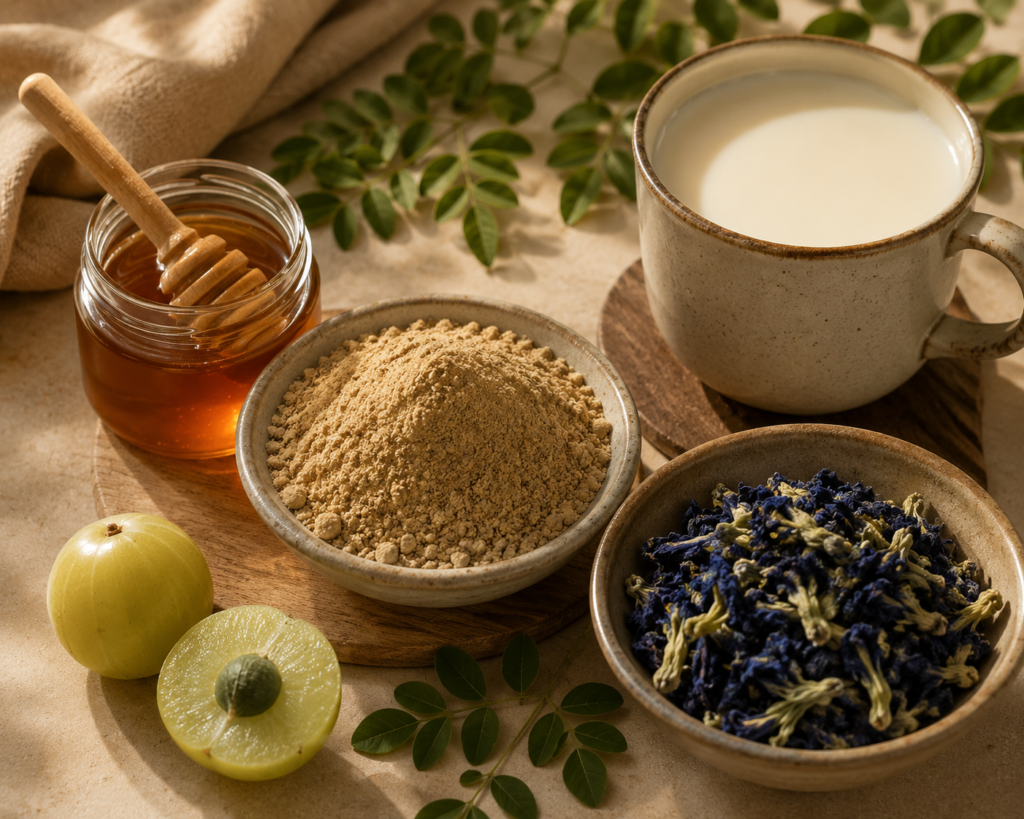
- 1 cup warm water or milk
- ½ tsp Suvarn Naturals Amla Powder
- A pinch of Suvarn Naturals Blue Pea Flower (for color and calm)
- Optional: a few drops of honey once the liquid has cooled slightly
Steps
- Warm the water or milk gently — it shouldn’t be boiling.
- Stir in the Amla Powder until fully dissolved.
- Add the Blue Pea Flower and let it steep for 60 seconds, watching the color shift.
- Let it cool for a minute, then add honey if using.
- Sip slowly, 20–30 minutes before bed.
Pro tip: mix in a spoon of our Floral Detox Powder on weekends for a gentler, floral variation of this same ritual.
Ayurvedic Immunity Herbs vs Alternatives
| Metric | Suvarn Naturals Powder | Generic Loose Powder | Capsules | Synthetic Vitamin C |
|---|---|---|---|---|
| Ease of use | High — pre-measured, mild taste | Medium — sourcing varies | High — no taste | High |
| Time to notice routine benefits* | 6–8 weeks, consistent use | Variable, quality-dependent | 6–8 weeks | Days (isolated nutrient only) |
| Skin type suitability | Broad, gentle | Depends on processing | Broad | N/A |
| PCOS-friendliness | Whole-herb, no added sugar | Varies by brand | Check excipients | N/A |
| Cost (per month, approx.) | Moderate | Low–moderate | Moderate–high | Low |
*No product can guarantee a specific timeline — this reflects commonly reported patterns, not a promise.
Side Effects and Precautions
Most people tolerate these herbs well in food-level amounts, but transparency matters more than marketing here.
- Pregnancy/breastfeeding: Speak to your doctor before starting any new herb.
- Blood thinners or diabetes medication: Amla’s vitamin C and possible blood-sugar effects mean you should check with your doctor first.
- Digestive sensitivity: Very high doses of any fibrous powder can cause mild bloating — start small.
- When to see a doctor: If you notice unusual rashes, digestive upset, or your existing condition changes after starting a new herb, stop and consult a healthcare professional.
These herbs are traditionally used for wellness support — they are not a treatment for any diagnosed condition, and they don’t replace prescribed medication.
It’s also worth being clear-eyed about quality control, since this is where most reported reactions actually come from. Herbal powders sourced without heavy-metal or microbial testing can carry contamination risks unrelated to the herb itself — this is far more often the cause of an adverse reaction than the plant compound in question. Look for brands that publish batch-level testing, and introduce any new herb on its own for at least a week before combining it with anything else, so you can trace a reaction back to its actual source if one occurs.
Myths and Mistakes Women Make With Ayurvedic Immunity Herbs
- Taking a herb only when already sick. Rasayana herbs are traditionally used for steady, ongoing support — not as a same-day remedy.
- Assuming “natural” means “no interactions.” Even food-based herbs can interact with medication; always check.
- Buying based on packaging, not sourcing. Ask where the raw herb comes from and how it’s tested.
- Stacking five new herbs at once. This is the mistake we see most — it makes it impossible to know what’s actually helping (or not agreeing with you).
- Expecting overnight results. This ties back to the core myth above — immunity is a gradual, cumulative process, not a switch.
Notes from the Suvarn Naturals Founder
Ayurveda has long valued herbs as part of a balanced lifestyle. While no single herb can prevent illness or replace a healthy diet and medical care, incorporating traditional botanicals into your daily routine may help support overall wellness.
When I first tested our Amla Powder batches, the thing that struck me wasn’t the vitamin C number on paper — it was the tartness. Real, sun-dried amla should taste sharp and slightly astringent, not flat or overly sweet. If it tastes bland, it’s likely been over-processed.
In our lab, we test every batch for heavy metals and microbial safety before it reaches a jar. We source Moringa from small farms in Tamil Nadu and Amla from Uttar Pradesh, working directly with growers so we know exactly how the herbs were dried and stored. It’s slower and more expensive than buying in bulk from a broker — but it’s the only way we’re comfortable putting our name on it.
Frequently Asked Questions
Is Moringa or Amla better for immunity?
Both are traditionally used for immune support through different mechanisms — Moringa for its broad polyphenol profile, Amla for concentrated vitamin C. Many people use both together.
Can I take Ayurvedic immunity herbs every day?
Small, consistent daily amounts are the traditional approach, generally more effective than occasional large doses.
How long before I notice a difference?
Most traditional use suggests 6–8 weeks of consistency before evaluating results — this isn’t a same-day remedy.
Is Blue Pea Flower actually good for immunity, or just for color?
It’s traditionally valued for its calming and antioxidant properties, which indirectly support the stress side of immune resilience — not a standalone immunity herb on its own.
Can PCOS patients use these herbs?
Many women with PCOS use antioxidant-rich herbs as general wellness support, but always alongside — never instead of — medical guidance.
Is it safe during pregnancy?
Speak with your doctor before starting any new herb during pregnancy or breastfeeding.
Do these herbs interact with medication?
Possibly, especially with blood thinners or diabetes medication. Check with your doctor if you’re on any prescription.
What’s the best time of day to take them?
Morning, on a relatively empty stomach with warm water, is the traditionally preferred time — though the nighttime ritual above works well too.
Powder, capsule, or tea — which is best?
Powder is the most versatile and lets you control dosage; capsules suit those sensitive to taste; tea suits Blue Pea Flower specifically.
Will this replace my multivitamin?
No — think of it as a complementary, whole-food layer alongside (not instead of) medical advice and a balanced diet.
Can I give these herbs to my teenage daughter?
Food-level amounts of Amla or Moringa are generally well tolerated by teenagers, but it’s worth checking with a pediatrician first, especially if she’s on any medication or has a diagnosed condition.
Why does Ayurveda emphasize warm water instead of cold?
Cold liquids are traditionally believed to dampen Agni (digestive fire), which Ayurveda ties closely to how well the body absorbs and uses nutrients — warm water is thought to support digestion instead of working against it.
Final Takeaway
If you came here wondering whether one herb could “fix” your immunity, the honest answer is: no single herb does that — and that’s not a disappointing answer, it’s a freeing one. Ayurveda’s real strength is consistency: a small ritual, repeated often, alongside decent sleep and food.
Start with one herb — Amla or Moringa — for six to eight weeks before adding another. Notice how your skin, energy, and digestion feel, not just whether you avoided a cold. That’s the metric Ayurveda actually cared about.
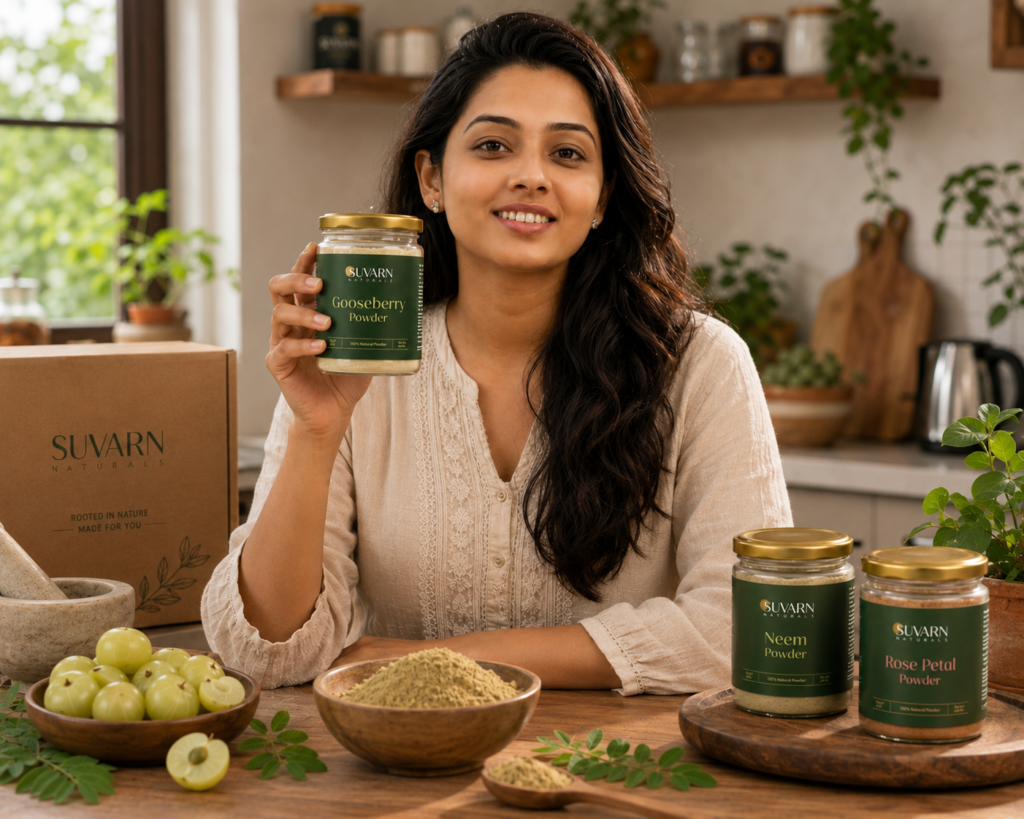
If you’re ready to start, our Amla Powder and Moringa Powder are a gentle first step — or try the 3-minute ritual above tonight.