
Can Rainwater Damage Hair? A Monsoon Guide, Ayurvedically

Published: 29July 2026 | By Suvarn Naturals Team
TL;DR
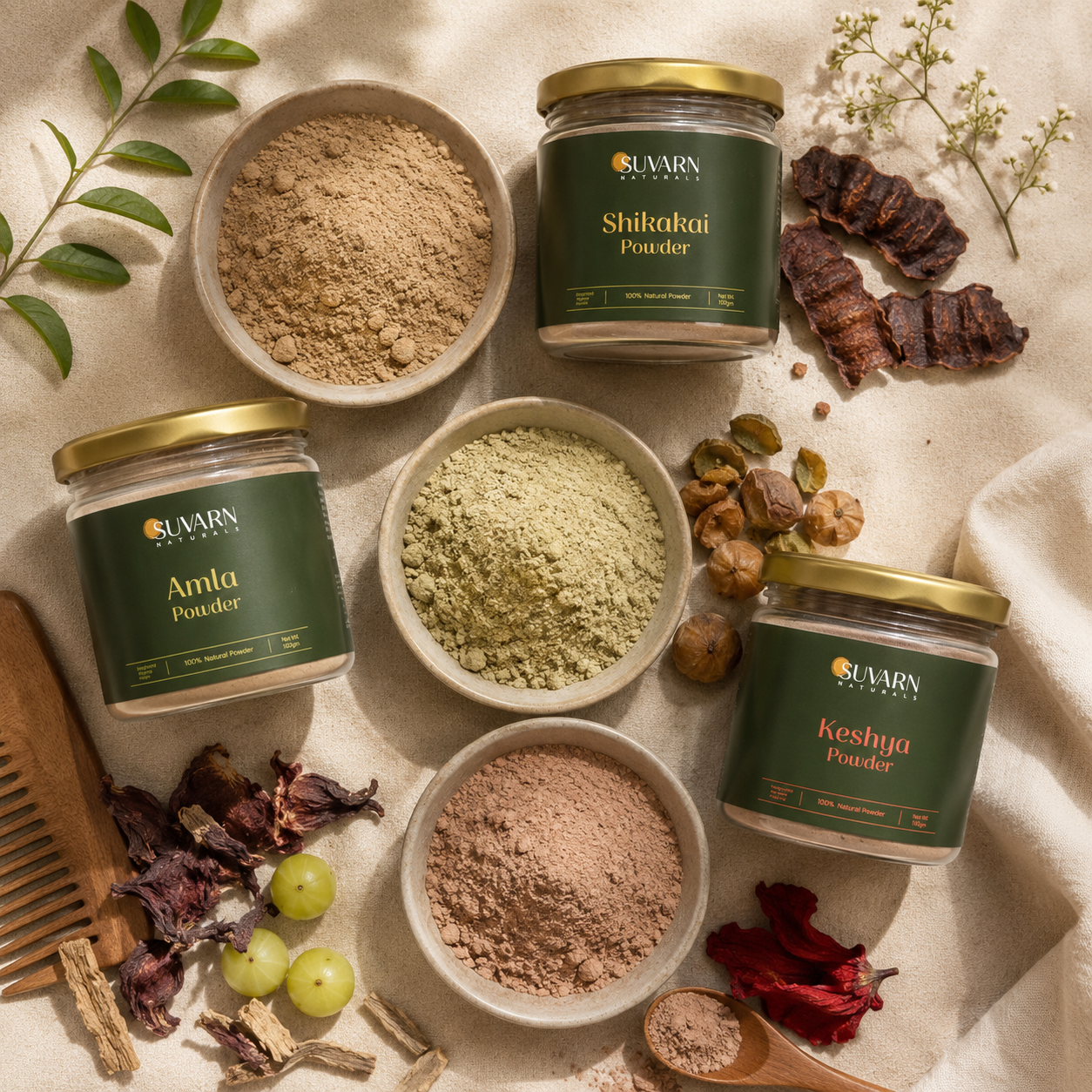
Try our nighttime ritual below, and consider pairing it with our Shikakai Powder for a soap-free, monsoon-friendly cleanse.
Occasional rain won’t ruin your hair — but urban rainwater is often mildly acidic and carries pollutants that can weaken the cuticle over time.
Left on the scalp for hours, rainwater plus sweat can raise humidity and feed Malassezia, the yeast behind monsoon dandruff and itching.
Ayurveda treats this as a Kapha-season imbalance — heavy, damp, and prone to buildup — best managed with light, cleansing herbs.
Shikakai, Amla, and Keshya powders offer a gentle, saponin-based cleanse that traditional texts and modern lab studies both connect to a calmer scalp.
A simple 3-minute rinse ritual after every rainy commute can prevent most monsoon hair fall.
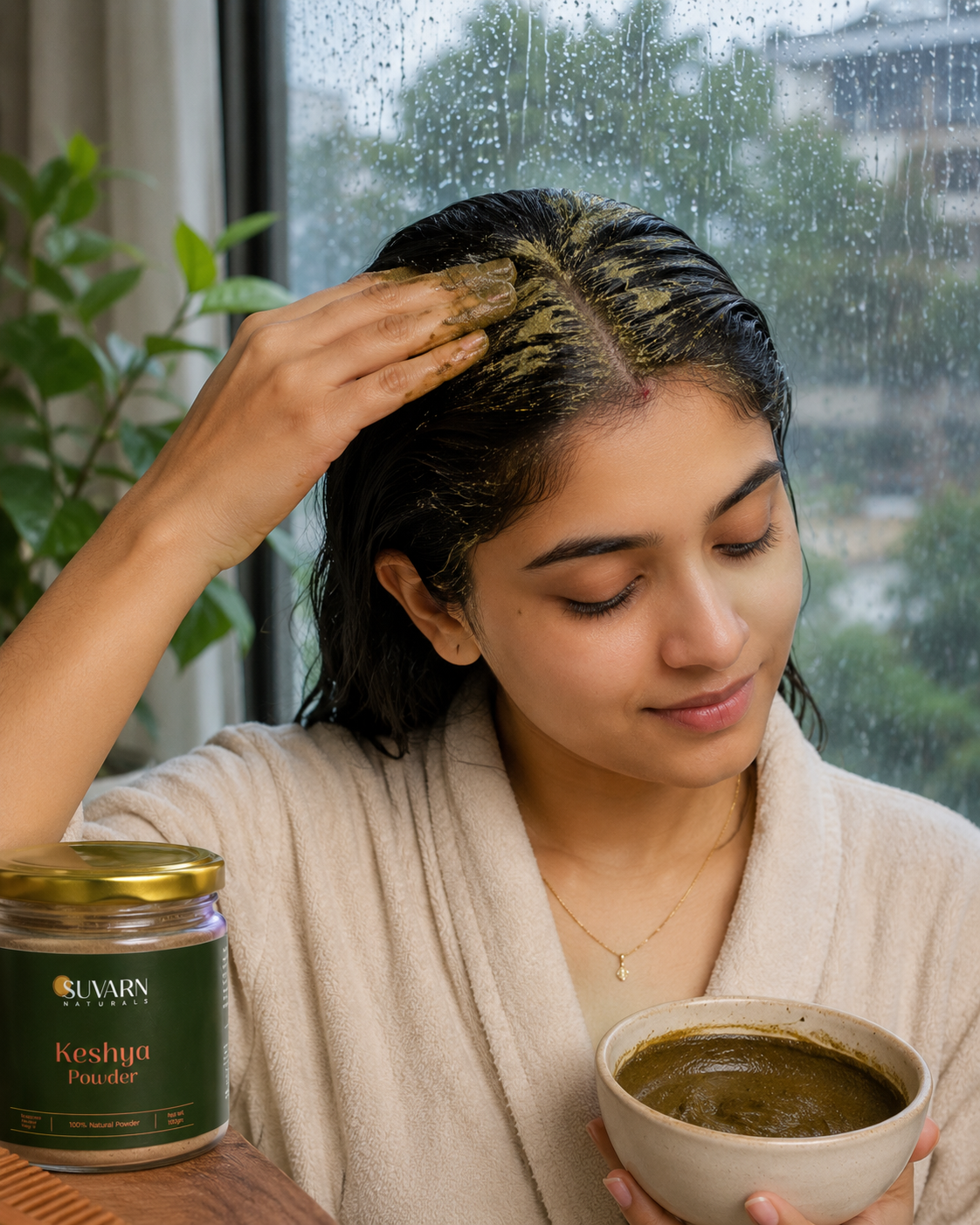
You step in from the rain, towel-dry your hair, and forget about it. By the next morning your scalp itches and your hairbrush has more strands in it than usual. As of 26/07/2026, with monsoon in full swing across India, this is one of the most common questions in wellness circles: can rainwater damage hair, or is it just an old myth? The honest answer sits between both extremes, and this guide — informational, comparative, and practical — walks you through what’s actually happening on your scalp, and what a smart, low-effort routine looks like.
This guide walks through what dermatology and Ayurveda each say about rain and hair, challenges the biggest myth around it, and ends with a simple ritual using Shikakai, Amla, and Keshya powders you can start tonight.
What Is Rainwater, and Why Does It Affect Hair?
Rainwater is naturally soft, but by the time it reaches your scalp in an Indian city, it has usually picked up dissolved pollutants that shift its pH and mineral content — this is what actually interacts with your hair.
In Ayurveda, rain-season hair changes are described through the Kapha dosha — the qualities of heaviness, moisture, and stagnation that dominate the monsoon (Varsha Ritu). Classical texts don’t reference “rainwater” directly, but they do describe this season as one where oil (sebum), damp air, and reduced digestion combine to make the scalp sluggish and prone to buildup.
In chemistry terms, clean rainwater sits close to neutral, but pollution from vehicles and industry can push its pH down toward 4.0–5.6 in cities — noticeably more acidic than the scalp’s natural range of 4.5–5.5. Combined with airborne particulate matter, this is the “rainwater” your hair actually meets.
The Science and the Ayurvedic Perspective
Rainwater itself rarely damages a healthy scalp in one exposure — the real issue is repeated wetting, urban pollutants, and how long moisture sits on your head before you cleanse it.
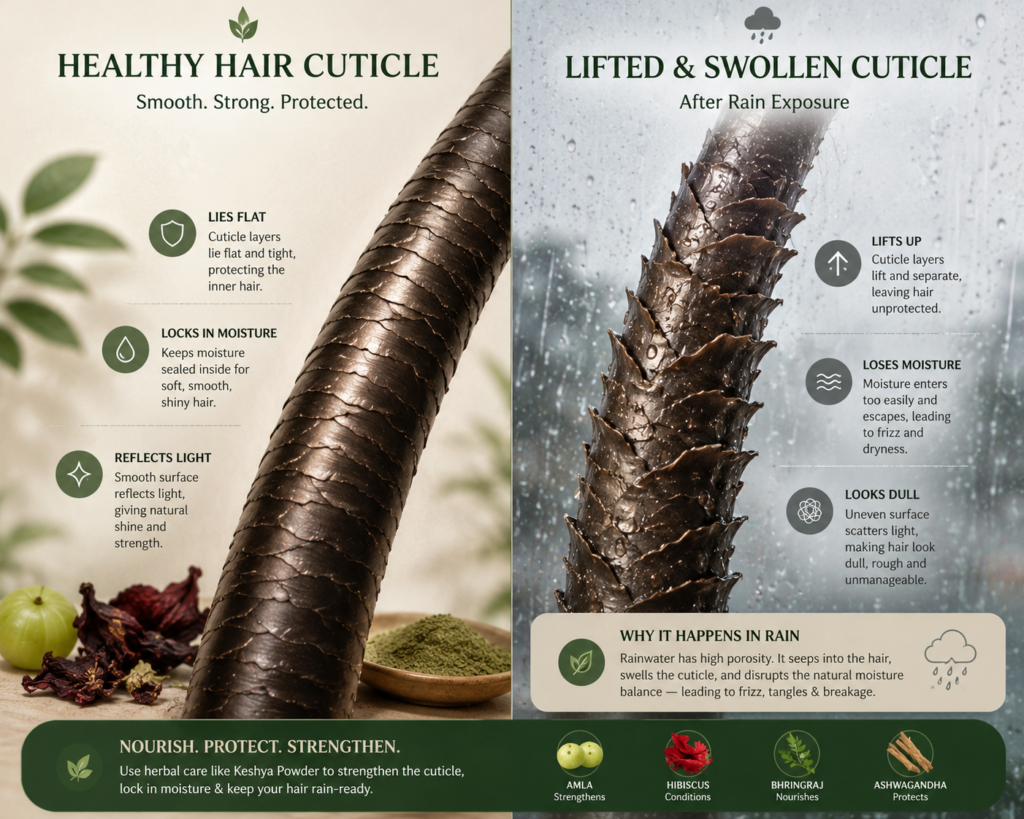
What actually happens physically: water makes the hair shaft swell and temporarily lifts the outer cuticle layer, similar to opening tiny overlapping scales. In this lifted state, hair is more porous and more prone to tangling or snapping, especially while wet.
What pollution adds: in industrial or high-traffic areas, dissolved sulfur and nitrogen compounds can lower rainwater’s pH enough to strip natural oils and irritate a sensitive scalp with repeated exposure.
What Ayurveda adds: the Varsha Ritu framework has always treated monsoon as a season for lighter cleansing routines and Kapha-balancing herbs, not heavy oiling — a preventive lens modern dermatology is only now catching up to with research on humidity and scalp microbiome shifts.
Underneath the cuticle, hair is mostly keratin protein held together by hydrogen bonds and disulfide links. Repeated wet-dry cycles from rain, followed by rough towel-drying, gradually loosen these bonds, which is why hair caught in frequent showers often feels rougher by the end of the season rather than after a single downpour.
The scalp itself also plays a role. Sebum, the natural oil your scalp produces, normally forms a light protective film. Humidity increases sebum output, and when that oil mixes with trapped rainwater and sweat, it creates exactly the moist, nutrient-rich surface that supports fungal overgrowth rather than a strand-level “damage” in the way sunlight or heat styling would.
Myth vs Fact
| Myth | Fact |
|---|---|
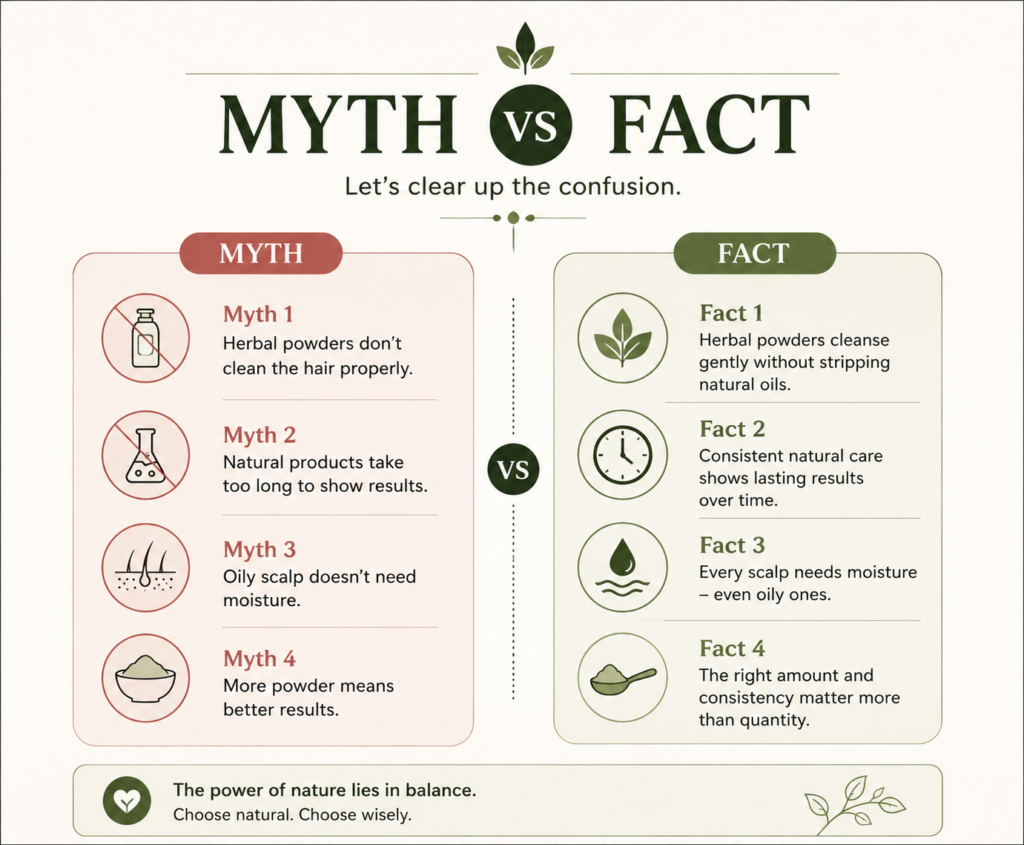
| “Rainwater is always pure, so it’s good for hair.” | City rainwater dissolves airborne pollutants on the way down; its safety for hair depends heavily on your location. |
| “If my hair falls out after rain, the rain caused permanent hair loss.” | Rain mainly triggers breakage and shedding from a weakened shaft or scalp irritation — true root-level hair loss usually needs a separate, ongoing cause. |
| “Just let your hair air-dry naturally after rain and you’re fine.” | Damp hair left uncleansed for hours creates the warm, moist environment where Malassezia yeast — the organism behind monsoon dandruff — multiplies fastest. |
Benefits of a Monsoon-Ready Hair Routine — Especially for Women
A consistent, gentle monsoon routine may support scalp comfort, reduce breakage, and calm the hormonal hair changes many women already notice more sharply during this season.
Calmer, Less Itchy Scalp
Frequent, gentle cleansing removes the sweat-rain-pollutant layer before Malassezia yeast gets a chance to overgrow, which research links to the greasy, persistent itch many people notice specifically in humid months.
Quick tip: Rinse hair with plain water immediately after a rain-soaked commute, even if you can’t shampoo right away.
Support for Monsoon Hair Fall
Monsoon hair fall in women is often shedding, not loss — driven by a damp scalp, hormonal shifts, and reduced traditional oiling. Herbal cleansers traditionally used in Ayurveda, like Amla, are being studied for their role in supporting the hair growth cycle.
Quick tip: Focus on scalp cleanliness before reaching for growth serums — a congested scalp limits how well any product can work.
Fewer Breakage-Prone “Bad Hair Days”
Since rain temporarily swells and roughens the hair shaft, gentle detangling and avoiding tight, wet hairstyles may reduce the visible breakage many women blame on “rain damage.”
Quick tip: Detangle with a wide-tooth comb starting from the ends, never the roots, while hair is wet.
A Steadier Mood Around Hair Care
For many women managing PCOS, postpartum shedding, or everyday stress, monsoon hair changes add one more thing to worry about. A short, dependable ritual — rather than a long list of products — can make hair care feel manageable again.
Quick tip: Keep your monsoon routine to 2–3 steps; consistency matters more than complexity.
A Small Buffer Against Daily Pollution
City hair is exposed to airborne particulate matter even on dry days, but monsoon rain can wash that layer straight onto the scalp. Regular gentle cleansing may help clear this buildup before it has a chance to sit against skin for long stretches.
Quick tip: If you commute daily through traffic, consider a light rinse every evening during monsoon, not just after visible rain.
“`html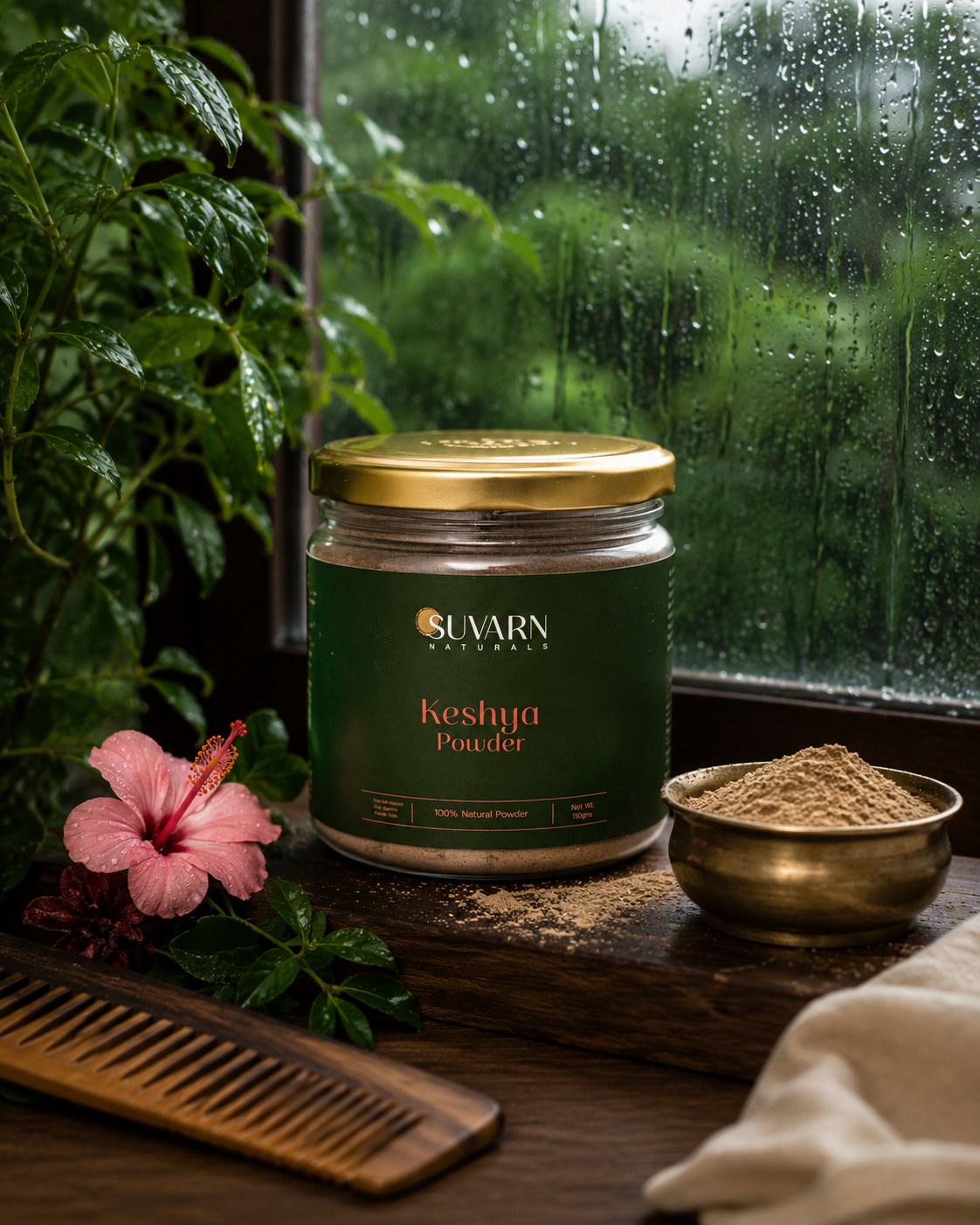
Give Your Hair the Herbal Care It Deserves with Keshya Powder
Crafted with a nourishing blend of traditional Ayurvedic herbs, Keshya Powder is perfect for DIY hair masks and natural hair care routines. Enjoy stronger-looking, softer, and healthier-looking hair with every application.
- ✔ Blend of Premium Ayurvedic Herbs
- ✔ Ideal for DIY Hair Masks & Scalp Care
- ✔ Helps Hair Feel Soft, Healthy & Manageable
- ✔ 100% Pure with No Additives or Preservatives
Who Should Pay Extra Attention to Monsoon Hair Care?
Certain groups may notice monsoon hair changes more intensely and can benefit from a slightly more deliberate routine during the rains.
If you’ve ever wondered why your friend’s hair sails through the rains untouched while yours reacts within a day, scalp oiliness, hormone patterns, and existing sensitivity usually explain the gap — not how much rain either of you actually walked through.
- PCOS or hormonal hair thinning: Excess scalp oil common with PCOS combines with monsoon humidity to encourage buildup faster than in drier months.
- Postpartum hair shedding: Already-elevated shedding can look worse when a damp scalp adds irritation on top of natural postpartum hormone shifts.
- Perimenopause: Changing oil production and slower hair regrowth make scalp hygiene more important, not less, during humid weeks.
- Exam stress or high-stress periods: Stress-related shedding is often worsened by a neglected, humid scalp that’s easy to overlook when busy.
Not ideal if…
- You have an active scalp infection, open wound, or diagnosed ringworm — see a dermatologist before starting any new herbal routine.
- You’re allergic to any ingredient in Shikakai, Amla, or Keshya blends — always patch test first.
- You’re pregnant or breastfeeding and unsure about a new topical routine — check with your doctor first.
How to Use Shikakai, Amla, and Keshya Powders — Step by Step
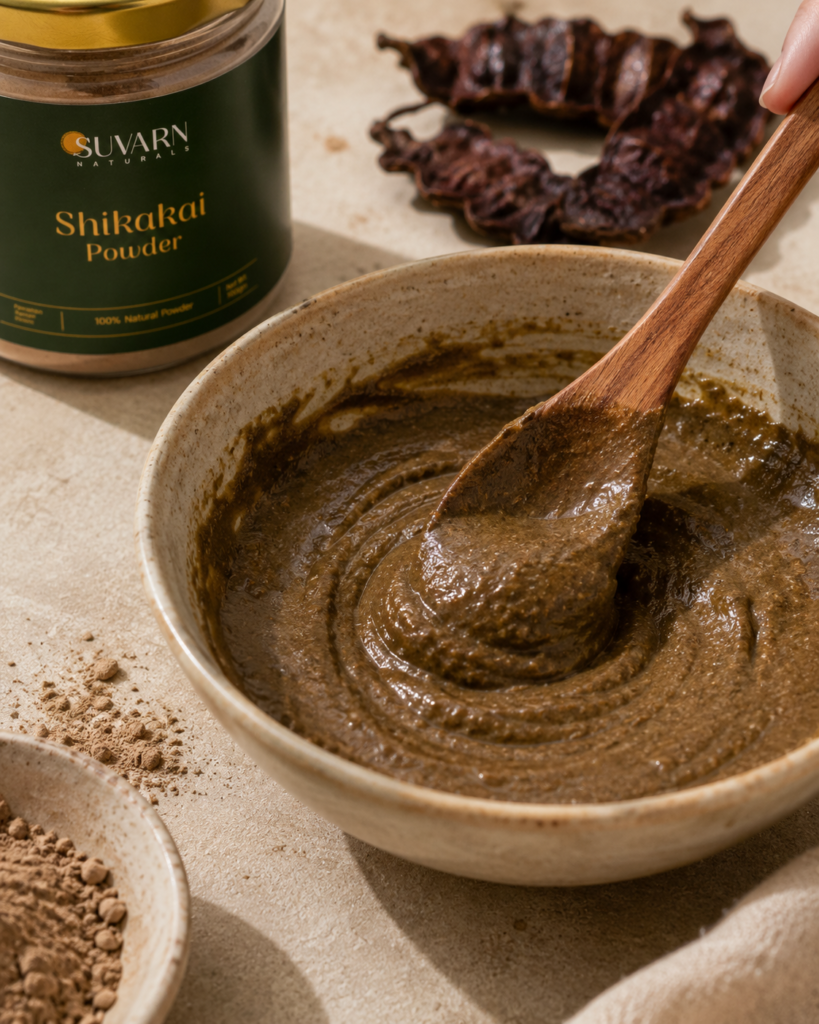
These traditional cleansing powders are typically mixed into a paste with water and applied to a wet or damp scalp before rinsing thoroughly.
Dosage (general guide, adjust to hair length): 2–4 tablespoons of powder mixed with enough water for a smooth, lump-free paste.
Best time: Evening, so hair can air-dry fully before bed rather than staying damp overnight.
Three ways to use them:
- Powder + water paste — the classic method, massaged into the scalp and rinsed after 10–15 minutes.
- Powder + curd or aloe gel — for extra softness on drier hair types.
- Powder infused overnight in water, strained, then used as a final rinse for shine.
| Do | Don’t |
|---|---|
| Patch test on your inner arm 24 hours before first use | Leave the paste on for hours expecting faster results |
| Massage gently in circular motions | Scrub vigorously on an already irritated scalp |
| Rinse with lukewarm, not hot, water | Use immediately after chemical hair treatments without a gap |
The 3-Minute Post-Monsoon Ritual
★ A quick evening reset for days you’ve been caught in the rain ★
Ingredients
- 2 tbsp Suvarn Naturals Shikakai Powder
- 1 tbsp Suvarn Naturals Amla Powder
- 1 tsp Suvarn Naturals Keshya Powder
- Warm (not hot) water
Steps
- Mix all three powders with water into a smooth, pourable paste.
- Section damp hair and apply the paste directly to the scalp, massaging gently for one minute.
- Leave on for one minute while you finish your evening routine.
- Rinse thoroughly with lukewarm water and air-dry before sleeping.
Pro tip: Mix your Shikakai base with our Keshya Powder on especially humid days — its blend is designed to complement the cleansing action of Shikakai during Kapha-heavy weather.
Shikakai & Amla Powder vs Alternatives
| Metric | Suvarn Naturals Powders | Generic Herbal Powder | Capsule/Supplement Form | Synthetic Anti-Dandruff Shampoo |
|---|---|---|---|---|
| Ease of use | Simple paste, 3 minutes | Varies by brand purity | Very easy, no prep | Very easy |
| Time to notice comfort | Often within 1–2 uses for scalp feel | Inconsistent | Weeks (internal route) | Fast for symptoms, not root cause |
| Suitability for sensitive scalps | Generally gentle, patch test advised | Depends on sourcing | N/A (oral) | Can be harsh with repeated use |
| PCOS-friendliness | Traditionally used, gentle | Varies | Needs medical guidance | Neutral |
| Cost over a monsoon season | Moderate | Low to moderate | Higher | Low to moderate |
No option here is a guaranteed fix — the right choice depends on your scalp type, budget, and how much routine you can realistically stick to.
Synthetic anti-dandruff shampoos can act faster on visible flaking because they target the Malassezia yeast directly with medicated ingredients, which matters if symptoms are already severe. Herbal powders, by comparison, work more gradually through gentle cleansing and traditional scalp-supporting botanicals, which is why many women pair the two — a medicated wash during a flare-up, and a herbal routine like this one to maintain scalp comfort the rest of the season.
Side Effects and Precautions
Herbal powders are generally gentle, but “natural” doesn’t mean risk-free for everyone.
Mild scalp tingling or dryness can occur, especially on a first use or with too-frequent application. Always patch test on your inner arm 24 hours beforehand. If you are pregnant, breastfeeding, or have a diagnosed scalp condition, check with a doctor before adding any new topical routine, herbal or otherwise. See a doctor if itching, redness, or hair shedding is severe, sudden, or doesn’t improve within a few weeks of gentle care.
There are no known major drug interactions with topical Shikakai, Amla, or Keshya use, since they act on the scalp surface rather than being absorbed systemically. Still, if you’re using a prescribed medicated shampoo or scalp treatment for a diagnosed condition, it’s worth checking with your dermatologist about spacing the two out rather than layering them in the same wash.
Myths and Mistakes Women Make During Monsoon
- “More oiling means more protection.” Heavy oiling before rain can trap moisture and pollutants against the scalp longer, which may worsen Kapha-type buildup rather than prevent it.
- “I’ll just let it dry naturally, no need to wash today.” Skipping cleansing after a rain-soaked day is the single biggest driver of the itchy, greasy scalp so many women blame on “the weather.”
- “Rainwater is basically distilled, so it’s harmless.” This holds true for genuinely clean rural rainwater, but not for what falls in most Indian cities today.
- “Hair fall in monsoon means I’m going bald.” Most monsoon shedding is temporary and tied to scalp condition and stress, not a permanent pattern.
- “Switching shampoos every week will fix it faster.” Constantly changing products can irritate a scalp that’s already adjusting to humidity — consistency works better than variety.
Notes from the Suvarn Naturals Founder
“Getting caught in the rain once in a while isn’t usually harmful, but leaving rainwater, sweat, and pollution on your scalp for long periods can affect how your hair looks and feels. A simple cleansing and hair care routine can help keep your scalp healthy during the monsoon.”
When we first tested our Shikakai and Amla blends for monsoon use, we specifically looked for a light, non-greasy texture that rinses out completely — no residue left behind for humidity to cling to. In our lab, we noticed that the natural saponins in Shikakai lather gently without stripping hair the way sulphates can, which matters even more when your scalp is already dealing with rain and pollution. We source our Amla and Shikakai from small farms that sun-dry the fruit and leaves traditionally, preserving the tart, slightly smoky scent you’d expect from an authentic Ayurvedic powder — not a masked, perfumed one.
Every batch is checked for a fine, consistent grind, because a coarse or uneven powder is usually the reason people find these pastes messy or hard to rinse out. We test each formulation ourselves through at least one full monsoon cycle before it reaches a customer, precisely because rain-season conditions are the toughest, most honest test for any scalp product.

Frequently Asked Questions
Does rainwater directly cause hair loss?
Not directly. Rain can weaken and swell the hair shaft, leading to more breakage, which can look like hair loss even though it’s usually shedding or snapping strands.
Is it safe to wash my hair with rainwater?
Clean, rural rainwater is often gentle, but urban rainwater usually contains pollutants, so filtered tap water is the safer everyday choice for most women.
Why does my scalp itch more after it rains?
Damp, humid conditions encourage Malassezia yeast overgrowth, which is one of the main drivers of monsoon-related itching and dandruff.
Can Shikakai Powder replace my regular shampoo?
Many women use it as a full replacement, though some prefer alternating it with a mild shampoo depending on hair type and scalp oiliness.
Is Amla Powder safe during pregnancy?
Topical Amla powder is traditionally considered gentle, but check with your doctor before adding any new routine during pregnancy.
How often should I do the 3-minute ritual during monsoon?
Two to three times a week works for most hair types, or after any day you’re caught in heavy rain.
Will Keshya Powder help with monsoon hair fall specifically?
It’s traditionally used to support scalp cleansing alongside Shikakai and Amla, though individual results vary and it isn’t a substitute for medical advice on hair loss.
Can I use these powders if I have PCOS-related hair thinning?
Yes, as a gentle scalp-care addition, but PCOS-related thinning often needs a broader medical approach too.
What’s the difference between monsoon dandruff and a fungal infection like ringworm?
Ordinary monsoon dandruff spreads evenly and flares with humidity; ringworm shows up as distinct circular patches with localised hair thinning and needs a doctor’s care.
Should I avoid stepping out in the rain altogether?
Not necessary — a quick rinse and gentle cleanse afterward is usually enough to prevent most rain-related scalp issues.
Final Takeaway
Rainwater itself isn’t the villain — it’s what rides along with it, and how long it’s left sitting on your scalp, that matters most. A short, consistent routine, built around gentle cleansing rather than heavy products, tends to serve most hair types well through the monsoon. If you’re looking for a simple place to start, our Shikakai, Amla, and Keshya powders were formulated with exactly this season in mind — light, rinse-clean, and easy to fold into a 3-minute evening habit.