
Does Humidity Cause Frizzy Hair? 5 Proven Ayurvedic Fixes

Published: 31 July 2026 | By Suvarn Naturals Team
TL;DR
Try our 3-minute monsoon hair ritual below before your next wash day.
Does humidity cause frizzy hair? Yes — hair is hygroscopic and absorbs excess moisture through its cuticle, making strands swell unevenly.
Raised or porous cuticles let humidity in faster, which is why monsoon frizz feels worse on colour-treated or heat-styled hair.
Ayurveda approaches this through the Vata-Pitta lens — dryness plus internal heat — and uses cooling, cuticle-sealing herbs like Hibiscus and Shikakai instead of stripping shampoos.
Skipping oil during monsoon (a common myth) often makes frizz worse, not better.
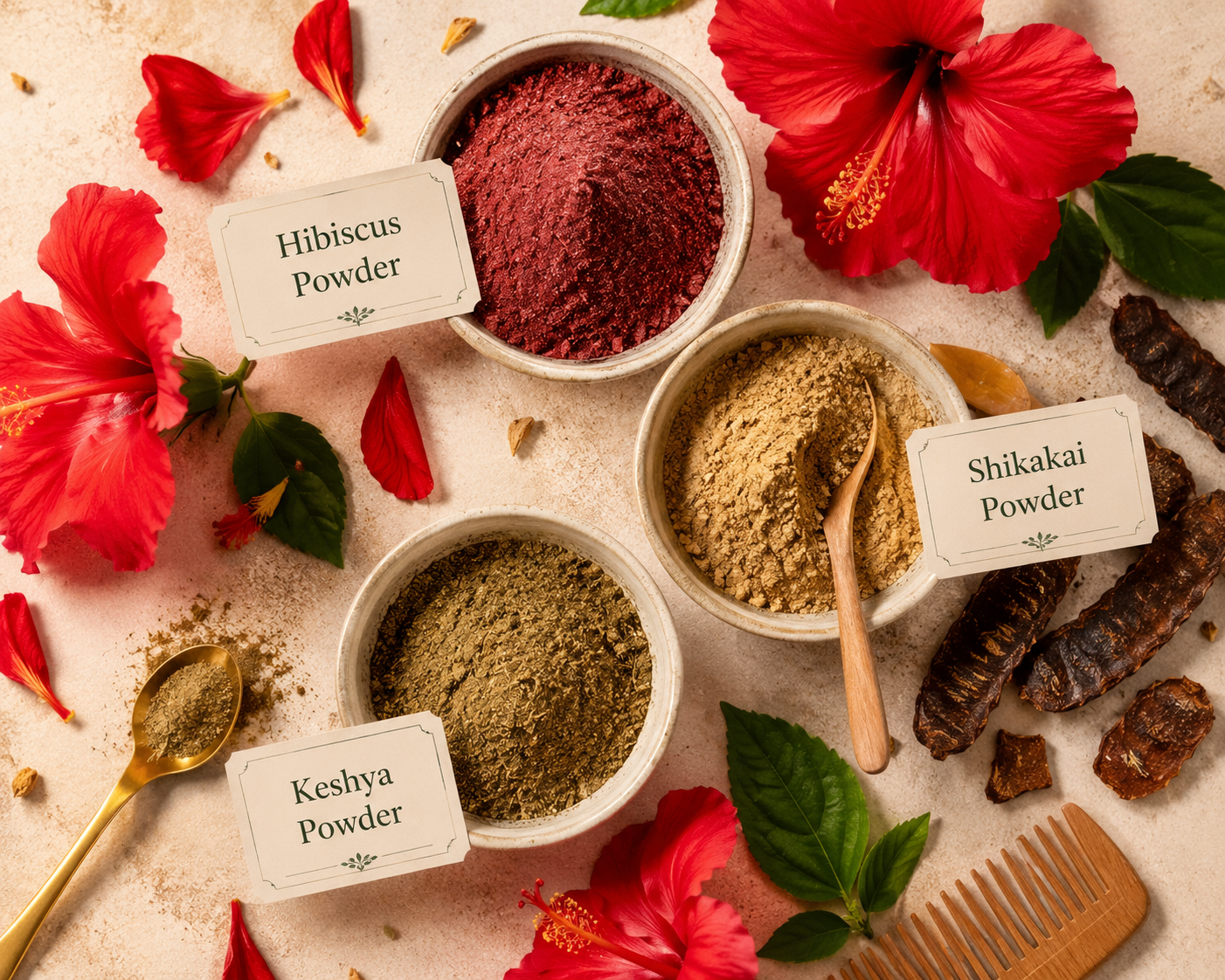
A simple weekly ritual with Keshya Powder, Hibiscus Powder, and Shikakai Powder can help smooth the cuticle and reduce visible frizz over time.
Does humidity cause frizzy hair? Yes — and if you’ve ever wondered why your hair seems to have a mind of its own the moment the air turns thick and sticky, you’re not imagining it. Monsoon walks into the room, and so does the frizz, even on days your hair looked perfectly smooth an hour ago. As of 31/07/2026, with the season in full swing across Indian cities, this is one of the most common hair complaints we hear at Suvarn Naturals. In this guide, we’ll break down exactly what’s happening, what Ayurveda has understood about this for centuries, and a simple, natural routine that may help you manage it — without stripping your hair of what it needs.
Does Humidity Cause Frizzy Hair? What’s Actually Happening
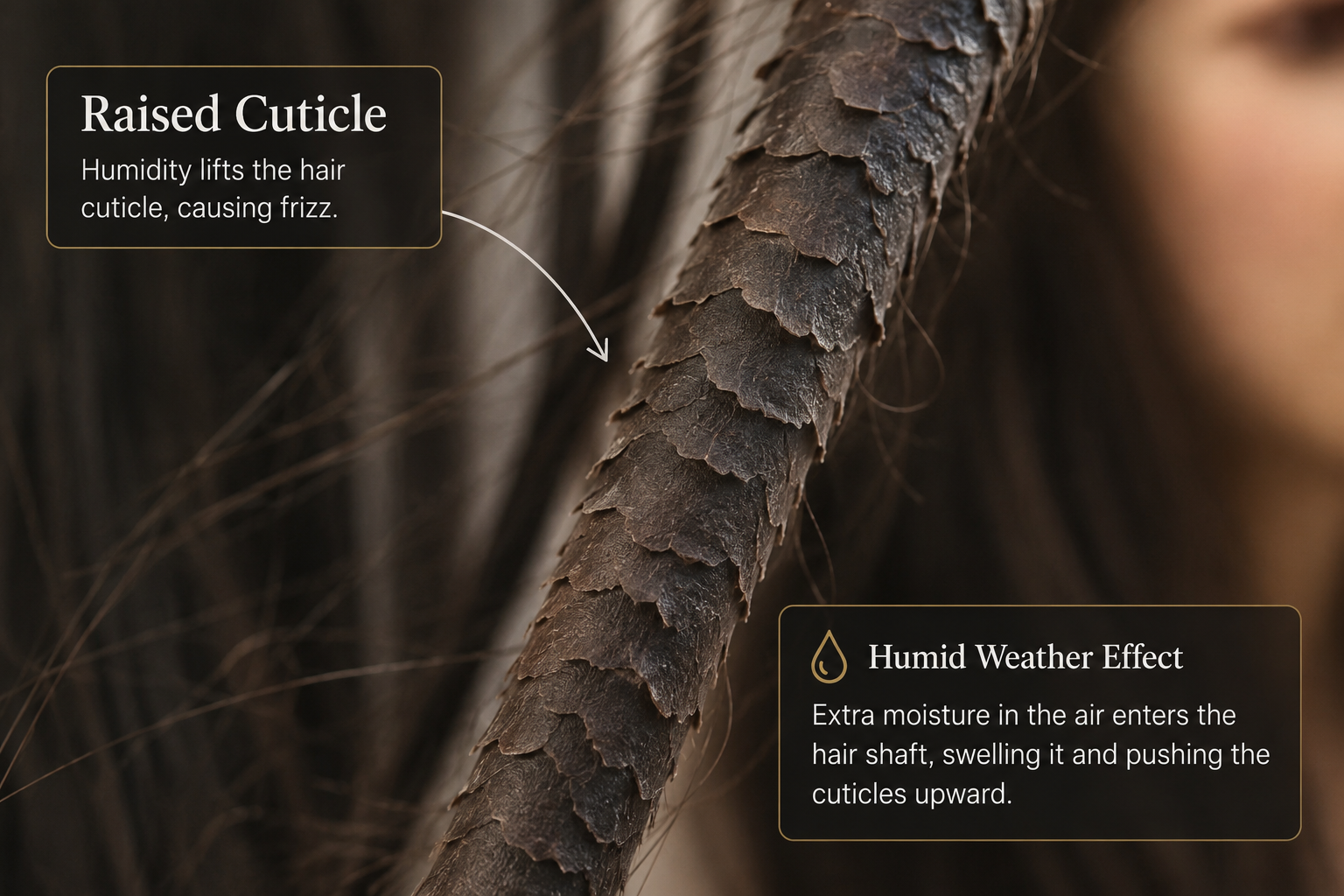
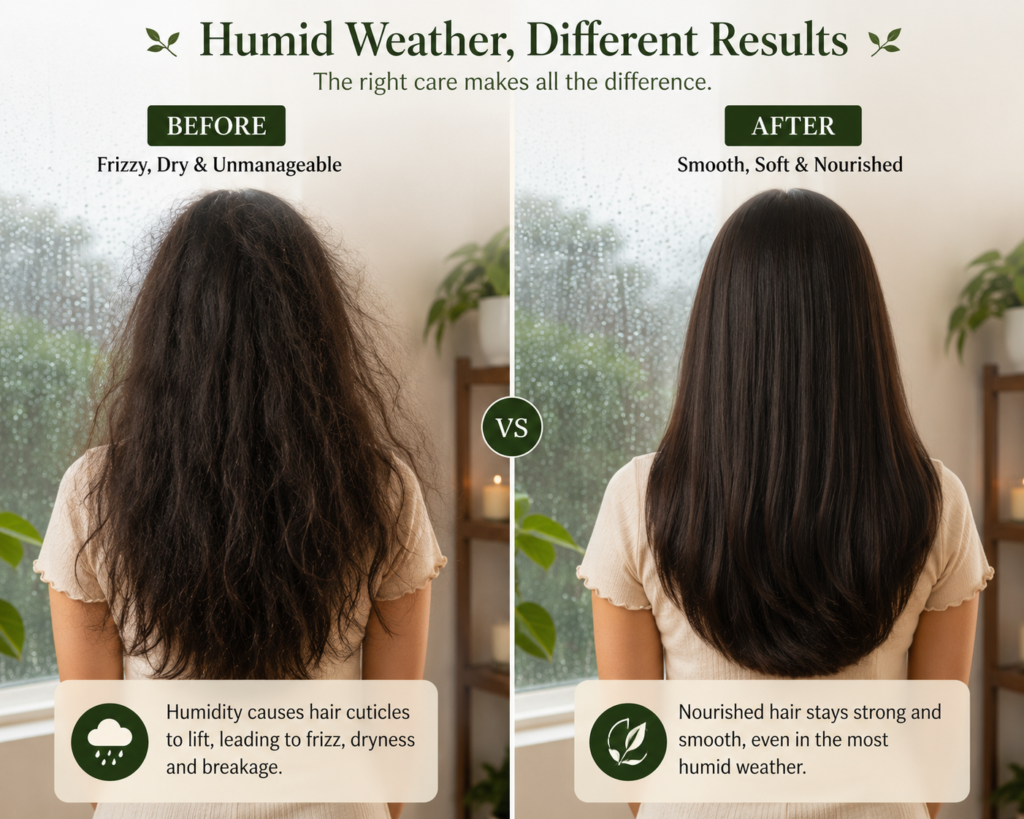
Yes — it happens when moisture in the air enters the hair shaft through lifted cuticle layers, causing strands to swell unevenly and lose their smooth shape. It isn’t dirt, and it isn’t a sign of “bad” hair — it’s a natural physical reaction.
In simple terms, hair is hygroscopic, meaning it constantly absorbs and releases moisture from the surrounding air. Ayurveda doesn’t use the word “frizz,” but it describes this exact pattern under Ruksha Kesha (dry, rough hair texture), often linked to aggravated Vata dosha working alongside seasonal Pitta in the body. The outer layer of the hair — the cuticle — is made of overlapping cells that Ayurvedic texts compare to fish scales, sitting over the cortex, the hair’s main structural layer.
Key constituents involved: keratin protein, natural sebum (the scalp’s own oil), and the moisture-regulating cuticle layer itself.
Does Humidity Cause Frizzy Hair? The Science + Ayurvedic Perspective
Yes, even on healthy hair — water molecules from the air push into the hair shaft through raised cuticles, breaking hydrogen bonds in the keratin and making strands swell irregularly. Ayurveda frames this as an imbalance of Vata (dryness, roughness) that leaves hair unable to hold moisture evenly.
Modern hair science explains that the hair cuticle acts as a protective, shingle-like layer. <cite index=”9-1″>Hair is hygroscopic, meaning it naturally absorbs moisture from the surrounding environment, and when the cuticle is lifted or compromised, humidity penetrates the shaft and causes strands to swell and bend irregularly.</cite> This swelling <cite index=”6-1″>happens because high humidity breaks the hydrogen bonds that normally hold the hair structure together, so moisture from the air gets absorbed instead and the hair becomes frizzy and harder to manage.</cite>
Porosity plays a big role here too. <cite index=”7-1″>Curly and high-porosity hair tends to frizz more in humid weather because raised cuticles let it absorb moisture quickly, but it loses that moisture just as fast, which can lead to hygral fatigue over time.</cite> A 2025 pharmacological review on Hibiscus sabdariffa notes the plant’s compounds have <cite index=”17-1″>notable anti-inflammatory properties studied extensively in recent years</cite>, which supports why Ayurveda has traditionally used it on the scalp — a calmer scalp environment tends to support healthier cuticle condition.
Myth we’re challenging: many women believe hair oil should be skipped in monsoon because “the air is already humid enough.” Ayurveda — and basic hair chemistry — suggest the opposite: a thin oil layer seals the cuticle and slows erratic moisture entry, rather than adding to the problem.
| Myth | Fact |
|---|---|
| Humidity means your hair is dirty or unwashed | Frizz is a physical, hygroscopic reaction — clean hair frizzes too |
| Oiling hair in monsoon makes it worse | A light oil/herbal layer may help seal the cuticle and reduce erratic moisture swings |
| Only curly hair gets frizzy | Straight and wavy hair also frizzes when cuticles are porous or damaged |
Benefits of a Humidity-Ready Hair Routine — Especially for Women
Now that we’ve answered does humidity cause frizzy hair, here’s the part that actually matters day to day: what you can do about it. Frizz doesn’t just affect how hair looks — for many women it ties directly into hormonal shifts, stress, and how confident they feel walking into a meeting or a wedding function. Here’s how a consistent, Ayurveda-rooted routine may help.
Smoother-looking strands through the season
Traditionally used to coat and smooth the hair shaft, ingredients like Shikakai and Hibiscus are believed to support a calmer cuticle surface, which may reduce the “halo” effect of frizz. Quick tip: Apply after a lukewarm (never hot) rinse — heat can further lift the cuticle.
Support during hormonal hair changes
Women dealing with PCOS, postpartum shedding, or perimenopause often notice hair feels rougher and more reactive to weather. Gentle, traditional herbal care may support overall scalp balance during these phases, though it isn’t a substitute for medical treatment. Quick tip: Pair scalp care with a dermatologist visit if shedding feels sudden or excessive.
A grounding self-care ritual for stress
Stress is known to affect hair health indirectly through the body’s stress response systems. A short, mindful hair ritual — even five minutes — may double as a moment of calm in a busy day. Quick tip: Do this ritual the night before an important day, not the morning of, so hair has time to settle.
Reduced dependence on heat styling
Constant straightening to “fight” frizz can further damage the cuticle, creating a cycle. <cite index=”9-1″>Chemical smoothing and heat styling can compromise the cuticle further</cite>, so herbal smoothing may offer a gentler alternative for regular use. Quick tip: Reserve heat styling for special occasions during monsoon, not daily wash days.
Scalp comfort in humid, sweaty conditions
An overheated, oily scalp during monsoon can add to hair looking “flat but frizzy” at once. Traditional cleansing powders like Shikakai are used for a gentler, non-stripping cleanse compared to harsh sulphates. Quick tip: Use lukewarm water, never hot, to avoid excess oil stimulation.
So, Does Humidity Cause Frizzy Hair for You Specifically?
The honest answer is yes, for nearly everyone to some degree — so anyone noticing seasonal frizz, flyaways, or rough texture during humid months may benefit, particularly women managing PCOS, postpartum hair changes, perimenopause, or high work/exam stress alongside monsoon weather.
- Women with wavy, curly, or high-porosity hair that reacts strongly to weather changes
- Those coming off chemical treatments (colour, keratin, smoothing) whose cuticle needs gentler care
- Anyone wanting to reduce reliance on daily heat styling during monsoon
- Postpartum or perimenopausal women noticing texture changes alongside hormonal shifts
Not ideal if…
- You have an active scalp infection, open wound, or allergy to any herb — patch test first
- You’re pregnant or breastfeeding and unsure about a new ingredient — check with your doctor
- You’re using a strong prescription scalp treatment — ask your dermatologist before layering herbal powders
How to Use Keshya, Hibiscus, and Shikakai Powder — Step by Step
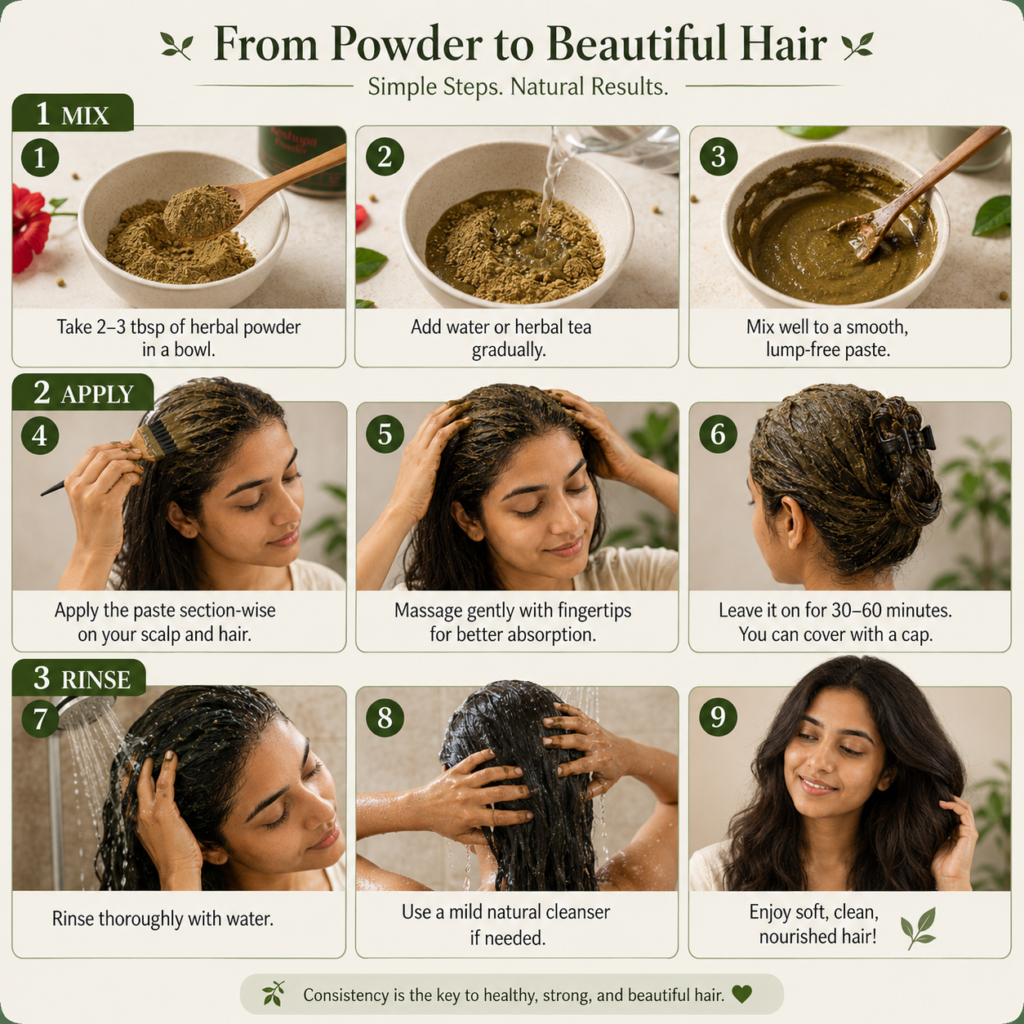
Mix the powders with water or a mild liquid into a smooth paste, apply from roots to ends, leave on for 20–30 minutes, then rinse with lukewarm water — ideally once or twice a week during monsoon.
- Mix 2–3 tablespoons of Shikakai Powder with warm water into a paste. Add a spoon of Hibiscus Powder for extra slip and shine.
- Apply section by section, focusing on scalp first, then lengths.
- Leave on for 20–30 minutes, keeping hair covered with a light cotton cloth to prevent drying out.
- Rinse thoroughly with lukewarm water. Follow with a light application of Keshya Powder paste on the scalp for nourishment.
- Best time: evening, so hair isn’t exposed to peak humidity right after the wash.
Three ways to use these powders:
- Paste (most common): mixed with water, yoghurt, or aloe gel for a mask
- Rinse: boiled and strained into a final hair rinse after shampoo
- Scalp oil infusion: simmered gently into a carrier oil for an overnight treatment
| Do | Don’t |
|---|---|
| Patch test before first full use | Leave the paste on until it fully dries and cracks |
| Use lukewarm water only | Use hot water, which lifts the cuticle further |
| Apply 1–2 times a week | Over-apply daily, which can be drying |
The 3-minute humidity hair ritual
A slightly different way to bring these powders into your week — a quick evening ritual rather than a full wash-day mask.
Ingredients
- 1 tsp Hibiscus Powder
- 1 tsp Shikakai Powder
- A few drops of water or aloe vera gel to form a thin, spreadable paste
Steps
- Mix the powders with just enough liquid to form a smooth, thin paste — it should glide, not clump.
- Run a small amount through mid-lengths and ends only (skip the scalp for this quick version).
- Leave for 3 minutes while you finish your evening routine, then rinse briefly or leave a light residue in if your hair tends to be very dry.
Pro tip: Mix a pinch of Keshya Powder into this blend once a week for added nourishment before bed — it pairs well with the humectant-like slip of hibiscus.
Humidity hair care vs alternatives
| Metric | Suvarn Naturals Powders | Generic Herbal Powder | Capsule Supplements | Synthetic Anti-Frizz Serum |
|---|---|---|---|---|
| Ease of use | Moderate (needs mixing) | Moderate | Easy (swallow) | Very easy (apply directly) |
| Time to see change | Few weeks, consistent use | Varies, often unclear sourcing | Weeks to months | Immediate, temporary |
| Suitability for sensitive scalp | Generally gentle | Depends on quality/purity | N/A (internal) | May cause build-up |
| PCOS-friendliness | Traditionally used, gentle | Unclear | Depends on formulation | Not specific to PCOS |
| Cost over a season | Moderate | Low to moderate | Higher (recurring) | Moderate to high |
We’re not claiming these powders “outperform” every alternative — different routines suit different hair types and budgets. This table is meant to help you compare, not to overstate results.
Side effects and precautions
Natural doesn’t automatically mean risk-free. A few honest notes:
- Patch test first. Apply a small amount on the inner arm or behind the ear and wait 24 hours before a full scalp application.
- Pregnancy/breastfeeding: these powders are food-grade herbs traditionally used in hair care, but if you’re pregnant or breastfeeding, check with your doctor before introducing any new topical product.
- Drug interactions: no known interactions with oral medication, since these are topical, external-use powders — but always disclose all products to your doctor if you’re on scalp-specific prescription treatment.
- When to see a doctor: if you notice sudden hair fall, scalp redness, itching that doesn’t resolve, or bald patches, please consult a dermatologist rather than relying on home remedies alone.
Myths and mistakes women make with humidity and hair
- “Skip the oil in monsoon.” As covered above, this is one of the most repeated mistakes — a light seal often helps more than it hurts.
- “Wash hair daily to control frizz.” Over-washing can strip natural oils, making hair compensate with more oil at the scalp and more dryness at the ends.
- “Tie hair tightly to control flyaways.” This can increase breakage at the hairline over time; looser styles with a light herbal paste tend to be gentler.
- “Frizz means damaged hair.” Frizz is often just a moisture-reaction, not necessarily damage — though repeated heat styling can compound the two.
- “More product is better.” Layering too many rich products can weigh hair down and look greasy in humidity rather than smooth.
Notes from the Suvarn Naturals founder
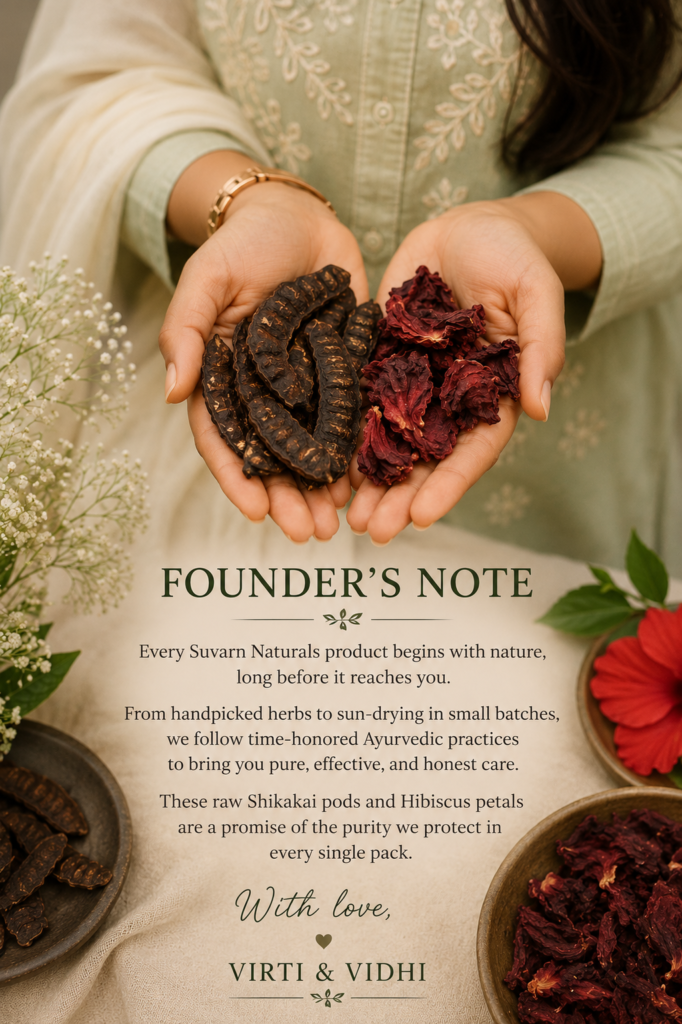
“Humidity is a natural part of the monsoon season, and it can make hair feel more difficult to manage. While you can’t control the weather, a simple and consistent hair care routine can help keep your hair smooth, nourished, and healthy-looking.”
When I first tested our Hibiscus and Shikakai powders during a particularly humid Mumbai monsoon, I wanted to see how they’d hold up on my own hair — thick, slightly wavy, and prone to frizz by noon. In our lab, we noticed the powders needed to be finely milled for the paste to spread evenly without gritty residue, which is why we spent extra time on the grind consistency. We source our Hibiscus and Shikakai from small farms that follow traditional drying methods, and every batch is tested for purity before it reaches you. The texture is fine, almost silky between fingers, with a mild, earthy, faintly floral smell — nothing overpowering, nothing masked with added fragrance.
Frequently Asked Questions
1. Does humidity really cause frizzy hair, or is it just my hair type?
Yes, humidity affects everyone’s hair to some degree, since hair is hygroscopic. Hair type and porosity simply determine how much and how fast.
2. Why does my hair frizz more after rain compared to just humid air?
Direct rainwater can add more moisture more quickly than ambient humidity, and rain pH or pollutants may add further stress on an already porous cuticle.
3.Can Ayurvedic powders really help with monsoon frizz?
They’re traditionally used to cleanse gently and support a smoother cuticle surface. Results vary and they work best as part of a consistent routine, not a one-time fix.
4. Is Hibiscus Powder good for all hair types?
Hibiscus is traditionally considered suitable for most hair types, but always patch test first, especially if you have a sensitive scalp.
5. How often should I use Shikakai Powder in monsoon?
Once or twice a week is a common starting point; daily use may feel too drying for some hair types.
6. Will oiling my hair before monsoon rain protect it?
A light oil layer may help slow down erratic moisture entry into the hair shaft, though it won’t make hair “waterproof.”
7. Can PCOS or hormonal hair fall make monsoon frizz worse?
Hormonal changes can affect hair texture and shedding patterns, which combined with humidity may make hair feel more unmanageable — but this needs a dermatologist’s input, not just topical care.
8.Is it safe to use these powders while pregnant?
These are topical, food-grade herbal powders, but please check with your doctor before adding any new product during pregnancy.
9.What’s the difference between Keshya Powder and Shikakai Powder?
Shikakai is traditionally used for gentle cleansing, while Keshya Powder is positioned as a nourishing scalp treatment — many use them together in the same routine.
10. How long before I notice a difference in frizz?
Most people using a herbal routine consistently report noticing texture changes over several weeks, not overnight — consistency matters more than any single application.
Final takeaway
Frizz isn’t a flaw — it’s simply your hair reacting to a hygroscopic, humid environment, and understanding that takes the guilt out of a monsoon bad-hair day. From here, the next step is small: patch test one of these powders this week, build a simple twice-a-week ritual, and give it a few weeks before judging results. If you’re looking for where to start, our Keshya Powder, Hibiscus Powder, and Shikakai Powder are a gentle, traditional place to begin — no pressure, just a routine worth trying alongside everything else you already do for your hair this season.