
Cool, Clear Skin with Natural Powders for Summer Skincare: An Ayurvedic Guide That Actually Works

Published: 22 May 2026 | By Suvarn Naturals Team
📋 TL;DR — Quick Summary
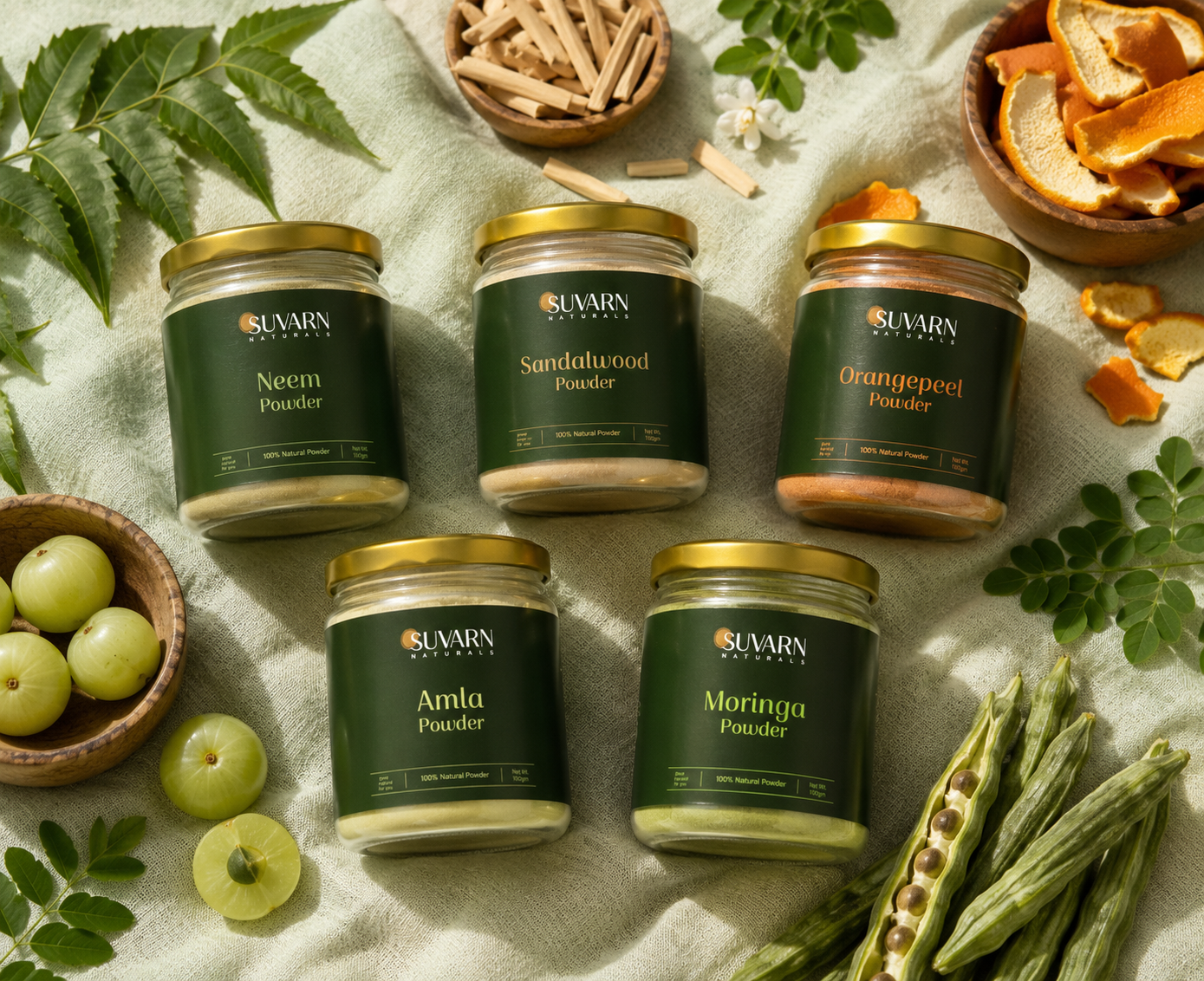
👉 Try Suvarn Naturals Neem Powder as your summer starter — it pairs with everything.
Summer heat triggers excess oil, pigmentation, and breakouts — natural herbal powders may help manage all three.
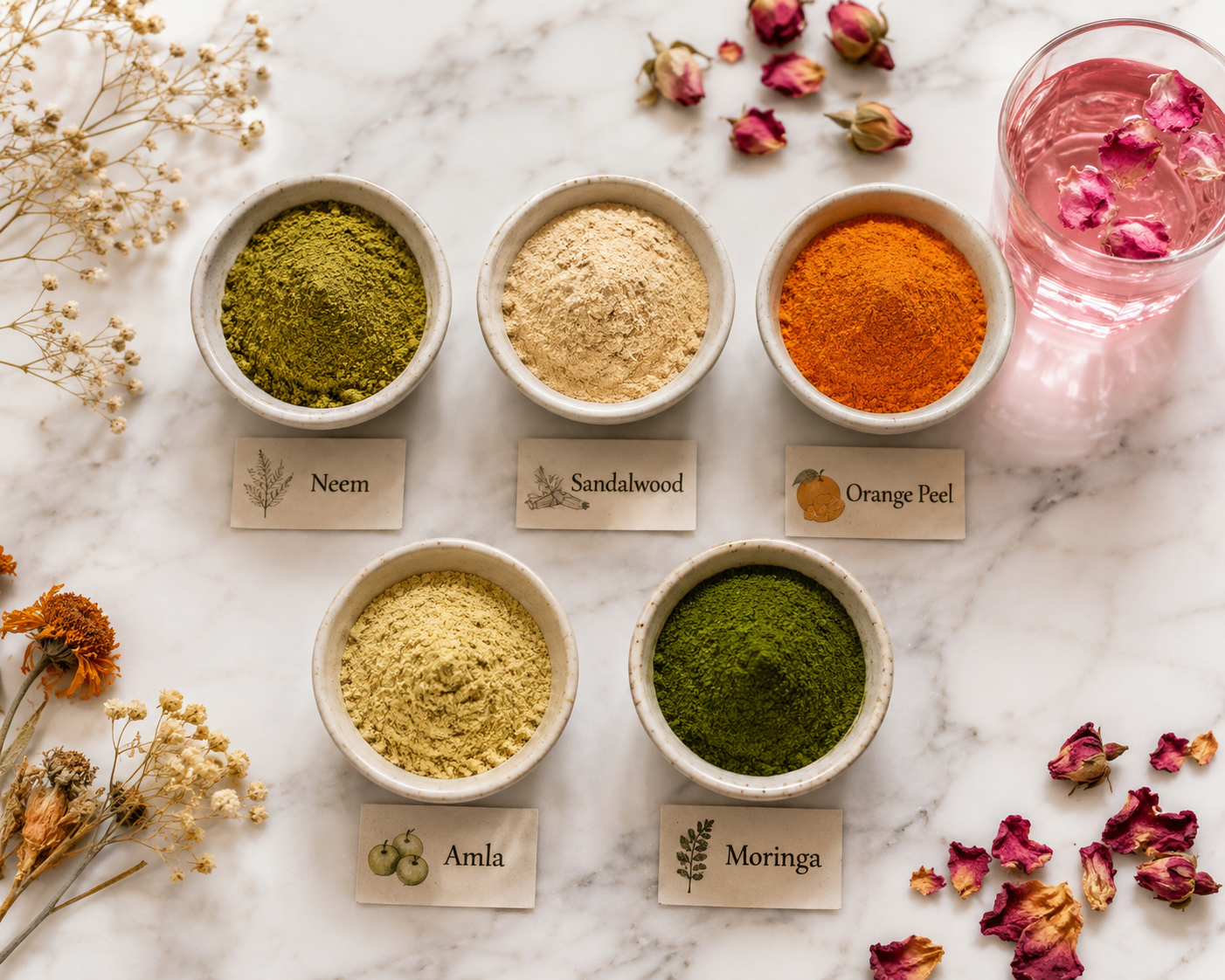
Neem, Sandalwood, Orange Peel, Amla, and Moringa are the five most researched Ayurvedic powders for warm-weather skin.
Each powder addresses a specific skin concern: cooling, brightening, cleansing, or antioxidant protection.
Mix with rose water or raw milk for a ready-to-use summer face pack in under 3 minutes.
Best results come from consistent use 2–3 times a week, not daily scrubbing.
The Summer Skin Struggle Is Real — And Your Bathroom Cabinet May Already Have the Answer
It’s May. Your skin is oily by 10 am. Your sunscreen is pilling. Your favourite moisturiser suddenly feels like applying butter to toast.
If that sounds familiar, you’re not alone. Millions of women in India switch to heavier chemical routines every summer — and then wonder why their skin looks worse by June.
Here’s what we’ve learned after years of working with traditional Ayurvedic ingredients: the answer to summer skin isn’t more products. It’s simpler ones. Natural powders for summer skincare — grounded in centuries of practice and now backed by emerging research — offer a clean, affordable, and effective alternative to complicated routines.
This guide (updated 21 May 2026) walks you through the science, the ritual, and the honest caveats — so you can decide what actually works for you.
What Are Natural Powders for Summer Skincare?
Natural powders for summer skincare are dried, finely milled plant-based ingredients — roots, leaves, peels, and seeds — used topically to address heat-triggered skin concerns like excess sebum, sun-induced hyperpigmentation, and clogged pores.
In Ayurveda, these fall under the category of Lepa (लेप) — topical herbal preparations applied as pastes. Each ingredient is classified by its Rasa (taste/action), Virya (potency), and Vipaka (post-digestive effect) — properties that determine how it interacts with skin types or doshas.
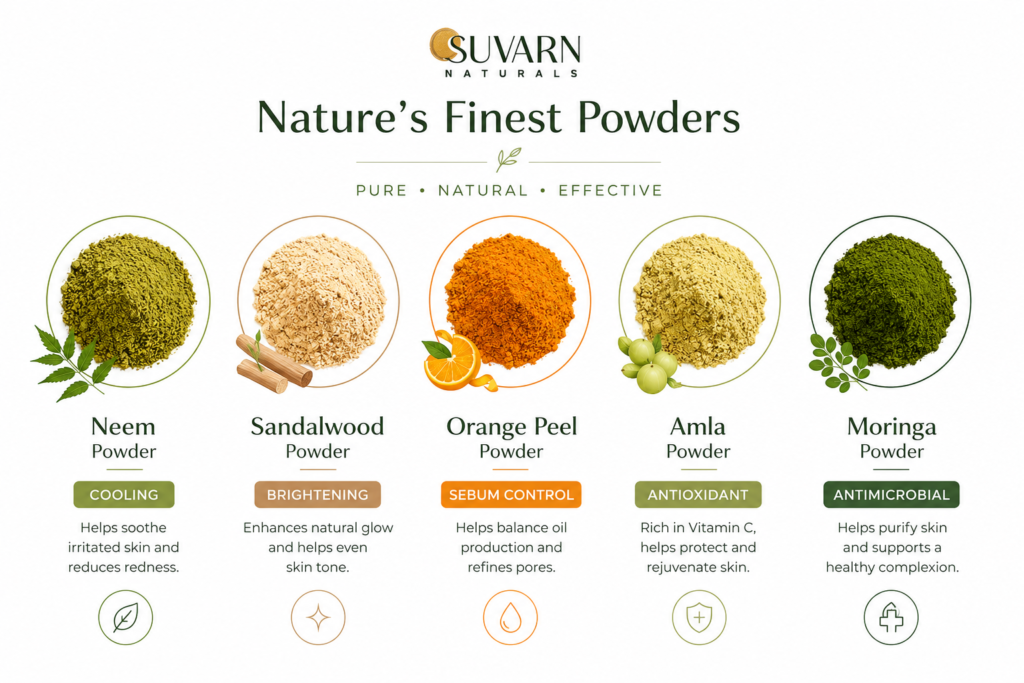
The five powders most relevant to summer skin:
| Powder | Sanskrit / Ayurvedic Name | Botanical Name | Key Constituents |
|---|---|---|---|
| Neem | Nimba (निम्ब) | Azadirachta indica | Azadirachtin, Nimbidin, Quercetin |
| Sandalwood | Chandana (चन्दन) | Santalum album | α-Santalol, β-Santalol, Santalene |
| Orange Peel | Narangi Twak (नारंगी त्वक्) | Citrus sinensis | Hesperidin, Limonene, Vitamin C |
| Amla | Amalaki (आमलकी) | Phyllanthus emblica | Emblicanin A & B, Vitamin C, Tannins |
| Moringa | Shigru (शिग्रु) | Moringa oleifera | Isothiocyanates, Quercetin, Chlorogenic acid |
These aren’t trendy “superfoods.” They are cornerstones of the Ayurvedic Dravyaguna (pharmacology) system — used in Indian households for generations and now being validated by dermatological research.
The Science and Ayurvedic Perspective
Natural herbal powders work on summer skin through four primary mechanisms: antimicrobial action (reducing acne-causing bacteria), sebum regulation (controlling oil without stripping), melanin modulation (addressing post-sun pigmentation), and antioxidant defence (neutralising UV-triggered free radicals).
From an Ayurvedic view, summer aggravates Pitta dosha — the fire-and-water element that governs heat, inflammation, and skin sensitivity. The powders above are primarily Pittashamaka (Pitta-pacifying) — they carry cooling Virya, making them particularly well-suited for warm months.
The Myth We Need to Address
The common myth across most summer skincare content: “The more often you exfoliate, the cleaner and brighter your skin.”
This is oversimplified at best, harmful at worst. Most top-ranking articles recommend using scrubs or exfoliating powders daily in summer to “fight sweat and oil.” Ayurveda — and recent research — disagrees.
A 2023 study published in the Journal of Cosmetic Dermatology found that over-exfoliation disrupts the skin’s acid mantle, leading to increased transepidermal water loss (TEWL) and paradoxically more breakouts in humid conditions. The same study noted that plant-based polyphenols (found in Amla and Moringa) support barrier repair when used at appropriate intervals.
Myth vs Fact: Summer Skincare
| Myth | Fact | Ayurvedic Principle |
|---|---|---|
| Daily exfoliation clears pores faster | 2–3x per week is optimal; daily use damages the acid mantle | Matra (appropriate dose) governs all Lepa use |
| Natural powders are for dry skin only | Powders like Neem and Orange Peel are ideal for oily and combination skin | Ruksha (dry/light) action suits Kapha-Pitta skin |
| You need a chemical SPF — herbs can’t protect skin from the sun | Herbal powders are complementary, not replacements for SPF — but Sandalwood and Amla do carry UV-filtering polyphenols | Ayurveda supports layered protection, not single-ingredient solutions |
Benefits of Natural Powders for Summer Skincare — Especially for Women
1. Cooling Inflammation and Redness (Neem + Sandalwood)
Summer heat often triggers redness, sensitivity, and breakouts — especially in women with hormonal fluctuations or PCOS. Both Neem and Sandalwood are classified as Sheetalya (cooling) in Ayurvedic pharmacology.
Nimbidin in Neem has demonstrated anti-inflammatory activity in preclinical studies, and α-Santalol in Sandalwood was shown in a 2022 lab study to inhibit pro-inflammatory cytokines relevant to acne pathways.
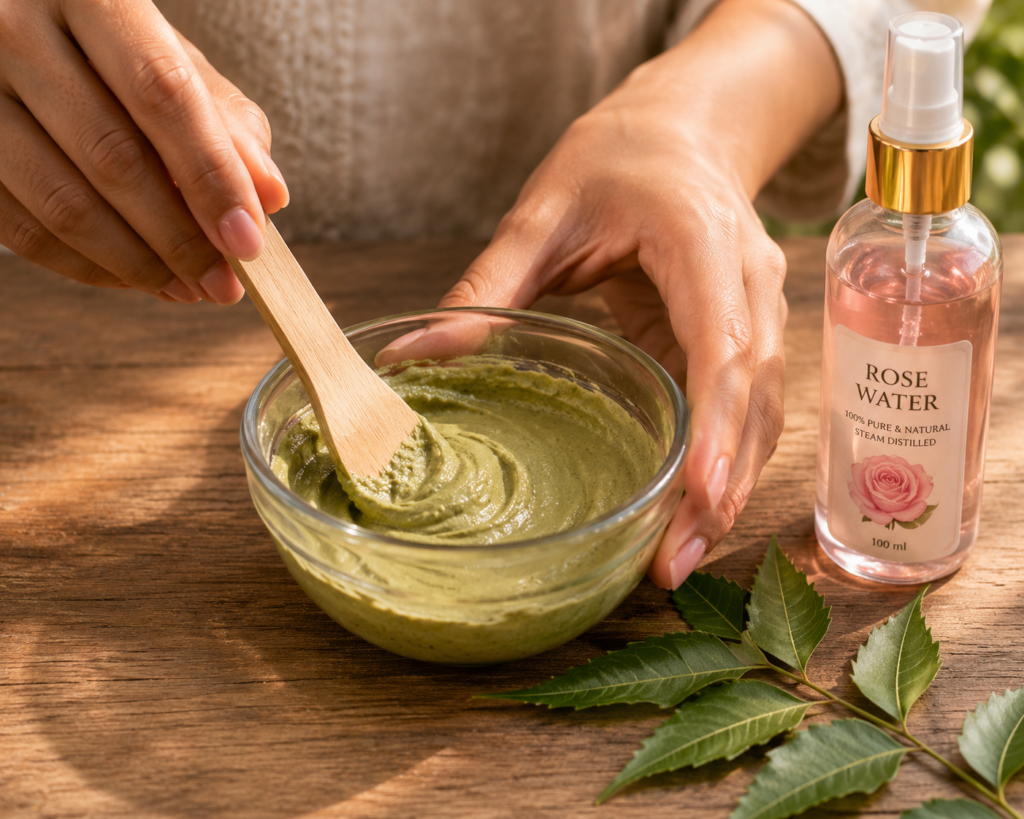
Quick tip: Mix Suvarn Naturals Neem Powder with chilled rose water for a 10-minute cooling mask after sun exposure.
2. Brightening Post-Sun Pigmentation (Orange Peel + Amla)
Hyperpigmentation accelerates in summer — especially in Indian skin tones that are more prone to post-inflammatory pigmentation (PIH). The Vitamin C in both Orange Peel and Amla may support melanin regulation by inhibiting tyrosinase activity.
Amla (Amalaki) contains Emblicanin A and B — two tannin-based compounds that are more stable and bioavailable than synthetic Vitamin C derivatives according to a 2023 paper in Phytomedicine.
Quick tip: Add a pinch of Suvarn Naturals Amla Powder to your face pack for a cumulative brightening effect over 4–6 weeks of consistent use.
3. Controlling Excess Sebum Without Drying (Neem + Orange Peel)
Women with PCOS or hormonal acne often experience a surge in sebum production in summer. Chemical astringents strip the skin and trigger rebound oiliness. Orange Peel powder contains Limonene and flavonoids that may regulate sebaceous gland activity without disrupting the skin barrier.
Quick tip: Replace your clay mask with Suvarn Naturals Orange Peel Powder mixed with raw milk. It clarifies without over-drying.
4. Antioxidant Protection Against UV Stress (Moringa + Amla)
Free radicals generated by UV exposure are a primary driver of premature ageing. Moringa’s Quercetin and Chlorogenic acid are potent antioxidants — and Amla is ranked among the highest ORAC-value (antioxidant capacity) botanicals in Ayurvedic materia medica.
These antioxidants do not replace SPF. But used in a morning or evening ritual, they may support the skin’s natural defence against oxidative stress.
Quick tip: Mix a small amount of Suvarn Naturals Moringa Powder into your face pack twice a week during summer for added antioxidant support.
5. Soothing Hormonal Breakouts (Neem + Sandalwood)
Women with PCOS or those in perimenopause frequently deal with jawline and chin breakouts that worsen in summer heat. Neem’s Azadirachtin has demonstrated antimicrobial activity against Cutibacterium acnes (formerly P. acnes) in lab settings, while Sandalwood’s α-Santalol may support calming inflamed skin.
Quick tip: For active breakouts, use Suvarn Naturals Sandalwood Powder as a targeted paste — not a full-face mask — for more precise action.
Who Should Use Natural Powders for Summer Skincare?
Natural herbal powders are a strong fit for:
- Women with oily or combination skin who want to manage shine without harsh chemicals
- PCOS-affected skin prone to hormonal breakouts and uneven texture
- Women with post-inflammatory hyperpigmentation (PIH) common in Indian skin after sun exposure
- Postpartum women with sensitised skin who want minimal-ingredient formulations
- Perimenopause and mature skin dealing with thinning, dullness, or increased sensitivity
- Exam stress skin — disrupted sleep and stress hormones worsen Pitta imbalance, and cooling herbal pastes can help manage the visible effects
Not ideal if you:
- Have an active rash, eczema flare, or open wounds — wait for these to heal before using any topical powder
- Are allergic to any of the botanicals listed (patch test first — always)
- Expect overnight results; these work over consistent weeks, not days
- Are pregnant — consult your doctor before topical use of Neem, which has a strong pharmacological profile
How to Use Natural Powders for Summer Skincare — Step by Step
Step 1: Choose your base liquid. Rose water (cooling, suits all skin types), raw milk (for dry/mature skin), coconut water (hydrating, ideal for summer), or plain water.
Step 2: Mix. Use 1–2 teaspoons of powder per application. Add liquid gradually until you reach a paste consistency — not too runny, not too thick.
Step 3: Apply to clean skin. Always apply to freshly cleansed, slightly damp skin. Avoid the eye area.
Step 4: Leave on for 10–15 minutes. Do not let the mask dry completely to a crack — this is over-drying, especially for mature or sensitive skin.
Step 5: Rinse with cool or lukewarm water. Never hot water in summer — it dilates pores and worsens redness.
Frequency: 2–3 times per week. Not daily.
Dos and Don’ts
| Do | Don’t |
|---|---|
| Patch test on your inner arm first | Don’t apply to broken or sunburned skin |
| Use cool or room-temperature liquid as your base | Don’t mix with lemon juice directly — it’s too acidic for sensitive skin |
| Store powders in an airtight container away from moisture | Don’t store in the bathroom — steam degrades the active constituents |
| Moisturise after every mask | Don’t skip SPF in the morning, even after a calming herbal mask |
| Start with one powder at a time | Don’t mix 4–5 powders at once until you know how your skin responds |
The 3-Minute Summer Cooling Ritual with Natural Powders
Most competitors list ingredients. Almost none offer a usable daily ritual — which is what actually gets used.
Here is the Suvarn Naturals summer evening cooling ritual, designed to take under 3 minutes of prep and 15 minutes of rest.
Ingredients (for one application)
- 1 tsp Suvarn Naturals Sandalwood Powder
- ½ tsp Suvarn Naturals Neem Powder
- ½ tsp Suvarn Naturals Amla Powder
- 3–4 tsp chilled rose water (or coconut water)
- Optional: 1 drop of pure Vetiver (Khus) essential oil for added cooling
Steps
- Chill your rose water. Even 10 minutes in the fridge makes a difference — a cool base feels immediately soothing on heat-stressed skin.
- Combine the powders in a small ceramic or glass bowl. Avoid metal bowls — they can oxidise the Amla Vitamin C.
- Add rose water gradually, stirring with your finger or a clean spatula, until you get a smooth paste.
- Cleanse your face with a gentle face wash. Pat — don’t rub — dry.
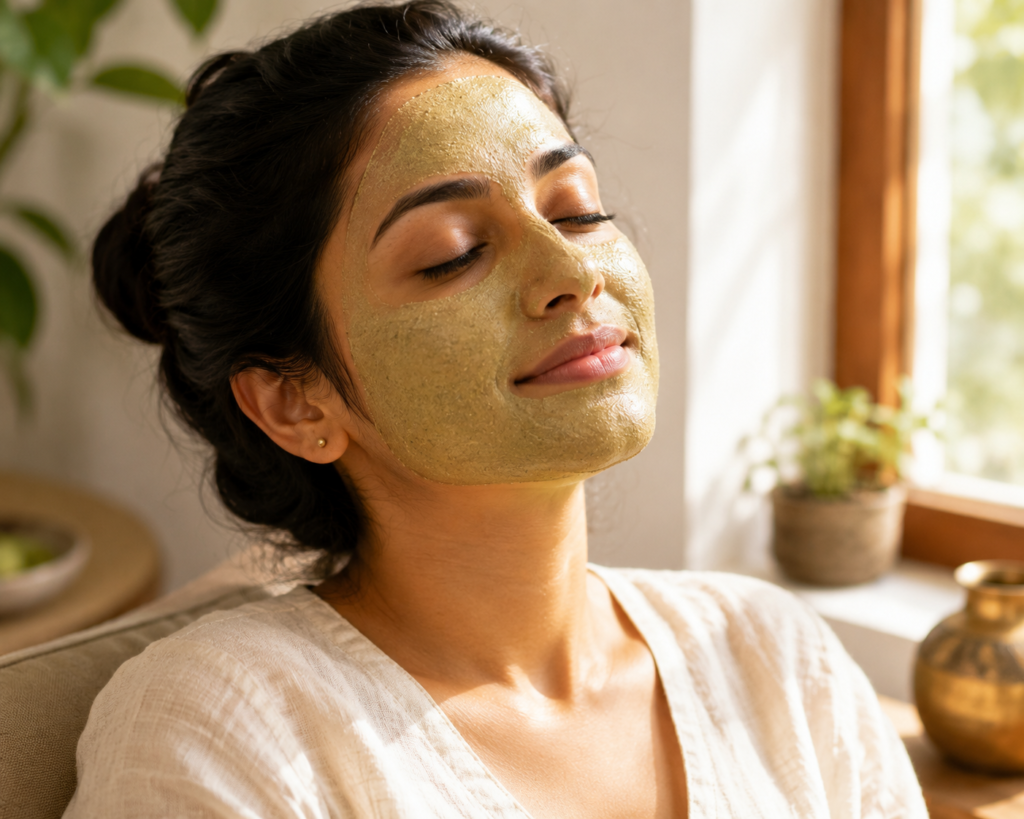
- Apply the paste in upward strokes, avoiding the eye area. Relax for 12–15 minutes. This is your rest moment — no screens if possible.
- Rinse with cool water and follow with a lightweight moisturiser.
Pro tip: Add ½ tsp of Suvarn Naturals Moringa Powder to this blend on days when your skin looks particularly dull or tired — the antioxidant boost from Moringa combined with Amla makes a noticeable difference after 2–3 weeks of consistent use.
Natural Powders for Summer Skincare vs Alternatives
| Metric | Suvarn Naturals Herbal Powders | Generic Loose Powder (unbranded) | Capsule Supplements | Synthetic Skincare (salicylic / chemical actives) |
|---|---|---|---|---|
| Ease of use | High — mix and apply | Medium — quality varies | High — but oral, not topical | High — ready to use |
| Time to visible results | 3–6 weeks (consistent use) | Variable | 8–12 weeks | 2–4 weeks (but rebound possible) |
| Oily/combination skin suitability | ✅ Excellent | ⚠️ Variable | ⚠️ Not directly topical | ✅ Good short-term |
| PCOS-friendly | ✅ Gentle, hormone-safe | ⚠️ Unknown sourcing | ✅ Some evidence (Spearmint, Amla) | ⚠️ Chemical actives may irritate sensitive hormonal skin |
| Cost per application | ₹5–₹15 | ₹3–₹8 (but inconsistent quality) | ₹30–₹80 per capsule | ₹20–₹100+ |
Side Effects and Precautions
Natural does not mean risk-free. Here is what you genuinely need to know:
Neem Powder: High concentrations may cause skin dryness with extended use. Start with a small amount mixed with a moisturising base (raw milk, not water) if you have dry skin.
Sandalwood Powder: Authentic Santalum album is rare — ensure the product you use is genuine. Synthetic sandalwood fragrance is not the same and should not be applied to sensitive skin.
Orange Peel Powder: Contains phototoxic compounds (furanocoumarins). Avoid use before direct sun exposure. Best used in an evening ritual.
Amla Powder: Generally very well tolerated. May temporarily stain light skin tones yellowish — this fades within an hour.
Moringa Powder: Well tolerated topically. No significant known interactions with topical use.
Pregnancy and breastfeeding: Consult your gynaecologist before any topical application of Neem. The other four powders are generally regarded as safe in topical use, but professional guidance is always advisable.
Drug interactions: Topical use of these powders at cosmetic doses is unlikely to interact with medications. However, if you are on immunosuppressants or have a compromised skin barrier, check with your dermatologist.
When to see a doctor: If you develop hives, rash, increased redness, or swelling after using any herbal powder, discontinue use and consult a dermatologist. This applies even to natural ingredients — allergies are individual.
Myths and Mistakes Women Make with Natural Powders for Summer Skincare
Mistake 1: Using Powders Daily Like a Cleanser
This is the most common error. Powders have exfoliating and absorbent properties. Daily use in summer — especially on already compromised skin — accelerates moisture loss. Twice to thrice a week is the sweet spot.
Mistake 2: Mixing Everything Together
“The more the merrier” doesn’t apply to herbal formulations. Mixing 4–5 powders at once makes it impossible to identify what’s causing a reaction — and some combinations (like Neem + Orange Peel + acidic base) may be too astringent for sensitive skin. Start with 2 powders maximum.
Mistake 3: Skipping the Patch Test
Every skin is different. Even “gentle” powders like Sandalwood can trigger reactions in individuals with specific sensitivities. Always test on the inner forearm or behind the ear for 24 hours before a full-face application.
Mistake 4: Expecting Results in 3 Days
Ayurvedic topical applications work with your skin’s natural renewal cycle — approximately 28 days. Most women see a meaningful difference in texture and tone after 3–4 consistent weeks. Giving up after 3 days is the number one reason herbal skincare “doesn’t work.”
Mistake 5: Storing Powders in the Bathroom
Steam from your shower degrades active plant compounds — especially the Vitamin C in Amla and Orange Peel. Store all herbal powders in airtight containers in a cool, dry place outside the bathroom.
Notes from the Suvarn Naturals Founder
— Suvarn Naturals Founding Team
“We started exploring herbal powders because we wanted simple ingredients people could recognise and trust. The earthy aroma and natural texture reminded us that skincare doesn’t always need complicated ingredient lists. Our first goal was creating products that felt close to traditional ingredients while fitting naturally into everyday routines.
When I first tested our Sandalwood and Neem formulations, the thing that surprised me most wasn’t the texture or the colour — it was how the powders smelled. Authentic Sandalwood has a quiet, woody depth that synthetic versions simply don’t replicate. Our Neem has a distinct bitterness that tells you the active compounds are actually present. We don’t mask these aromas with fragrance. That earthiness is part of the proof.
In our quality process, we look at particle size, moisture content, and colour consistency — because all three indicate freshness and processing care. Neem that’s been stored incorrectly turns dull. Amla that’s over-dried loses its characteristic tang. These sensory cues matter. We test every batch before it leaves our facility.
The powders you receive from Suvarn Naturals are sourced from trusted regional growers — Neem from Karnataka, Sandalwood from Karnataka’s certified estates, Amla from Rajasthan and Uttar Pradesh. No synthetic binders. No artificial colours. Just the plant, dried and milled.
We built these products for women who’ve stopped trusting ten-step routines — and want to go back to something real.”
FAQs
1. Can I use natural powders for summer skincare every day?
No — 2 to 3 times per week is the recommended frequency. Daily use, particularly with exfoliating or astringent powders like Neem and Orange Peel, can disrupt the skin’s natural barrier. Consistency over weeks matters more than frequency per day.
2. Which powder is best for PCOS-related acne in summer?
Neem Powder is often the first recommendation for hormonal acne because of its antimicrobial and anti-inflammatory properties. Pair it with Sandalwood Powder for a cooling, calming combination. Results typically take 3–6 weeks of regular use.
3. Is Sandalwood Powder safe for daily use?
Sandalwood is gentle enough for most skin types, but daily use is unnecessary. Used 2–3 times per week in a face pack, it may help with pigmentation, redness, and oil balance over time.
4. Can I mix Amla Powder with my regular face pack?
Yes. Amla is one of the most versatile Ayurvedic powders and blends well with Sandalwood, Neem, and Moringa. It adds antioxidant and brightening support to any formulation. Use ½ teaspoon to start.
5. Will Orange Peel Powder make my skin photosensitive?
Orange Peel contains naturally occurring furanocoumarins, which may increase photosensitivity in some individuals if used before sun exposure. We recommend using Orange Peel Powder in your evening routine, followed by SPF the next morning.
6. I have dark skin with hyperpigmentation — which combination should I try?
A combination of Amla Powder and Sandalwood Powder, mixed with raw milk, is traditionally used for brightening in Indian skin tones. Results are gradual — expect visible improvement in 4–6 weeks. Always follow with broad-spectrum SPF during the day.
7. Can men use these powders for summer skincare?
Absolutely. The Neem and Sandalwood combination is particularly effective for men dealing with oily skin, shaving rashes, and sun exposure. The ritual is identical; adjust the quantity to your face size.
8. Are Suvarn Naturals powders safe during breastfeeding?
For topical use (as face packs rinsed off after 15 minutes), the absorption is minimal. However, Neem Powder is traditionally contraindicated in pregnancy and breastfeeding in some Ayurvedic texts. Consult your doctor before use if breastfeeding.
9. How long does one 100g pack of herbal powder typically last?
Using 1–2 teaspoons per application, 2–3 times a week, a 100g pack typically lasts 6–8 weeks. Storing it properly (sealed, away from moisture) ensures it remains fresh for the full period.
10. Can I use these powders if I have active eczema or rosacea?
Not during a flare. Wait until the active inflammation subsides, then introduce one powder at a time with a patch test. Sandalwood and Amla are generally the gentlest options for reactive skin types.
Final Takeaway
Summer skin doesn’t need a more complicated routine — it needs a smarter one. Natural powders for summer skincare offer a grounded, evidence-informed, and deeply practical path: fewer ingredients, more intention, and results that build quietly over weeks.
Start with one powder. Neem or Sandalwood is a good place to begin. Learn how your skin responds. Then layer.
The summer ritual your grandmother followed wasn’t primitive — it was edited. She used what worked and left out the rest. That’s all we’re suggesting you do.
If you’re ready to start, explore Suvarn Naturals’ full range of herbal powders here. Each batch is sourced, tested, and made to be recognised by your skin.