
Clear Skin Naturally with Natural Remedies for Acne-Prone Skin: The Ayurvedic Way That Actually Works

Published: 01 June 2026 | By Suvarn Naturals Team
TL;DR — Read this first (especially on mobile)
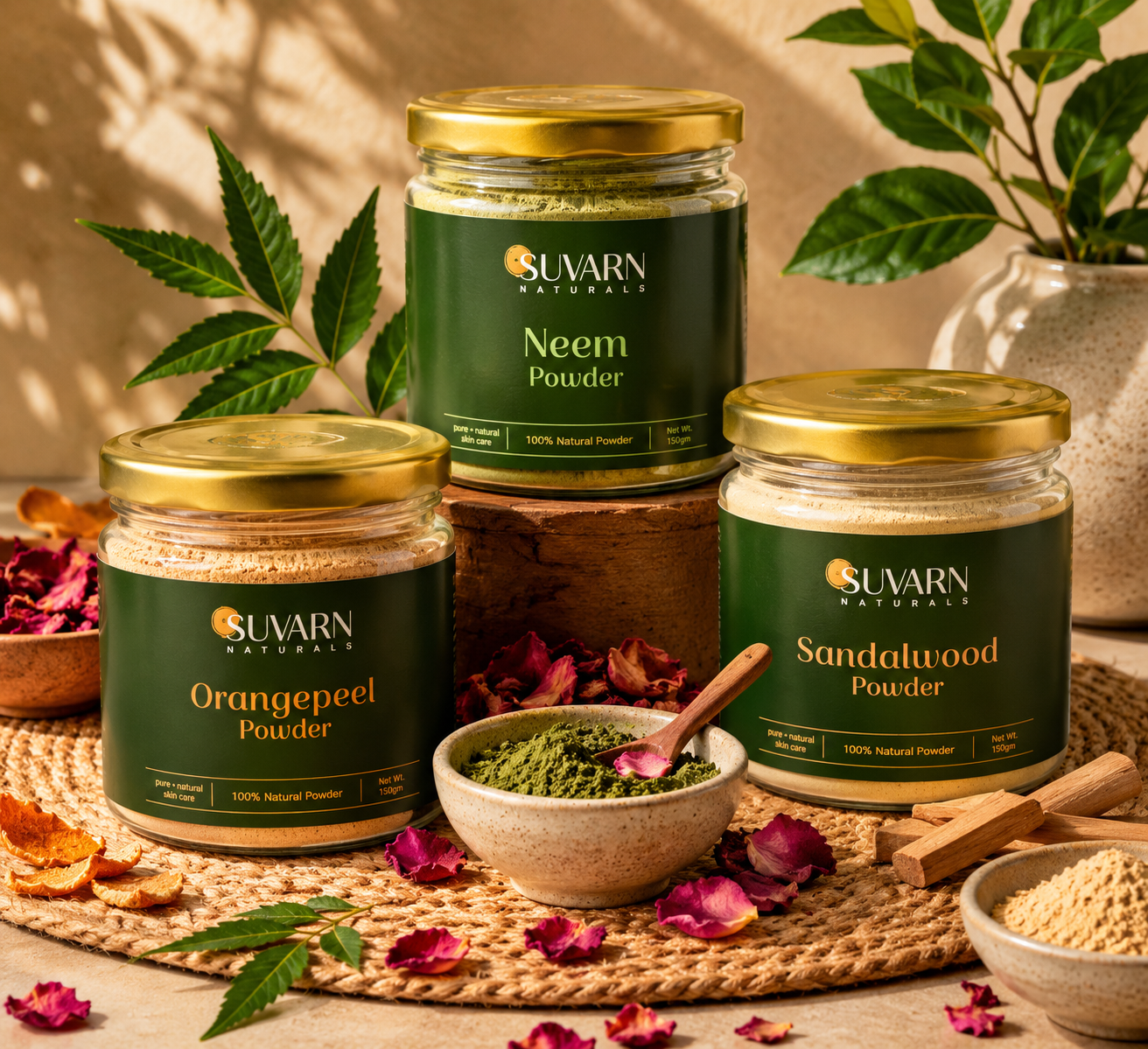
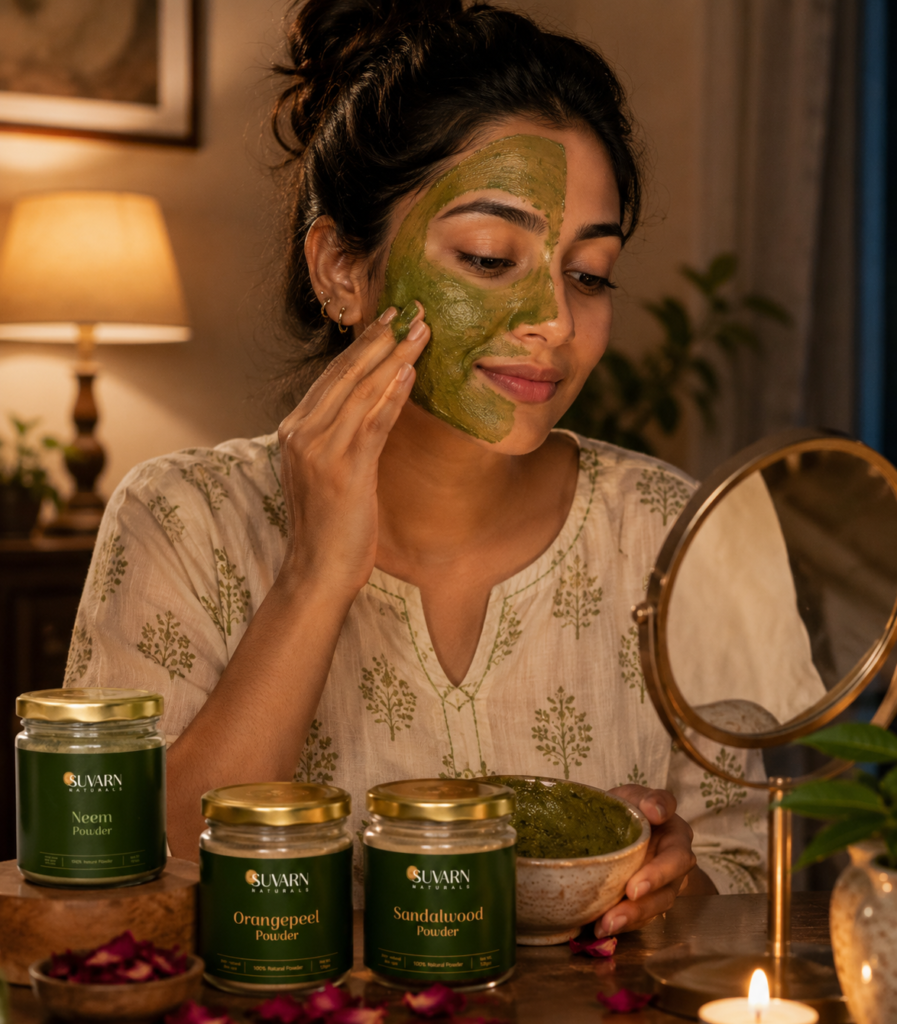
Ready to start? Explore Suvarn Naturals Neem Powder, Orange Peel Powder, and Sandalwood Powder — all available at suvarnnaturals.com/shop.
Acne-prone skin needs antibacterial + anti-inflammatory + sebum-balancing care — not just drying out.
Neem, sandalwood, orange peel, and rose powder have been used for generations in Indian homes to address breakouts gently.
Hormonal acne (common in PCOS, perimenopause, and postpartum) responds especially well to herbs that balance both skin and internal inflammation.
These remedies work best as consistent rituals, not one-time fixes — most people see noticeable changes in 4–6 weeks.
Mixing powders incorrectly (wrong ratios, wrong base) is the most common mistake — this article covers exactly how to do it right.
What Are Natural Remedies for Acne-Prone Skin?
Natural remedies for acne-prone skin are plant-based ingredients — used topically, as face masks, or in daily rituals — that may support clearer skin by targeting the four root causes of acne: excess sebum, bacterial overgrowth (especially Cutibacterium acnes), inflammation, and clogged pores.
In Ayurveda, acne-prone skin is most often linked to aggravated Pitta dosha — the fire-and-water element that governs heat, metabolism, and inflammation in the body. When Pitta is elevated (by stress, heat, oily foods, or hormonal changes), it can manifest as redness, breakouts, and oily skin.
The Sanskrit system for skin healing is rooted in Twak Prasadana (skin purification) — a combination of detoxifying, cooling, and nourishing herbs applied consistently over time. Far from being vague folklore, many of these herbs now have peer-reviewed support for their mechanisms.
Key Ayurvedic herbs for acne-prone skin include:
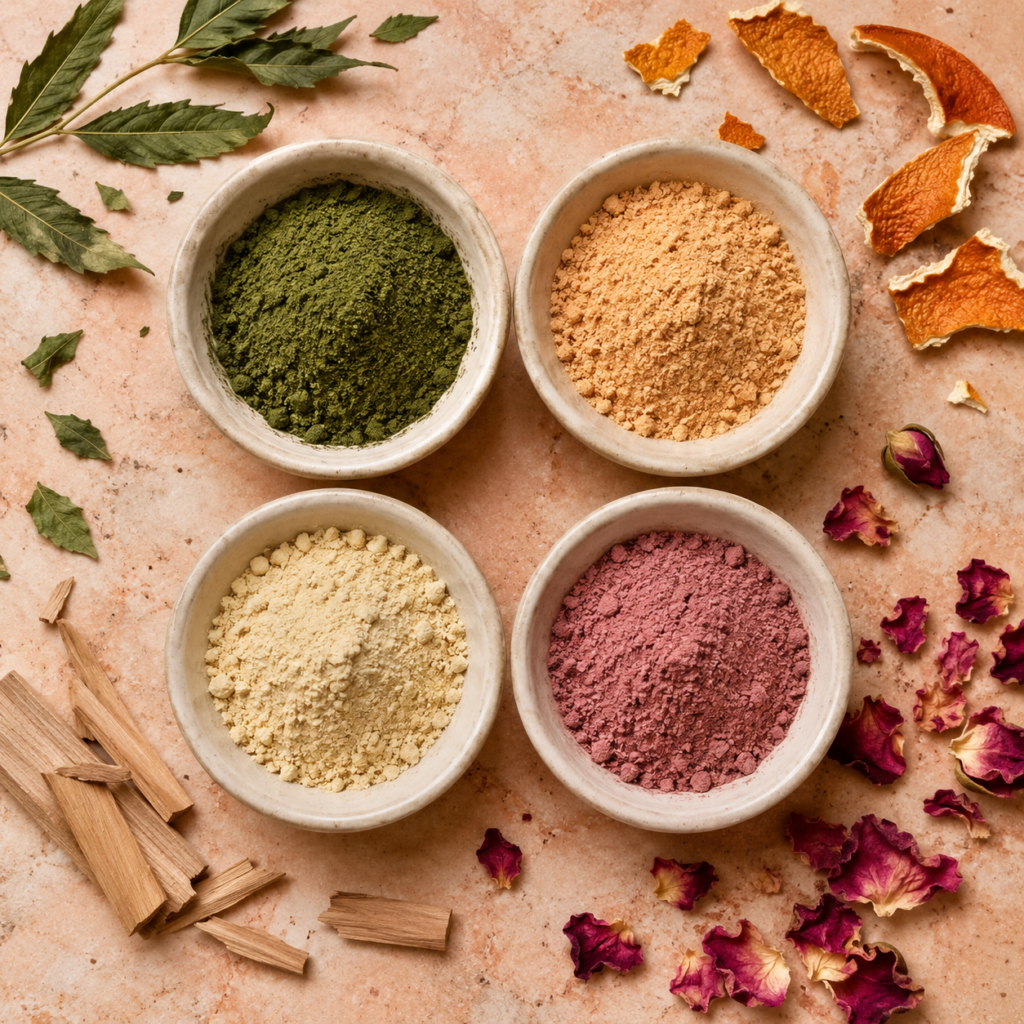
- Neem (Nimba | Azadirachta indica) — antibacterial, anti-inflammatory, sebum-regulating
- Sandalwood (Chandan | Santalum album) — cooling, antimicrobial, scar-fading
- Orange Peel (Narangi chilka | Citrus sinensis) — AHA exfoliation, pore-refining, brightening
- Rose (Gulab | Rosa damascena) — anti-inflammatory, toning, microbiome-balancing
The Science + Ayurvedic Perspective
Natural remedies for acne-prone skin work through overlapping biological pathways: reducing C. acnes bacterial load, lowering skin surface inflammation, and regulating sebaceous gland activity.
How Neem Works Against Acne
Neem contains azadirachtin, nimbidin, and nimbolide — limonoid compounds with documented antibacterial activity. A 2022 review published in Cosmetics (MDPI) confirmed neem’s broad-spectrum antimicrobial and anti-inflammatory properties, making it relevant for topical use in acne-prone skin. Nimbidin in particular has been shown to inhibit inflammation pathways, while azadirachtin disrupts bacterial cell membranes.
How Orange Peel Works
Orange peel contains natural alpha hydroxy acids (AHAs), including citric acid, plus hesperidin and naringin (flavonoids with antioxidant properties). A 2023 study published in the Journal of Food Chemistry & Nanotechnology (Jaiswal & Gaur, 2023) identified multiple skin health benefits of orange peel extracts, including antimicrobial activity against skin pathogens and potential to improve hyperpigmentation. AHAs work by loosening the bonds between dead skin cells, gently clearing blocked pores without abrasion.
Challenging the Biggest Myth in Acne Skincare
Almost every top-ranking article online says the same thing: “dry out acne-prone skin.” This is an oversimplification that can actively worsen your skin. Here’s why.
When you strip the skin of its natural oils through harsh cleansers, drying toners, or over-exfoliation, the skin interprets this as a threat. It responds by producing more sebum to compensate — a rebound effect that can trigger new breakouts.
Ayurveda has understood this for centuries. The goal is not to strip Pitta aggravation from the outside — it is to balance it from within and around the skin. This means using cooling, nourishing herbs alongside antibacterial ones. Sandalwood cools. Rose hydrates. Neem cleanses. Orange peel refines. Together, they address acne without triggering the overproduction cycle.
Myth vs. Fact — Acne-Prone Skin
| Myth | What Actually Happens | Ayurvedic + Science View |
|---|---|---|
| “Dry out acne to heal it” | Stripping skin triggers sebum overproduction | Balance Pitta; use cooling + antibacterial herbs together |
| “Natural remedies are too slow to work” | Many show effects in 4–6 weeks of consistent use — similar to mild OTC actives | Ayurvedic rituals are cumulative, not one-time |
| “One remedy works for all acne types” | Hormonal, bacterial, and stress acne have different drivers | Herb selection should match your dosha and acne type |
Benefits of Natural Remedies for Acne-Prone Skin — Especially for Women
1. Antibacterial Action That Doesn’t Damage Your Skin Barrier
Neem’s key compounds — azadirachtin and nimbidin — may inhibit C. acnes and S. aureus, two bacteria commonly found in acne lesions. Unlike benzoyl peroxide, which kills bacteria but also disrupts the skin’s natural microbiome, neem powder used topically may support selective antimicrobial action.
Quick tip: Mix 1 tsp Suvarn Naturals Neem Powder with cool water or aloe vera gel. Avoid using in combination with chemical exfoliants on the same day.
2. Sebum Regulation Without Over-Drying
The hesperidin and citric acid in orange peel may help regulate sebaceous gland activity — reducing excess oiliness without stripping the skin. For women with PCOS-related oily skin, this is particularly relevant, as elevated androgens drive excess sebum production.
Quick tip: Orange Peel Powder works well as a weekly mask for oily zones (T-zone, chin). Follow with a light moisturiser to prevent the rebound oil effect.
3. Post-Acne Pigmentation + Scar Fading
One of the most frustrating parts of acne isn’t the pimple — it’s the dark mark it leaves behind. Sandalwood (Chandan) contains alpha-santalol, which may reduce melanin production. Orange peel’s natural AHAs support cellular turnover. Rose powder contains antioxidants that may soothe post-inflammatory redness.
Quick tip: Layer your approach — use neem for active breakouts, then transition to sandalwood + rose for post-acne marks. Read more about sandalwood powder benefits and uses.
4. Hormonal Acne Support (PCOS + Menstrual Cycle)
Hormonal fluctuations — especially spikes in androgens — are a primary trigger for jawline and chin acne in women. While no topical remedy changes hormone levels, cooling Pitta-balancing herbs like sandalwood and rose may reduce the inflammatory response to hormonal changes, making breakouts less severe and shorter-lived.
Quick tip: Increase the frequency of your sandalwood mask in the week before your period — this is when Pitta tends to spike.
5. Gentle Exfoliation for Clogged Pores
Clogged pores are the foundation of almost all acne. Orange peel powder provides natural AHA exfoliation — removing dead skin cells and excess keratin without the micro-tears caused by physical scrubs. This makes it safer for sensitive acne-prone skin than walnut shell or apricot scrubs.
Quick tip: Use orange peel powder as a mask (not a scrub) — mix to a paste, apply, and rinse gently. Let the acids do the work.
6. Skin Microbiome Balance
Rose powder and sandalwood have mild antimicrobial and anti-inflammatory properties that may support a balanced skin microbiome — the ecosystem of bacteria that protects healthy skin. Disrupting this balance (through harsh products) is increasingly linked to persistent acne. Suvarn Naturals Rose Powder is a gentle option for daily use.
Who Should Use Natural Remedies for Acne-Prone Skin?
Natural remedies for acne-prone skin may be particularly well-suited for:
- Women with PCOS-related acne — hormonal breakouts along the jawline, chin, and neck that are cyclical and inflammation-driven
- Postpartum women — when hormones are recalibrating and harsh chemicals should be avoided, especially for breastfeeding mothers
- Perimenopause (35–50) — adult acne returning due to declining oestrogen and relative androgen dominance
- Exam or work-stress acne — cortisol-driven breakouts, often forehead and T-zone, that appear during high-pressure periods
- Sensitive skin types — those who’ve reacted to salicylic acid, benzoyl peroxide, or retinoids and need a milder alternative
- DIY skincare enthusiasts — women who prefer to know every ingredient in their routine
Not Ideal If…
- You have cystic or nodular acne (Grade III–IV) — please consult a dermatologist; herbal remedies work best for mild-to-moderate acne
- You have an open, infected breakout — avoid applying powders directly to broken skin
- You are on prescription acne medication — check with your doctor before adding topical herbal products
How to Use Natural Remedies for Acne-Prone Skin — Step by Step
Basic Face Mask Method
Step 1: Cleanse your face with a gentle, sulfate-free cleanser. Pat dry.
Step 2: Choose your powder based on your current skin concern:
- Active breakouts → Neem Powder
- Oily/clogged pores → Orange Peel Powder
- Redness + marks → Sandalwood or Rose Powder
Step 3: In a clean bowl, mix 1–1.5 tsp of the chosen powder with a liquid base. See table below.
Step 4: Apply a thin, even layer to your face. Avoid the eye area.
Step 5: Leave on for 10–15 minutes (neem) or 15–20 minutes (sandalwood, rose, orange peel).
Step 6: Rinse with cool water. Pat dry. Apply a light, non-comedogenic moisturiser.
Recommended frequency: 2–3 times per week for active concerns; 1–2 times per week for maintenance.
Dos and Don’ts
| Do | Don’t |
|---|---|
| Use cool or room-temperature liquid bases | Mix with hot water — heat activates irritation |
| Do a patch test on your inner arm first | Apply to broken, inflamed, or open acne skin |
| Use consistently for 4–6 weeks | Expect overnight results |
| Follow with a light moisturiser | Skip hydration after a clay or powder mask |
| Store powders in a dry, cool place | Let moisture enter the powder container |
| Mix fresh paste each time | Prep and store paste in advance |
Best Liquid Bases for Acne-Prone Skin
| Liquid Base | Best For | Why It Works |
|---|---|---|
| Aloe vera gel | Inflamed, sensitive acne | Cooling, hydrating, anti-inflammatory |
| Rose water | All skin types, especially combination | Toning, pH-balancing |
| Raw honey | Dry + acne-prone skin | Antibacterial, humectant |
| Chilled green tea | Oily, hormonal acne | Antioxidant, sebum-reducing |
| Plain yogurt | Dull + congested skin | Lactic acid exfoliation, probiotic |
The 3-Minute Acne-Calming Ritual with Natural Remedies
This is the section your competitors won’t give you — a specific, ready-to-use routine.
This is a nighttime ritual because skin repair peaks between 10 PM and 2 AM. Even 10 minutes before bed can make a meaningful difference over weeks.
Ingredients
- 1 tsp Suvarn Naturals Neem Powder
- ½ tsp Suvarn Naturals Sandalwood Powder
- ½ tsp Suvarn Naturals Rose Powder
- 2 tbsp rose water (or aloe vera gel for extra sensitivity)
Steps
- Cleanse (1 minute): Wash your face with a gentle cleanser. Use cool water.
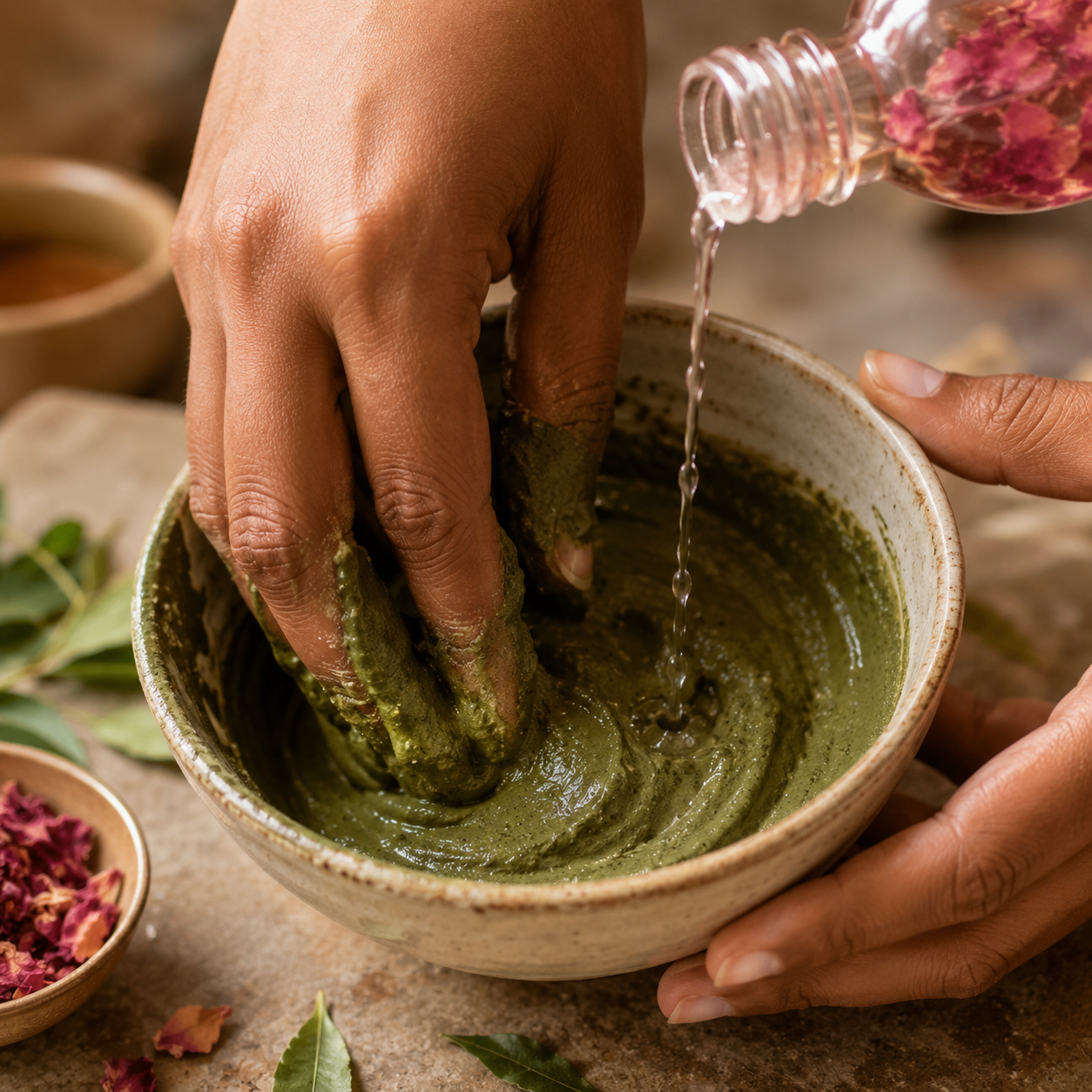
- Mix (30 seconds): Combine neem, sandalwood, and rose powders in a small bowl. Add rose water a little at a time until you get a smooth, thick paste — like yogurt consistency.
- Apply (30 seconds): Using clean fingers or a face brush, apply evenly across your face. Concentrate on your chin, jaw, and T-zone if those are your breakout zones. Avoid eye area.
- Rest (10–12 minutes): Lie down. This is not optional — keeping your face still helps the mask dry evenly and penetrate better.
- Rinse (30 seconds): Use cool water and gentle circular motions. Pat dry — do not rub.
- Finish (30 seconds): Apply a light layer of moisturiser or Suvarn Naturals Rose Powder mixed with a few drops of water as a finishing veil.
Pro tip: On alternate nights, swap the neem powder for Suvarn Naturals Orange Peel Powder. The AHAs in orange peel work best at night (citric acid can increase photosensitivity). This combination of antibacterial + exfoliating nights gives your skin two complementary actions without overloading it. Explore Orange Peel Powder here.
Natural Remedies for Acne-Prone Skin vs. Alternatives
| Metric | Suvarn Naturals Herbal Powders | Generic Herbal Powder | Capsule/Internal Supplement | Synthetic Topical (BPO/SA) |
|---|---|---|---|---|
| Ease of use | Moderate (requires mixing) | Moderate (quality varies) | Easy | Easy |
| Time to visible results | 4–6 weeks consistently | 4–8 weeks | 8–12 weeks (internal) | 2–4 weeks (but rebound common) |
| Sensitive skin suitability | High — no harsh actives | Variable — filler risk | High | Low — irritation common |
| PCOS / hormonal acne fit | Good — Pitta-balancing herbs | Inconsistent | Good for some herbs | Addresses symptoms only |
| Cost (per month) | ₹250–₹500 | ₹150–₹400 | ₹600–₹1,200 | ₹300–₹800 |
| Ingredient transparency | Single-ingredient powders | Often blended, unclear ratios | Often capsule fillers | Full label disclosure |
Note: No product “treats” or “cures” acne. This comparison reflects general use patterns and typical timelines shared by users of each category.
Side Effects and Precautions
Natural doesn’t always mean risk-free. Here is what you need to know before starting.
Neem Powder: May cause dryness in very dry skin types if used daily. Avoid applying on open wounds. Some people experience temporary redness on the first use — this usually settles within 20 minutes. Do a patch test first.
Orange Peel Powder: Contains natural AHAs (citric acid) — these increase photosensitivity. Always use orange peel masks at night or rinse thoroughly and apply SPF before going outdoors. May cause mild tingling in sensitive skin — reduce contact time to 8–10 minutes if this occurs.
Sandalwood Powder: Generally very well tolerated. Rare allergy to sandalwood has been reported — patch test recommended.
Rose Powder: One of the gentlest options. Suitable for most skin types including sensitive and rosacea-prone.
Pregnancy and breastfeeding: Topical use of these powders in normal quantities is generally considered safe, but consult your gynaecologist or dermatologist before introducing new skincare during pregnancy.
Drug interactions: No significant interactions have been reported for topical use of these herbs at standard concentrations. If you are on prescription retinoids or chemical exfoliants, do not layer these over the same area on the same day.
When to see a doctor: If your acne is cystic, deeply painful, or spreading rapidly — or if you notice scarring — please consult a dermatologist. Natural remedies support mild-to-moderate acne management but are not a substitute for medical treatment.
Myths and Mistakes Women Make with Natural Remedies for Acne-Prone Skin
This section addresses what the top articles online consistently get wrong.
Myth 1: “More mask time = better results”
Leaving any powder mask on for 30–40 minutes does not double the benefit. After 20 minutes, dried masks begin to draw moisture back out of the skin, which can trigger — yes — more sebum production. Stick to 10–20 minutes.
Myth 2: “Natural remedies are too slow — they don’t really work”
This comes from comparing herbal approaches to prescription actives like benzoyl peroxide, which can visibly reduce a pimple in 48 hours. But the skin changes produced by consistent herbal rituals — reduced oil, strengthened barrier, fewer C. acnes colonies — build over 4–6 weeks. The goal is not to spot-suppress: it’s to change your skin’s baseline behaviour.
Myth 3: “Use as many ingredients as possible for better results”
The more-is-better approach to DIY skincare is one of the most common mistakes. Mixing 7 ingredients increases the risk of reactions, makes it impossible to identify what’s working, and often creates incompatible pH or texture combinations. Start with one or two powders and observe your skin for 2–3 weeks before adding more.
Myth 4: “Lemon juice is a great natural acne remedy”
This is one of the most dangerously oversimplified recommendations in the top-10 results for this keyword. Neat lemon juice is highly acidic (pH 2–3) and can cause chemical burns, photosensitivity, and permanent pigmentation when applied to acne-prone skin. Orange peel powder, by contrast, delivers AHA benefits at a safer, food-grade concentration.
Myth 5: “Skip moisturiser if your skin is oily”
Skipping moisturiser on oily acne-prone skin is the single fastest way to worsen breakouts. Dehydrated skin overproduces oil as a compensatory response. Always follow any powder mask with a light, non-comedogenic moisturiser.
Notes from the Suvarn Naturals Founder
While researching traditional skincare ingredients, we noticed that certain herbs repeatedly appeared in home beauty rituals across generations. Neem, sandalwood, and orange peel were among the ingredients people trusted most. Our goal has always been to offer simple, recognisable ingredients that can easily fit into everyday skincare routines.
When I first began working on our herb powders, I was struck by how many of our customers described the same experience: they’d grown up watching their mothers or grandmothers use neem leaves on the skin, or apply a simple chandan paste before a function. Yet when they tried to replicate this as adults, they didn’t know where to find clean, single-ingredient powders without fillers, synthetic fragrance, or unknown additives.
That became our starting point. Every powder in the Suvarn Naturals range is a single ingredient — what you read on the label is exactly what’s inside.
Our Neem Powder is sourced from shade-dried neem leaves and milled finely enough to blend smoothly without grittiness. In our testing, we noticed that coarser neem powders — common in unbranded bulk products — can cause micro-abrasion on sensitive acne skin. Our formulation avoids this.
The Orange Peel Powder is one of the most underrated in our range. We process it from sun-dried orange peels, which preserves the flavonoids and natural AHAs without artificial brightening agents. The smell alone — warm, citrusy, clean — is grounding in a way that synthetic vitamin C serums simply are not.
We also batch-test each powder for microbiological contamination before release. This matters more than most people realise with topical powders, because contaminated powders can introduce new bacteria to already-vulnerable skin.
Our goal is not to reinvent skincare. It is to make centuries-old wisdom accessible, clean, and consistent.
— Suvarn Naturals Teams →
FAQs: Natural Remedies for Acne-Prone Skin
Q1: Can I use neem powder on my face every day?
Neem powder may be too drying for daily use on most skin types. We recommend using it 2–3 times per week for active acne, and once a week for maintenance. If your skin feels tight or flaky after use, reduce frequency and always follow with a light moisturiser. Women with very dry or dehydrated skin may prefer mixing neem with yogurt to buffer its intensity.
Q2: Which powder is best for hormonal acne along my jawline?
Jawline and chin acne is most commonly hormonal — linked to androgen fluctuations in PCOS or the luteal phase of your cycle. Sandalwood powder (cooling, anti-inflammatory) and neem powder (antibacterial) used together may help reduce the severity of these breakouts. Sandalwood Powder is particularly well-suited for inflamed, cystic-adjacent spots.
Q3: How long before I see results from herbal face masks?
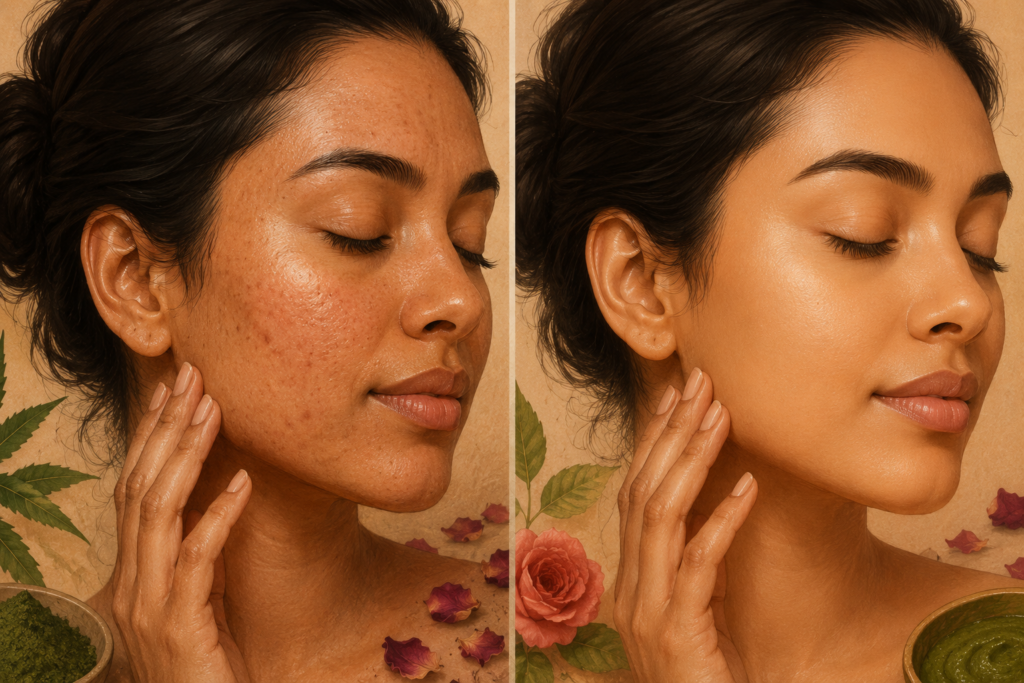
Most women using consistent herbal mask routines (2–3 times per week) report visible changes in skin texture and reduction in breakout frequency within 4–6 weeks. Results for post-acne pigmentation and dark marks may take 8–12 weeks. Consistency matters more than intensity.
Q4: Can I use orange peel powder if I have sensitive skin?
Yes, but with care. Orange peel powder contains natural AHAs, which can cause mild tingling in sensitive skin. Reduce contact time to 8–10 minutes, and always use at night (AHAs increase photosensitivity). Mix with yogurt or aloe vera gel to dilute the concentration. If irritation persists after two uses, discontinue and consult a dermatologist.
Q5: Is it safe to use these powders during pregnancy?
Topical application of food-grade herbal powders at normal quantities is generally considered low-risk. However, every pregnancy is different. We strongly recommend consulting your gynaecologist or dermatologist before introducing new skincare products during pregnancy or while breastfeeding.
Q6: Can men use these remedies for acne-prone skin?
Yes. The Ayurvedic approach to acne is not gender-specific. Men with oily, acne-prone skin — especially those with body acne, back acne, or post-shave breakouts — may find neem and sandalwood powders particularly helpful. The same mask method applies.
Q7: I have PCOS. Which combination of powders should I start with?
For PCOS-related acne, we suggest starting with a neem + sandalwood combination (1 tsp neem : ½ tsp sandalwood), mixed with aloe vera gel. This addresses both the bacterial load and the Pitta-aggravated inflammation typical of PCOS skin. Use 2–3 nights per week. Add Rose Powder as a finishing step for toning and soothing.
Q8: Can I mix all four powders together?
You can, but we’d advise against it when starting out. It makes it impossible to identify what’s working (or what’s causing a reaction). Begin with one or two powders for 2–3 weeks. Once your skin has adjusted, you can experiment with combinations.
Q9: Are these powders safe to use with prescription acne medication like retinoids or salicylic acid?
Do not layer herbal powders over the same skin areas as prescription retinoids or chemical exfoliants on the same day — especially orange peel powder (AHAs). If you are on prescription acne medication, check with your dermatologist before adding any new topical product.
Q10: How do I store herbal powders to keep them effective?
Store in a dry, airtight container, away from direct sunlight and moisture. Do not use a wet spatula or fingers to scoop the powder, as moisture introduces bacterial contamination. Properly stored, our powders remain effective for 12–18 months. Check the best-before date on the packaging.
Final Takeaway
Natural remedies for acne-prone skin are not a shortcut. They are a shift in how you approach your skin — from suppressing symptoms to supporting balance.
Neem clears. Sandalwood cools. Orange peel refines. Rose restores. Used consistently and intelligently, these four herbs can form the backbone of a simple, effective acne-care ritual — one rooted in centuries of Ayurvedic knowledge and supported by a growing body of research.
Your skin has its own intelligence. Give it the right inputs, and it will respond.
Explore the full range at suvarnnaturals.com/shop — and start with just one powder. See what your skin says.
