
Best Detox Drink for Monsoon: A Skin-Hormone Ritual Women Trust

Published: 25 July 2026 | By Suvarn Naturals Team
TL;DR — Quick Answer
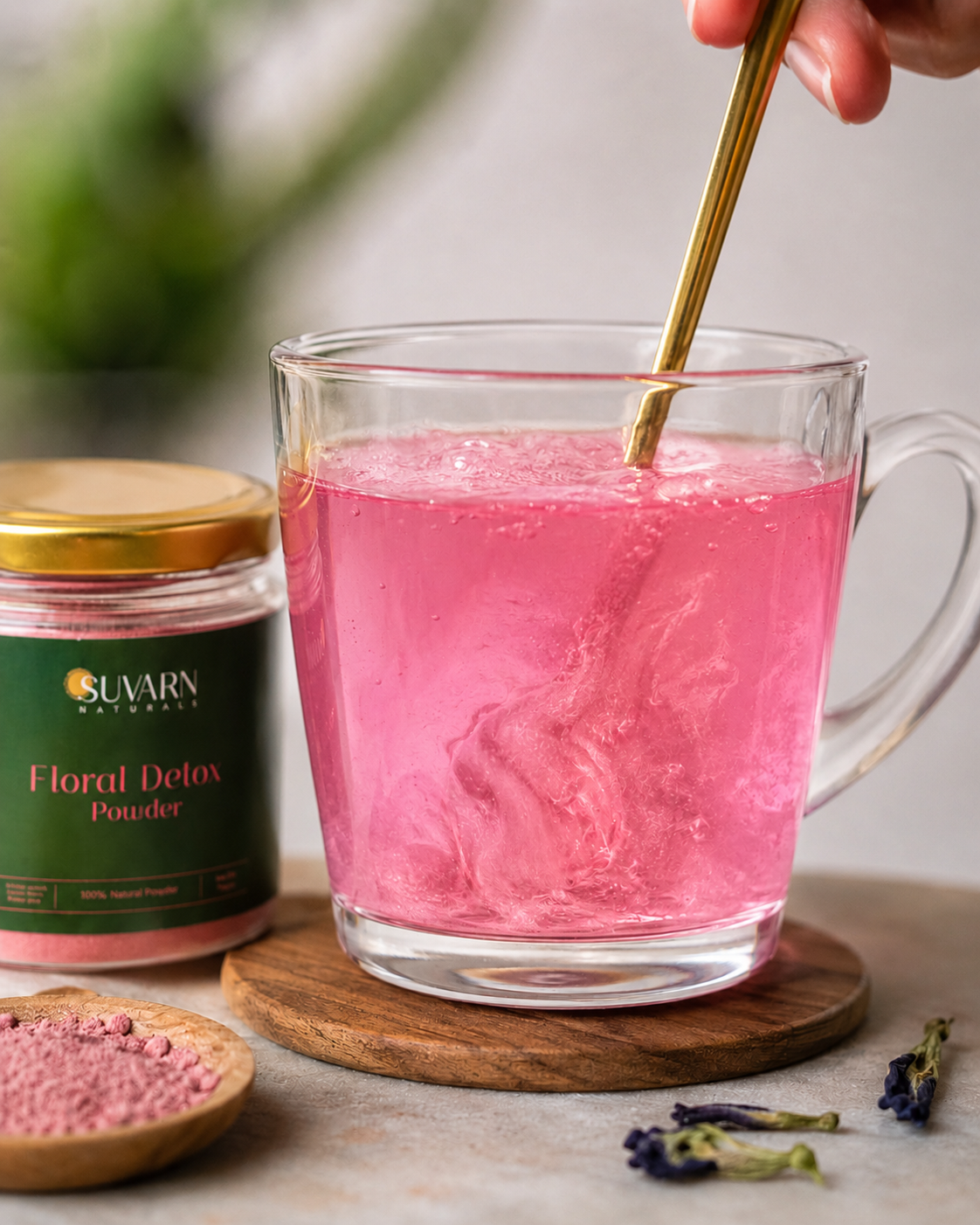
Curious which format works for you? Try our Floral Detox Powder as a gentle first step.
The best detox drink for monsoon combines Moringa, Amla, and Blue Pea Flower to support hydration, digestion, and skin during humid weather.
Monsoon aggravates Vata and Kapha dosha, which traditional Ayurveda links to sluggish digestion, breakouts, and low energy.
Real “detox” isn’t an overnight flush — it’s giving your liver, gut, and skin the antioxidants and hydration they need to do their own job well.
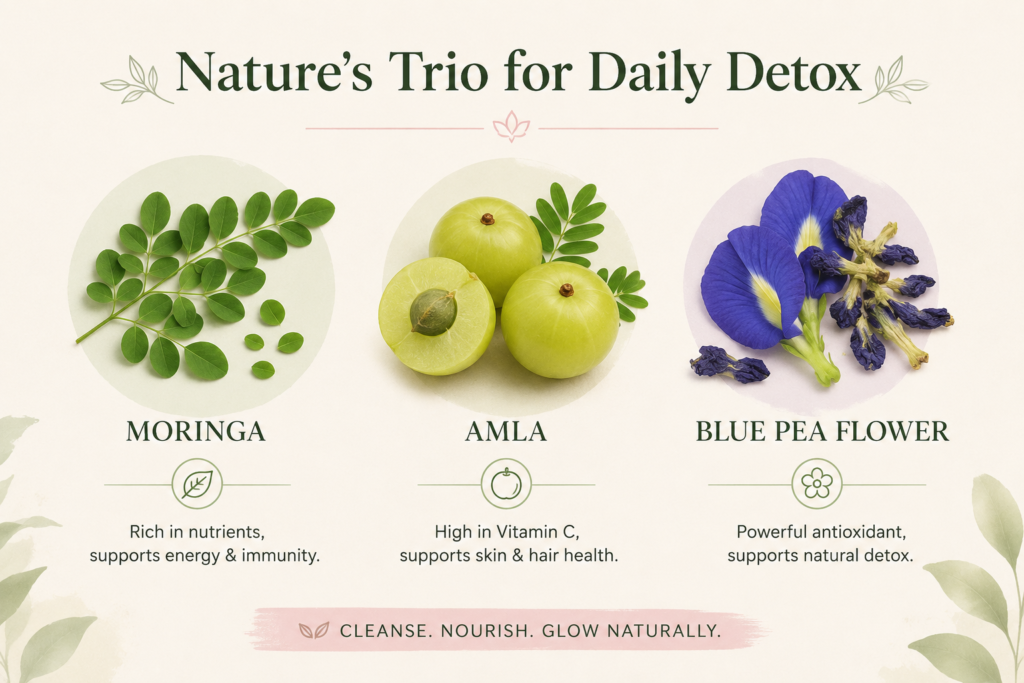
Moringa, Amla, and Blue Pea Flower each bring distinct, research-backed compounds: vitamin C, anthocyanins, and polyphenols.
A simple 3-minute evening ritual (below) fits into even the busiest monsoon routine.
If your skin has been breaking out, your digestion feels off, and your hair is shedding more than usual, you’re not imagining it. Monsoon does this to a lot of us. You’ve probably searched “best detox drink for monsoon” hoping for something simple you can actually stick with — not another 10-step routine. This guide breaks down what genuinely works, backed by both Ayurveda and current research, and ends with a 3-minute ritual our founder personally tested before it became part of Suvarn Naturals.
What Is the Best Detox Drink for Monsoon?
The best detox drink for monsoon is a warm or room-temperature blend of antioxidant-rich herbs — like Moringa, Amla, and Blue Pea Flower — mixed with water to support hydration, gentle digestion, and skin clarity during humid weather.
In Ayurveda, this kind of drink is sometimes called a Rasayana peya, a rejuvenating tonic meant to support Agni (digestive fire), which tends to weaken during monsoon. The botanical names behind Suvarn Naturals’ blend:
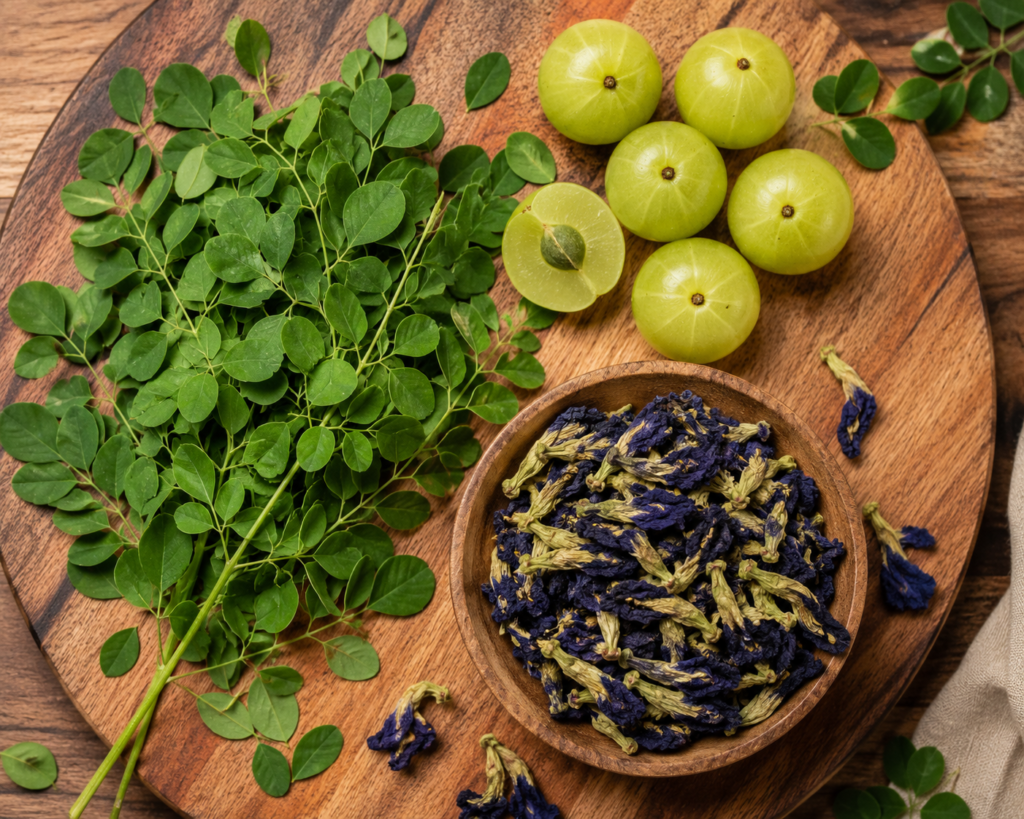
- Moringa (Moringa oleifera, Sanskrit: Shigru) — leaves rich in iron, calcium, and antioxidant compounds
- Amla (Phyllanthus emblica, Sanskrit: Amalaki) — a vitamin C-dense fruit central to classic formulations like Chyawanprash
- Blue Pea Flower (Clitoria ternatea, Sanskrit: Aparajita) — a flower whose anthocyanins give it its signature blue color
Together, these three ingredients form the basis of the Floral Detox Powder, designed specifically for this season.
The Science and the Ayurvedic Perspective
Monsoon detox drinks work by supporting your body’s own detox pathways — the liver, kidneys, and skin — rather than “flushing toxins” the way many wellness posts suggest.
Ayurveda describes monsoon as a season where Vata dosha accumulates due to cold, damp air, while weakened digestion allows Kapha to build up, showing up as heaviness, bloating, and dull skin. Classical texts recommend light, warm, easily digestible foods and drinks during this window — which is exactly the role a herbal detox drink plays.
Modern research adds a layer of nuance here. Amla’s vitamin C content is understood to support collagen production, which plays into the skin benefits often linked to monsoon skincare routines. Separately, Clitoria ternatea flower extracts have been studied for their antioxidant, antibacterial, and cytotoxic activities in laboratory research, giving some grounding to its traditional use.
The myth this article challenges: the idea that a detox drink “flushes out toxins” within a day or two. Your liver and kidneys already do this work continuously. What a good detox drink actually does is reduce the antioxidant load your body has to fight and keep you hydrated enough for those organs to function well — a subtler, slower, more honest claim than most marketing suggests.
This distinction matters more during monsoon than most people realize. Humidity changes how your body regulates temperature and sweat, which can quietly affect hydration even when you don’t feel particularly thirsty. Add in monsoon’s typical shift toward fried, comfort-style foods, and digestion often slows further. This is the gap a herbal drink is meant to fill — not as a dramatic reset, but as a small daily counterbalance to what the season naturally does to your body.
It’s also worth being clear about what the research can and cannot tell us. Much of the evidence behind Moringa, Amla, and Blue Pea Flower comes from laboratory studies, animal models, or small human trials — not large-scale clinical trials. That doesn’t make the traditional use meaningless; Ayurveda has observed these patterns over centuries. But it does mean the honest framing is “may support,” not “will fix,” which is exactly the language this article uses throughout.
Myth vs. Fact
| Myth | Fact |
|---|---|
| Detox drinks flush toxins out of your body overnight | Your liver and kidneys handle detoxification continuously; herbal drinks may support this process, not replace it |
| More sourness or bitterness means more “detox power” | Efficacy depends on specific compounds (like vitamin C or anthocyanins), not taste intensity |
| Detox drinks alone fix monsoon skin and hair issues | Diet, sleep, stress, and humidity all play a role; a drink is one supportive piece, not a standalone fix |
Benefits of the Best Detox Drink for Monsoon — Especially for Women
Monsoon-related skin dullness, hair fall, and low energy show up differently for women, often layered with hormonal shifts, PCOS, or postpartum recovery. Here’s how each benefit may show up for you specifically.
Skin clarity and reduced breakouts
Humidity increases oil and sweat, which can clog pores and trigger monsoon breakouts. Amla’s vitamin A and antioxidant content are traditionally understood to support skin repair and help protect against oxidative damage, which may traditionally be used alongside topical skincare during this season.
Quick tip: Pair your detox drink with a light, oil-free moisturizer during monsoon for best results.
Hair fall support
Iron deficiency and humidity-related scalp issues can both worsen hair shedding in women. A 2024 study found that women with hair loss who took Amla syrup daily showed improvement in hair growth and thickness, suggesting Amla may traditionally be used to support hair health alongside a balanced diet.
Quick tip: Hair fall has many causes — pair internal support with a gentle scalp massage 2–3 times a week.
Hormonal balance through PMS and perimenopause
Moringa contains phytoestrogens, plant compounds that interact with estrogen receptors, which may help smooth some of the hormonal shifts around menstruation and perimenopause. This is why Moringa is often included in blends aimed at women’s wellness routines.
Quick tip: Track your cycle alongside your detox ritual to notice patterns over 2–3 months.
Energy and reduced monsoon fatigue
Monsoon’s low light and heavy, oily comfort foods can leave energy levels low. Moringa’s iron and mineral content, including potassium for hydration and sound bodily function, may traditionally be used to support steady energy through the day.
Quick tip: Have your detox drink mid-morning, not right after waking, to avoid an empty-stomach reaction.
Mood and stress support
Contemporary studies on Butterfly Pea Flower suggest it may help reduce anxiety and support memory and cognitive function, aligning with its traditional use as a calming evening flower.
Quick tip: Sip your Blue Pea Flower drink slowly in the evening — the ritual itself is part of the calming effect.
“`html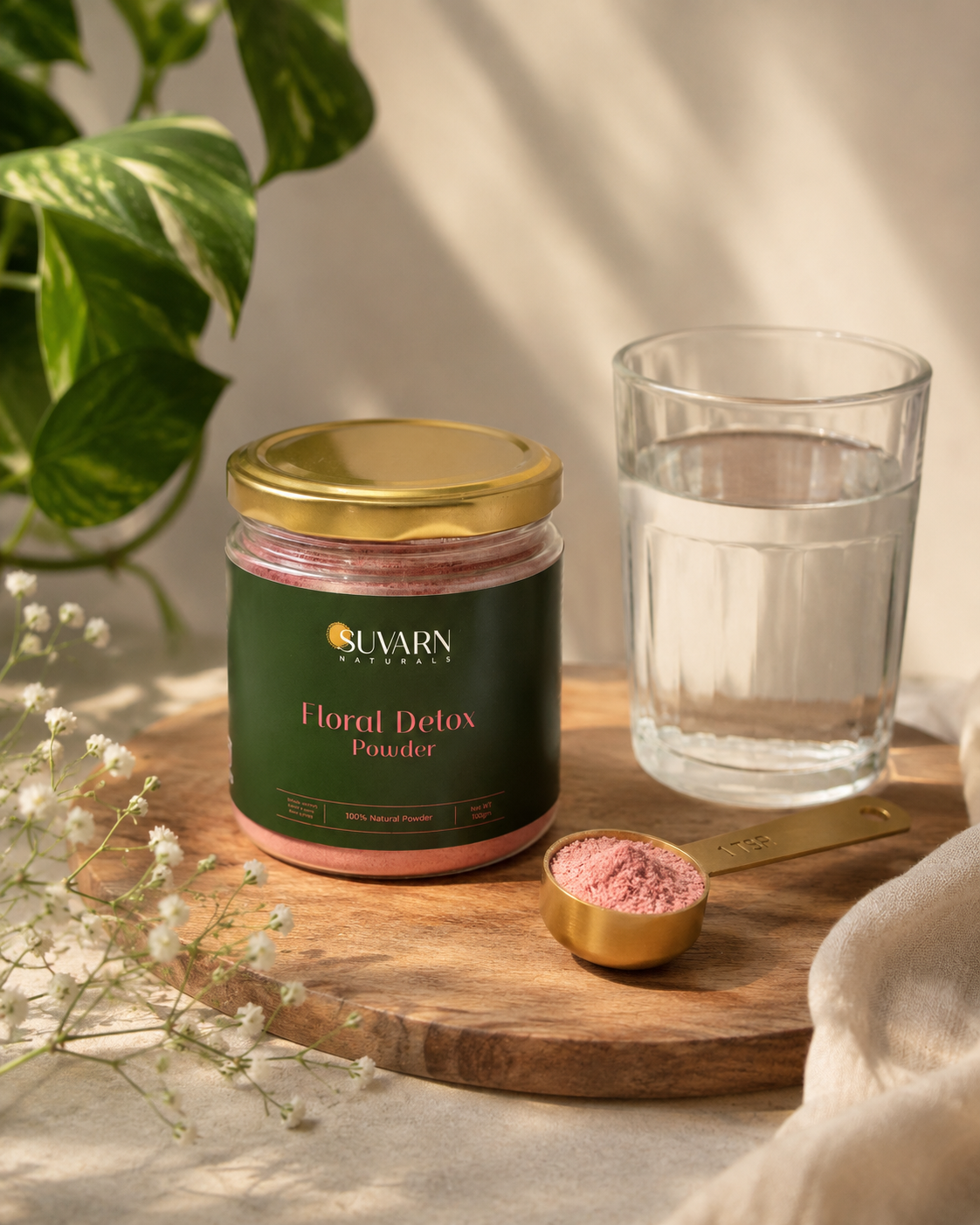
Refresh Your Wellness Naturally with Floral Detox Powder
Crafted with a nourishing blend of Amla, Beetroot, Hibiscus, and Rose Petals, Floral Detox Powder is an easy way to enjoy a naturally vibrant herbal drink as part of your everyday wellness routine.
- ✔ Made with Amla, Beetroot, Hibiscus & Rose Petals
- ✔ Refreshing Herbal Drink for Daily Wellness
- ✔ Naturally Vibrant with No Artificial Colours
- ✔ 100% Pure • No Additives • No Preservatives
Who Should Use the Best Detox Drink for Monsoon?
This kind of herbal blend is generally well-suited for women managing PCOS-related bloating, postpartum recovery, perimenopause symptoms, or simple exam and work stress during humid months.
- PCOS: Many women look for gentle, plant-based additions alongside their existing care plan — this drink is not a treatment, but a supportive daily habit. Because Moringa and Amla are low in added sugar compared to many packaged “detox” mixes, they’re often an easier fit for blood-sugar-conscious routines.
- Postpartum: A 2022 randomized controlled trial found postpartum mothers taking Moringa oleifera capsules had 47% more breast milk volume than the placebo group, though the difference in median volume wasn’t statistically significant — worth discussing with your doctor first. New mothers juggling recovery and sleep deprivation also tend to appreciate how little effort this ritual takes.
- Perimenopause: Women navigating hot flashes or mood shifts often appreciate a calming, low-effort ritual. The Blue Pea Flower component in particular is traditionally reached for during this stage, more for the wind-down ritual than any single active compound.
- Exam or work stress: A predictable evening routine can help signal wind-down time to your body, especially useful for students and working women juggling irregular monsoon schedules.
Not ideal if…
- You’re on blood thinners (Amla may interact)
- You’re pregnant without medical guidance (check with your doctor first)
- You have a known allergy to any of the individual herbs
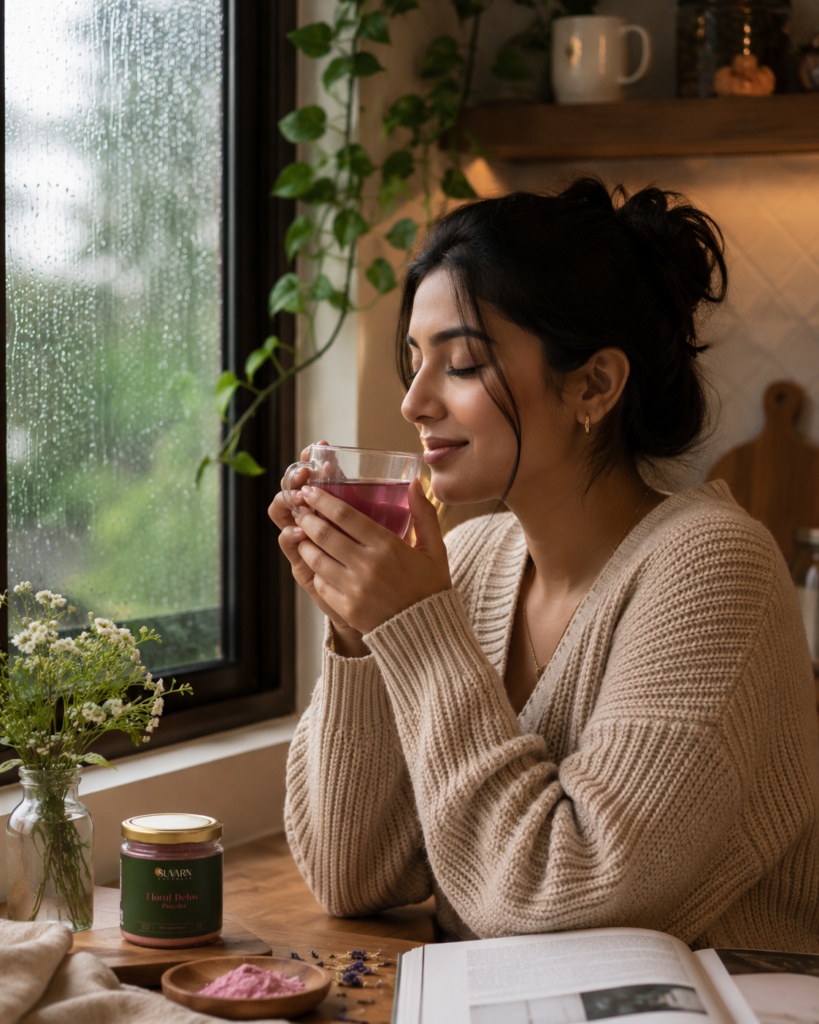
How to Use the Best Detox Drink for Monsoon — Step by Step
Most women start with ½ to 1 teaspoon of powder mixed into 200ml of warm water, once daily, traditionally taken in the morning or early evening.
Best time of day: Morning on a light stomach, or early evening before dinner — avoid taking it right before bed if you’re sensitive to caffeine-free herbal stimulation.
Three formats to try:
- Powder — mixed into warm water or herbal tea (most versatile)
- Capsule — for those who dislike the taste, useful while travelling
- Cold-brew style — steeped overnight in the fridge for a refreshing version
| Do | Don’t |
|---|---|
| Start with a smaller dose and build up | Don’t double the dose expecting faster results |
| Pair with meals if you have a sensitive stomach | Don’t take on a completely empty stomach if prone to acidity |
| Store in a cool, dry place | Don’t leave the jar open in humid bathroom cabinets |
The 3-Minute Monsoon Detox Ritual
★ A ritual we haven’t seen anywhere else — designed specifically for busy monsoon evenings. ★
Ingredients
- 1 tsp Floral Detox Powder
- 200ml warm water
- A few drops of lemon (optional, for taste and extra vitamin C)
- Honey to taste (optional)
Steps
- Boil water and let it cool slightly to warm (not boiling hot).
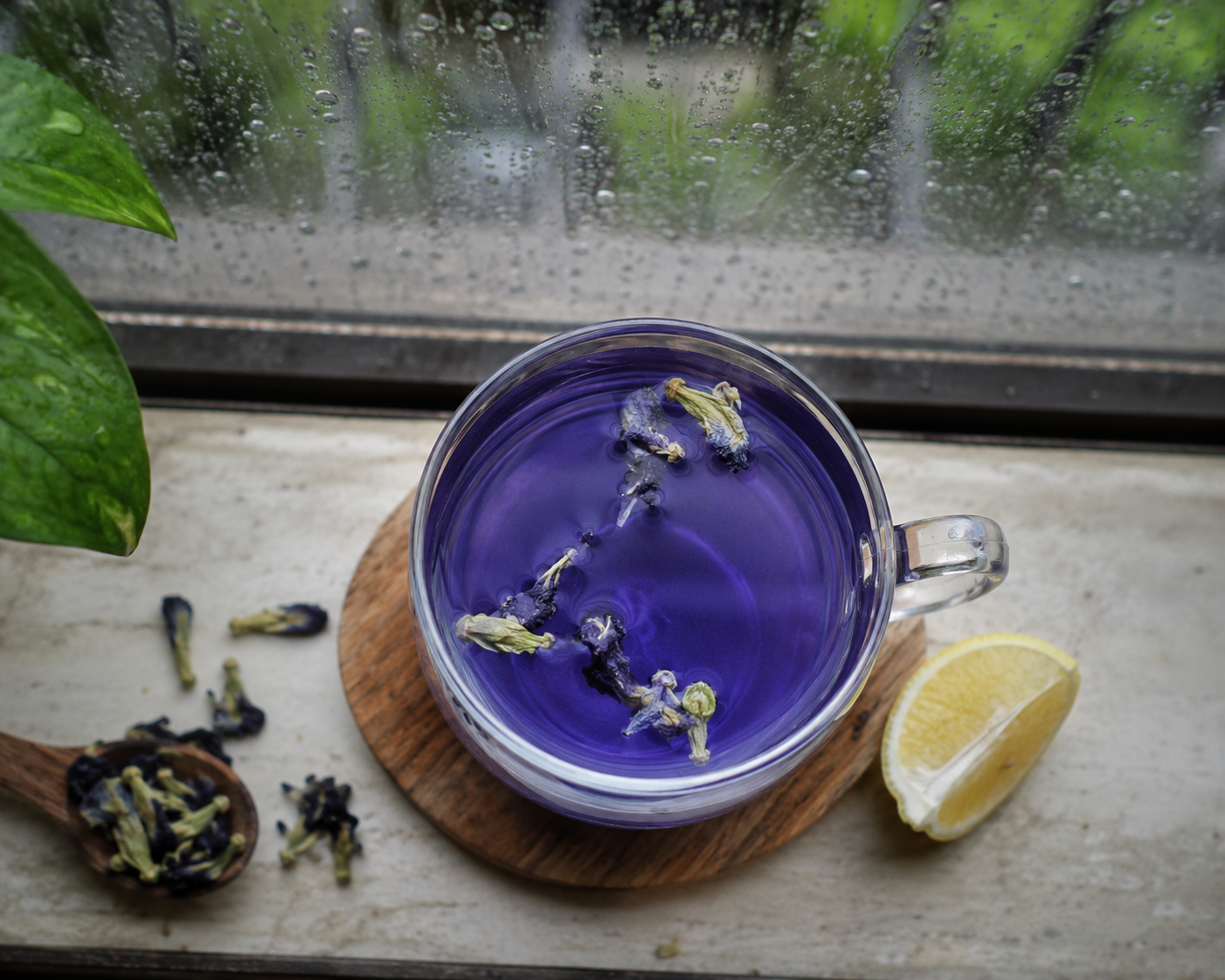
- Stir in the Floral Detox Powder until fully dissolved — you’ll see the natural blue-lavender hue from the Blue Pea Flower.
- Add lemon drops if you like a tangy note; the acid also brightens the color to a soft purple.
- Sip slowly over 3–5 minutes, ideally sitting down without your phone.
- Finish and rinse your cup right away so the natural pigment doesn’t stain.
Pro tip: On heavier monsoon days, mix in a pinch of our Amla Powder for an extra vitamin C boost.
Best Detox Drink for Monsoon vs. Alternatives
| Metric | Suvarn Naturals Blend | Generic Detox Powder | Single-Herb Capsule | Synthetic “Detox” Supplement |
|---|---|---|---|---|
| Ease of use | Very easy — one scoop, water | Varies by brand | Easy, but single-benefit | Easy, but often requires strict protocol |
| Time to notice a routine effect | 2–4 weeks of consistent use | Varies, often unclear sourcing | 2–4 weeks | Claims are often faster but less transparent |
| Skin type suitability | Suited to most skin types | Depends on formulation | Limited to one herb’s benefit | Can be harsh on sensitive skin |
| PCOS-friendliness | Gentle, whole-herb based | Depends on added sugars/fillers | Narrower benefit range | Often not PCOS-specific |
| Cost per month | Mid-range | Varies widely | Similar or higher for 3 separate herbs | Often premium-priced |
No option here is a magic fix — the comparison is about fit for your lifestyle, not superiority claims.
Side Effects and Precautions
Herbal detox drinks are generally well-tolerated, but they aren’t risk-free for everyone.
Amla may interact with blood-thinning medication, and high doses of Moringa root or bark (not the leaf powder used here) have been linked to uterine effects in animal studies, so pregnant women should check with their doctor before use. Most human research on these herbs comes from small trials or animal studies, so results can vary between people.
A few other things worth knowing before you start. Amla’s acidity can be harsh on an empty, sensitive stomach for some people, which is why pairing it with a meal is often more comfortable. Blue Pea Flower is generally considered gentle, but as with any new botanical, a small patch of skin sensitivity or mild stomach upset is possible in rare cases. If you’re managing thyroid medication, space it out from your detox drink by at least an hour, since some herbal compounds can affect absorption timing.
When to see a doctor: If you notice unusual bloating, skin reactions, or changes in your cycle after starting any new herbal supplement, stop and consult a healthcare provider. This is especially important if you’re pregnant, breastfeeding, or managing a chronic condition like thyroid disorders, diabetes, or PCOS.
Myths and Mistakes Women Make With Detox Drinks
★ Another gap most competitor articles skip entirely. ★
- “More is better.” Doubling your dose doesn’t double the benefit — it just increases the chance of stomach upset.
- Treating it as a meal replacement. A detox drink supports your diet; it isn’t a substitute for actual food, especially during monsoon when your body needs steady nutrition.
- Expecting overnight skin change. Skin cycles take weeks, not days — give it at least a month before judging results.
- Skipping it the moment skin improves. Consistency, not intensity, is what these herbs are traditionally used for.
- Ignoring water intake. No herbal powder replaces plain water — monsoon humidity can mask dehydration since you may sweat less visibly.
Notes From the Suvarn Naturals Founder
The monsoon season often changes our eating habits and daily routine. We created our wellness powders to make it easy to enjoy simple, plant-based drinks that support hydration and fit naturally into a balanced lifestyle.
When I first tested this formulation, what struck me was the texture — a fine, almost silky powder that dissolves without the grittiness you get in a lot of raw herbal powders. In our lab, we noticed the Blue Pea Flower’s color shift from blue to violet with lemon fascinated our early testers as much as the taste did. We source our Moringa and Amla from small Indian farms and test every batch for purity before it reaches your kitchen shelf. It’s a small ritual, but it’s one we genuinely use ourselves through the season.
Frequently Asked Questions
Is it safe to drink a detox drink every day during monsoon?
For most healthy adults, daily use of one teaspoon in water is generally well tolerated. Those on medication or with existing conditions should check with a doctor first.
Can this help with monsoon acne specifically?
It may support skin health from the inside, but monsoon acne usually needs a combined approach with topical skincare, since humidity and clogged pores are the main triggers.
Is Blue Pea Flower the same as butterfly pea tea?
Yes, Blue Pea Flower and butterfly pea are common names for the same plant, Clitoria ternatea, known for its natural blue-violet pigment.
Will this help with PCOS-related bloating?
Some women find gentle herbal drinks help as part of a broader PCOS management routine, but this is not a treatment for PCOS itself — please work with your doctor for that.
Can I drink this cold instead of warm?
Yes, though Ayurveda traditionally favors warm drinks during monsoon since cold drinks are thought to further slow digestion.
Is this suitable for teenagers?
Herbal powders like Moringa and Amla are commonly used in Indian households across age groups, but check with a pediatrician for anyone under 18.
How long before I see a difference in hair fall?
Hair growth cycles are slow — most women report noticing a difference after 6–8 weeks of consistent use.
Can I mix this with my existing supplements?
Generally yes, but if you’re on iron supplements, blood thinners, or thyroid medication, check with your doctor about timing and interactions.
What does it taste like?
Earthy and slightly tangy from the Amla, with a mild floral note from the Blue Pea Flower — many people add a touch of honey or lemon.
Is this suitable during pregnancy?
Some ingredients, particularly Moringa in higher doses, are traditionally avoided during pregnancy. Please consult your doctor before starting.
Why does the drink change color?
Blue Pea Flower’s anthocyanin pigments shift from blue to violet or pink when they meet an acid like lemon juice — it’s a natural chemical reaction, not a dye or additive.
Can men drink this too?
Yes. While this guide focuses on women’s use cases, Moringa, Amla, and Blue Pea Flower are traditionally used by the whole household, and many men in the same family enjoy the same daily ritual.
Final Takeaway
Monsoon doesn’t have to mean dull skin, low energy, and unpredictable digestion. The goal isn’t a dramatic overnight “cleanse” — it’s a small, consistent habit that supports what your body is already trying to do. Moringa, Amla, and Blue Pea Flower each bring something different to that habit: nutrients, antioxidants, and a calming ritual. If you’re ready to start, our Floral Detox Powder is designed exactly for this season — one scoop, warm water, three minutes.