
What Foods Help Reduce Seasonal Hair Fall: 7 Ayurvedic-Backed Picks That Work

Published: 26 July 2026 | By Suvarn Naturals Team
TL;DR
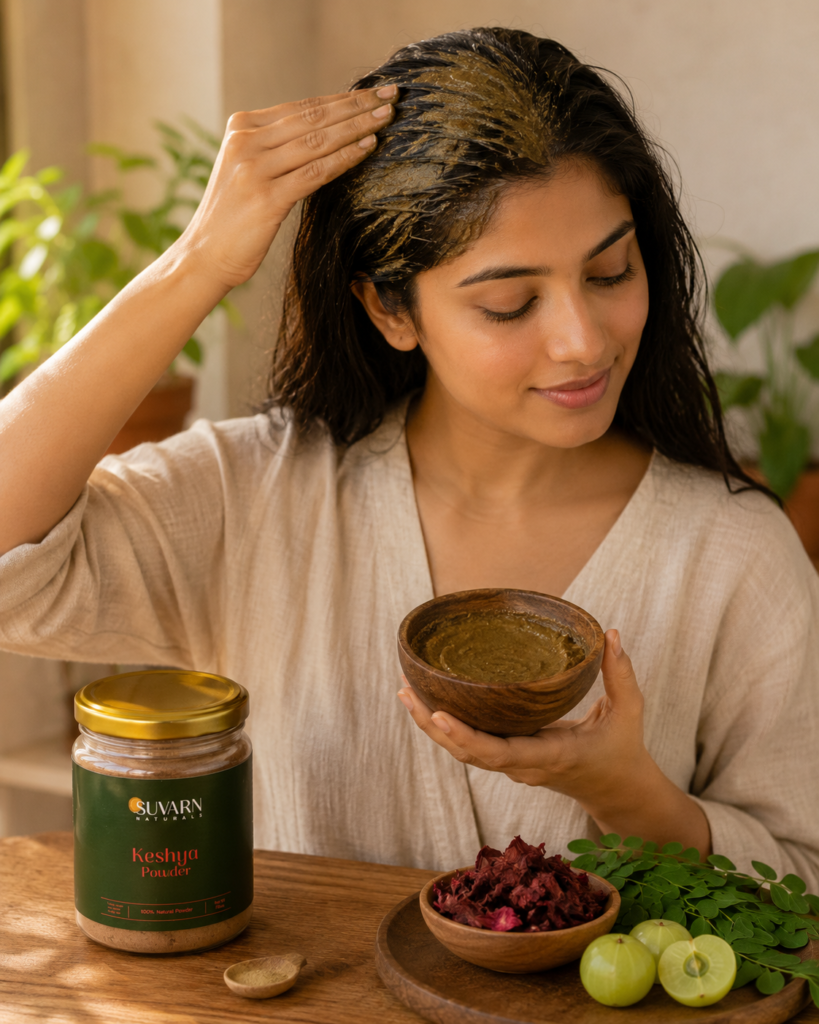
Pair a nutrient-rich diet with topical care — try our Keshya Powder as part of your weekly ritual (for external use only).
What foods help reduce seasonal hair fall? Iron, protein, zinc, biotin, and omega-3-rich foods are the ones most consistently linked to healthy hair in research.
Seasonal hair fall (especially in monsoon and autumn) is real and linked to weather, stress, and nutrient shifts — not just genetics.
Ayurveda views hair as a by-product of Asthi Dhatu (bone tissue) — so nourishing food is considered foundational, not optional.
No single food “cures” hair fall — this works best alongside a consistent scalp-care routine.
Simple additions like amla, moringa leaves, eggs, seeds, and leafy greens are an easy place to start.
What foods help reduce seasonal hair fall? That’s the question most people land on the moment they notice more strands on their pillow, in the shower drain, or on their hairbrush around the same time every year. This guide breaks down what research actually says about diet and seasonal shedding, what Ayurveda has observed for centuries, and how to build a realistic, food-first routine. As of 24/07/2026, we’ve also woven in newer research on nutritional deficiencies and hair shedding to keep this guide current.
What Foods Help Reduce Seasonal Hair Fall? Understanding the Basics
Understanding what foods help reduce seasonal hair fall starts with why the shedding happens in the first place. Seasonal hair fall refers to a temporary rise in hair shedding tied to weather changes, most commonly in monsoon and early autumn, when more hair follicles shift into the resting (telogen) phase together. In Ayurveda, this is often linked to aggravated Vata and Pitta dosha disturbing the nourishment of hair roots. Diet matters because hair follicles are metabolically active tissue — they need a steady supply of protein, iron, and micronutrients to keep producing strong strands. Ayurveda calls hair (Kesha) an upadhatu, or by-product, of Asthi Dhatu — the bone tissue — meaning what foods help reduce seasonal hair fall is really a downstream question about overall internal nourishment, not something to fix in isolation.
Ayurveda also links hair quality to the balance of the three doshas — Vata governs dryness and brittleness, Pitta relates to scalp heat and premature thinning, and Kapha relates to oiliness and sluggish growth. Seasonal transitions, especially the shift into and out of monsoon, are classically considered Vata- and Pitta-aggravating periods, which is one reason many people notice more shedding around these months regardless of their usual hair type.
The Science Behind Seasonal Hair Fall Nutrition
Diffuse seasonal shedding is called telogen effluvium, and while its exact triggers are still debated, several nutrients are consistently studied in connection with it — giving us real, research-backed clues about what foods help reduce seasonal hair fall. A 2024 case-control study comparing 90 women with chronic telogen effluvium to 90 controls examined ferritin (a marker of stored iron), vitamin B12, vitamin D, zinc, copper, biotin, and thyroid markers, reflecting how many overlapping factors researchers now consider together. A 2022 review of research on vitamins and minerals in telogen effluvium found that ferritin deficiency and protein or amino acid deficiency appeared more consistently linked to hair shedding than most standalone vitamins.
That same 2024 study found no significant difference in several individual vitamin levels between the two groups, a useful reminder that hair shedding is rarely explained by one nutrient in isolation — it tends to reflect overall dietary patterns over months.
Ayurveda arrives at a similar answer to what foods help reduce seasonal hair fall through a different route — the idea of Rasayana, or deep nourishment. Foods and herbs classified as Rasayana are traditionally used to build tissue quality over time rather than deliver a quick fix, which lines up with the modern finding that nutrient-related hair fall responds slowly, over months, not days.
A common oversimplification in most hair-fall content online is the idea that popping a biotin supplement alone answers what foods help reduce seasonal hair fall. Research doesn’t support this shortcut: true biotin deficiency is uncommon in people eating a varied diet, and studies have found a clearer, more consistent link between hair shedding and low ferritin or protein intake than between hair shedding and biotin levels alone. Food-based iron, protein, and zinc — not an isolated biotin pill — deserve the bigger share of your attention when you’re weighing what foods help reduce seasonal hair fall.
Myth vs Fact
| Myth | Fact |
|---|---|
| A biotin supplement alone will stop seasonal hair fall | Research links ferritin and protein status more consistently to shedding than biotin alone |
| Only oiling and shampoo choice affect hair fall | Internal nourishment (protein, iron, zinc) is foundational; topical care works best alongside it |
| Hair fall improves overnight with the “right” food | Hair growth cycles are slow — dietary changes typically show visible impact only after 3–6 months |
Show Image Suggested alt text: “what foods help reduce seasonal hair fall — amla and moringa”
7 Foods That Support Healthy Hair — Especially for Women
Hormonal shifts, monthly cycles, and higher iron needs make women more prone to nutrient-linked shedding, so this list of what foods help reduce seasonal hair fall is chosen with that in mind.
1–2. Iron-Rich Foods for Ferritin Support
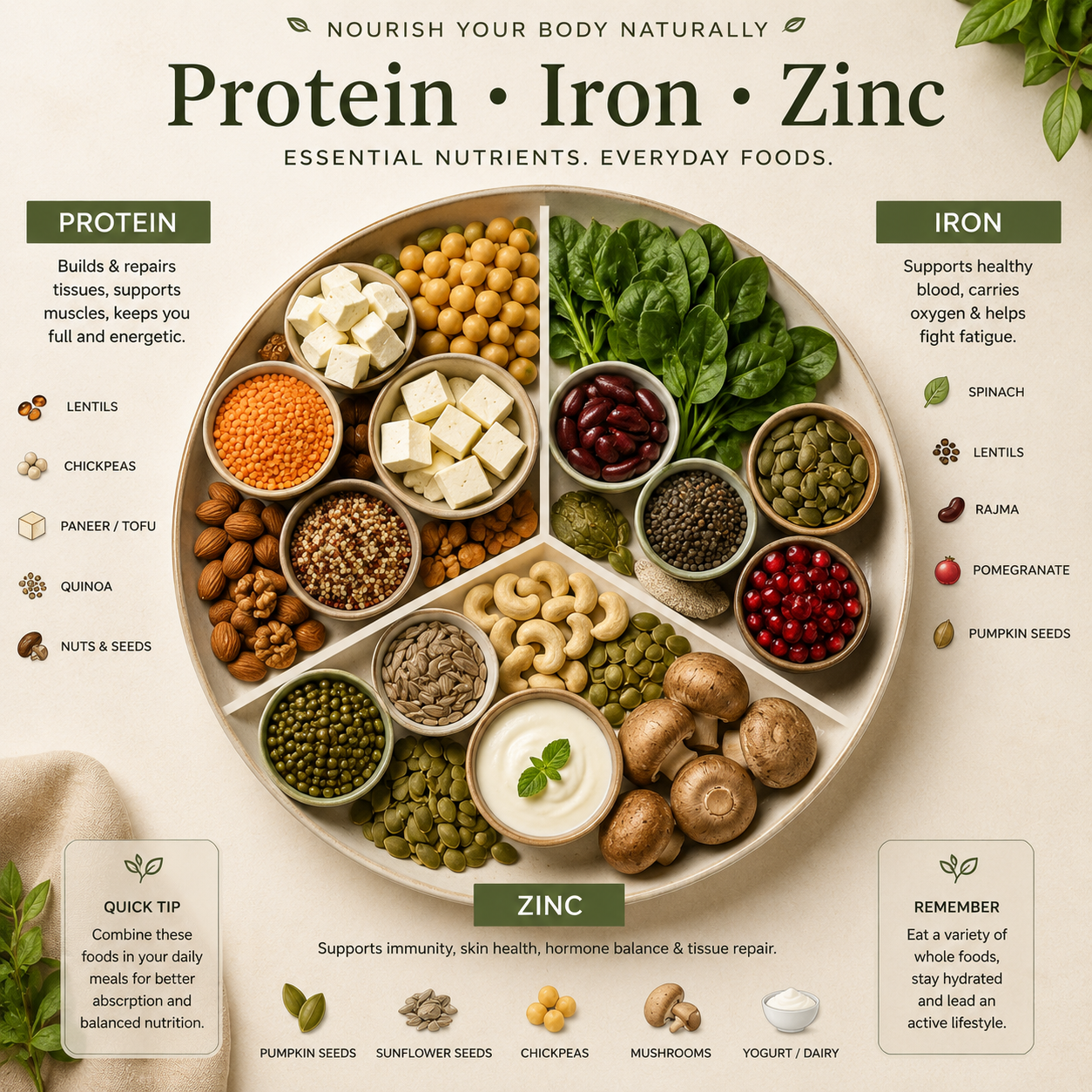
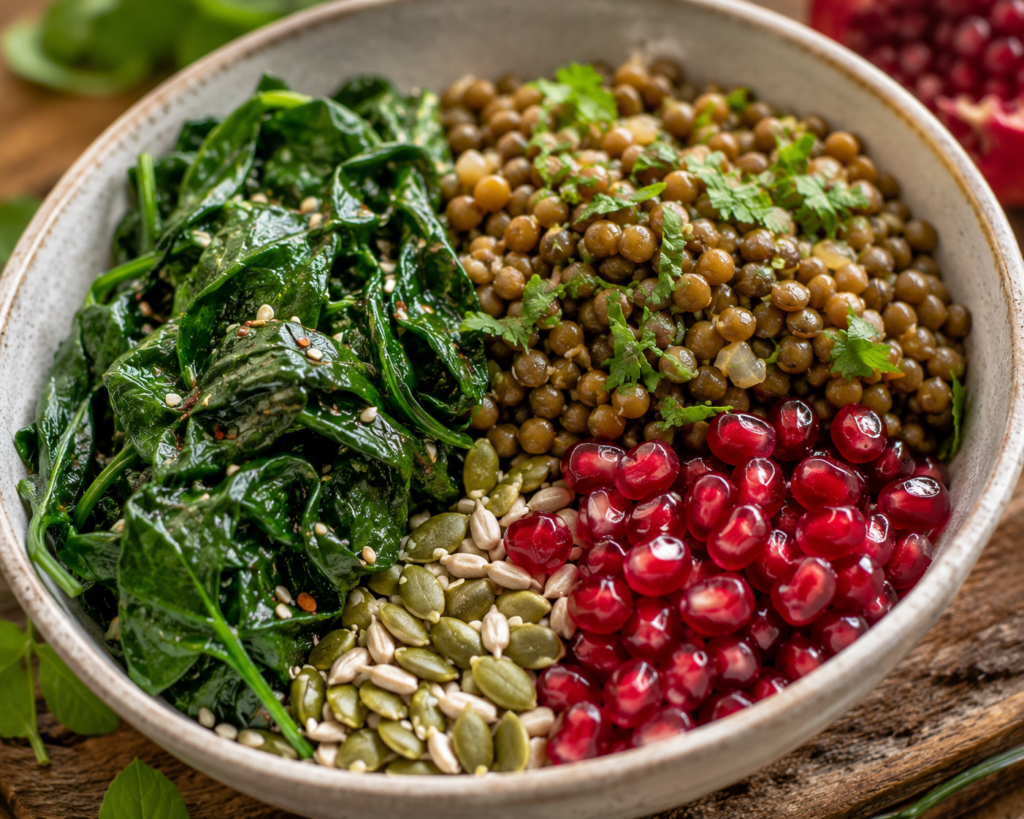
Low ferritin has repeatedly shown up in studies of women with chronic telogen effluvium, making iron-rich foods one of the strongest answers to what foods help reduce seasonal hair fall. Spinach, moringa leaves, jaggery, and pomegranate may help maintain healthy iron stores when eaten consistently. Quick tip: Pairing iron-rich foods with vitamin C, like amla or citrus, is one of the simplest ways to act on what foods help reduce seasonal hair fall.
3–4. Protein and Amino Acids for Keratin Production
Hair is almost entirely made of a protein called keratin, so inadequate protein intake can show up as weaker, more brittle strands during high-shedding months — which is why protein sources are near the top of any list answering what foods help reduce seasonal hair fall. Eggs, lentils, paneer, and moong dal are practical daily sources for most Indian diets. Quick tip: Aim to include a palm-sized protein source at both lunch and dinner during monsoon and autumn.
5. Zinc and Omega-3s for Scalp Health
Zinc supports the tissue-repair processes involved in hair follicle cycling, while omega-3 fatty acids are associated with scalp hydration and reduced dryness-related breakage. Pumpkin seeds, flaxseeds, walnuts, and fatty fish (or soaked chia seeds for a vegetarian option) are practical sources. Quick tip: A tablespoon of mixed seeds added to your morning breakfast is an easy, sustainable habit.
6–7. Vitamin C and Antioxidants for Follicle Nourishment
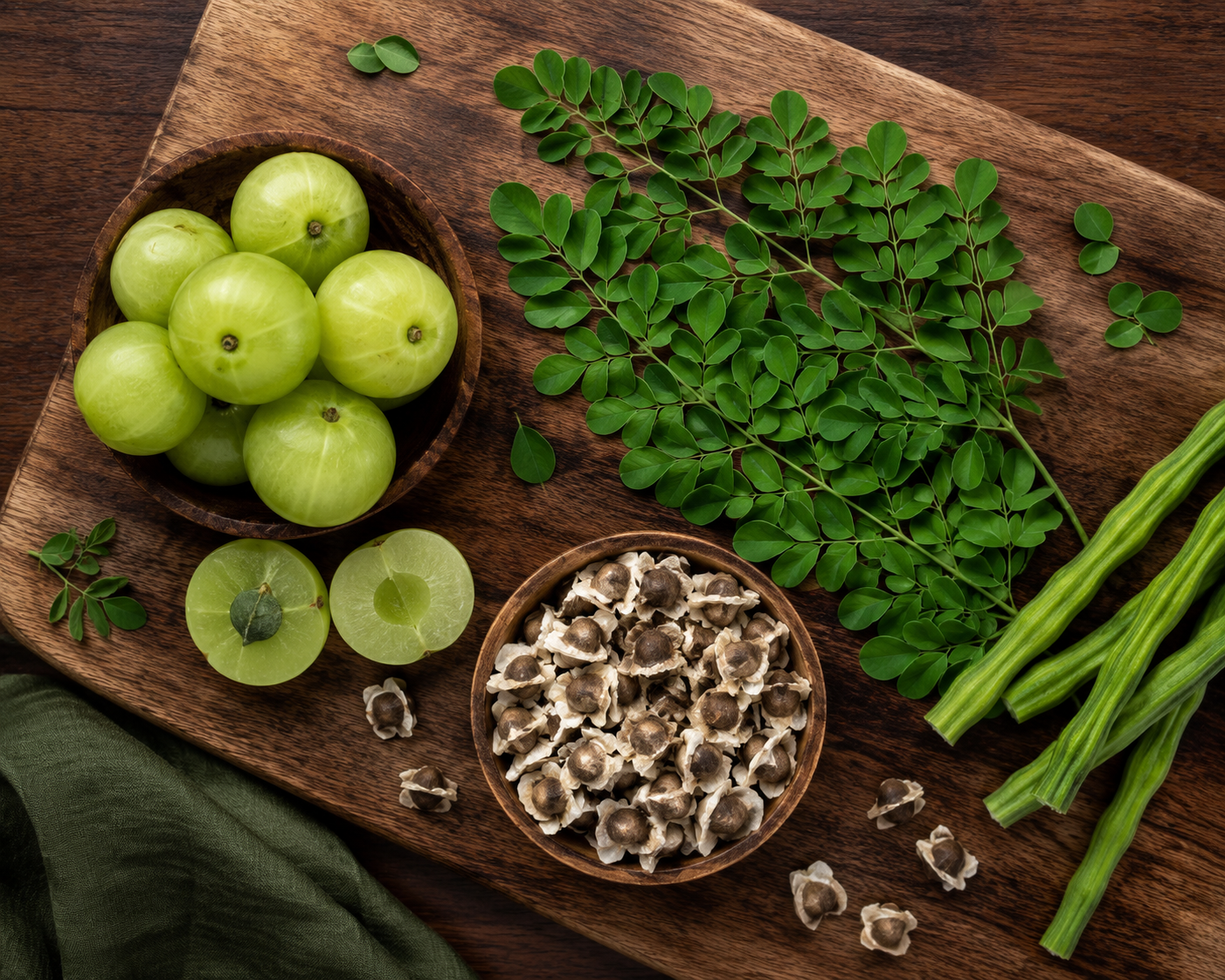
Vitamin C supports collagen formation around the hair follicle and helps the body absorb iron more efficiently — both relevant when you’re figuring out what foods help reduce seasonal hair fall during high-shedding months. Amla (Indian gooseberry) is one of the richest natural vitamin C sources and has a long Ayurvedic history as a hair-nourishing Rasayana food, and moringa leaves round out this pair as a second antioxidant-rich staple. Quick tip: A teaspoon of amla powder in warm water each morning is one of the easiest ways to act on what foods help reduce seasonal hair fall.
Who Should Pay Closest Attention to This?
If you’re dealing with PCOS, postpartum shedding, perimenopause, or a stressful exam or work season, nutrient-linked hair fall is more likely to be part of the picture, and what foods help reduce seasonal hair fall becomes a more meaningful question to answer. Women with PCOS often experience hormone-linked hair thinning, where balanced blood sugar and adequate protein can support overall hair health alongside medical care. Postpartum shedding is usually hormonal and self-resolving within months, but adequate iron and protein can support recovery. Perimenopausal women may benefit from paying closer attention to protein and healthy fats as estrogen shifts. High-stress periods, like exams, can deplete nutrient reserves faster, making consistent meals more important, not less.
Not ideal if…
- You suspect a diagnosed condition like thyroid dysfunction or anemia — food alone won’t address these; please consult a doctor.
- You are experiencing sudden, patchy (not diffuse) hair loss — this needs a dermatologist’s evaluation, not a dietary fix.
- You are pregnant or breastfeeding and considering herbal supplements — check with your doctor before adding any new botanicals.
How to Build These Foods Into Your Routine — Step by Step
When it comes to what foods help reduce seasonal hair fall, building nutrient-dense habits works better than chasing a single “miracle” food. Start with breakfast, since it’s the easiest meal to upgrade consistently.
- Morning: A teaspoon of Amla Powder in warm water, or added to smoothies, on an empty stomach.
- Breakfast: Eggs, moong dal chilla, or a moringa-leaf paratha for a protein-and-iron combination.
- Midday: A handful of mixed seeds (pumpkin, flax, sesame) sprinkled over salads or yogurt.
- Evening: A protein-forward dinner — dal, paneer, or fish — with a side of leafy greens.
Dos and Don’ts
| Do | Don’t |
|---|---|
| Combine iron-rich foods with vitamin C sources | Rely on tea/coffee right after iron-rich meals, which can block absorption |
| Give dietary changes 3–6 months before judging results | Expect a single meal or supplement to “fix” shedding overnight |
| Pair diet with a gentle scalp-care ritual | Skip protein at meals in the name of quick weight loss |
The 3-Minute Morning Ritual for Seasonal Hair Fall
★ A simple daily habit competitors rarely spell out step by step ★
Ingredients
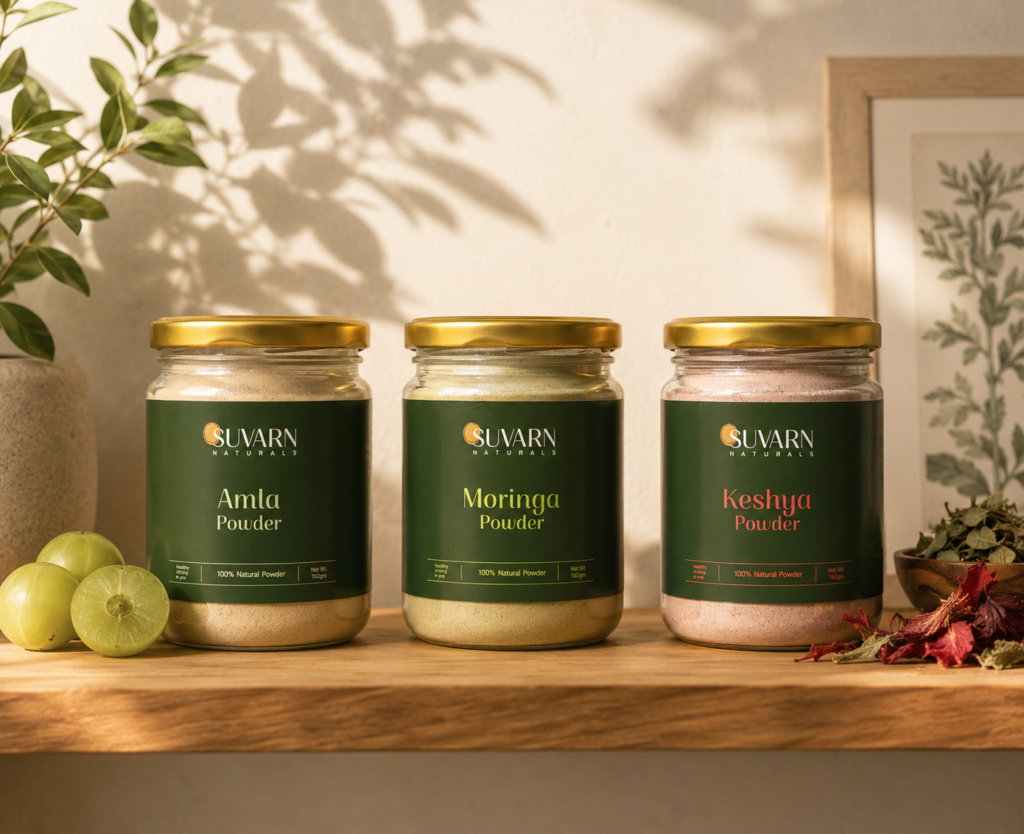
- 1 teaspoon Suvarn Naturals Amla Powder
- 1/2 teaspoon Suvarn Naturals Moringa Powder
- 1 glass of warm water or coconut water
Steps
- Stir the amla and moringa powders into warm water until dissolved.
- Drink on an empty stomach, first thing in the morning.
- Wait 20–30 minutes before eating breakfast, so nutrients absorb well.
Pro tip: On oil-massage days, follow this internal ritual with our Keshya Powder as a topical hair mask (for external use only) — many women in our community pair the two as a simple morning-and-evening hair care rhythm.
Show Image Suggested alt text: “amla and moringa morning ritual for seasonal hair fall”
Food-First Diet vs Other Hair Fall Options
| Metric | Whole-Food Diet (Amla, Moringa, Seeds) | Generic Biotin Capsules | Synthetic Hair-Growth Serums |
|---|---|---|---|
| Ease of use | Moderate — needs meal planning | High — one capsule daily | High — one application |
| Time to notice change | 3–6 months, gradual | Weeks, but often placebo-driven | 2–4 months |
| Suitability for sensitive skin/scalp | High | N/A (oral) | Can cause irritation in some |
| PCOS-friendliness | High — supports overall metabolic health | Neutral | Neutral |
| Approx. cost (monthly) | Low-moderate | Moderate | High |
No single option here “wins” outright when weighing what foods help reduce seasonal hair fall — a food-first approach builds a foundation, while topical care and medical guidance address specific concerns diet can’t reach alone.
Side Effects and Precautions
When exploring what foods help reduce seasonal hair fall, whole foods are generally safe for most people, but a few precautions are worth knowing. Amla in large quantities may cause mild acidity in sensitive stomachs — start with small amounts. Iron-rich foods should be moderated if you have a diagnosed iron-overload condition like hemochromatosis. Pregnant or breastfeeding women should check with their doctor before adding any new herbal powder in meaningful quantities, even food-based ones. If hair fall is sudden, patchy, or accompanied by scalp redness, itching, or bald patches, please see a dermatologist rather than relying on diet alone — these patterns can indicate conditions that need medical evaluation.
Myths and Mistakes Women Make About Seasonal Hair Fall Nutrition
- Mistake: Cutting carbs or fasting aggressively during a “hair fall phase.” Crash diets often worsen shedding by depriving follicles of energy and protein.
- Myth: “Natural” means unlimited. Even beneficial foods like amla should be used in moderate, consistent amounts, not overloaded.
- Mistake: Judging results after two weeks. Hair grows in cycles of months, so give any dietary change realistic time.
- Myth: If it’s not oil or shampoo, it doesn’t matter for hair. What foods help reduce seasonal hair fall is just as important — internal nutrition and external care work together, not separately.
- Mistake: Ignoring protein at breakfast. Many Indian breakfasts (poha, upma) are carb-heavy and protein-light — an easy, overlooked gap.
Notes From the Suvarn Naturals Founder
Healthy hair is influenced by many factors, including genetics, hormones, stress, nutrition, and daily hair care. While no single food can stop seasonal hair fall, understanding what foods help reduce seasonal hair fall through a balanced diet combined with a consistent hair care routine can help support healthy-looking hair throughout the year.
When we first started formulating our Amla and Moringa powders, we tested multiple sourcing regions before settling on ones with consistent nutrient density and minimal processing loss. In our lab, we noticed that stone-ground, low-heat drying preserved a noticeably fresher aroma and finer texture compared to standard market powders — small details that matter when you’re using something daily. We built these products to complement food, not replace it, because we believe real hair care starts on your plate and continues in your routine.
Frequently Asked Questions
Does seasonal hair fall stop on its own?
Yes, for most people, seasonal shedding is temporary and settles within a few weeks to a couple of months as the weather stabilizes and follicles resync.
Can amla alone stop hair fall?
Amla may support hair nourishment through its vitamin C and antioxidant content, but no single food works in isolation — it works best alongside protein, iron, and a consistent routine.
Is moringa good for hair fall?
Moringa leaves are rich in iron, protein, and vitamins, all of which are traditionally and nutritionally linked to supporting healthy-looking hair.
How long before diet changes show results in hair?
Most people notice a difference only after 3–6 months, since hair growth cycles are slow and shedding today reflects nutrition from months earlier.
Can PCOS cause seasonal hair fall to feel worse?
Yes, hormonal imbalances linked to PCOS can make hair more sensitive to seasonal and stress-related shedding triggers.
Should I take iron supplements for hair fall?
Only after testing — supplementing without a confirmed deficiency isn’t recommended and won’t necessarily help hair if your iron levels are already normal.
Does stress from exams or work worsen hair fall?
Yes, high stress can push more follicles into the resting phase, compounding seasonal shedding — nutrient-dense meals can help offset some of this load.
Are eggs good for hair fall?
Eggs are a practical protein source, and since hair is largely keratin, adequate protein intake is considered supportive of healthy hair structure.
What foods should I avoid during a hair fall phase?
Ultra-processed, low-protein meals and crash dieting are worth avoiding, as both can deprive hair follicles of the steady nutrition they need.
Is monsoon hair fall different from other seasonal shedding?
Monsoon shedding is often linked to increased scalp moisture, fungal activity, and humidity-related weakening of hair strands, alongside the general seasonal shift in follicle cycling.
Can I take Amla and Moringa powder together every day?
Many women use small daily amounts of both together, but it’s best to start with lower quantities and build up gradually, watching how your body responds.
Final Takeaway
Seasonal hair fall can feel alarming, but for most women, it’s a temporary, explainable pattern — not a sign that something is permanently wrong. Knowing what foods help reduce seasonal hair fall gives you a realistic, evidence-informed starting point: prioritize iron, protein, zinc, and vitamin C-rich foods like amla and moringa, be patient with timelines, and pair diet with a gentle external routine. If shedding feels unusual or severe, loop in a dermatologist. For everything else, small, consistent choices — at breakfast, at your desk, in your evening ritual — tend to add up. If you’d like a simple starting point, our Amla and Moringa Powders are designed to slot easily into that daily rhythm.
