
Which Suvarn Powder Should I Start With? 9 Best Picks for Women

Published: 09 July 2026 | By Suvarn Naturals Team
TL;DR
- Confused about which Suvarn Powder should I start with? Match the powder to your main concern, not the trend.
- Hair fall, dullness, or dandruff → start with Keshya Powder or Shikakai Powder.
- Dull, uneven skin or pigmentation → start with Orange Peel Powder or Rose Powder.
- PCOS, hormonal acne, or low energy → start with Moringa Powder or Amla Powder.
- Puffy eyes, stress, or dull complexion → try Blue Pea Flower or Hibiscus Powder.
- You don’t need every powder at once — one Suvarn Powder, used consistently for 4–6 weeks, tells you more than five used for a week each.
- Pro tip: pair your starter powder with our Keshya Powder hair ritual below for faster visible results.
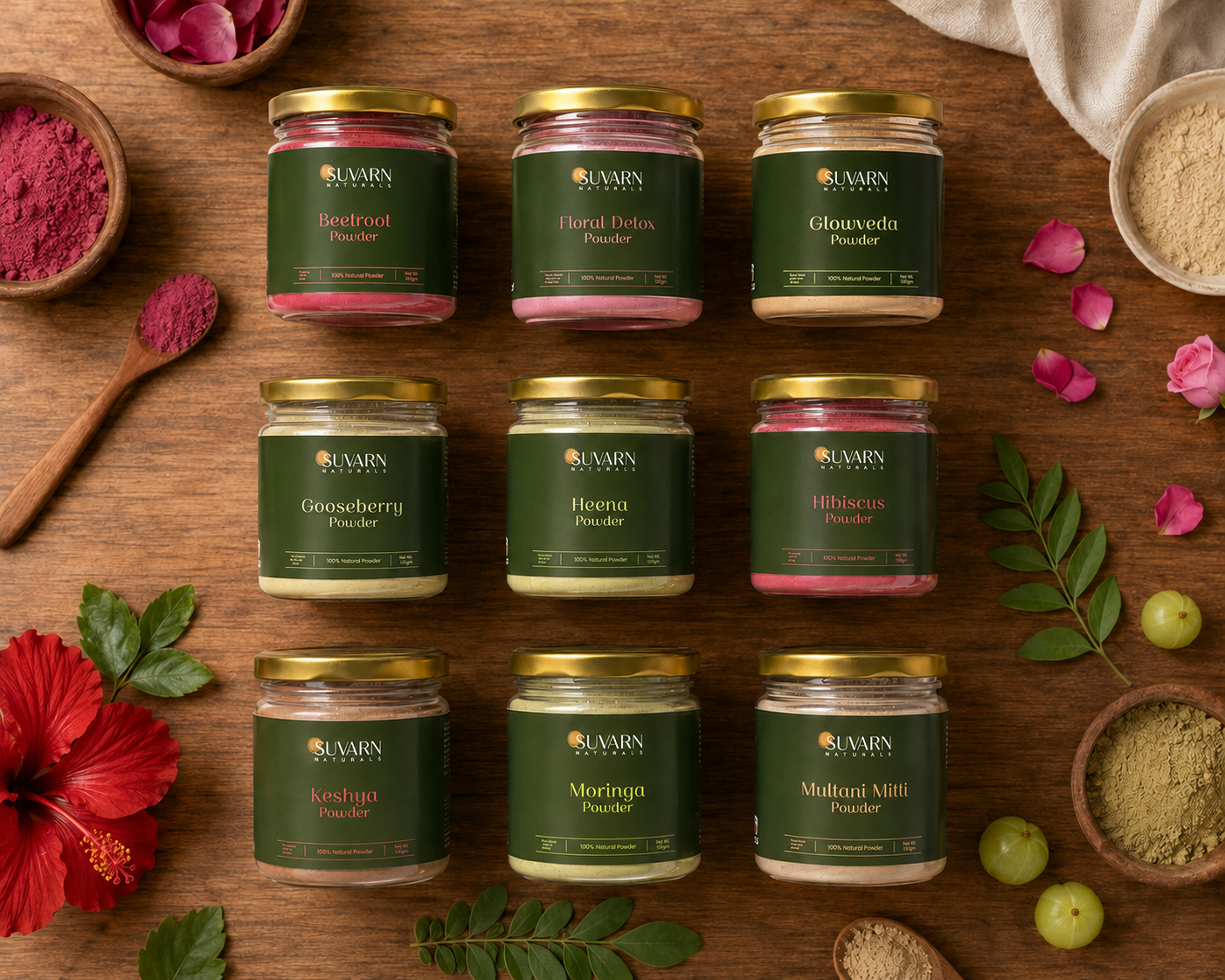
If you’ve stood in front of nine jars of herbal powder wondering where to even begin, you’re not alone. This is the single most Which Suvarn Powder Should I Start With? A Founder-Backed Guide
If you’ve stood in front of nine jars of herbal powder wondering where to even begin, you’re not alone. This is the single most common question we get at Suvarn Naturals. As of 09/07/2026, this guide walks you through exactly which Suvarn Powder to start with, based on your skin, hair, and hormonal goals — not on whichever powder is trending in your WhatsApp group this week.
What Is a Suvarn Powder?
A Suvarn Powder is a single-ingredient, sun-dried plant powder — like Amla, Moringa, or Hibiscus — traditionally used in Ayurveda for hair, skin, and daily wellness support. Each one is ground from a single botanical source, with no fillers.
In Ayurveda, a powder like this is often called a churna. Each herb is chosen for its effect on one or more doshas — Vata, Pitta, and Kapha — the three energies believed to govern body and mind.
Botanically, our range spans Phyllanthus emblica (Amla), Moringa oleifera (Moringa), Hibiscus rosa-sinensis (Hibiscus), and Acacia concinna (Shikakai), among others. Key constituents include vitamin C, polyphenols, and plant-based antioxidants.
According to the National Center for Complementary and Integrative Health (NCCIH), Ayurvedic herbs have been used for centuries, though rigorous clinical evidence is still developing for many of them. That’s why we hedge our claims and encourage you to start small.
The Science Behind Suvarn Powder: An Ayurvedic Perspective
A Suvarn Powder is traditionally believed to work by balancing your dominant dosha while supplying antioxidants that modern research links to scalp and skin health. Neither view claims an overnight fix — both point to consistent, gentle use.
In Ayurveda, hair and skin concerns are often traced to a Pitta or Vata imbalance — think excess heat (breakouts, premature greying) or dryness (frizz, flaking). Herbs like Rose and Hibiscus are traditionally used to cool Pitta, while Moringa and Amla are considered nourishing “Rasayana” herbs, meaning they’re traditionally used to slow tissue ageing.
Modern research is starting to test some of these traditional uses. A 2023 triple-blind randomised controlled trial published in the Journal of Ethnopharmacology found that an oral Amla-based product significantly increased the ratio of anagen (growth) to telogen (shedding) hair phases in women with female androgenetic alopecia, compared with placebo. This doesn’t mean Amla powder cures hair loss — but it does suggest the traditional use has some scientific grounding.
The common myth we want to challenge: that you should use every powder in a range together, right away, to see results faster. In reality, both Ayurveda and dermatology research suggest the opposite — one herb, used consistently, lets you and your skin or scalp actually register what’s working.
| Myth | Fact |
|---|---|
| More powders used together = faster results | Consistency with one Suvarn Powder for 4–6 weeks shows real change; layering many at once makes it hard to know what’s working |
| Natural means instant | Herbal powders traditionally support gradual balance, not overnight transformation |
| One powder suits every dosha or skin type | Ayurveda matches herbs to individual constitution (Prakriti); what suits your friend may not suit you |
Benefits of Suvarn Powder — Especially for Women
Hair fall and thinning
Hair fall linked to stress, PCOS, or postpartum hormonal shifts is one of the most common concerns we hear about. Keshya Powder and Shikakai Powder are traditionally used to strengthen the scalp and reduce breakage from the root.
Emerging research suggests some traditional hair-supporting herbs may inhibit 5-alpha reductase, an enzyme linked to hormonal hair thinning, though human studies remain limited.
Quick tip: apply your hair powder mask on unwashed, un-oiled hair for best absorption.
Dull or uneven skin tone
Orange Peel Powder is traditionally used for gentle brightening, thanks to its natural vitamin C content. Many women use it 2–3 times a week as a face pack.
Quick tip: patch-test first — citrus-based powders can increase sun sensitivity.
Hormonal skin and PCOS-related concerns
Moringa Powder and Amla Powder are traditionally used to support the body during hormonal fluctuations, including those linked to PCOS. Both are rich in antioxidants and vitamin C.
Quick tip: take Moringa powder in warm water first thing in the morning, on an empty stomach, if your doctor has cleared it for you.
Stress, mood, and energy
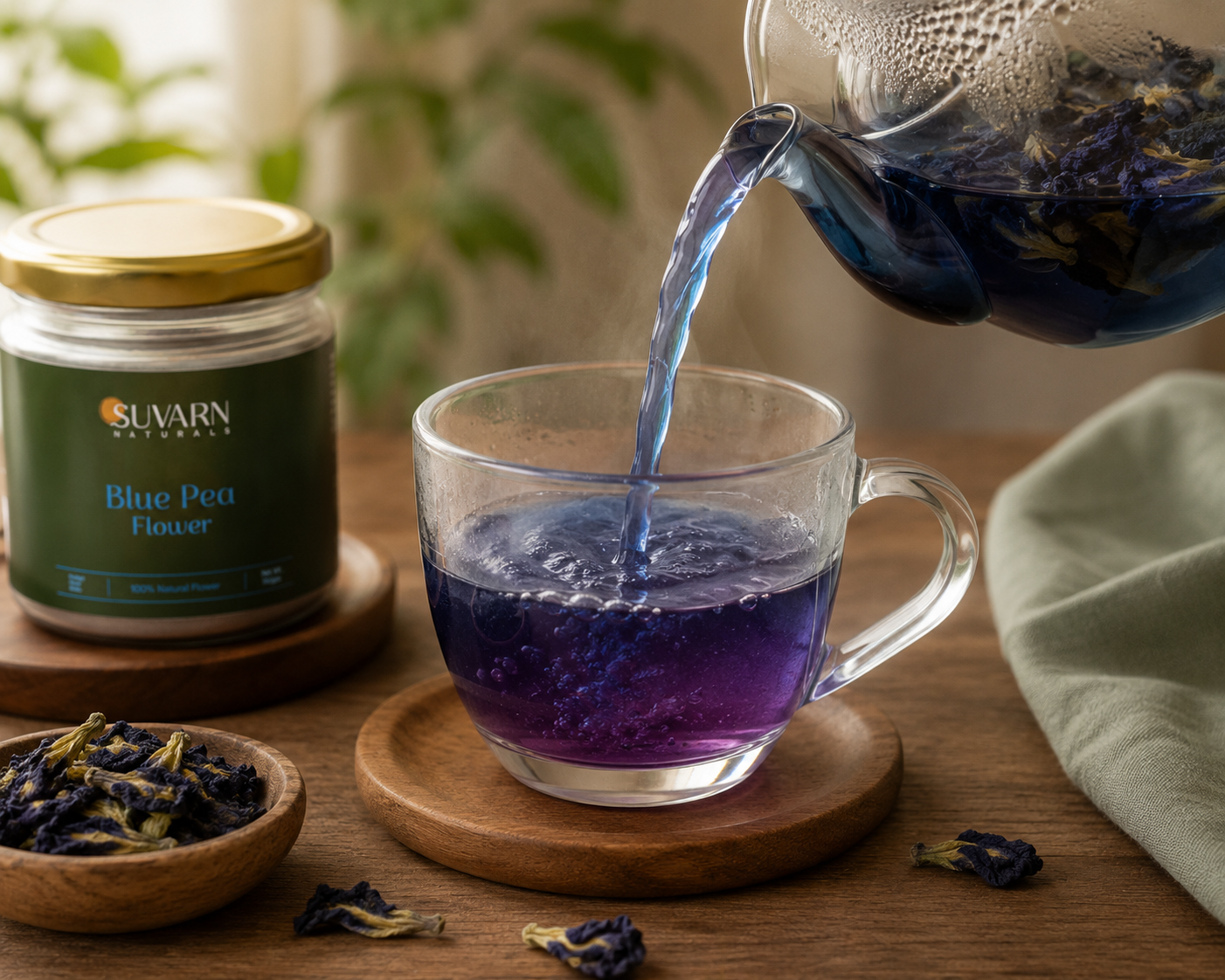
Blue Pea Flower is traditionally valued in Ayurveda as a calming herb, often taken as a tea. Many women use it during exam season or high-stress weeks.
Quick tip: steep it for 5 minutes — the water turns a vivid blue, a nice ritual cue that it’s “me time.”
Scalp and dandruff support
Neem Powder is traditionally used for its purifying properties, especially for oily or flaky scalps.
Quick tip: mix with a small amount of yogurt, not water alone, to reduce dryness after rinsing.
Who Should Start With Which Suvarn Powder?
- Dealing with PCOS-linked hair or skin changes? Start with Moringa Powder, and consider Amla Powder as your second product.
- Postpartum hair shedding? Keshya Powder is our most requested starting point for new mothers, once cleared by your doctor.
- Perimenopause and dull, thinning skin? Rose Powder is gentle and hydrating, a good first step.
- Exam stress or burnout? Blue Pea Flower as a tea is a light, low-commitment starting point.
- Oily scalp with dandruff? Neem Powder or Shikakai Powder are traditionally used first.
Not ideal if:
- You’re pregnant or breastfeeding — check with your doctor before starting any herbal powder.
- You have a known allergy to a specific plant family (for example, ragweed allergies and Hibiscus).
- You’re on blood-thinning or blood-sugar medication — some herbs may interact.
How to Use Suvarn Powder — Step by Step
Most Suvarn Powders can be used in three ways: as a paste (mixed with water, yogurt, or rose water), added to a drink, or taken as directed on the pack. Start with the smallest recommended amount and build up slowly.
As a general guide, topical hair and face packs are typically used 1–2 times a week, while ingestible powders like Moringa or Amla are often taken once daily. Always check your specific product label, as amounts vary by powder.
Morning use tends to suit ingestible powders like Moringa and Amla, while evening tends to suit topical hair and face masks, giving the pack time to sit before your next wash.
| Do | Don’t |
|---|---|
| Patch-test any new powder on your inner arm first | Don’t use citrus powders right before sun exposure |
| Start with one Suvarn Powder for 4–6 weeks | Don’t mix five new powders into your routine at once |
| Store in a cool, dry place, tightly sealed | Don’t add water to the whole jar — mix small batches |
The 3-Minute Suvarn Powder Ritual to Start Tonight
★ A simple starter ritual, whichever powder you’ve chosen ★
Ingredients
- 1 tablespoon of your chosen Suvarn Powder
- 2–3 tablespoons of water, rose water, or yogurt
- A wide-tooth comb or soft brush
Steps
- Mix your powder into a smooth, lump-free paste.
- Apply to clean, dry hair or skin, focusing on the area of concern.
- Leave on for 15–20 minutes while you unwind — this is your pause, not a chore.
- Rinse thoroughly with lukewarm water.
- Repeat 1–2 times weekly, same day each week, to build a habit you’ll actually keep.
Pro tip: mix your Orange Peel Powder with a spoon of Rose Powder for a gentler brightening pack if your skin runs sensitive.
Suvarn Powder vs Alternatives
| Metric | Suvarn Naturals Powder | Generic Herbal Powder | Herbal Capsule | Synthetic Alternative |
|---|---|---|---|---|
| Ease of use | Simple, ritual-based | Varies by brand | Very easy, no mixing | Very easy |
| Time to visible results | Typically 4–8 weeks | Varies, often unclear sourcing | Similar, but harder to dose topically | Often faster, but temporary |
| Skin type suitability | Wide range, single-ingredient control | Inconsistent purity | N/A (oral only) | Can irritate sensitive skin |
| PCOS-friendliness | Traditionally supportive, gentle | Depends on sourcing | Depends on formulation | Some can disrupt hormones further |
| Cost | Mid-range, long-lasting per jar | Often cheaper, lower purity | Mid-to-high | Varies widely |
No option here “cures” anything — this table compares convenience and traditional use, not guaranteed outcomes.
Side Effects and Precautions
Herbal powders are generally gentle, but they aren’t automatically risk-free just because they’re natural. Some people experience mild skin irritation, especially with citrus-based powders like Orange Peel.
If you’re pregnant or breastfeeding, speak with your doctor before starting any new Suvarn Powder, ingested or topical. Some herbs, including Moringa root (not leaf), are traditionally avoided in pregnancy.
If you’re on medication for blood pressure, blood sugar, or blood thinning, check with your doctor first, as some herbs may interact. The World Health Organization’s guidance on traditional medicine recommends discussing any herbal product with a qualified healthcare provider, especially alongside prescription medication.
See a doctor if: you notice a rash, swelling, or breathing difficulty after use, or if hair or skin symptoms worsen rather than improve after 6–8 weeks of consistent use.
Myths and Mistakes Women Make With Suvarn Powder
- “I’ll use all nine powders together for faster results.” This is the biggest mistake — it makes it impossible to know what’s actually helping.
- “If it’s natural, more is better.” Overusing any powder, including Amla or Neem, can dry out skin or scalp.
- “Results should show in a week.” Most traditional uses describe gradual change over 4–8 weeks, not days.
- “I don’t need to patch-test — it’s just a herb.” Plant allergies are real; always test first.
- “One friend’s routine will work identically for me.” Ayurveda specifically frames this as individual — your Prakriti isn’t your friend’s.
Notes From the Suvarn Naturals Founder
One of the questions we hear most often is, “Which product should I start with?” The answer depends on your personal goals. That’s why we created a range of herbal powders — so whether you’re looking for hair care, skincare, or daily wellness support, there’s a Suvarn Powder that fits your routine.
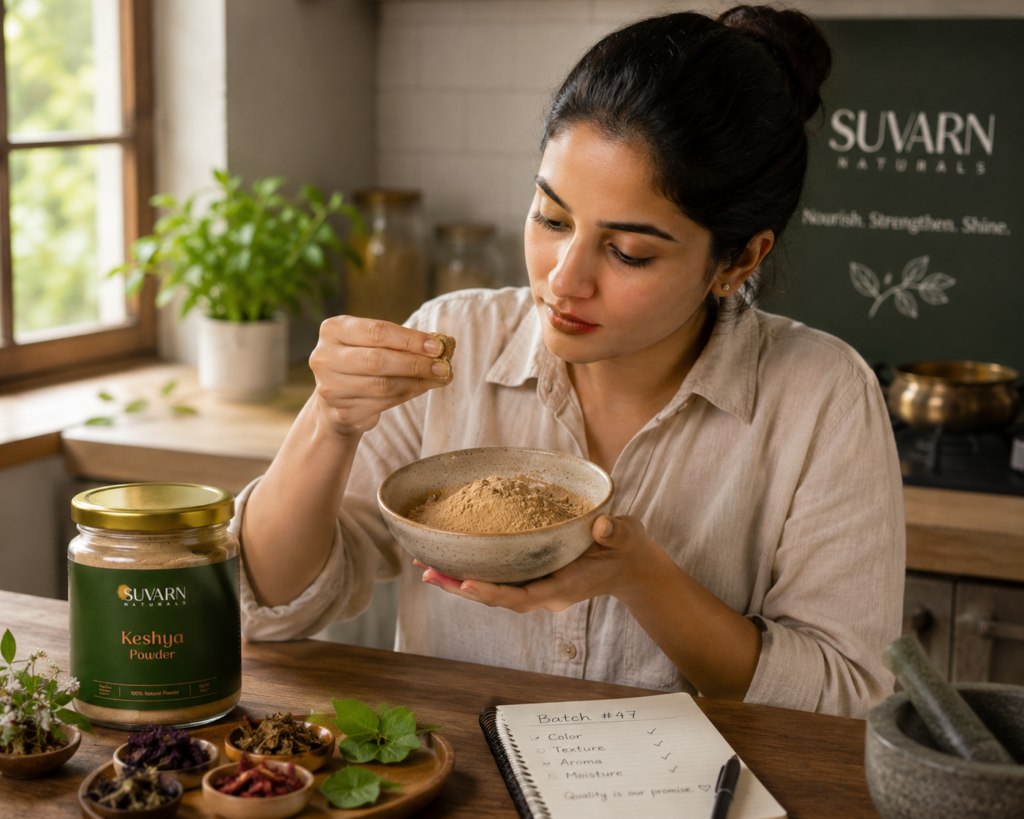
When I first started sourcing for Suvarn Naturals, I insisted on single-ingredient powders with no fillers, because that’s the only way you can actually tell what’s working for you. In our lab, we test every batch for texture and grind consistency — you should never feel grit in a face pack.
We also test scent carefully. A good Rose Powder should smell like the flower, not like a preservative. If a jar ever smells “off,” that’s your sign to stop using it and reach out to us.
Frequently Asked Questions
Is it safe to start with more than one Suvarn powder at once?
It’s possible, but we recommend starting with one for 4–6 weeks. This makes it easier to tell which powder is actually helping your specific concern.
Which Suvarn powder is best for PCOS-related hair fall?
Moringa Powder and Amla Powder are traditionally used to support hormonal balance and hair strength, though individual results vary and a doctor’s input is recommended.
Can I use Suvarn powders during pregnancy?
Some are traditionally avoided during pregnancy. Please check with your doctor before starting any new herbal powder while pregnant or breastfeeding.
How long before I see results from Keshya Powder?
Most women report noticing texture changes around 4–8 weeks of consistent, twice-weekly use, though this varies by individual.
Do I need to refrigerate herbal powders?
No, but store them in a cool, dry, airtight container away from direct sunlight to preserve potency.
Can Orange Peel Powder lighten my skin permanently?
No product can promise permanent skin lightening. Orange Peel Powder is traditionally used for gentle brightening, not permanent tone change.
Is Blue Pea Flower the same as regular tea?
No — it’s a caffeine-free herbal infusion, traditionally used for its calming properties, unlike black or green tea.
What’s the difference between Shikakai and Keshya Powder?
Shikakai is a single-ingredient powder traditionally used as a gentle cleanser, while Keshya is a blend formulated specifically for hair strength and scalp support.
Can teenagers use these powders?
Generally yes for gentle powders like Rose, but we recommend checking with a parent or doctor first, especially for hormone-supportive powders like Moringa.
Will these powders replace my dermatologist visits?
No. Herbal powders are a wellness addition, not a replacement for medical care, especially for diagnosed skin or hormonal conditions.
Final Takeaway
Choosing which Suvarn powder should I start with doesn’t need to be complicated. Start by naming your main concern — hair, skin, or stress — then pick the one powder that matches it, not the whole shelf.
Give it 4–6 weeks of consistent, twice-weekly use before judging results. From there, you can build a small, sustainable routine, one powder at a time. If you want a next step, our Best Herbal Powder for Hair guide breaks this down further for hair-specific concerns.