
How to Get Rid of Blackheads Naturally: A Woman’s Ayurvedic Guide

Published: 19 August 2026 | By Suvarn Naturals Team
TL;DR — Quick Summary
Blackheads form when a pore’s opening stays open while sebum and dead skin oxidise and turn dark — they aren’t “dirt,” they’re oxidised oil.
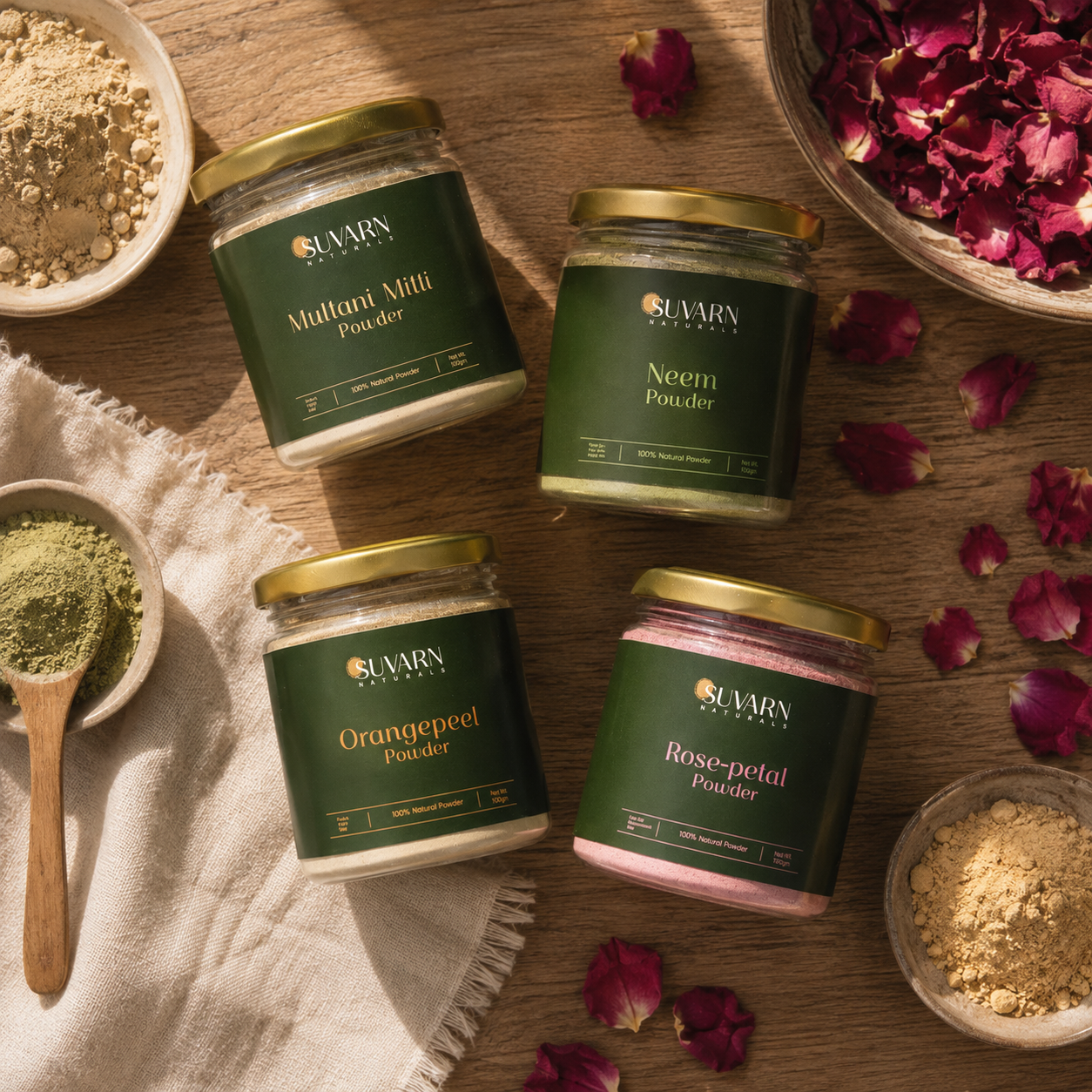
Multani Mitti (Fuller’s Earth) draws out excess sebum and loosens debris sitting in the pore lining, while Neem Powder brings traditional antibacterial support.
Orange Peel Powder offers mild vitamin C and natural AHAs that support gentle exfoliation, and Rose Powder calms and tones after a clay treatment.
Hormonal shifts — PCOS, perimenopause, stress, exam season — can all increase sebum output and worsen blackheads.
A weekly clay-based ritual, done consistently for 6–8 weeks, tends to show more visible results than a single “miracle” treatment.
Curious which combination fits your skin? Suvarn Naturals’ herbal powders are designed to be mixed fresh at home, based on your skin type.
Clear Skin With How to Get Rid of Blackheads: An Ayurvedic Guide
You’ve scrubbed, you’ve squeezed (we don’t recommend it), and those little dark dots on your nose just keep coming back. If you’ve searched “how to get rid of blackheads” at 11pm scrolling on your phone, you’re not alone — this is one of the most common skin concerns Indian women bring up in wellness groups. This guide walks through how to get rid of blackheads by blending what modern dermatology understands with what Ayurveda has used for generations, so you can build a routine that actually respects your skin.
What Are Blackheads?
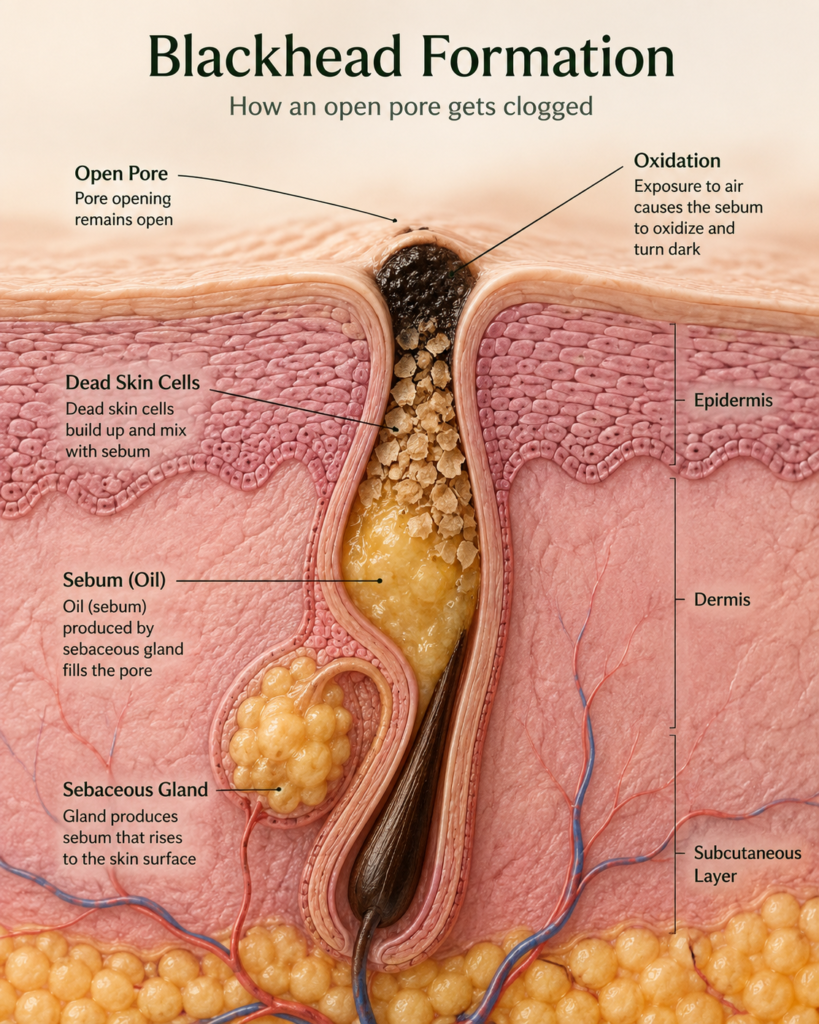
Blackheads are open, clogged pores where trapped sebum and dead skin cells oxidise on contact with air, turning the plug dark. They aren’t caused by dirt sitting on the skin — they’re a build-up problem happening inside the follicle, and understanding this is the real first step in learning how to get rid of blackheads for good.
In Ayurveda, this concern is generally understood through the lens of excess Kapha and aggravated Pitta in the skin tissue (twacha), where sluggish sebaceous flow and heat combine to block pores. The clinical term is comedones — specifically open comedones, distinct from the closed, skin-coloured “whiteheads.” According to the American Academy of Dermatology, key players involved are sebum, keratinocytes (dead skin cells), and the bacterium Cutibacterium acnes, which can worsen inflammation once a pore is blocked.
The Science and Ayurvedic Perspective on How to Get Rid of Blackheads
Blackheads form through a specific mechanical process: a hair follicle’s opening widens, sebum and dead cells accumulate inside it, and the exposed plug oxidises to a dark colour on contact with oxygen — it is not, despite popular belief, caused by dirty skin.
Modern dermatology traces this back to four overlapping factors: excess sebum production, a build-up of dead keratinocytes that don’t shed properly, hormonal signalling (especially androgens), and bacterial colonisation. Ayurveda frames the same picture differently — as a Kapha-Pitta imbalance disturbing the skin’s natural cleansing rhythm, often worsened by ama (metabolic toxins) reaching the skin through diet, stress, or poor digestion. The NCCIH’s overview of Ayurvedic medicine notes that this dual framework — modern mechanism plus traditional dosha theory — is common ground for many Ayurveda-informed skincare approaches today.
Where the two systems agree is on management: reduce excess oil, keep the pore lining clear, and calm inflammation, rather than trying to “dissolve” the blackhead in one sitting. This overlap is exactly why so many women find that learning how to get rid of blackheads works best when it borrows from both traditions rather than picking just one.
Myth vs Fact: How to Get Rid of Blackheads
| Myth | Fact |
|---|---|
| Blackheads are caused by dirty, unwashed skin | They’re oxidised sebum and dead skin trapped in a pore — even well-cleansed skin gets them |
| Squeezing or using pore strips permanently clears blackheads | These give temporary results and may stretch the pore, making it refill faster |
| Only oily skin gets blackheads | Combination and even dry skin around the T-zone can develop them, especially with hormonal shifts |
Benefits of Learning How to Get Rid of Blackheads — Especially for Women
Blackheads respond to a mix of oil control, gentle exfoliation, and consistency — and for women, hormonal fluctuations from PCOS, periods, or perimenopause often make how to get rid of blackheads a moving target rather than a one-time fix.
Oil Balance Without Over-Stripping
Traditional clay-based ingredients like Multani Mitti are valued in Ayurveda for absorbing excess sebum without the harsh, tight, over-dried feeling synthetic astringents can leave behind — a gentler answer to how to get rid of blackheads than harsh scrubs. Quick tip: Use clay masks 1–2 times a week, not daily — over-use may dry the skin and trigger a rebound in oil production.
Support During Hormonal Shifts
Research suggests that androgen-driven sebum increases around ovulation, PCOS flare-ups, or perimenopause can make pores appear more congested than usual. Quick tip: Track your skin alongside your cycle — many women notice a predictable “blackhead week” they can plan a clay ritual around.
Traditional Antibacterial Support
Neem has traditionally been used in Ayurveda for its cleansing properties, and modern lab research, including a 2022 review in Frontiers in Pharmacology, has looked at neem leaf extracts for their activity against acne-associated bacteria — one reason it’s a recurring answer whenever women ask how to get rid of blackheads the traditional way. Quick tip: Patch-test neem powder mixes first — its potency can feel strong on sensitive facial skin.
Gentle Brightening Alongside Clearer Pores
Orange peel powder is traditionally used for its mild vitamin C and citrus AHA content, which may support gentle surface exfoliation alongside oil control — a softer piece of the how to get rid of blackheads puzzle for women who find clay alone too drying. Quick tip: Avoid direct sun exposure right after using citrus-based powders — always follow with SPF the next morning.
Calming the Skin Barrier Post-Treatment
Rose powder is traditionally valued in Ayurveda as a cooling, Pitta-pacifying ingredient, often used to soothe skin after a purifying clay treatment. Quick tip: Mix rose powder into your clay mask itself, not just as an aftercare step, for a gentler overall experience.
Who Should Follow This Routine to Get Rid of Blackheads?
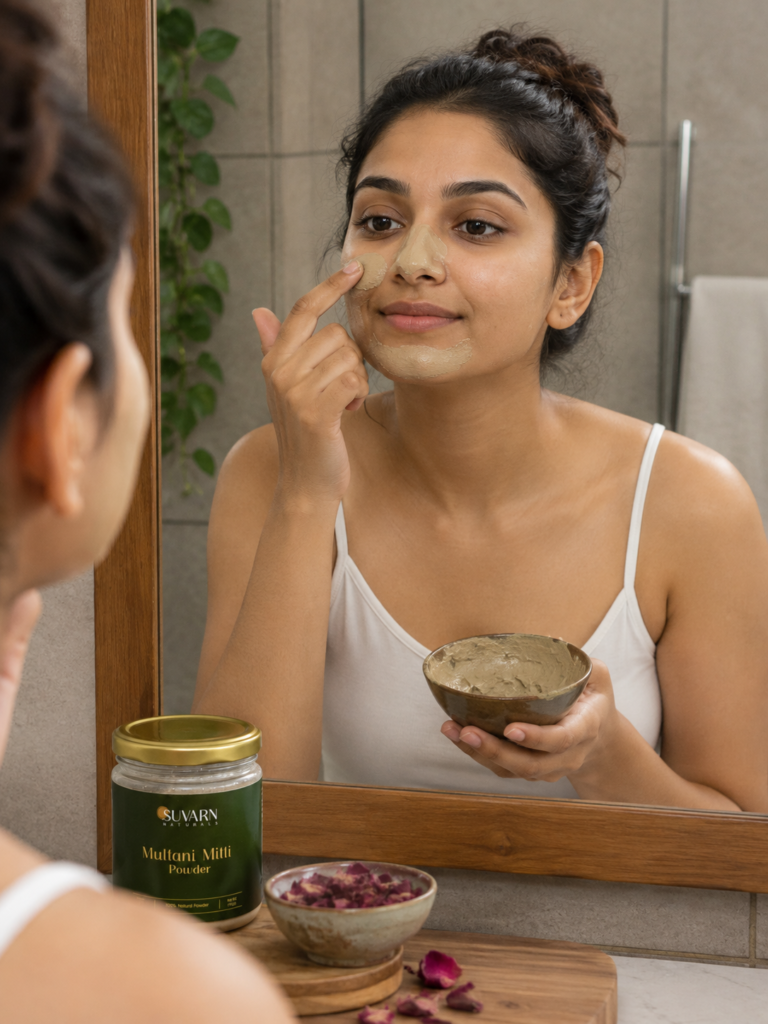
This how to get rid of blackheads routine is best suited to women managing recurring congestion linked to oily or combination skin, PCOS, postpartum hormonal shifts, perimenopause, or stress-related breakouts around exams or deadlines.
If you’re postpartum and noticing new congestion as your hormones resettle, a once-weekly gentle clay mask (skip if breastfeeding and applying near the chest area) can slot into an already-busy routine. If you’re managing PCOS-related oiliness, a twice-weekly Multani Mitti and Neem combination is often the most effective natural way to learn how to get rid of blackheads, alongside your dermatologist’s guidance. Perimenopausal skin, which can swing between dry and oily, usually does better with clay diluted in rose water rather than plain water.
Not ideal if:
- You have active eczema, rosacea, or broken/inflamed skin
- Your skin is very dry or sensitised right now
- You’re using strong prescription retinoids or acids the same week
- You’ve had a known allergy to any clay, citrus, or neem-based product before
How to Get Rid of Blackheads — Step by Step
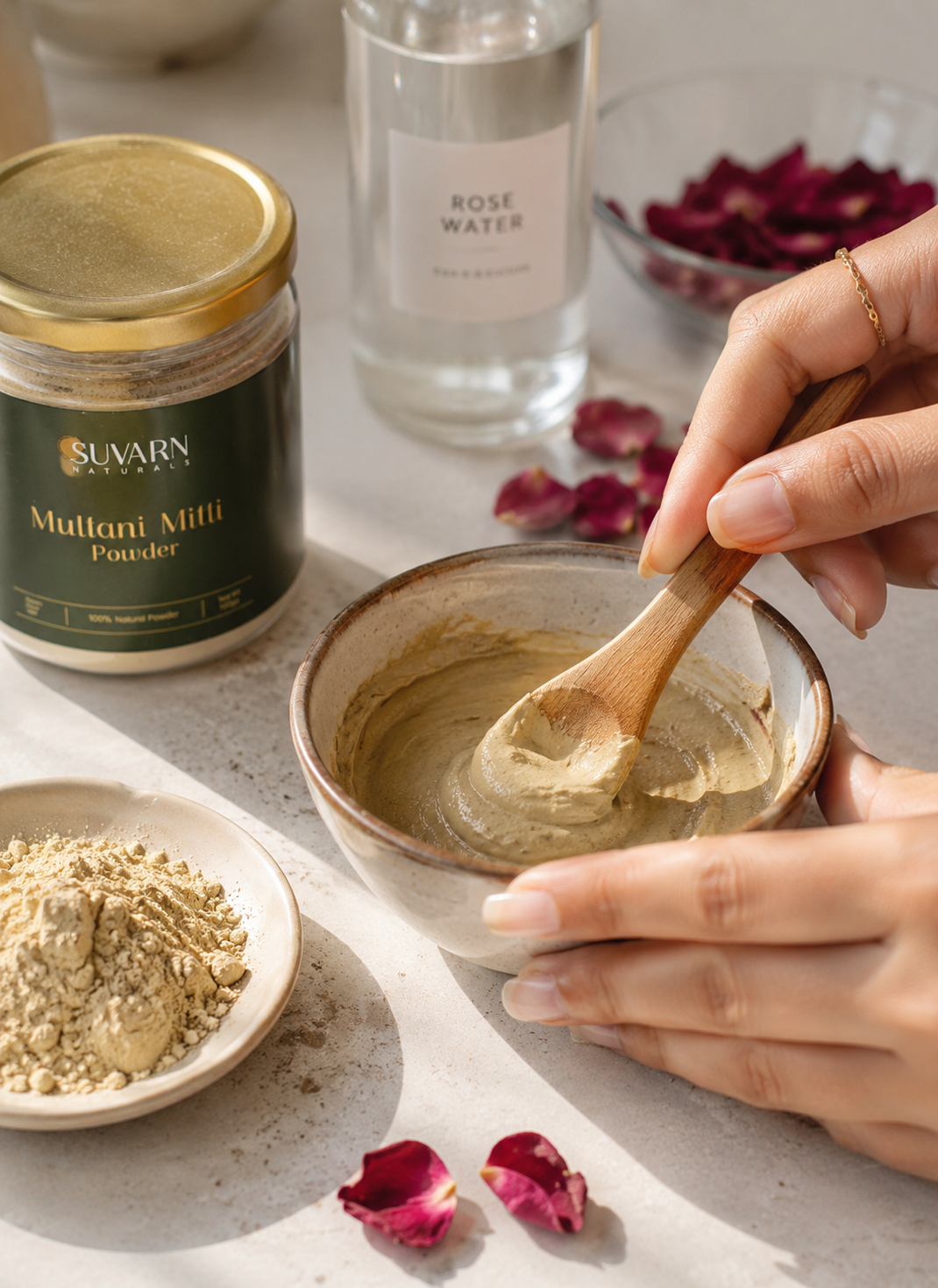
Start with a clean face, mix your chosen herbal powder with a liquid like rose water or plain water into a smooth paste, apply a thin even layer avoiding the eye area, and rinse off before it fully hardens and cracks. This is the core routine most women need when they’re figuring out how to get rid of blackheads at home.
Dosage and timing: Traditionally, clay-based masks are used in the late afternoon or early evening, when skin is thought to be most receptive. Start with once a week and observe how your skin responds before increasing frequency.
Three formats to consider:
- Powder mask — Multani Mitti or Neem Powder mixed fresh with water or rose water
- Powder scrub — Orange Peel Powder mixed with a few drops of water for gentle manual exfoliation
- Powder + carrier oil spot paste — a small amount applied only to the nose and chin for targeted use
| Do | Don’t |
|---|---|
| Patch test on your inner arm 24 hours before facial use | Don’t leave clay masks on until they crack completely — this over-dries skin |
| Mix fresh each time, no preservatives needed | Don’t reuse leftover wet paste the next day |
| Follow with a light, fragrance-free moisturiser | Don’t apply straight after waxing, threading, or exfoliating acids |
| Use lukewarm water to rinse | Don’t use hot water, which strips natural oils further |
The 3-Minute Ritual for How to Get Rid of Blackheads
Unique to this guide — a specific, repeatable evening ritual for how to get rid of blackheads.
Ingredients
- 1 tsp Suvarn Naturals Multani Mitti Powder
- ½ tsp Suvarn Naturals Neem Powder
- 2–3 tsp rose water (or plain water)
- A pinch of Suvarn Naturals Rose Powder for the finish
Steps
- Cleanse your face with a mild, fragrance-free cleanser and pat dry.
- In a small bowl, mix the Multani Mitti and Neem Powder with rose water until it forms a smooth, spreadable paste.
- Apply a thin, even layer across the nose, chin, and forehead — the areas where blackheads tend to cluster.
- Leave on for 8–10 minutes, until just slightly tacky (not fully dry and cracking).
- Rinse off gently with lukewarm water, using circular motions with your fingertips.
- Pat dry and dust a light layer of Rose Powder mixed with a drop of water over the skin as a calming finish.
Pro tip: on nights your skin feels drier than usual, swap in our Orange Peel Powder once a week instead of neem — it’s gentler while still offering mild exfoliation.
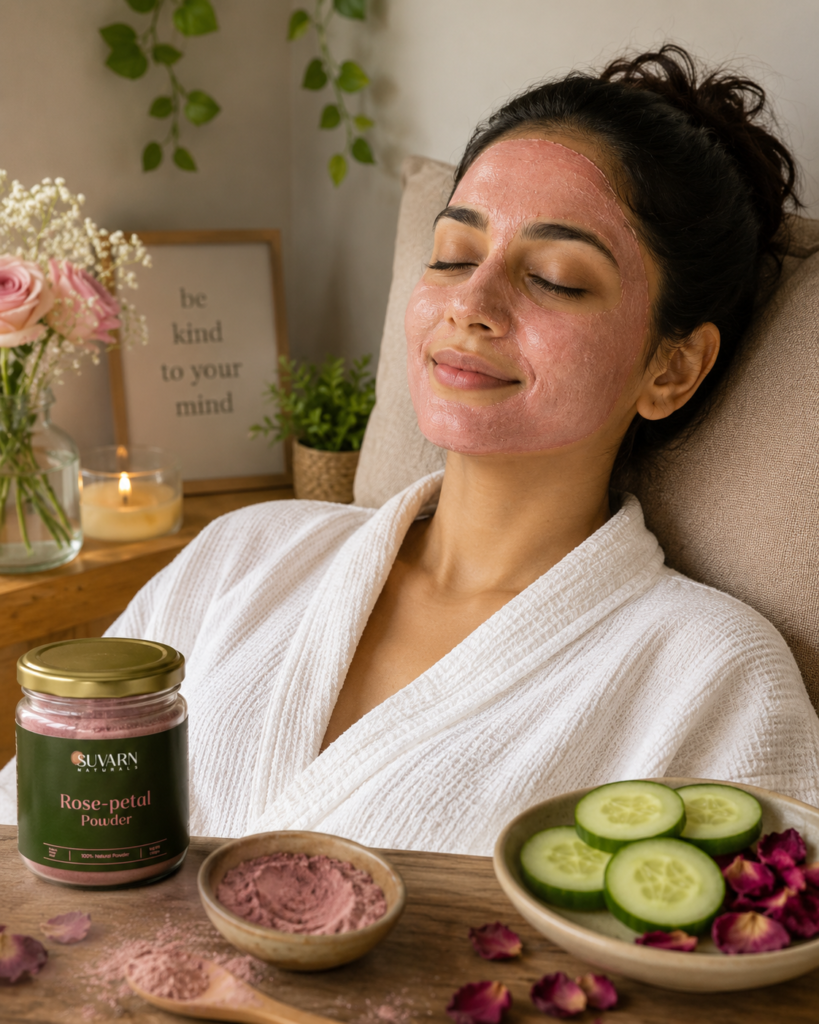
How to Get Rid of Blackheads: Comparing Your Options
Not every method of how to get rid of blackheads works the same way — here’s how the natural route stacks up against common alternatives.
| Metric | Suvarn Naturals Herbal Powders | Generic Clay Powder | Store-Bought Capsules | Synthetic Pore Strips |
|---|---|---|---|---|
| Ease of use | Simple, mix-at-home ritual | Simple, but sourcing quality varies | Very easy, no mixing | Very easy, single-use |
| Time to visible results | 6–8 weeks with consistent use | Varies by purity | Varies widely | Immediate but temporary |
| Skin type suitability | Customisable by skin type via mixing ratio | Often one-size-fits-all | Not adjustable | Best for oily skin only |
| PCOS-friendliness | Can be layered into a hormone-aware routine | Unclear sourcing, harder to trust | Depends on formulation | Doesn’t address root oiliness |
| Cost (per use) | Moderate, reusable pack | Often lower, but variable quality | Moderate to high | Low per strip, adds up over time |
Side Effects and Precautions
Any natural approach to how to get rid of blackheads still deserves caution: Multani Mitti, Neem, Orange Peel, and Rose powders are generally considered low-risk when used topically and in moderation, though individual sensitivities can vary.
Overuse of clay-based masks may over-dry the skin, especially in dry or sensitive skin types. Citrus-based powders like orange peel can increase sun sensitivity, so daytime SPF is important after use. If you are pregnant or breastfeeding, patch test any new ingredient and avoid strong citrus or neem concentrations near the chest area, and check with your doctor if unsure. There are no well-documented drug interactions with topical use of these powders, but anyone on prescription topical acne treatments (like retinoids or benzoyl peroxide) should space out use to avoid over-exfoliating the skin barrier.
When to see a doctor: If blackheads are accompanied by painful cystic bumps, sudden hormonal changes, hair thinning, or irregular periods, it’s worth speaking to a dermatologist or gynaecologist — these can be signs of an underlying hormonal pattern worth investigating properly.
Myths and Mistakes Women Make When Trying to Get Rid of Blackheads
A few habits quietly undo good skincare intentions — here’s what tends to trip women up most when they’re trying to figure out how to get rid of blackheads fast.
- Believing squeezing “gets it all out.” It rarely does, and it often pushes debris deeper, worsening inflammation.
- Using pore strips as a weekly habit. These can stretch pores over time, making them look larger and refill faster.
- Skipping moisturiser after a clay mask. This is the biggest mistake — clay is drying by design, and skipping hydration afterward can trigger more oil production to compensate.
- Assuming one product will “cure” blackheads. This is the oversimplification most articles repeat — blackheads are a maintenance concern, not a one-time fix, and consistency matters more than intensity.
- Ignoring the hormonal angle. Many women treat blackheads purely as a cleansing issue and miss that cycle-related or PCOS-related oil surges need a slightly different rhythm of care.
Notes From the Suvarn Naturals Founder
At Suvarn Naturals, we believe skincare doesn’t have to be complicated. We wanted to make traditional herbal powders simple and convenient to include in everyday skincare routines, while keeping the ingredients natural and easy to understand.
When I first tested our Multani Mitti formulation, what stood out was the texture — fine enough to mix into a smooth paste without grit, but still absorbent enough to actually pull oil from the skin. In our lab, we noticed that sourcing quality clay made a visible difference in how the paste dried on skin: a slower, gentler dry meant less tightness and less redness for testers with sensitive skin. That’s the standard we hold every batch to — natural, single-ingredient powders, tested for texture and purity, with nothing hidden in the ingredient list, because we built these formulations around real questions women ask us about how to get rid of blackheads.wders, tested for texture and purity, with nothing hidden in the ingredient list.
Frequently Asked Questions
1. How long does it take to see results when learning how to get rid of blackheads naturally?
Most women notice visibly less congestion after 6–8 weeks of consistent, once- or twice-weekly use, a timeline broadly consistent with skin-cycle guidance from the American Academy of Dermatology. Skin renewal cycles take time, so results build gradually rather than overnight.
2. Can Multani Mitti be used every day?
It’s not recommended. Daily use can over-dry skin and disrupt its natural oil balance. Once or twice a week is generally considered sufficient for most skin types.
3. Is Multani Mitti safe during pregnancy?
Topical use is generally considered low-risk, but it’s best to patch test first and consult your doctor, especially if you have sensitive or reactive skin during pregnancy.
4. Why do I get more blackheads before my period?
Hormonal shifts, particularly a rise in androgens in the luteal phase, may increase sebum production, which can make pores look more congested in the days before your period starts.
5. Can PCOS make blackheads worse?
Yes. PCOS is associated with higher androgen levels, which can increase oil production and pore congestion. A consistent, gentle routine alongside medical guidance for PCOS itself tends to help most.
6. Does orange peel powder lighten skin or just help with blackheads?
Orange peel powder is traditionally used for mild brightening and gentle exfoliation due to its vitamin C and citrus AHA content, but it isn’t a substitute for treating pigmentation medically if that’s your primary concern.
7. Should I use neem powder if I have sensitive skin?
Neem can be intense for sensitive skin. Start with a diluted mix — a smaller ratio of neem to Multani Mitti or rose powder — and always patch test first.
8. Can I combine Multani Mitti and Neem Powder in one mask?
Yes, this is a common traditional combination. Start with more Multani Mitti and less neem if you’re new to it, then adjust based on how your skin responds.
9. Do blackheads ever go away permanently?
Since blackheads form from an ongoing biological process (oil production and skin cell turnover), they aren’t something you clear once and forget. Consistent care manages them long-term rather than eliminating them for good.
10. What’s the biggest mistake women make when trying to figure out how to get rid of blackheads fast?
Over-treating skin in a rush — combining too many active ingredients (acids, clay, and scrubs) in the same week — often backfires with irritation and rebound oiliness instead of clearer pores.
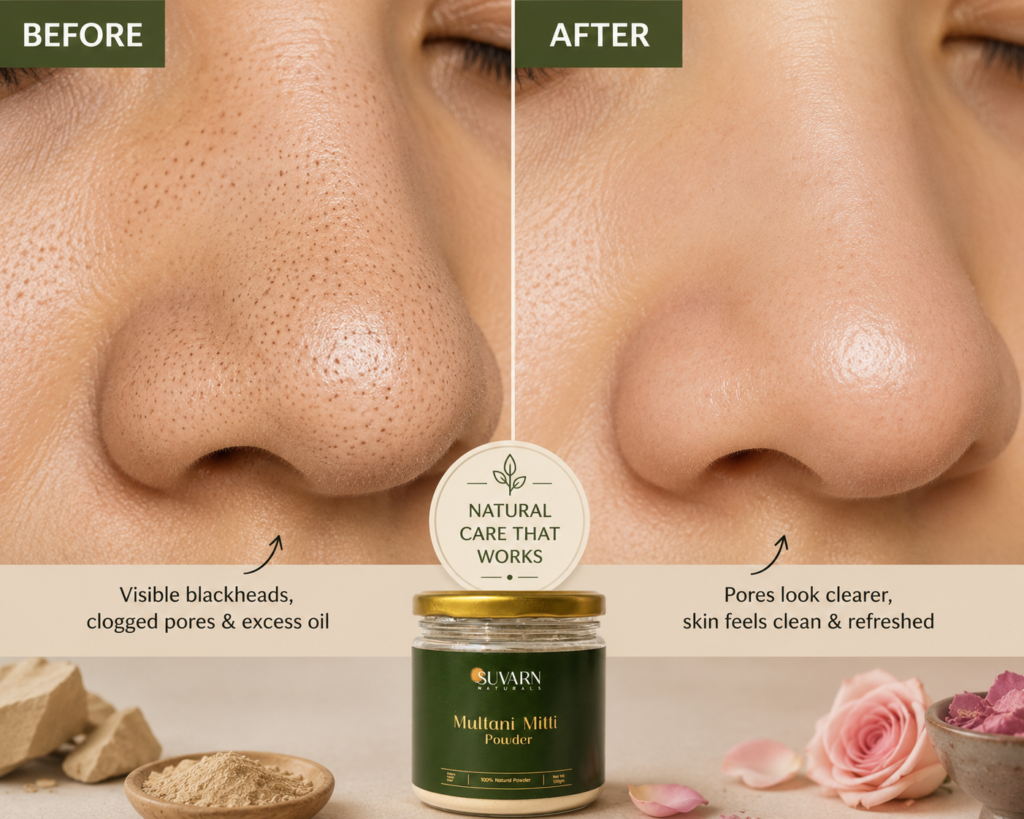
Final Takeaway: How to Get Rid of Blackheads for Good
Blackheads aren’t a sign your skin is “dirty” or that you’re doing something wrong — they’re a normal part of how oily and combination skin behaves, especially when hormones are involved. The women who finally figure out how to get rid of blackheads usually aren’t the ones chasing the most intense product; they’re the ones who build a simple, consistent ritual and stick with it through a full skin cycle.
Start small: one weekly clay mask, patch-tested, paired with gentle daily cleansing and SPF. If you want to explore how Ayurvedic ingredients fit into a broader routine for acne-prone skin, our guide on Natural Remedies for Acne-Prone Skin is a good next stop. Your skin didn’t get congested overnight, and learning how to get rid of blackheads won’t happen overnight either — but with the right rhythm, it will get there.
