
Monsoon Hair Fall: Stop It With These Proven Ayurvedic Remedies

Published: 19 July 2026 | By Suvarn Naturals Team
TL;DR — Quick Answer
- Monsoon hair fall is usually temporary shedding, not permanent hair loss — humidity, sweat, and rainwater are the main triggers.
- Ayurveda links it to Vata aggravation and weakened digestion (Agni), which affects how well your body nourishes hair roots.
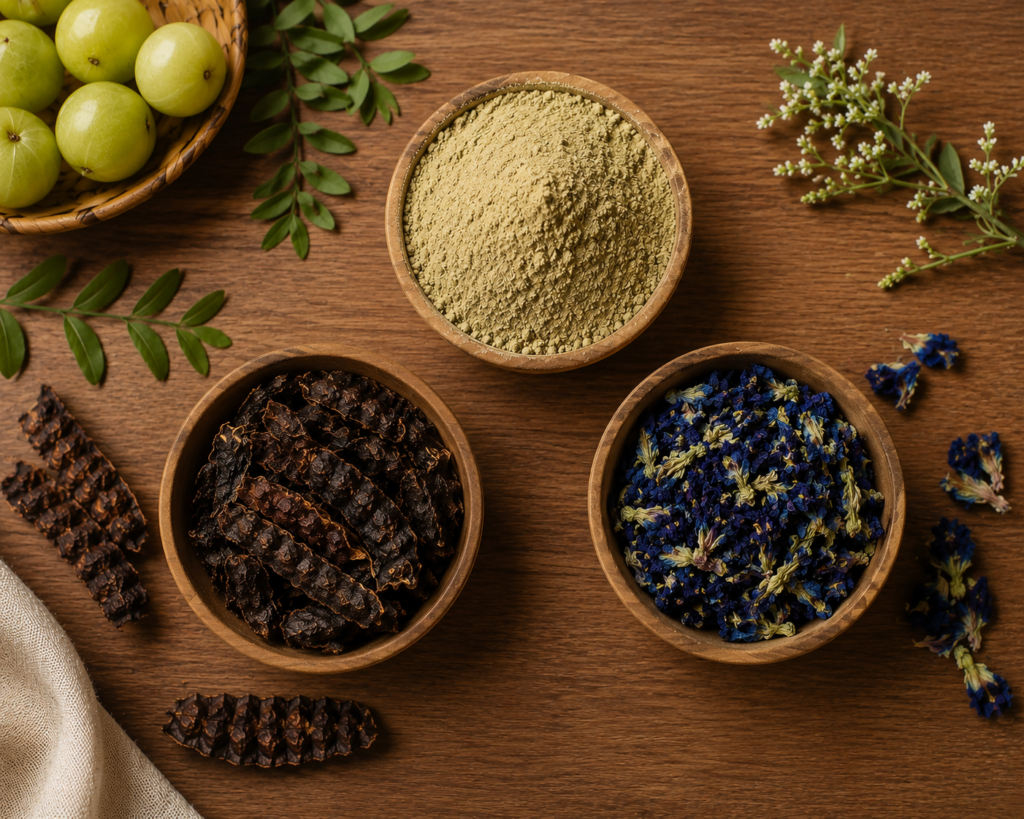
- Amla, Shikakai, and Blue Pea Flower are traditional Indian herbs with emerging research on scalp health and hair strength.
- A 2024 clinical trial found oral Amla improved the anagen-to-telogen (growth-to-shedding) hair ratio in women over 12 weeks.
- A consistent, gentle weekly ritual — not harsh treatments — is what actually helps hair get through the rainy season.
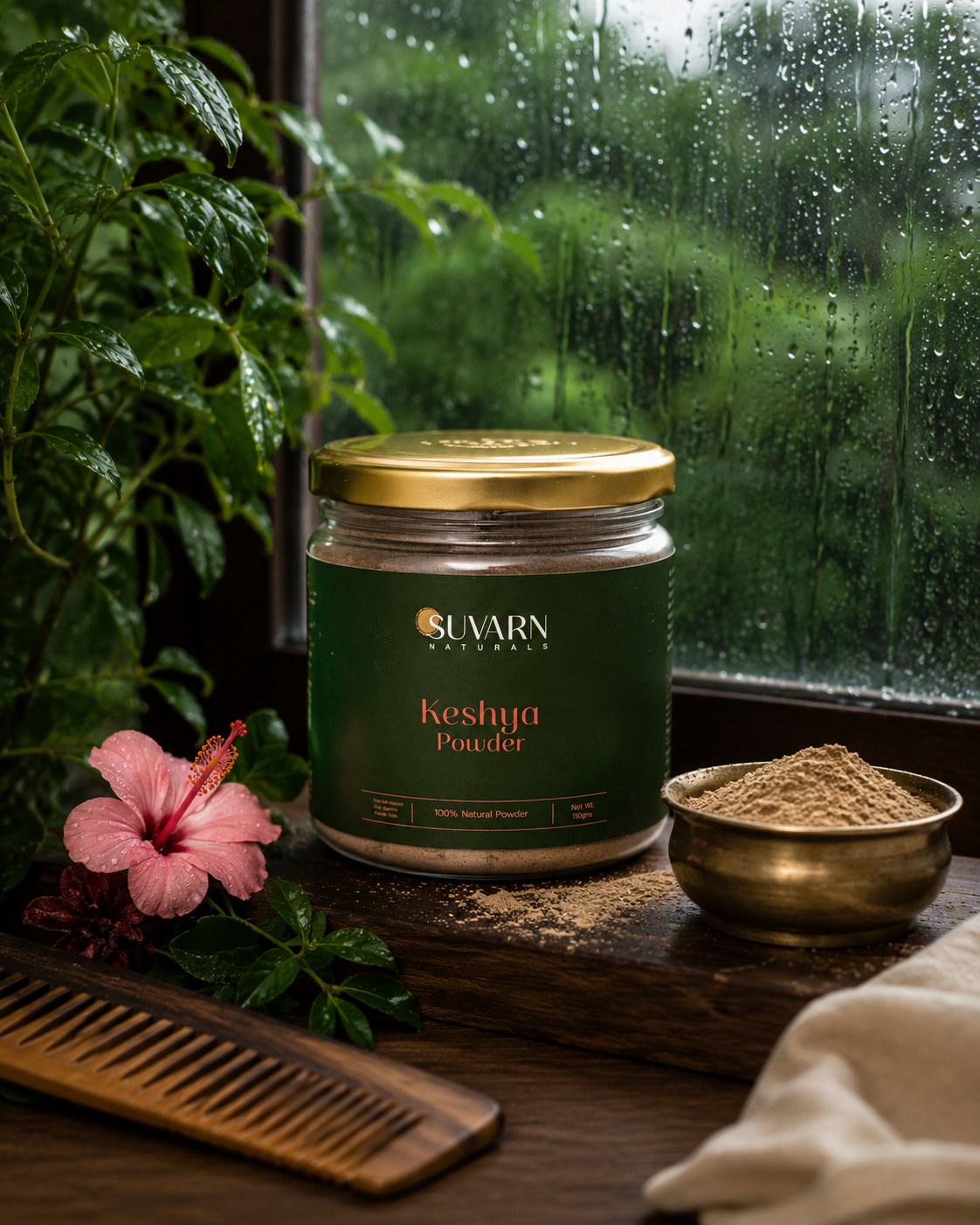
- Try our Keshya Powder as part of a simple monsoon hair care routine.
Monsoon Hair Fall: Stop It With These Proven Ayurvedic Remedies
More hair on your pillow this July? You’re not imagining it. As the rains set in across India on 19/07/2026, monsoon hair fall becomes one of the season’s most-searched hair concerns — and one of the most misunderstood. Most guides jump straight to “use this oil” without explaining why monsoon hair fall happens in humid weather. This guide breaks down the real causes of monsoon hair fall, what Ayurveda and modern research each say about it, and a simple ritual you can realistically fit into a busy week. We’ll also share a founder’s note on how Suvarn Naturals approaches monsoon hair care.
What is monsoon hair fall?
Monsoon hair fall refers to the noticeable rise in hair shedding that many people, especially women, experience during India’s rainy season (June–September). Monsoon hair fall is typically a temporary increase in normal hair shedding rather than a new form of hair loss.
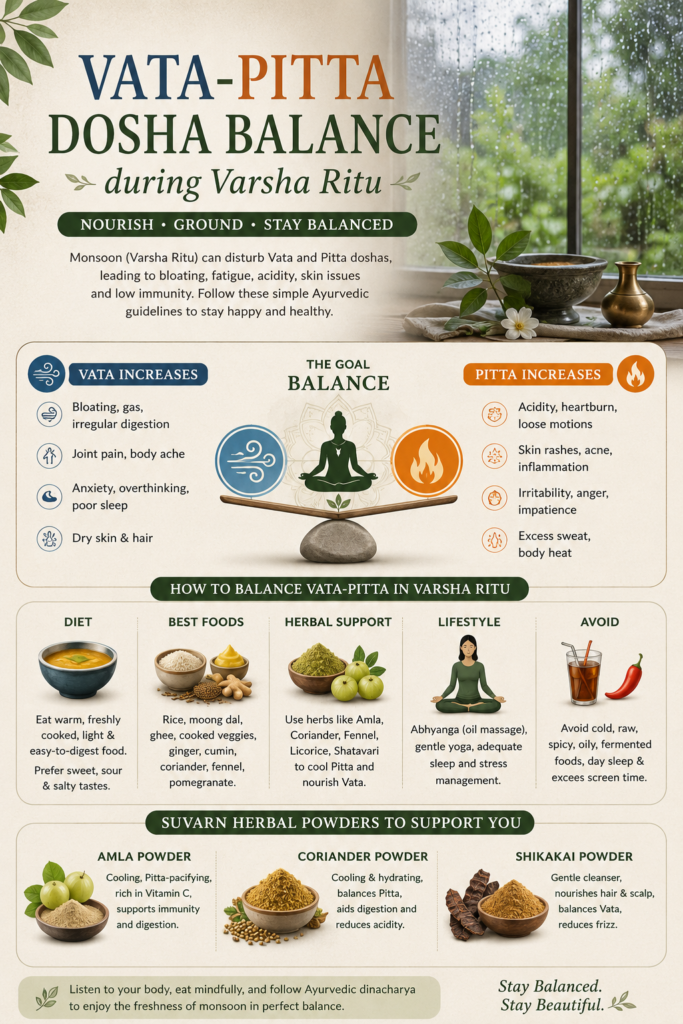
In Ayurveda, monsoon hair fall falls under Varsha Ritucharya — the rainy-season regimen — and is associated with aggravated Vata dosha and a mildly increased Pitta dosha. Classical texts describe this period as one where digestive fire (Agni) weakens, which Ayurveda believes affects how well the body nourishes tissues, including hair (Kesha, part of the Asthi Dhatu group). Modern dermatology, as summarised by the American Academy of Dermatology’s guide to hair shedding, describes a parallel picture for monsoon hair fall: humidity causes the hair shaft to absorb moisture and swell, weakening its structure, while sweat and rainwater residue can clog follicles and encourage scalp fungal overgrowth.
Show Image
The science and the Ayurvedic perspective on monsoon hair fall
Monsoon hair fall happens because humidity and Vata aggravation act on the scalp at the same time — one weakens the hair shaft physically, the other disrupts the body’s internal nourishment of the follicle, according to Ayurvedic theory and dermatological observation. Understanding both sides is what makes a routine actually work.
The Ayurvedic view: Varsha Ritu is considered Vata-dominant. Vata governs dryness and irregularity, so even though the air is humid, Ayurveda holds that hair roots can become under-nourished internally during this period. Weakened Agni is believed to reduce nutrient absorption, and since hair is considered one of the last tissues to receive nourishment in the body’s priority order, it’s thought to show deficiency first, as seasonal shedding.
The modern, science-backed view of monsoon hair fall: Excess atmospheric moisture makes the hair shaft absorb water and swell, which weakens the outer cuticle and makes strands more prone to breakage. A damp, sweaty scalp also creates a favourable environment for Malassezia yeast, commonly linked to dandruff and follicular irritation, which can indirectly worsen monsoon hair fall — the same shedding-vs-hair-loss distinction the American Academy of Dermatology outlines applies here too.
The myth we need to challenge about monsoon hair fall: Many articles treat any increase in shedding during monsoon as a medical emergency requiring urgent dermatologist visits. In reality, daily hair shedding naturally fluctuates with season, and a temporary rise for a few weeks is common and usually self-resolving with basic care. That said, shedding that is severe, sudden, or accompanied by visible bald patches is different and does warrant a doctor’s opinion — the nuance matters.
| Myth | Fact |
|---|---|
| “All monsoon hair fall means you’re going bald.” | Most monsoon shedding is temporary and part of the hair’s natural growth-shedding cycle; it typically settles once the season ends. |
| “Oiling makes monsoon hair fall worse because it’s already humid.” | A light, well-absorbed herbal oil massage may support scalp circulation; the issue is usually leaving oil on too long in humid weather, not oiling itself. |
| “Washing hair less during monsoon protects it from damage.” | Infrequent washing can let sweat, oil, and rainwater residue build up on the scalp, which may worsen clogging and odour; gentle, regular cleansing is generally preferred. |
Benefits of Ayurvedic monsoon hair care — especially for women
Traditional Ayurvedic herbs may support monsoon hair fall recovery by working on scalp cleansing, antioxidant protection, and gentle nourishment — three areas that matter most when hormonal shifts, stress, or PCOS are already affecting a woman’s hair alongside monsoon hair fall.
Show Image
1. May support the hair growth cycle during monsoon hair fall
A 2024 triple-blind randomised controlled trial published in the Journal of Ethnopharmacology studied 60 women with female androgenetic alopecia who took an oral Amla (Phyllanthus emblica) preparation for 12 weeks. Using TrichoScan imaging, researchers found a significant improvement in the ratio of hair in the active growth phase versus the shedding phase, compared to placebo. This is one of the few herbal hair studies with a proper control group, which matters for anyone evaluating herbal hair fall remedy claims. A related 2022 PubMed study on Phyllanthus emblica extract found that a key compound in Amla activated hair-growth-related gene expression in lab-grown scalp cells.
Quick tip: Consistency over 8–12 weeks matters more than the amount used in a single sitting during monsoon hair fall season.
2. Antioxidant support for a monsoon-stressed scalp
Blue Pea Flower (Clitoria ternatea) is rich in anthocyanins, plant antioxidants that researchers believe help counter oxidative stress on skin and scalp cells during monsoon hair fall. A 2024 study on a shampoo containing Blue Pea Flower extract reported reduced dandruff severity in users, which researchers linked to its effect on excess scalp oil — a common trigger of monsoon hair fall.
Quick tip: Add a pinch of Blue Pea Flower powder to your hair mask for its antioxidant profile — and a naturally blue-tinted rinse water your WhatsApp group will ask about.
3. Gentle cleansing without stripping natural oils
Shikakai (Acacia concinna) contains natural saponins — plant-based cleansing compounds — that lather gently and are traditionally considered milder than sulphate shampoos, which matters when excess scalp buildup is part of the problem. Early lab and dermatology research has also pointed to antimicrobial activity against organisms linked to scalp irritation and dandruff, both common companions of monsoon hair fall.
Quick tip: If your scalp gets oily faster in monsoon, Shikakai-based washes may feel more balancing than daily shampoo.
4. Supports scalp comfort during hormonal shifts
For women managing PCOS, postpartum shedding, or perimenopause, monsoon hair fall can amplify existing hair concerns. Traditionally used Rasayana-style herbal routines — combining cleansing, antioxidant, and mild astringent herbs — are used in Ayurveda as a supportive, non-invasive addition alongside medical care, not a replacement for it.
Quick tip: Track your shedding weekly instead of daily — hormonal shedding patterns are easier to notice over 2–3 weeks than overnight.
Who should use a monsoon hair fall routine like this?
This kind of Ayurvedic routine for monsoon hair fall is best suited to women dealing with seasonal shedding, PCOS-related hair thinning, postpartum hair changes, perimenopausal shifts, or stress-related hair fall around exams or work deadlines — situations where gentle, consistent care tends to help more than aggressive treatments.
- PCOS-related hair thinning: May benefit from routines focused on scalp circulation and reducing inflammation, alongside medical management.
- Postpartum hair fall: Often resolves on its own by 6–12 months; gentle herbal care can support the process without adding further stress to hair.
- Perimenopause: Hormonal fluctuations can overlap with monsoon shedding; a calming, non-harsh routine avoids compounding the irritation.
- Exam or work stress: Cortisol-linked shedding may ease as stress levels drop; scalp massage during oiling may support relaxation too.
Not ideal if:
- You have an active scalp infection, open wound, or severe eczema/psoriasis flare — see a dermatologist first.
- You’re experiencing sudden, patchy hair loss (possible alopecia areata) — this needs medical diagnosis, not home remedies.
- You have a known allergy to any of the herbs used; always patch-test first.
How to use monsoon hair fall remedies — step by step
Most Ayurvedic hair powders used for monsoon hair fall are applied as a paste to the scalp and hair 1–2 times a week, left on for 20–40 minutes, then rinsed with lukewarm water — timing and frequency should be adjusted to your hair type and how your scalp responds to monsoon hair fall care.
Suggested formats:
- Powder paste — mixed with water, yogurt, or aloe vera gel, applied directly to scalp.
- Infused oil — herbs steeped in a carrier oil (coconut or sesame), massaged in before wash day.
- Rinse/tea — brewed as a cooled herbal rinse after shampooing, for a lighter routine.
| Do | Don’t |
|---|---|
| Do a patch test 24 hours before first use | Don’t leave herbal paste on for more than an hour — it can dry out hair |
| Use lukewarm, not hot, water to rinse | Don’t skip conditioner if your hair is dry-textured |
| Massage gently to boost circulation | Don’t scrub vigorously — this can cause breakage, not less shedding |
| Dry hair naturally or on cool setting | Don’t step out with fully wet hair in humid weather — it invites frizz and fungal growth |
The 3-minute monsoon hair fall ritual
★ A quick nightly ritual competitors rarely mention. ★
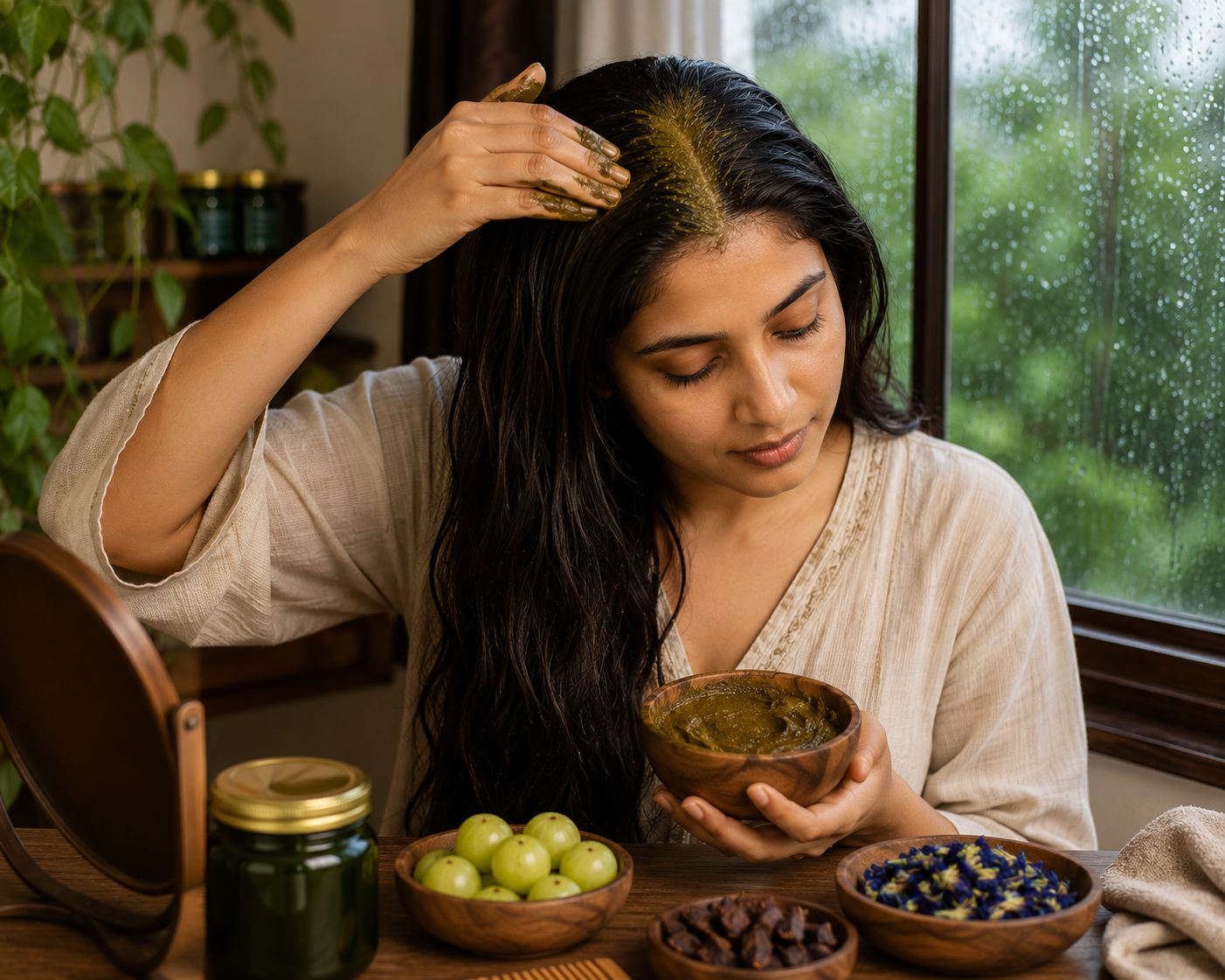
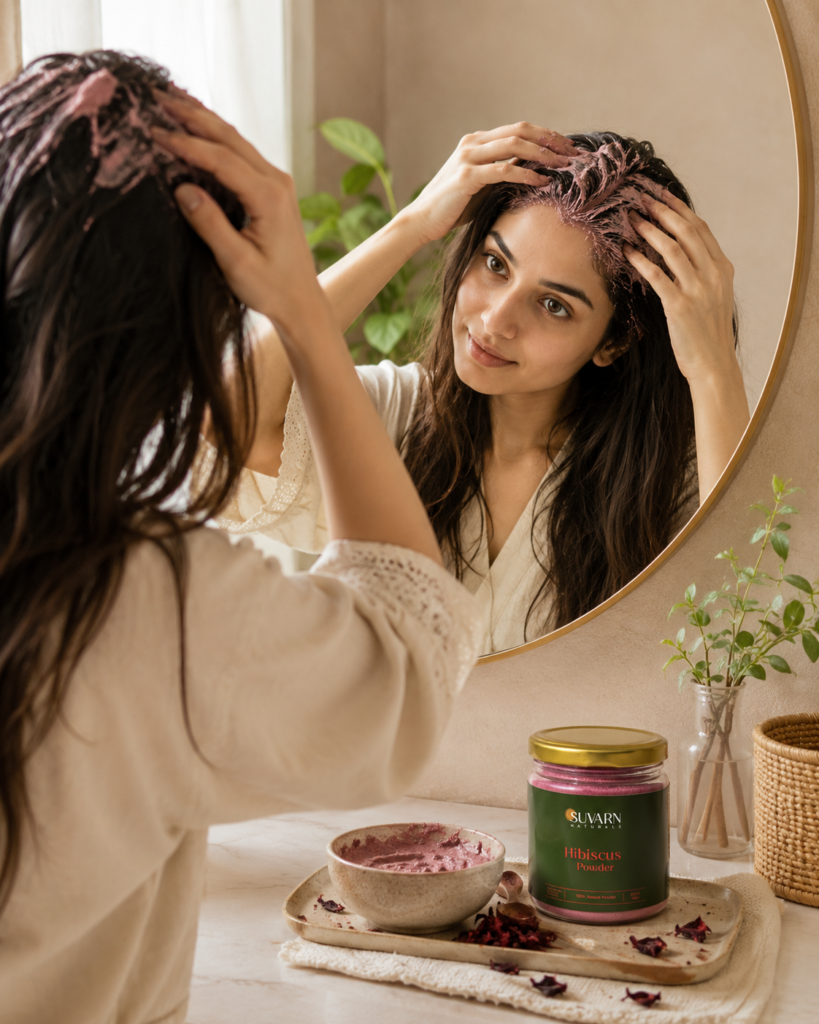
This isn’t a full hair-wash routine — it’s a 3-minute scalp reset you can do before bed, 3–4 nights a week during monsoon, to support circulation and reduce the buildup that drives monsoon hair fall.
Show Image
Ingredients
- 1 tsp Suvarn Naturals Keshya Powder
- ½ tsp Amla Powder
- A pinch of Blue Pea Flower powder
- 2–3 tbsp lukewarm water (adjust for a smooth, not runny, paste)
Steps
- Mix the powders with water into a smooth paste.
- Section your hair and apply the paste along your scalp’s parting lines only — not the full length.
- Massage gently with fingertips for 60–90 seconds, moving in small circles.
- Leave it on overnight or rinse after 20 minutes if you prefer a lighter application.
- Rinse thoroughly the next morning with a mild, sulphate-free wash.
Pro tip: mix your weekly deep-cleanse with our Shikakai Powder for a gentler wash that won’t strip your scalp’s natural balance the way daily shampooing can.
Show Image
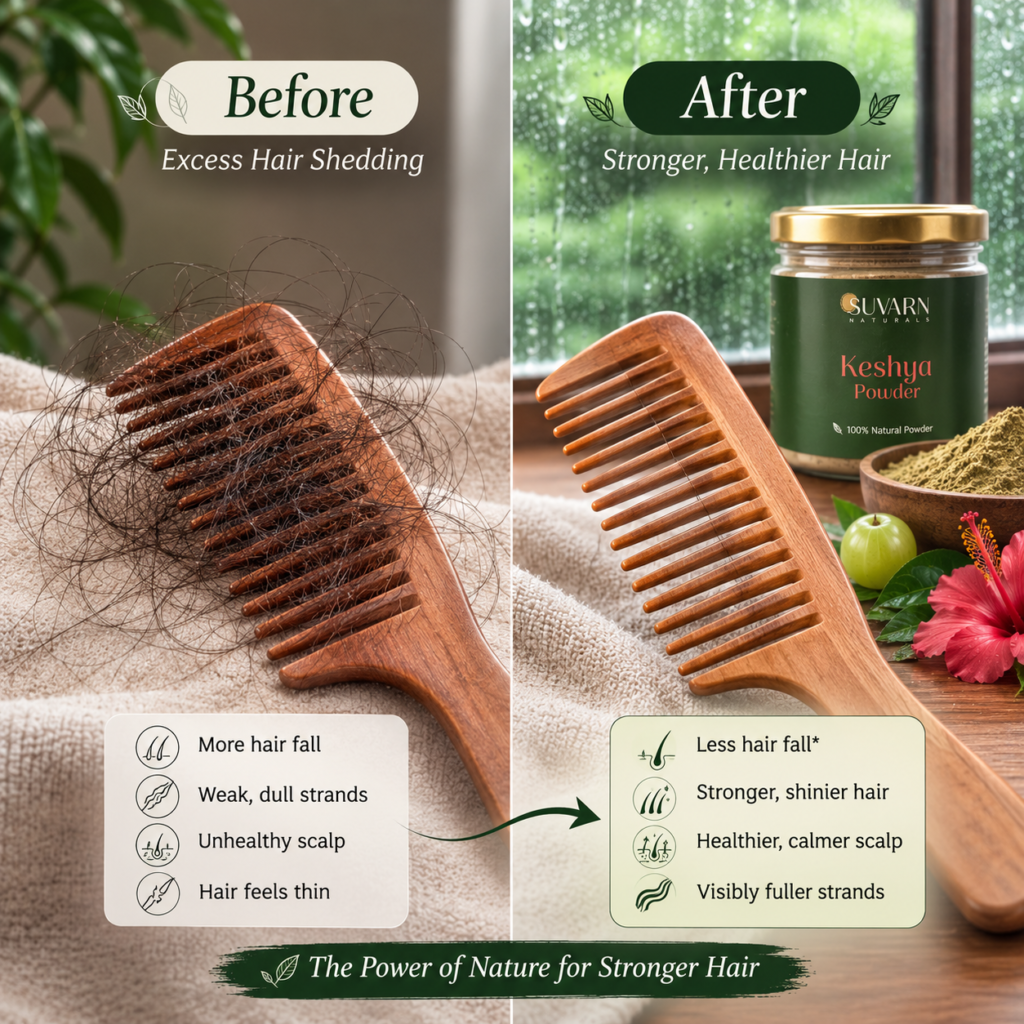
Monsoon hair fall: Suvarn Naturals vs. other options
| Metric | Suvarn Naturals herbal powders | Generic loose herbal powder | Capsule/supplement form | Synthetic anti-hair-fall shampoo |
|---|---|---|---|---|
| Ease of use | Moderate (needs mixing) | Moderate | Very easy | Very easy |
| Time to notice a difference | 6–8 weeks, consistent use | Variable, quality-dependent | 8–12 weeks | 2–4 weeks (often temporary) |
| Suitability for sensitive scalp | Generally gentle | Depends on sourcing/purity | N/A (oral) | Can be harsh with sulphates |
| PCOS-friendliness | Supportive, non-hormonal | Supportive, if pure | Consult doctor first | Cosmetic effect only |
| Cost (monthly) | Moderate | Low to moderate | Moderate to high | Low to moderate |
No option here claims to cure hair loss — all should be seen as supportive additions to a balanced routine, not replacements for medical care when needed.
Side effects and precautions
Ayurvedic hair powders are generally well tolerated, but they are not risk-free — patch testing, correct dilution, and awareness of allergies matter, especially for pregnant or breastfeeding women and anyone on prescription hair-loss medication.
- Pregnancy/breastfeeding: Topical use of these herbs is traditionally considered mild, but always check with your gynaecologist before introducing anything new, especially oral formats.
- Allergies: Saponin-rich herbs like Shikakai can occasionally cause dryness or irritation in sensitive scalps — dilute well and patch-test.
- Drug interactions: No major topical interactions are documented, but if you’re on oral hair-loss medication (like minoxidil or finasteride-class drugs), continue that as prescribed — herbal routines are a complement, not a substitute.
- When to see a doctor: Sudden clumps of hair loss, visible bald patches, scalp pain, or shedding that doesn’t reduce after the season ends are signs to consult a dermatologist rather than continue home remedies alone.
Myths and mistakes women make with monsoon hair fall
A lot of monsoon hair fall anxiety comes from a few repeated mistakes — over-washing, over-oiling, or panicking over normal shedding — rather than monsoon itself doing lasting damage.
- Mistake: Assuming more shedding always means balding. Reality: normal daily shedding is around 50–100 strands; a temporary seasonal rise doesn’t automatically signal permanent loss.
- Mistake: Skipping hair wash to “protect” it from humidity. Reality: this often worsens scalp buildup and odour — the fix is a gentler wash, not fewer washes.
- Mistake: Over-oiling and leaving it on for days. Reality: in humid weather, oil left too long can trap sweat and dirt against the scalp, doing the opposite of what’s intended.
- Mistake: Switching products every week out of panic. Reality: hair needs 6–8 weeks minimum to show a visible response to any routine — constant switching resets that clock.
- Mistake: Ignoring gut health. Reality: Ayurveda’s emphasis on Agni isn’t just tradition — diet and digestion genuinely influence how well nutrients reach hair follicles.
Notes from the Suvarn Naturals founder
The rainy season brings unique hair care challenges, and we’ve seen many customers ask how to care for their hair during monsoon. That’s why we believe in simple, consistent routines using traditional herbal ingredients that have been part of Indian hair care practices for generations.
When I first tested our Keshya Powder formulation, what struck me wasn’t a dramatic before-and-after — it was how calm my scalp felt within days of switching from a sulphate shampoo. In our lab, we noticed the powder blend needed just the right grind — too fine and it turns pasty too fast, too coarse and it doesn’t dissolve evenly. We source our Amla and Shikakai from farms that harvest in-season, because both herbs lose potency quickly once processed. It’s a slower way to build a product, but it’s the only way we’re comfortable putting our name on it.
Frequently Asked Questions
1. Is monsoon hair fall permanent?
No, for most people it’s a temporary seasonal increase in shedding that typically settles once humidity drops. If shedding continues well past monsoon or comes with bald patches, see a dermatologist.
2. How much hair fall is normal in monsoon?
Some increase above your usual 50–100 strands a day is common, though there’s no single universal number — what matters more is whether it’s a temporary rise or a sustained upward trend over months.
3. Can I use Amla powder daily during monsoon?
Most Ayurvedic routines suggest 1–2 times a week rather than daily, since daily use may be drying for some hair types. Start with once weekly and adjust based on how your scalp responds.
4. Does Blue Pea Flower actually stain hair blue?
Used in small amounts and rinsed properly, it typically doesn’t leave a lasting tint on most hair colours, though very light or grey hair may show a faint temporary tone that washes out.
5. Is oiling before or after monsoon rain better for hair?
Oiling before stepping out isn’t necessary and can attract more dust in humid air. It’s generally better used as a pre-wash treatment at home, left on for a set time, then washed out.
6. Can men use the same monsoon hair routine?
Yes — the core causes (humidity, weakened Agni, scalp buildup) affect all hair types and genders, though frequency and product texture may be adjusted for shorter hair.
7. Can PCOS make monsoon hair fall worse?
Hormonal fluctuations linked to PCOS can already affect hair density, and seasonal shedding may feel more noticeable on top of that. A gentle, consistent routine alongside your prescribed PCOS management may help you track what’s truly seasonal versus hormonal.
8. Should I stop hair oiling if my scalp gets oily in monsoon?
Not necessarily — you can shift to lighter oils, apply less, and shorten how long you leave it on, rather than skipping oiling altogether.
9. Is Shikakai good for dandruff during monsoon?
Early research suggests Shikakai’s natural compounds may help with scalp cleansing and have some antimicrobial activity, which could support dandruff-prone scalps, though it isn’t a substitute for a medicated shampoo if dandruff is severe.
10. How long before I see results from an Ayurvedic hair routine?
Most people report changes only after 6–8 weeks of consistent use, since hair growth cycles are slow-moving by nature. Photos or shedding logs are a more reliable way to track progress than daily observation.
Final takeaway
Monsoon hair fall feels alarming when you don’t understand what’s actually happening — but for most women, it’s a temporary, explainable shift, not a crisis. Knowing the difference between normal seasonal shedding and something that needs medical attention is the first step. From there, a simple, consistent routine — gentle cleansing, light oiling, and traditional herbs like Amla, Shikakai, and Blue Pea Flower — can support your hair through the season without overcomplicating your evenings. If you’re ready to try a routine built around this, our Keshya Powder is a good place to start — one small, consistent habit at a time.
