
The Proven 3-Minute Ayurvedic Fix for Dry Flaky Skin
-
By admin
Published: 20 August 2026 | By Suvarn Naturals Team
TL;DR — Quick Summary
- Dry flaky skin happens when the skin’s outer barrier loses ceramides and natural moisturising factor faster than it can replace them.
- In Ayurveda, this is read as excess Vata dosha in the skin tissue (twak) — dryness, roughness, and lightness that call for warmth and gentle oiliness, not stripping.
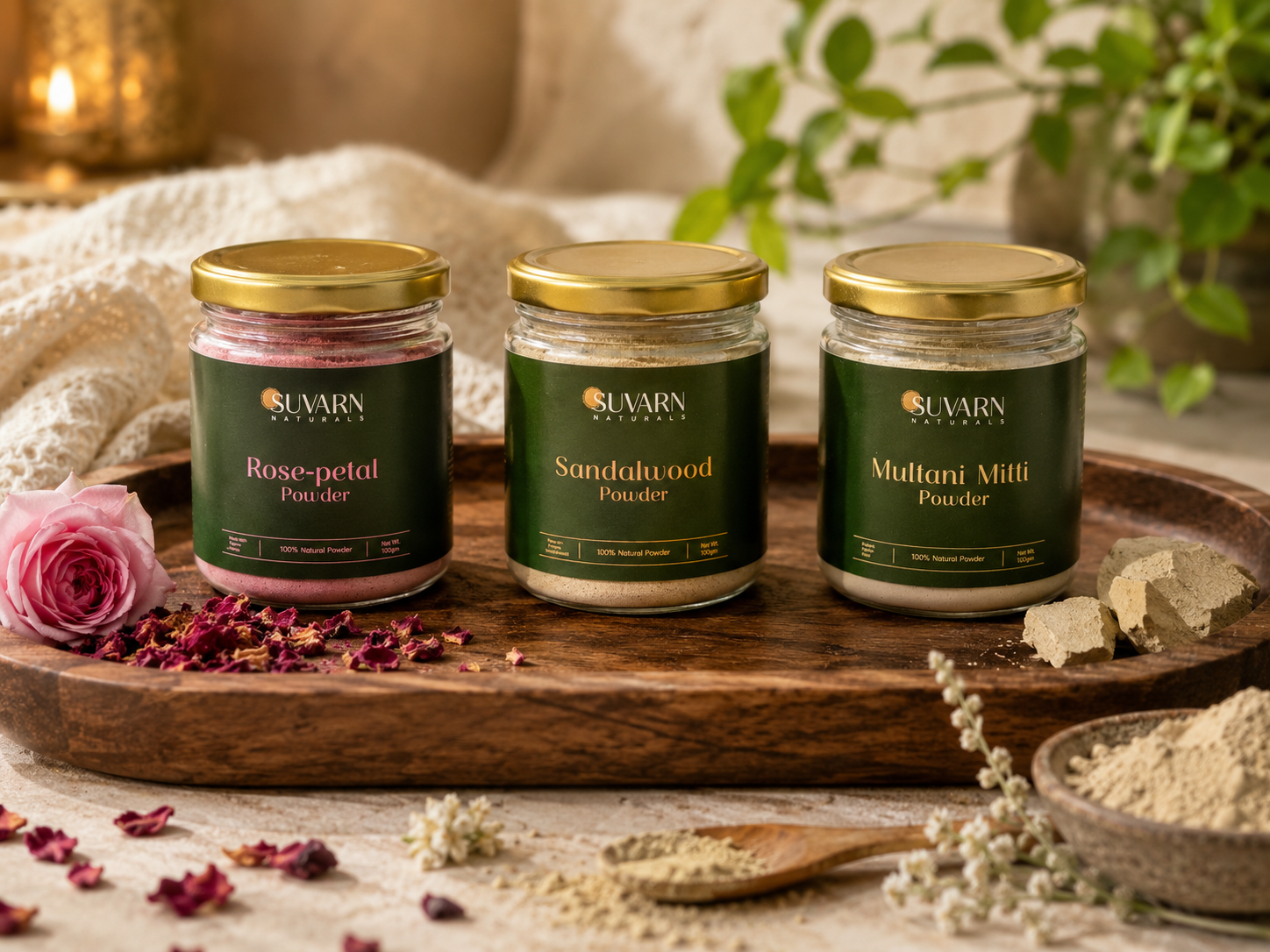
- Rose Petal Powder, Sandalwood Powder, and Multani Mitti Powder may support a softer-feeling complexion when combined mindfully — never mixed with plain water alone.
- Hormonal shifts like PCOS, postpartum recovery, and perimenopause can intensify dry, flaky patches, especially around the cheeks and jawline.
- A gentle, weekly night-time ritual tends to suit dry skin better than frequent exfoliation.
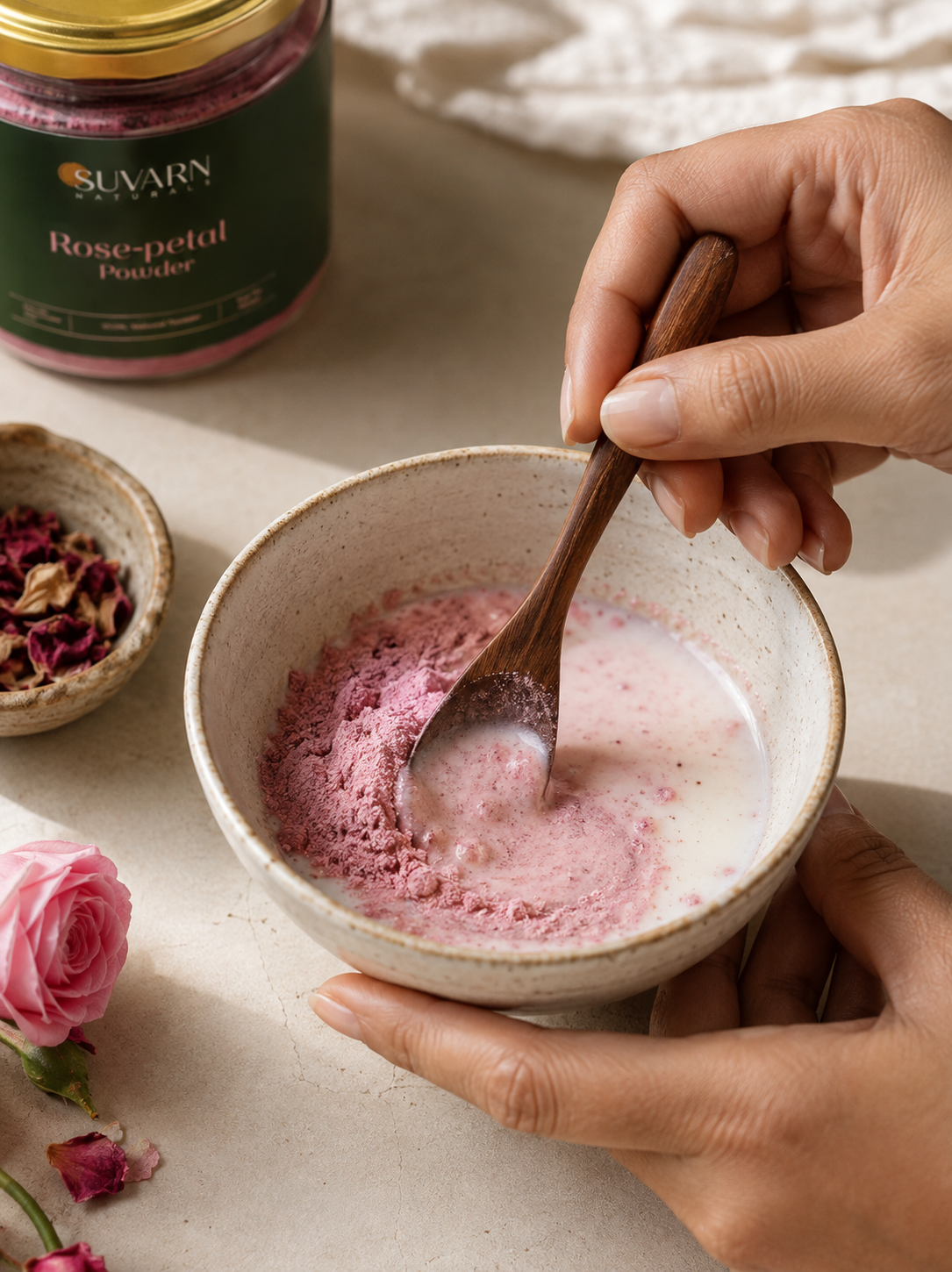
- New to the range? Try our Rose Petal Powder mixed with milk instead of water for a softer first experience.
If your cheeks feel tight by afternoon, or fine white flakes keep showing up around your nose no matter how much moisturiser you layer on, you’re not imagining it. Dry flaky skin is one of the concerns Indian women write to us about most, especially as the weather shifts or hormones fluctuate. This guide brings together Ayurvedic wisdom on Vata-driven dryness with what current dermatology research says about the skin barrier — so you understand not just what to apply, but why it may help. We’ll also share the founder’s own notes on formulating for dry skin.
What Is Dry Flaky Skin?
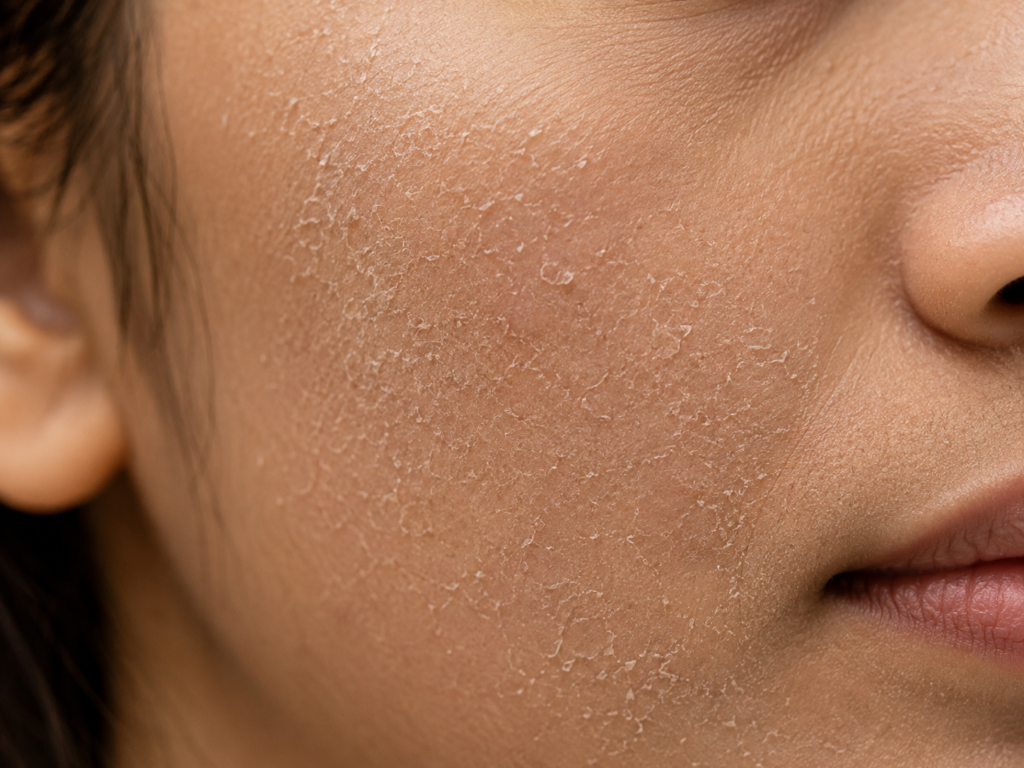
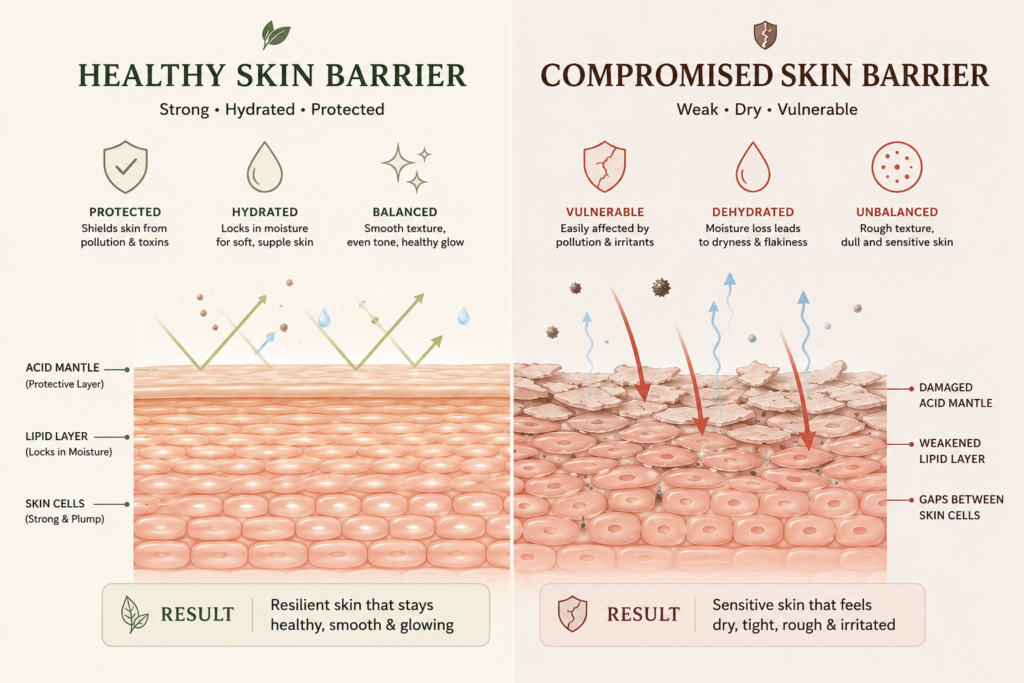
Dry flaky skin occurs when the outermost skin layer, the stratum corneum, loses water faster than it can hold on to it. Skin cells that would normally shed invisibly instead clump together and become visible as flakes. Ayurveda calls this pattern twak rukshata — a state where Vata dosha dominates the skin tissue.
In simple terms, dry flaky skin is a barrier problem, not just a moisture problem. The skin’s lipid layer — made up of ceramides, cholesterol, and fatty acids — normally locks moisture in. When this layer thins, water escapes through a process dermatologists call trans-epidermal water loss (TEWL), and skin starts to feel tight, rough, and papery.
Sanskrit and Ayurvedic name: twak rukshata (literally, “dryness of the skin”), a Vata-predominant condition.
Key drivers: reduced ceramide and natural moisturising factor (NMF) levels, low humidity, hot water, harsh cleansers, ageing, and — in Ayurvedic terms — aggravated Vata from cold weather, irregular routines, or stress.
The Science Behind Dry Flaky Skin: An Ayurvedic View
Dry flaky skin sits at the meeting point of two explanations that actually agree with each other: a weakened lipid barrier in modern dermatology, and an aggravated Vata dosha in Ayurveda. Both point to the same fix — replenish, don’t strip.
Mechanistically, when ceramides and NMF (urea, lactic acid, amino acids) fall, TEWL rises, and the skin’s surface starts to look rough and scaly. In Ayurveda, Vata is described by qualities (gunas) that mirror this exactly — ruksha (dry), khara (rough), and laghu (light) — and these qualities are said to increase in cold, windy weather, with excessive exfoliation, hot showers, and stress.
Research on the botanicals traditionally used for this pattern is catching up with the classical texts. A 2025 study on Rosa damascena (rose) petal extract found antioxidant activity that may support the skin’s ability to manage oxidative stress, one of the factors linked to a compromised barrier.
Separately, review literature on Santalum album (sandalwood) describes traditionally reported anti-inflammatory and skin-soothing activity, which may explain why it’s traditionally paired with rose and clay powders for dry flaky skin rather than left out of dry-skin routines altogether.
For a closer look at the underlying mechanism, see this 2025 study on Rosa damascena petal extract and the American Academy of Dermatology’s guidance on relieving dry skin.
Myth vs Fact
| Myth | Fact |
| Multani Mitti is only for oily skin and will always worsen dryness. | Mixed with milk or honey instead of plain water, and used about once a week rather than daily, it may cleanse gently without over-stripping natural oils. |
| More scrubbing and exfoliation clears flakes faster. | Over-exfoliating dry skin can damage the barrier further and may increase flaking and sensitivity over time. |
| Dry skin doesn’t need “brightening” ingredients like sandalwood. | Sandalwood’s traditionally cooling, calming profile is often used specifically for Vata-Pitta balance on dry, easily irritated skin, not just for tan or pigmentation. |
Benefits of Dry Flaky Skin Remedies — Especially for Women
For Indian women, dry flaky skin rarely shows up in isolation — it’s often tangled up with hormones, hair fall, energy dips, and how a face looks and feels under makeup or a saree drape for a family event. Here’s how a gentle, Ayurveda-rooted routine may help across these connected concerns.
Hormonal and PCOS-Related Skin Dryness
PCOS and thyroid imbalances are often associated with changes in skin texture, including patches of dryness alongside oiliness elsewhere on the face. Gentle, barrier-supportive ingredients may be more suitable here than harsh, oil-stripping treatments.
Quick tip: If your skin is dry in some areas and oily around the T-zone, use a thinner paste and avoid daily application — twice a week is usually plenty.
Postpartum Skin Recovery
New mothers often notice their skin feels different — drier, duller, more reactive — as hormone levels shift after childbirth. A soft, fragrance-forward ritual can double as a few minutes of calm in an otherwise packed day.
Quick tip: Patch test any new powder on your inner arm first, especially in the postpartum weeks when skin can be more reactive.
Perimenopausal Dryness
As oestrogen declines around perimenopause, skin tends to hold less water and produce less natural oil, which is traditionally read in Ayurveda as a natural increase in Vata with age.
Quick tip: Add a few extra drops of milk or a nourishing oil to your usual mix as your skin’s needs shift year to year.
Stress, Exam Season, and Dull, Tight Skin
Stress is one of the most commonly cited Vata aggravators in Ayurvedic texts, and many women notice dry flaky skin appearing during exam season, deadlines, or travel.
Quick tip: Pair your ritual with a warm (not hot) shower and a few slow breaths — Ayurveda ties calm routines directly to Vata balance.
Who Should Use Dry Flaky Skin Remedies?
These herbal powders are traditionally used by women dealing with everyday dryness, seasonal dryness, and dryness linked to hormonal shifts such as PCOS, postpartum recovery, perimenopause, or high-stress periods like exams.
They may be worth trying if you:
- Notice tightness or fine flaking within a few hours of moisturising
- Are managing PCOS, thyroid changes, or perimenopause alongside skin changes
- Are a few weeks postpartum and want a gentle, fragrant self-care ritual
- Are going through a stressful period and notice your skin turning dull and rough
Not Ideal If…
- You have an active eczema, psoriasis, or dermatitis flare — check with a dermatologist first
- You have open cuts, broken skin, or an active infection
- You have a known allergy to rose, sandalwood, or Fuller’s earth (Multani Mitti)
- Your skin is very reactive or rosacea-prone and you haven’t patch tested
How to Use Dry Flaky Skin Remedies — Step by Step
A little goes a long way when treating dry flaky skin with these powders. Most women find that roughly one to two teaspoons per use, mixed to a smooth paste, is enough for the full face and neck.
Best time of day: evening, ideally 30–60 minutes before bed, so your skin has time to settle before you sleep.
Three Ways to Use These Powders
- As a face pack — mix with milk, honey, or a nourishing oil (never plain water alone if your skin is very dry)
- As a gentle body treatment — mix Multani Mitti with oil for elbows, knees, and heels, where skin tends to be driest
- As a hair and scalp mask — a flaky, dry scalp may traditionally be treated the same way as flaky facial skin, using Multani Mitti mixed with yogurt or oil
Dos and Don’ts
| Do | Don’t |
| Mix with milk, honey, or oil for extra nourishment | Mix Multani Mitti with plain water if your skin is already dry |
| Patch test on your inner arm before your first full use | Apply to broken, cracked, or actively inflamed skin |
| Limit to once or twice a week for dry skin | Use daily, which may increase dryness over time |
| Follow with a moisturiser while skin is still slightly damp | Leave the pack on until it fully hardens and tightens the skin |
The 3-Minute Dry Flaky Skin Ritual
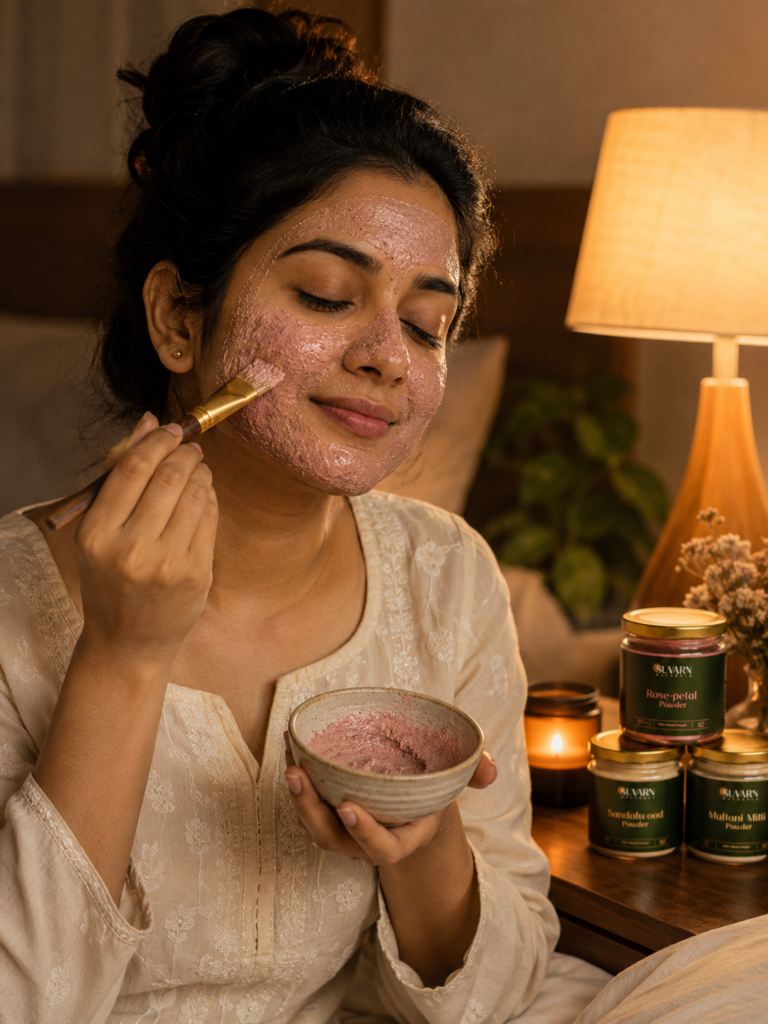
This night-time ritual for dry flaky skin is designed to layer softness rather than strip it — a sequence competitors rarely walk through step by step.
Ingredients
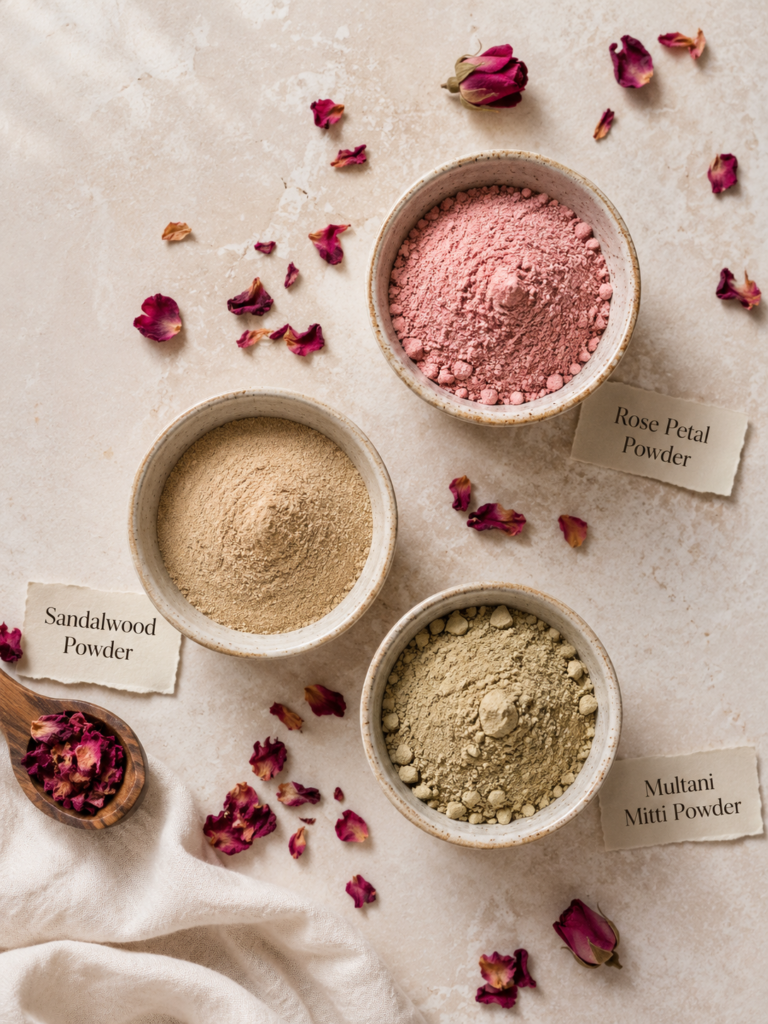
- 1 teaspoon Rose Petal Powder
- 1/2 teaspoon Sandalwood Powder
- 1/2 teaspoon Multani Mitti Powder
- 1–2 tablespoons raw milk or honey (adjust for a smooth, non-drippy paste)
Steps
- 1. Mix all three powders in a small bowl.
- 2. Add milk or honey a little at a time until you get a smooth, spreadable paste.
- 3. Apply an even layer to clean, dry skin, avoiding the eye area.
- 4. Leave on for about 8–10 minutes — stop before it fully hardens and tightens.
- 5. Rinse off with lukewarm water using your fingertips in gentle circular motions.
- 6. Pat dry and follow immediately with a moisturiser while skin is still slightly damp.
Pro tip: for very dry skin, mix in a touch more of our Sandalwood Powder for its cooling, calming feel — this small change tends to make the pack more comfortable to wear.
Dry Flaky Skin Remedies vs Alternatives
No single option suits every case of dry flaky skin — here’s an honest, side-by-side look, without exaggerated claims.
| Metric | Suvarn Naturals Powders | Generic Unbranded Powder | Synthetic Moisturising Cream | DIY Kitchen-Only Remedies |
| Ease of use | Simple mix-and-apply, 3 minutes | Similar, but sourcing quality varies | Very easy, no mixing | Easy but inconsistent results |
| Time to softer feel | Gradual, over several weeks of regular use | Varies widely by source | Often immediate but surface-level | Varies, hard to standardise |
| Skin type suitability | Adjustable for dry, combination, sensitive | Unclear, depends on batch | Broad, but may contain fragrance/irritants | Limited, depends on ingredients on hand |
| PCOS/hormonal-skin friendliness | Gentle, adjustable ratios | Not consistently tested | Depends on formulation | Depends on ingredients used |
| Cost per use | Moderate, powders last many uses | Often lower, but quality unverified | Moderate to high | Low, but time-intensive |
Side Effects and Precautions
These are herbal powders, not medicines, and they may not suit every case of dry flaky skin. Being transparent about limits is part of using them safely.
- Patch test on your inner forearm 24 hours before your first face application.
- Discontinue if you notice redness, itching, burning, or swelling, and rinse off immediately.
- During pregnancy or while breastfeeding, these powders are traditionally used topically, but it’s best to check with your doctor first, especially for facial use.
- No known drug interactions have been reported for topical use, but always mention any skincare routine to your dermatologist if you’re on prescription topical treatments.
- See a doctor or dermatologist if dryness is severe, persistent, worsening, or accompanied by intense itching, cracking, bleeding, or signs of infection.
Myths and Mistakes Women Make with Dry Flaky Skin
- Mixing Multani Mitti with plain water: this is probably the single most common mistake — plain water alone can leave already-dry skin feeling tighter, not softer.
- Leaving the face pack on until it fully hardens: a fully dried, tight mask pulls moisture out of the skin rather than nourishing it.
- Exfoliating dry flaky skin daily to “remove the flakes”: this often damages the barrier further and can make flaking worse.
- Skipping moisturiser after a face pack: the few minutes right after rinsing, while skin is still damp, are when a moisturiser works hardest.
- Assuming dry skin doesn’t need brightening or clarifying ingredients: sandalwood and rose can still be part of a dry-skin routine when balanced with the right liquid base.
Notes from the Suvarn Naturals Founder
At Suvarn Naturals, we believe that dry skin needs gentle care rather than harsh cleansing. We wanted our herbal powders to be simple additions to a mindful skincare routine, with naturally sourced ingredients and a texture that feels comfortable when prepared as a face pack.
When I first tested our Rose Petal Powder formulation for dry flaky skin, I was looking for something that felt soft even before it touched a liquid base — a fine, even grind that wouldn’t feel gritty on already-sensitive, dry skin. In our lab, we noticed that the finer the grind on the Sandalwood Powder, the smoother the paste felt while wearing it, which matters far more than people expect once you’re the one sitting with a mask on for ten minutes.
We source our rose petals and sandalwood from growers we’ve worked with for years, and every batch of Multani Mitti is tested before it reaches you. None of our powders carry synthetic fragrance — what you smell is the ingredient itself.
Frequently Asked Questions
1. Can Multani Mitti be used on dry skin?
Yes, but with modification. Mix it with milk or honey instead of plain water, keep usage to once a week, and always follow with a moisturiser. Used this way, many women with dry skin still include it in rotation.
2. How often should I use a face pack for dry flaky skin?
Once or twice a week is generally enough. Dry skin doesn’t need daily masking, and over-application may increase dryness rather than resolve it.
3. Does rose petal powder help with dry skin?
Rose petal powder is traditionally used for its gentle, calming feel on the skin, and research on Rosa damascena extract has found antioxidant activity that may support skin already under environmental stress.
4. Can sandalwood powder be used daily on dry skin?
Daily use isn’t usually necessary. Two to three times a week, mixed with a nourishing base, is a more traditional and gentler approach for dry or sensitive skin.
5. Why is my skin still dry after moisturising?
This often points to a weakened skin barrier rather than a lack of product. Gentle, barrier-supportive routines — and avoiding hot water and over-exfoliation — tend to help more than heavier layering.
6. Is dry flaky skin a sign of PCOS or thyroid issues?
Dry, flaky skin can be associated with PCOS or thyroid changes in some women, but it also has many non-hormonal causes. If it’s new, sudden, or paired with other symptoms, it’s worth mentioning to your doctor.
7. Can I use these powders during pregnancy?
These are traditionally used topically during pregnancy, but as with any new skincare step, it’s best to check with your doctor first, especially for facial application.
8. What’s the difference between dry skin and dehydrated skin?
Dry skin lacks natural oil (sebum), while dehydrated skin lacks water and can affect any skin type, including oily skin. Both can show up as flaking, so a gentle, hydrating approach usually helps either way.
9. Can dry flaky skin be reversed with only home remedies?
Mild, everyday dryness often improves with a consistent gentle routine. Persistent or severe flaking may need a dermatologist’s input, especially if a skin condition is involved.
10. Which Suvarn Naturals powder should I start with for dry skin?
Many women start with Rose Petal Powder for its gentle feel, then introduce Sandalwood Powder and Multani Mitti Powder gradually. Our guide on choosing a starting powder walks through this in more detail.
Final Takeaway
Dry flaky skin usually isn’t a sign that something is wrong with you — it’s a barrier that needs a little more warmth, oil, and patience than it’s currently getting. Understanding the Vata pattern behind it, and matching that with a gentle, consistent ritual, tends to work better than reaching for the harshest product on the shelf.
Start small: try the 3-minute ritual once this week with our Rose Petal Powder, Sandalwood Powder, and Multani Mitti Powder, and notice how your skin feels by morning. Small, consistent steps tend to serve dry skin far better than dramatic ones.
