
How Herbal Ingredients Work on Skin & Hair: The Science + Ayurvedic Truth

Published: 30 April 2026 | By Suvarn Naturals Team
📋 TL;DR — Quick Summary
👉 Ready to explore? Start with the Suvarn Naturals Herbal Powders Collection.
Herbal ingredients work through phytochemicals — bioactive compounds that interact with skin cells, hair follicles, and sebum production at a molecular level.
Ayurveda understood this 3,000 years ago through the lens of Dosha balance — and modern science is now confirming it.
The form of the herb matters as much as the herb itself — powder applied topically delivers different results than a capsule.
Key benefits for women: reduced hormonal acne, stronger hair roots, balanced scalp oil, and slower visible ageing.
Not all herbal powders are equal — raw colour, aroma, and texture are the first indicators of potency.
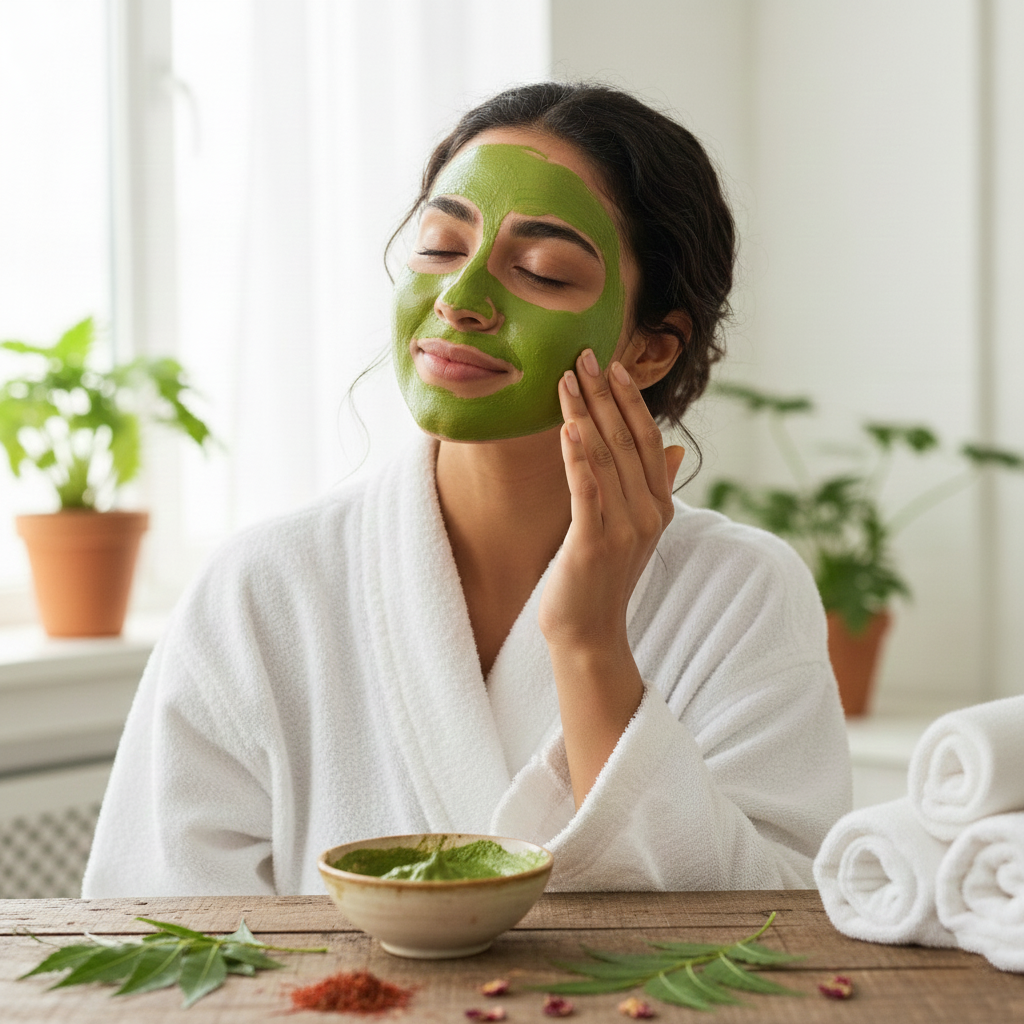
Introduction
You’ve probably switched a shampoo three times this year. You’ve tried the serum your colleague swears by. And still — the breakouts return, the hairline recedes, the scalp itches.
Most of us instinctively know that something in nature — a leaf, a root, a dried fruit — can do what a lab formula somehow can’t. But we’ve never been told why it works. Or whether it’ll work for us.
This guide, updated 30 April 2026, answers that. We’ll walk through the actual mechanisms by which herbal ingredients act on skin and hair — the phytochemistry, the Ayurvedic logic, and the modern research. You’ll also find a note from our founder about what separates a genuine herb from a coloured powder.
What Are Herbal Ingredients, and How Do They Interact with Skin & Hair?
Herbal ingredients are plant-derived materials — leaves, bark, seeds, peels, roots — that contain phytochemicals: naturally occurring compounds that influence biological processes in the human body and on its surface.
On skin and hair specifically, these compounds interact with:
- Sebaceous glands (which control oil/sebum output)
- Keratinocytes (skin cells that form the outer protective layer)
- Hair follicle papilla cells (which govern hair growth cycles)
- Melanocytes (cells responsible for skin and hair pigmentation)
In Ayurveda, herbs used for the skin are categorized by their Guna (quality), Rasa (taste-energy), and Vipaka (post-digestive effect). These ancient categories map surprisingly well onto modern biochemical profiles — a “cooling” herb like sandalwood is now known to contain alpha-santalol, a compound that measurably reduces skin inflammation markers.
Sanskrit name for this practice: Twak Prasadana — literally “that which illuminates the skin.”
Key constituents that drive results:
- Tannins — astringent polyphenols that tighten pores and reduce excess oil
- Flavonoids — antioxidant compounds that neutralise free radicals in the dermis
- Saponins — natural surfactants that cleanse without stripping the skin barrier
- Alkaloids — nitrogen-containing compounds with antimicrobial and anti-inflammatory activity
- Terpenoids — volatile compounds that penetrate the epidermis and modulate cell signalling
The Science and the Ayurvedic Perspective
Understanding how herbal ingredients work on skin and hair requires reading both languages — the ancient and the clinical. Together, they tell a more complete story than either does alone.
How Phytochemicals Reach Skin Cells
When you apply an herbal powder topically — mixed with water, yogurt, or rose water — the phytochemicals dissolve into a semi-permeable paste. They penetrate the stratum corneum (the outermost skin layer) through intercellular lipid channels. Smaller molecules, like certain flavonoids and terpenoids, can reach the dermis within 20–30 minutes of application.
A 2023 review published in Molecules (MDPI) confirmed that phenolic compounds from plant extracts demonstrate measurable antioxidant activity on keratinocyte cultures — supporting what Ayurvedic texts recorded as Twak Varnya (skin brightening) effects.
The Dosha Connection
Ayurveda classifies every person’s skin into three Dosha types:
| Dosha | Skin Tendency | Best Herb Category |
|---|---|---|
| Vata | Dry, thin, prone to flakiness | Nourishing, oleating herbs (e.g., Shatavari, Ashwagandha) |
| Pitta | Sensitive, redness-prone, oily T-zone | Cooling, anti-inflammatory herbs (e.g., Neem, Sandalwood, Amla) |
| Kapha | Thick, prone to clogged pores and dullness | Stimulating, astringent herbs (e.g., Tulsi, Orange Peel, Triphala) |
Most synthetic skincare ignores constitution entirely — it offers one formulation for all skin types. Ayurveda designed herb protocols for your specific Dosha, which is why personalised herbal use often outperforms generic products.
Myth vs Fact — The 3 Biggest Misconceptions
| Myth | What People Believe | What Research + Ayurveda Actually Shows |
|---|---|---|
| “Herbal = slow, synthetic = fast” | Natural ingredients take months; chemicals show results in days | Many phytochemicals (e.g., curcumin, gallic acid) show measurable effect on sebum and inflammation within 2–4 weeks of consistent use |
| “The herb is what matters, not the form” | Capsule, powder, and extract all deliver the same benefit | Topical application of raw powder delivers direct contact with follicle and epidermis; oral capsules work systemically — both are needed for full effect |
| “More herbs = better results” | Layering 10 herbs is superior to using 2–3 focused ones | Herb synergy matters; Ayurveda’s formulations (Yoga) are precise. Excess combinations can cancel each other’s bioavailability — a concept called Viruddha Ahara |
The myth we challenge directly: Many competitor articles claim “natural ingredients work for everyone.” They don’t. A Pitta-aggravating herb like Ginger used topically on already-inflamed skin can worsen redness. Individual constitution, skin type, and season all matter — and Ayurveda accounts for all three.
Benefits of Herbal Ingredients on Skin & Hair — Especially for Women
H3: Hormonal Acne and Sebum Regulation
Hormonal acne — the kind that flares around your cycle, especially along the jawline and chin — is driven by elevated androgens increasing sebum production. Certain herbal ingredients may help regulate this response.
Neem (Azadirachta indica) contains nimbidin and nimbin, compounds with proven antibacterial action against Cutibacterium acnes (formerly P. acnes). A 2022 study in the Journal of Ethnopharmacology found neem extract significantly reduced sebum secretion and inflammatory papule count in subjects with mild-to-moderate acne over 8 weeks.
Amla (Phyllanthus emblica) is rich in gallic acid and ellagic acid, which inhibit 5-alpha reductase — the enzyme that converts testosterone into DHT, the primary hormonal driver of both acne and hair thinning.
💡 Quick tip: Mix Neem Powder with a teaspoon of cold yogurt and apply to the jawline for 15 minutes, twice a week. Read our full Neem Powder guide for skin for more targeted uses.
H3: Hair Fall and Follicle Strengthening
Hair fall related to stress, postpartum hormonal shifts, or nutritional deficiency responds well to herbal intervention — both topical and internal.
Amla is perhaps the most researched herb for hair. Its Vitamin C density (reportedly 20× higher than orange by weight in dried form) supports collagen synthesis around the hair follicle, improving follicle anchoring. It also acts as a Rasayana — an Ayurvedic category of herbs that support tissue rejuvenation at the cellular level.
Moringa (Moringa oleifera) contains all 9 essential amino acids — the building blocks of keratin, the primary protein of hair structure. A well-nourished scalp fed with moringa-derived nutrients may support thicker, more resilient hair over time.
💡 Quick tip: Combine Amla Powder with Moringa and a tablespoon of coconut oil for a follicle-nourishing pre-wash hair mask. Leave for 30–45 minutes.
H3: Skin Brightening and Anti-Ageing
Dullness and uneven tone are often signs of accumulated oxidative stress — free radicals damaging skin cells faster than they can repair. Herbal antioxidants work by donating electrons to neutralise these radicals before they degrade collagen or cause pigmentation irregularities.
Orange Peel Powder is rich in hesperidin and naringenin — flavonoids that inhibit tyrosinase, the enzyme responsible for melanin overproduction (dark spots). It also has a mild AHA-like effect, gently dissolving dead keratinocytes from the surface.
Moringa provides zeatin, a plant cytokinin shown in preliminary research to stimulate fibroblast activity — the cells that produce collagen and elastin.
💡 Quick tip: Use Orange Peel Powder in a weekly brightening mask. Mix with raw honey and a pinch of turmeric for a Pitta-balancing glow ritual.
H3: Scalp Health and Dandruff Control
An itchy, flaky scalp is usually a sign of Kapha imbalance in Ayurveda — excess oil and stagnation creating a breeding ground for Malassezia (the fungus linked to dandruff). Herbs address this through antifungal phytochemicals and sebum regulation.
Neem‘s gedunin and azadirachtin compounds demonstrate antifungal properties in multiple in-vitro studies. Regular scalp application may help reduce fungal overgrowth without disrupting the scalp’s natural microbiome — unlike antifungal shampoos, which often strip both the bad and the beneficial.
💡 Quick tip: A warm Neem Powder + aloe vera gel scalp mask, applied 20 minutes before washing, may support a cleaner, less itchy scalp with consistent use.
Who Should Use Herbal Ingredients for Skin & Hair?
Herbal ingredients are particularly well-suited for women navigating hormonal transitions or seeking a sustainable, low-chemical daily ritual.
You may benefit most if you:
- Have PCOS — herbs that regulate androgens and reduce inflammation can address both skin and hair symptoms simultaneously
- Are postpartum — experiencing hair shedding (telogen effluvium) or hormonal breakouts after delivery
- Are in perimenopause — declining oestrogen affects skin elasticity, scalp thickness, and moisture retention
- Are dealing with exam or work stress — chronic cortisol elevation impairs skin barrier function and accelerates hair fall
- Have a sensitive skin type that reacts to synthetic fragrance, parabens, or sulphates
Not ideal if:
- You have an active, severe skin infection — please see a dermatologist first
- You are pregnant — some herbs (e.g., Methi in high doses) are contraindicated; always consult your doctor
- You expect results within 48 hours — herbal action is cumulative and typically shows visible improvement after 3–6 weeks of consistent use
How to Use Herbal Powders on Skin & Hair — Step by Step
Using herbal powders correctly makes a significant difference in results. Here’s a practical framework:
Topical (Face & Scalp)
Dosage: 1–2 teaspoons per application. Start with once a week; build to 2–3 times a week as skin acclimatises.
Best time: Evening for most skin-type applications (sebum is lower, skin is in repair mode). Morning for brightening rituals (Kapha-reducing herbs work well post-sleep sluggishness).
Base options by skin type:
| Skin Type | Best Mixing Base |
|---|---|
| Dry/Vata | Raw milk or almond oil |
| Oily/Pitta-Kapha | Rose water or aloe vera gel |
| Sensitive/Pitta | Cold yogurt or cucumber juice |
| Normal/Combination | Plain water or honey |
Internal (Powder in Warm Water or Smoothie)
Dosage: ½ to 1 teaspoon in warm water or a smoothie. Best taken in the morning on an empty stomach (for Amla, Moringa) or with food (for denser powders like Shatavari).
Dos and Don’ts
| Do | Don’t |
|---|---|
| Patch test on inner wrist before first use | Apply to broken or actively inflamed skin |
| Use consistently for at least 4–6 weeks | Mix more than 3 herbs in one application without guidance |
| Store powder in an airtight container, away from light | Use if colour has faded dramatically or odour is absent — potency may be lost |
| Combine topical + internal use for best results | Expect overnight transformation — these herbs build results over time |
The 3-Minute Herbal Skin & Hair Ritual
★ This section is unique to Suvarn Naturals — no competitor gives you this level of specificity.
Most herbal routines fail because they’re vague. Here is a precise, evidence-informed nighttime ritual that takes under 3 minutes to prepare and 15 minutes of application time.
Ingredients
- 1 tsp Amla Powder (hair + scalp) or Neem Powder (face + oily scalp)
- ½ tsp Moringa Powder (nutrient boost)
- 2 tsp cold yogurt (Pitta-cooling base) or rose water (for drier skin)
- 1 drop pure neem oil (optional — for targeted antimicrobial action)
Steps
- Combine Amla (or Neem) and Moringa powders in a small ceramic bowl.
- Add your chosen liquid base gradually, stirring to a smooth paste — no lumps.
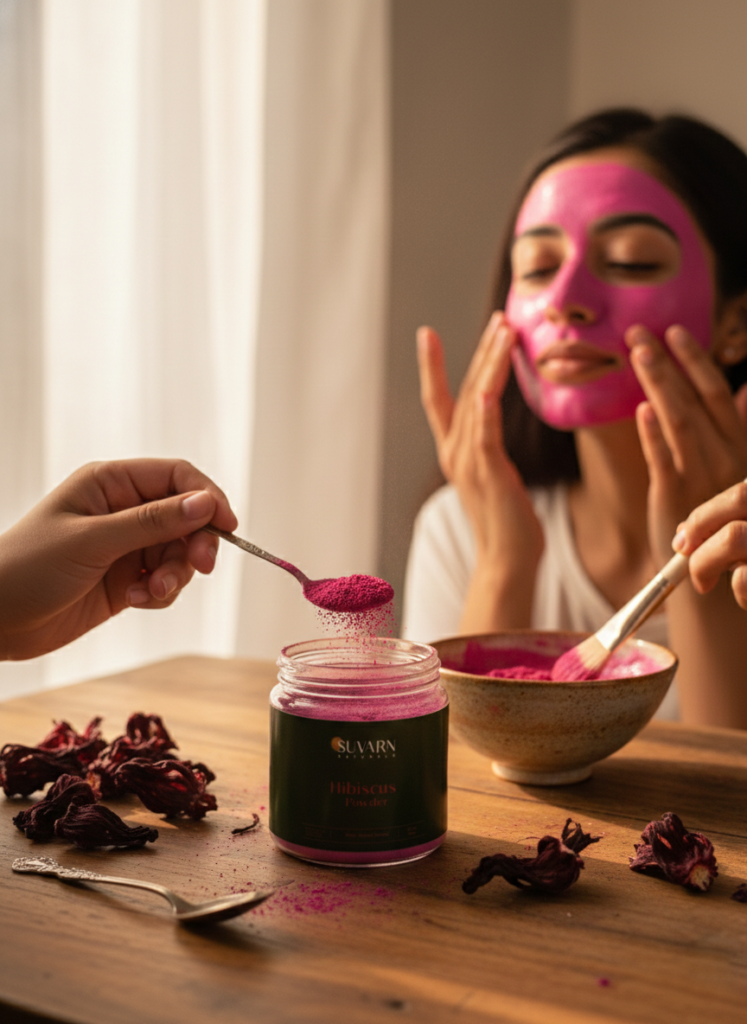
- Apply to clean, towel-dried hair or face using fingertips or a flat brush. Work from the roots outward for scalp application.
- Leave for 15–20 minutes. Use this time to meditate, journal, or simply rest.
- Rinse with lukewarm water. Avoid hot water — it strips the herb’s residual oil action.
- Follow with your regular moisturiser or a light hair oil.
💚 Pro tip: Mix your herbal powder base with our Moringa Powder for an added amino acid boost that feeds both skin cells and hair follicles simultaneously. The combination of Amla’s Vitamin C and Moringa’s amino acids creates a bioavailable nutrient duo that works synergistically on keratin production.
Herbal Powders vs Alternatives — A Practical Comparison
| Factor | Suvarn Naturals Herbal Powder | Generic Store-Bought Powder | Herbal Capsule | Synthetic Skincare |
|---|---|---|---|---|
| Ease of use | Medium (requires prep) | Medium | Very easy | Very easy |
| Time to visible results | 4–6 weeks (topical) | 6–10 weeks (variable quality) | 8–12 weeks (systemic) | 1–2 weeks (often surface-level) |
| Suitable for sensitive skin | Yes — adaptable base | Variable — check for additives | Yes | Often no (fragrance, alcohol) |
| PCOS-friendliness | High — targets androgens + inflammation | Low — inconsistent potency | Medium | Low — may contain hormone-disruptors |
| Cost over 3 months | ₹300–₹600 | ₹200–₹500 | ₹600–₹1,200 | ₹1,500–₹4,000+ |
Note: Results vary by individual. The table reflects general patterns, not guaranteed outcomes.
Side Effects and Precautions
Herbal ingredients are generally well-tolerated — but “natural” does not automatically mean risk-free for everyone.
Possible reactions:
- Contact dermatitis — rare, usually from Neem or strong astringents; always patch-test first
- Photosensitivity — Amla and citrus-based powders (Orange Peel) may increase sun sensitivity; use in the evening or follow with SPF
- Digestive sensitivity — some people experience mild bloating when starting Moringa internally; begin with ¼ tsp and increase gradually
During pregnancy and breastfeeding: Avoid Neem internally during pregnancy. Amla in moderate food-quantity amounts is generally considered safe, but consult your gynaecologist before starting any new herbal regimen.
Drug interactions: If you are on blood thinners, thyroid medication, or diabetes medication, speak to your doctor before adding herbal powders internally — some herbs may interact with drug metabolism pathways.
When to see a doctor: If you experience redness, swelling, or hives after application; if hair fall increases significantly despite consistent herbal use for 6+ weeks; or if skin conditions worsen rather than improve.
Myths and Mistakes Women Make with Herbal Ingredients
★ Unique section — most competitor blogs skip this entirely.
Mistake 1: “I’ll use it every day for faster results”
Daily exfoliating herbal applications (especially clay- or Neem-based ones) can over-strip the skin barrier, triggering more sebum production — the opposite of what you want. Most herbal masks are designed for 2–3x per week use.
Mistake 2: “All powders with the same name are the same”
The potency of Amla Powder sourced from Uttarakhand Emblica officinalis fruit at peak ripeness is genuinely different from a powder made from unripe fruit or diluted with starches. Colour, aroma, and texture are your first quality checks — and they matter more than price.
Mistake 3: “Topical application is enough”
Herbs work best when used both internally and topically for skin and hair goals. A Moringa mask alone cannot supply the amino acids your hair follicles need internally — pairing it with Moringa in your morning smoothie creates a dual-action approach that Ayurveda calls Antah (internal) and Bahya (external) treatment.
Mistake 4: “Results should show in a week”
This expectation, set by synthetic skincare marketing, is the #1 reason women abandon herbal routines prematurely. The skin cell turnover cycle is 28 days. Any visible change requires at least one full cycle — and cumulative benefits build over 2–3 cycles.
Mistake 5: “Mixing more herbs is more powerful”
More is not better. Ayurvedic formulations are precise. Combining too many herbs can cause Viruddha Yoga — incompatible combinations that reduce each herb’s efficacy or cause unexpected reactions. Stick to 2–3 well-matched herbs per application.
Notes from the Suvarn Naturals Founder
When I first started working on the Suvarn Naturals Herbal Powders Range, I wasn’t thinking about marketing. I was thinking about my own skin — and my mother’s hair.
Like many of you, I had tried the branded “herbal” products from large stores. The powders were uniform beige, odourless, and completely inert-feeling. Nothing like the Amla my grandmother would grind at home — that deep greenish-brown powder that smelled sharply tangy and stained your fingernails.
At Suvarn Naturals, we carefully select herbs from trusted sources to ensure purity and effectiveness. Each powder retains its natural colour, aroma, and texture, which reflects its authenticity. During our early testing phase, we focused on how these herbs interact naturally with skin and hair without causing irritation or dependency.
One thing we noticed immediately: the colour variance between harvest seasons tells you something real. Our Moringa is a vivid, almost luminous green — because it is dried at low temperature within hours of harvest. Our Amla is a true tan-brown with green undertones. These are not cosmetic choices — they are indicators of intact phytochemical content.
We don’t add anti-caking agents, synthetic fragrance, or colourants. What you smell in the packet is the herb. What you see is the herb. That is the standard we built this range around.
— Suvarn Naturals Team
FAQs — Herbal Ingredients on Skin & Hair
How long does it take for herbal powders to show results on skin?
Most women notice subtle improvements — less redness, more even texture — within 2–4 weeks of consistent use. Significant changes in pigmentation, acne frequency, or hair density typically become visible after 6–12 weeks. Herbal action is cumulative, not instantaneous.
Can I use herbal powders if I have PCOS-related acne?
Yes, and herbal powders may be particularly useful for PCOS-related skin issues. Neem and Amla both demonstrate potential in managing androgen-driven sebum overproduction. Combining topical application with internal Amla or Moringa use may offer a more comprehensive approach. Always consult your doctor for medical guidance.
Is it safe to use Neem Powder on the face daily?
Daily use is not generally recommended. Neem is powerfully astringent — used too frequently, it can strip your skin barrier. Two to three times a week is a more sustainable frequency. Read our detailed Neem Powder guide for protocol specifics.
Can men use these herbal powders too?
Absolutely. The herbs themselves are not gender-specific. Men dealing with oily scalp, dandruff, or beard skin issues may find Neem and Moringa particularly useful. Dosage and application method remain the same.
What should I mix herbal powder with for best results?
The ideal base depends on your skin type. Rose water suits most skin types and has mild toning properties. Yogurt is excellent for sensitive or Pitta skin. Raw milk suits dry/Vata skin. For hair, coconut oil or warm sesame oil work as excellent carriers for powder application.
Can I use these powders during my period?
Yes. There are no contraindications for topical herbal use during menstruation. If using internally, some women prefer to reduce dosage during heavy flow days as a precaution — but there is no scientific basis for avoiding them entirely.
How do I know if my herbal powder is genuine and potent?
Check for natural colour (not unnaturally bright or uniform beige), a distinct aroma, and a slightly grainy or fibrous texture depending on the herb. Potent herbal powders should stain slightly when mixed with water. Odourless, perfectly smooth powders with no visible plant texture are often over-processed.
Can I combine herbal powders from different brands?
You can, but consistency matters. Different brands source, dry, and process herbs differently — potency will vary. For best results, work with one trusted source and understand each powder’s individual properties before combining them.
Are herbal powders safe for sensitive skin?
Generally yes — especially when mixed with soothing bases like yogurt, aloe vera, or rose water. Always patch test on your inner wrist 24 hours before first application. Start with shorter leave-on times (5–10 minutes) and build up.
How should I store herbal powders?
Store in an airtight container away from direct sunlight and humidity. A cool, dark shelf or a pantry works well. Avoid storing near the stove or in bathrooms with high steam. Properly stored herbal powders typically retain potency for 12–18 months.
Final Takeaway
Herbs have been working on human skin and hair for thousands of years — not because of placebo or folklore, but because their phytochemical profiles genuinely interact with the biological systems that govern how our skin looks and how our hair grows.
Understanding how they work — through antioxidants, sebum regulation, keratin support, and Dosha balance — transforms herbal use from a vague wellness habit into a purposeful daily practice.
Start simple. Pick one herb matched to your skin type and your primary concern. Use it consistently for 6 weeks. Give your skin one full growth cycle to respond.
The Suvarn Naturals Herbal Powders Range is built for exactly this kind of intentional, personalised care. Explore the collection and find your starting point.