
Best Herbal Powder for Hair: A Real Comparison, Not Just a Trend

Published: 8 June 2026 | By Suvarn Naturals Team
TL;DR
- The best herbal powder for hair depends on your specific concern — there’s no single “best,” but a right match for your scalp and goals.
- Keshya Powder is the easiest starting point: a multi-herb blend for overall hair nourishment.
- Amla Powder has the strongest emerging clinical backing for hair growth and thickness.
- Shikakai suits oily scalps; Hibiscus suits dry, brittle hair; Blue Pea Flower works well in hydrating masks; Henna is for natural colour with conditioning.
- None of these “cure” hair loss — they may support scalp health and hair quality as part of a consistent routine.
- 👉 New to herbal hair care? Start with Keshya Powder.
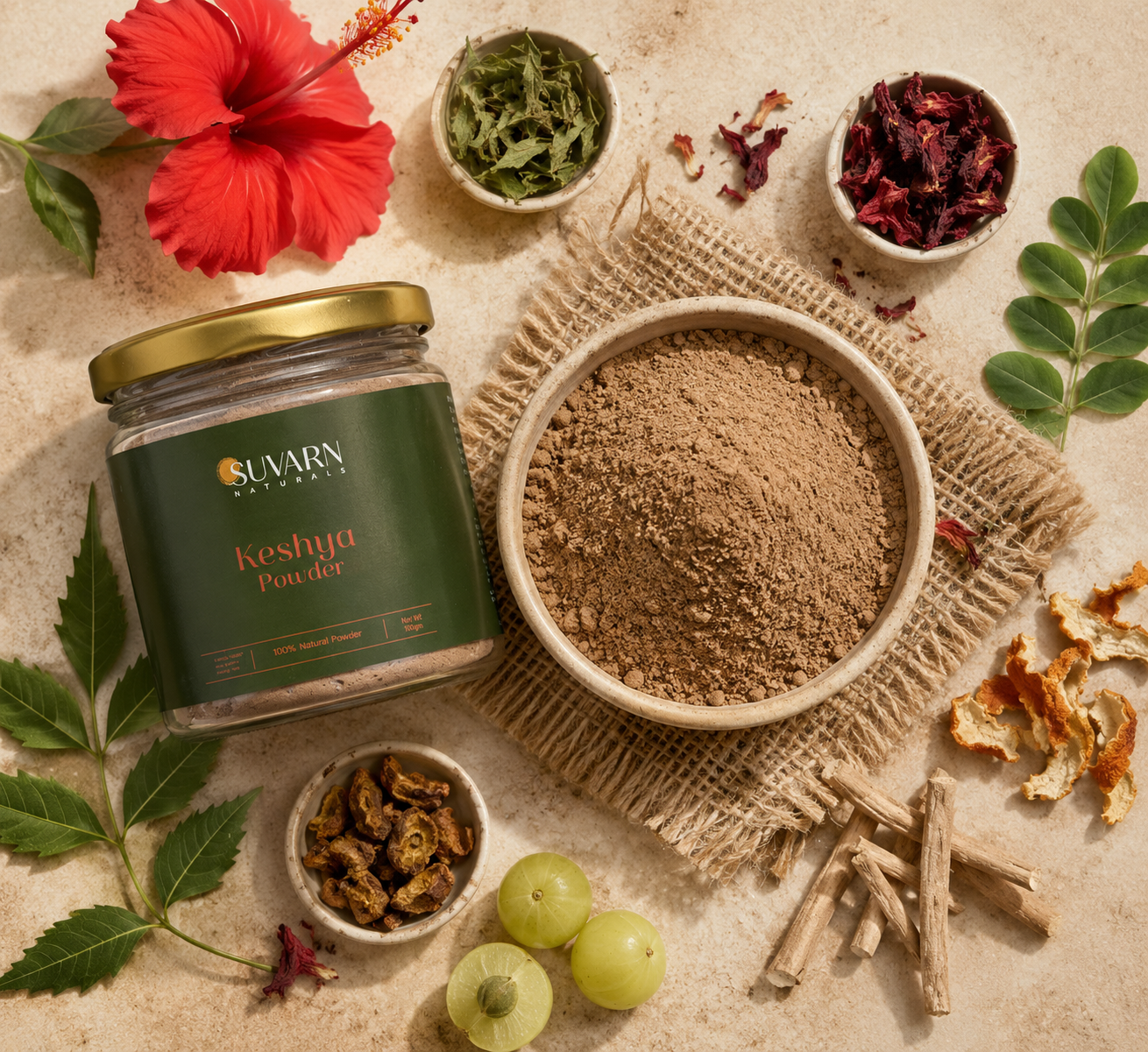
Scroll any wellness page today and you’ll see hair powders promising miracles. But which is genuinely the best herbal powder for hair? This guide compares six traditional powders — Keshya, Amla, Shikakai, Hibiscus, Blue Pea Flower, and Henna — using both Ayurvedic use-cases and current research, so you can pick the best herbal powder for hair based on your own scalp, not hype.
What Is the Best Herbal Powder for Hair?
The best herbal powder for hair is simply the one matched to your specific scalp and hair concern — there’s no single formula that works identically for everyone. A herbal powder for hair is a dried, ground botanical — like Amla fruit or Hibiscus flower — used topically as a paste or mask to support scalp and hair health. In Ayurveda, these are called Keshya dravyas, meaning “substances traditionally used for hair.”
Most come from single plants: Amla (Phyllanthus emblica), Shikakai (Senegalia rugata), Hibiscus (Hibiscus rosa-sinensis), or Henna (Lawsonia inermis). Some, like Keshya Powder, are blends combining several of these traditional herbs into one formula — which is often why blends are considered the best herbal powder for hair for beginners.
Key constituents across these powders include tannins, flavonoids, vitamin C, and mucilage — compounds traditionally associated with scalp conditioning, mild cleansing, and antioxidant support.
The Science Behind the Best Herbal Powder for Hair
Ayurveda classifies most of these herbs as supportive for Pitta dosha, the bodily energy linked to scalp heat, inflammation, and premature greying. Modern research is beginning to explore why these herbs earn their reputation.
A common myth is that “more powder, more results” — that packing your scalp with multiple potent herbs speeds up change. In practice, overuse can dry the scalp and cause irritation. Traditional use always paired these herbs with oils like coconut or sesame to balance their drying effect.
One of the more notable recent studies is a 2023–2024 triple-blind randomized controlled trial published in the Journal of Ethnopharmacology, which examined an oral Amla-based product in women with androgenetic hair thinning over 12 weeks. The trial concluded that the Amla-based formulation may help support hair growth patterns and increase the proportion of hair in the active growth phase, though the researchers noted further studies are needed to confirm this effect. This is a meaningful, recent data point — though it studied an oral product, not a topical powder, so results shouldn’t be over-extended to paste application.
For general safety and evidence summaries on individual botanicals, the NIH’s National Center for Complementary and Integrative Health (NCCIH) Herbs at a Glance database is a reliable independent reference worth bookmarking before you buy any herbal powder for hair.
Myth vs Fact
| Myth | Fact |
|---|---|
| Herbal powders regrow hair overnight | Traditional use suggests gradual support over weeks, not instant regrowth |
| More powder = faster results | Overuse can dry the scalp; consistency matters more than quantity |
| All herbal powders suit all hair types | Different powders suit different concerns — oily scalp, dryness, colour, etc. |
Benefits of the Best Herbal Powder for Hair — Especially for Women
Scalp Nourishment
For scalp nourishment specifically, the best herbal powder for hair is usually Amla — it’s rich in vitamin C and polyphenols, traditionally used to support a healthy scalp environment. Quick tip: Mix with warm water, not boiling, to preserve the herb’s natural compounds.
Supporting Hair Thickness and Fall
For women managing postpartum shedding, PCOS-related thinning, or stress-related hair fall, Amla-based blends are the most researched starting point. Quick tip: Pair a herbal paste routine with iron and protein-rich meals — hair health starts from within.
Managing Oiliness Without Harsh Shampoo
Shikakai has mild natural saponins, traditionally used as a gentler alternative to sulphate shampoos for oily scalps. Quick tip: Use Shikakai paste 1–2 times a week, not daily, to avoid over-drying.
Softness and Shine for Dry, Damaged Hair
Hibiscus is mucilage-rich, traditionally valued for conditioning dry, frizzy strands. Quick tip: Combine Hibiscus powder with yogurt for extra slip and softness.
Natural Hair Colour Without Ammonia
Henna deposits a reddish-brown tint while coating the hair shaft, which may reduce breakage from daily styling. Quick tip: Always do a patch test 24 hours before your first full henna application.
Who Should Use Which Herbal Powder for Hair?
- Postpartum hair fall: Amla Powder, alongside iron-rich nutrition and patience — postpartum shedding is usually temporary, and it’s a strong contender for the best herbal powder for hair in this scenario.
- PCOS-related thinning: Amla Powder combined with a dermatologist-guided plan; herbal powders support but don’t replace medical care.
- Perimenopause dryness: Hibiscus Powder for added moisture and softness.
- Exam stress or seasonal shedding: Keshya Powder as a low-effort, all-in-one weekly ritual — arguably the best herbal powder for hair when you have zero time to plan a routine.
- Oily, humid-climate scalp: Shikakai Powder for a lighter, cleansing wash.
Not ideal if:
- You have open scalp wounds, active infection, or eczema flare-ups — check with a dermatologist first.
- You’re allergic to hibiscus, legumes (Shikakai is in the pea family), or henna-related compounds.
- You want overnight results — these are gradual, supportive rituals, not quick fixes.
1. Keshya Powder – An All-in-One Herbal Hair Care Blend
If you’re searching for the best herbal powder for hair that combines multiple traditional ingredients in one jar, Suvarn Naturals Keshya Powder is a great place to start.
Unlike single-ingredient powders, Keshya Powder is a carefully crafted blend of herbs traditionally used in hair care routines, making it suitable for anyone who wants a complete herbal hair care solution without juggling five jars.
Best for: overall hair care, hair nourishment, weekly herbal hair masks, healthy-looking hair, scalp care routines.
How to use:
- Mix Keshya Powder with water, curd, or aloe vera gel into a smooth paste.
- Apply evenly to scalp and hair.
- Leave on for 30–45 minutes.
- Rinse thoroughly with water.
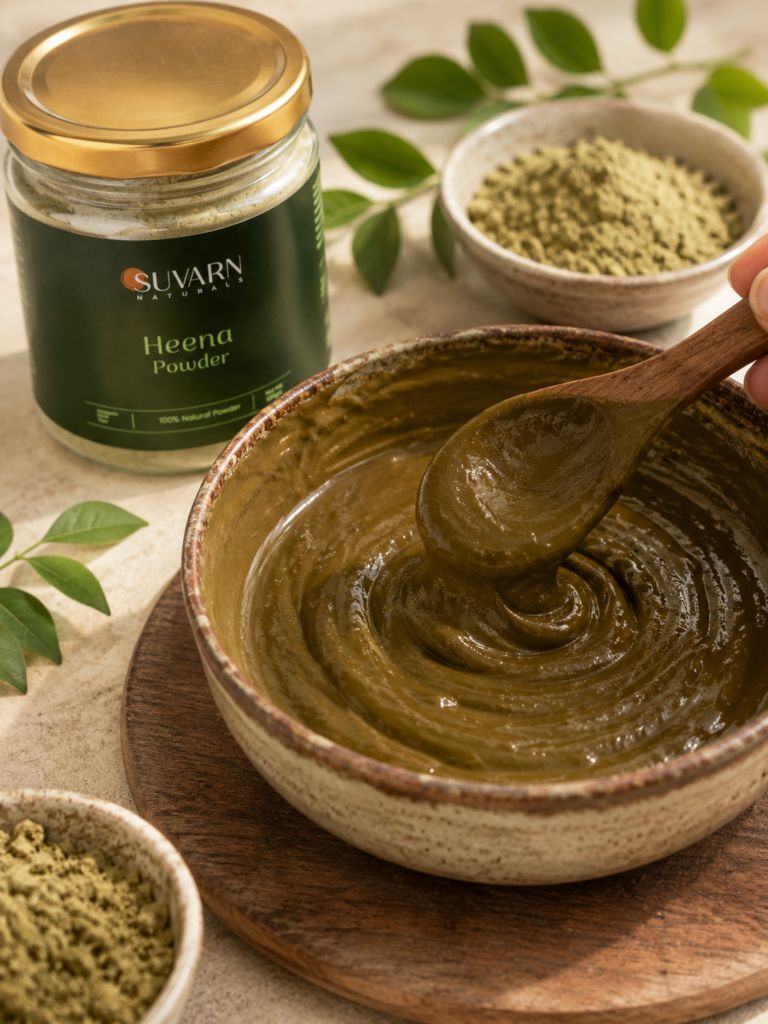
How to Use the Best Herbal Powder for Hair — Step by Step
Whichever best herbal powder for hair you choose, most follow a similar base method, with small tweaks by type.
- Measure 2–4 tablespoons depending on hair length.
- Mix with a liquid base — water, curd, aloe vera gel, or a few drops of oil.
- Apply section by section, focusing on scalp for Shikakai/Amla, and length for Hibiscus/Henna.
- Leave on 30–45 minutes (Henna may need 1–2 hours for colour development).
- Rinse with lukewarm water; avoid daily shampoo the same day.
Best time to use: Early evening, so hair air-dries before bed rather than being tied up damp.
| Do | Don’t |
|---|---|
| Do a strand or patch test first | Don’t leave henna on for more than 2–3 hours |
| Do use lukewarm, not hot, water to rinse | Don’t apply to broken or irritated scalp skin |
| Do follow up with a light oil if scalp feels dry | Don’t mix too many potent powders in one sitting |
The 3-Minute Ritual With the Best Herbal Powder for Hair
★ A quick nighttime ritual most blogs skip entirely ★
Ingredients
- 2 tbsp Keshya Powder
- 1 tbsp curd or aloe vera gel
- A few drops of coconut oil (optional, for extra softness)
Steps
- Mix Keshya Powder with curd into a lump-free paste — should take under a minute.
- Section hair and apply from roots to mid-lengths.
- Leave on while you finish your evening routine (30–40 minutes).
- Rinse with lukewarm water.
Pro tip: Alternate this with a Blue Pea Flower rinse once a week for a cooling, calming scalp routine — small variety keeps your scalp from getting “used to” one formula.
Best Herbal Powder for Hair vs Alternatives
| Metric | Suvarn Naturals Powder | Generic Herbal Powder | Capsule Supplement | Synthetic Hair Serum |
|---|---|---|---|---|
| Ease of use | Moderate (needs mixing) | Moderate | Easy (swallow) | Very easy |
| Time to visible change | Weeks, with consistency | Weeks, variable quality | Weeks to months | Days (temporary shine only) |
| Suitability for sensitive scalp | Generally gentle | Depends on sourcing | N/A (oral) | Can irritate sensitive skin |
| PCOS-friendliness | Supportive, non-hormonal | Variable | Depends on formulation | Not typically relevant |
| Cost over time | Moderate | Low to moderate | Moderate to high | Moderate to high |
Side Effects and Precautions of Herbal Hair Powders
Herbal doesn’t automatically mean risk-free. Some people experience scalp dryness, mild itching, or an allergic reaction, especially on first use.
- Pregnancy/breastfeeding: Topical use of these powders is generally considered low-risk, but always check with your doctor before starting anything new.
- Colour-treated hair: Henna can interact unpredictably with chemical dyes — avoid combining within the same month.
- Drug interactions: No major topical interactions are documented, but oral Amla supplements may interact with certain medications — consult your doctor if you take blood thinners or diabetes medication.
- When to see a doctor: If you notice sudden, patchy hair loss, scalp sores, or a reaction that doesn’t resolve within 24–48 hours, stop use and consult a dermatologist.
Myths and Mistakes Women Make With Herbal Hair Powders
- “If a little works, a lot works faster.” More product often just means more drying, not more benefit.
- Skipping the patch test. Even natural ingredients can cause reactions — always test first.
- Expecting overnight thickness. Hair growth cycles take months; herbal support works alongside patience.
- Using henna and chemical dye together. This is the fastest way to get an unpredictable colour result.
- Ignoring diet and stress. No powder compensates for chronic stress, poor sleep, or nutrient gaps.
Can’t Decide? Start with Keshya Powder
If you’re new to herbal hair care and aren’t sure which ingredient to choose, Keshya Powder is an excellent starting point because it combines multiple traditional herbs in one convenient blend.
Instead of buying several individual powders, you can begin with a ready-to-use blend and later customise your routine with ingredients like Blue Pea Flower, Shikakai, or Amla Powder based on your specific hair goals.
Notes from the Suvarn Naturals Founder
“When I first tested our Keshya Powder formulation, the thing that struck me wasn’t a dramatic before-and-after — it was the texture. In our lab, we noticed that the finer we milled the herbs, the smoother the paste held on the scalp without dripping, which meant less mess and better contact time.
We source our Amla from small farms in a way that preserves the fruit’s natural tartness — a good indicator the vitamin C content hasn’t degraded in processing. We test every batch for grit size and moisture content before it reaches you, because a coarse, poorly-dried powder simply won’t perform the way tradition intended.”
Frequently Asked Questions
What is the best herbal powder for hair fall?
For hair fall specifically, Amla Powder currently has the most recent clinical interest among herbal powders for hair, though results vary by individual and consistency of use.
Can I mix multiple herbal hair powders together?
Yes, in moderation. Keshya Powder is designed as a pre-mixed blend so you don’t need to guess ratios yourself.
How often should I use a herbal hair mask?
Once or twice a week is typical. Daily use isn’t necessary and may dry out your scalp.
Is Shikakai a replacement for shampoo?
It can be used as a gentler wash for oily scalps, though very oily or product-heavy hair may still need occasional shampoo.
Does henna damage hair over time?
Used correctly, henna typically coats and conditions hair. Overuse without conditioning can lead to dryness.
Can herbal powders help with PCOS-related hair thinning?
They may offer supportive scalp care, but PCOS-related hair loss usually needs a doctor-guided treatment plan alongside any herbal routine.
Are these powders safe during pregnancy?
Topical use is generally considered low-risk, but always confirm with your doctor first.
How long before I see results?
Most traditional guidance suggests 8–12 weeks of consistent use before assessing results.
What’s the difference between Keshya Powder and buying individual herbs?
Keshya Powder is a pre-blended mix for convenience; individual powders let you customise ratios for a specific concern.
Can Blue Pea Flower powder change hair colour?
No — it’s typically used for its cooling, antioxidant properties rather than colour deposit, unlike Henna.
Final Takeaway
Multani mitti powder isn’t a miracle cure, and it’s not meant to be one. What it offers, backed by both generations of Ayurvedic use and emerging clay research, is a simple, low-cost way to manage excess oil and give your skin a reset — especially useful during hormonal shifts, stress weeks, or humid seasons. Start with a patch test, use it 1–3 times a week rather than daily, and pair it with the liquid that suits your skin type. If you’re still unsure where to start, our skin type guide is a good first stop, and our full herbal range is there when you’re ready to build a routine around it.
